Universal Coupling Empowers PU Sandwich Panel Line To Achieve Energy Saving And Consumption Reduction

In the modern construction industry, polyurethane (PU) sandwich panels have become indispensable building materials due to their excellent thermal insulation, flame retardancy, structural stability, and lightweight properties. These panels, composed of two outer facing materials and a rigid PU foam core, are widely used in external walls, roofs, cold storage facilities, and various prefabricated buildings, driving the continuous development and innovation of their production technology. The PU sandwich panel production line is a complex integrated system that involves multiple consecutive processes, including uncoiling of facing materials, roll forming, preheating, PU foaming, lamination, curing, and cutting. Each link requires precise and stable power transmission to ensure the consistency of product quality and the efficiency of the entire production process. Among the numerous components that make up the transmission system of the production line, the universal coupling, also known as the universal joint coupling, stands out as a key energy-saving component. Its unique structural design and excellent transmission performance have significantly promoted the upgrading and transformation of the PU sandwich panel production line, becoming an indispensable core part in realizing energy saving and consumption reduction goals.
To understand the important role of universal couplings in empowering PU sandwich panel line to achieve energy saving and consumption reduction, it is first necessary to clarify the working characteristics of the production line and the core challenges faced by its transmission system. A modern PU sandwich panel production line is a continuous and automated production system that integrates mechanical, electrical, hydraulic, and chemical reaction technologies. It requires the coordinated operation of multiple subsystems, such as the uncoiling system, roll forming system, foaming system, double-belt lamination system, cutting system, and conveying system. Each subsystem is driven by a separate power source, and the power needs to be transmitted to various executing components accurately and stably to ensure that the entire production line operates in a synchronized manner. The transmission system of the production line is faced with several key challenges that directly affect energy consumption: first, the installation and layout of each subsystem are often not on the same axis due to the limitations of the production process and the overall structure of the equipment, resulting in angular deviations between the driving shaft and the driven shaft; second, during the long-term continuous operation of the production line, the equipment will generate vibration and thermal expansion, leading to changes in the relative position of the shafts, which requires the transmission component to have a certain compensation capacity; third, the production process of PU sandwich panels requires frequent adjustments in production speed according to different specifications and process requirements, which puts forward higher requirements for the flexibility and adaptability of the transmission system; fourth, the traditional rigid transmission components are prone to friction and wear during operation, resulting in energy loss and shortened service life, which indirectly increases the energy consumption and maintenance costs of the production line.
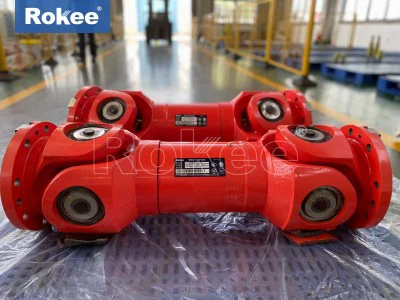
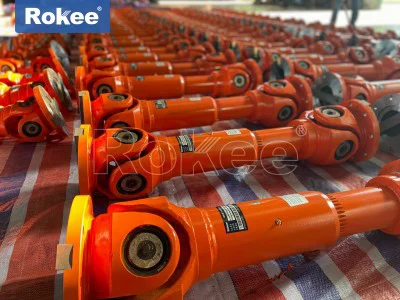
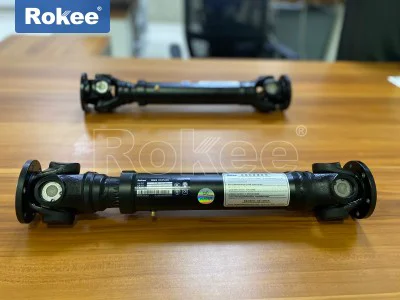
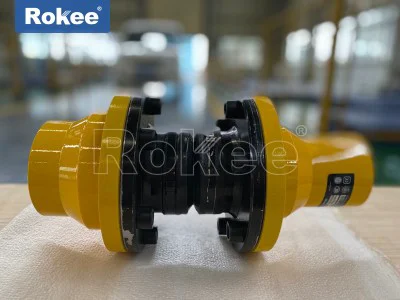
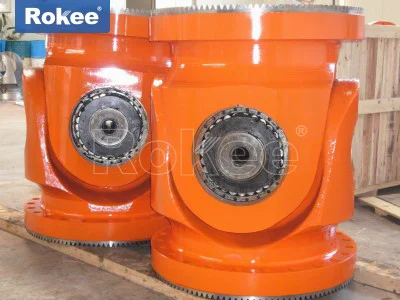
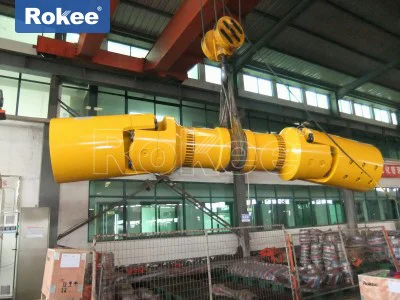
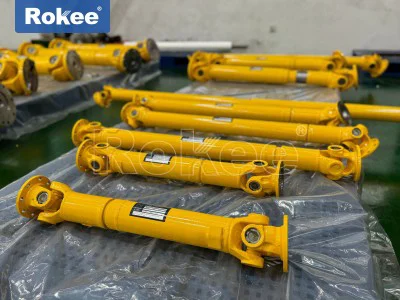
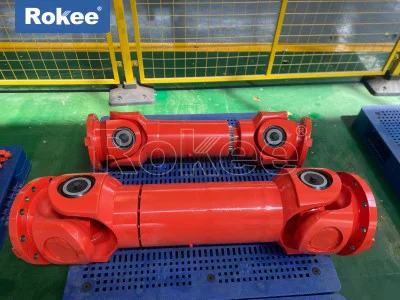
The universal coupling solves these challenges through its unique structural design and working principle, thereby realizing significant energy saving and consumption reduction effects in the operation of the PU sandwich panel production line. The core function of the universal coupling is to connect two shafts (active shaft and passive shaft) in different mechanisms, allowing them to rotate together to transmit torque, and at the same time, it can flexibly compensate for angular deviations, axial displacements, and radial displacements between the two shafts. This flexible compensation capability is crucial for the stable operation of the PU sandwich panel production line, as it avoids the additional energy loss caused by shaft misalignment in traditional rigid couplings. Unlike traditional rigid couplings that can only transmit power between coaxial shafts, universal couplings can achieve stable power transmission even when there is an angular deviation of 5° to 45° between the two shafts, which is completely suitable for the layout characteristics of multiple subsystems in the PU sandwich panel production line that are not on the same axis.
The energy-saving mechanism of universal couplings in PU sandwich panel production lines is reflected in multiple aspects, among which the improvement of transmission efficiency is the most core and direct manifestation. Transmission efficiency is essentially the ratio of the output power to the input power of the coupling, reflecting the degree of energy loss during the transmission process. The structural design of universal couplings minimizes energy loss during power transmission. Common types of universal couplings include cross-shaft universal couplings and ball cage universal couplings. Among them, the transmission efficiency of cross-shaft universal couplings can reach 95% to 98%, while the ball cage universal couplings, with their more precise structural design, can achieve a transmission efficiency of more than 98%, and some high-precision models can even reach 99% or more. Compared with traditional rigid couplings, which have a transmission efficiency of only 85% to 90%, universal couplings can reduce energy loss by 5% to 10% in the power transmission process. For PU sandwich panel production lines that operate continuously for a long time and have high power demand, this seemingly small efficiency improvement can accumulate into considerable energy savings over a long period of time. For example, a PU sandwich panel production line with a daily operating time of 20 hours and a total power of 100 kW can save 100 kW × 20 hours × 5% × 365 days = 36,500 kWh of electricity every year if the transmission efficiency is improved by 5%, which not only reduces energy costs but also reduces carbon emissions, in line with the global trend of energy conservation and environmental protection.
Another important energy-saving advantage of universal couplings lies in their ability to reduce mechanical friction loss and extend the service life of equipment. The key components of universal couplings, such as cross shafts, ball cages, and needle roller bearings, adopt high-precision processing technology and high-performance materials. The surface of the cross shaft is usually treated with carburizing and quenching, which makes its hardness reach HRC58-62, greatly improving its wear resistance. At the same time, the use of high-quality lubricants forms an oil film on the contact surface of the components, reducing friction resistance and wear between the components. Compared with traditional rigid couplings, which are prone to severe wear due to inability to compensate for shaft deviation, leading to increased friction and energy loss, universal couplings can maintain stable friction levels during long-term operation, thereby reducing energy loss caused by friction. In addition, the reduction in wear also extends the service life of the coupling itself and the connected equipment components, reducing the frequency of equipment maintenance and replacement. The maintenance process of the production line often requires shutdown operations, and the reduction in maintenance frequency not only reduces maintenance costs but also avoids energy waste caused by unplanned shutdowns. Relevant research shows that the use of universal couplings can reduce the failure rate of the transmission system of PU sandwich panel production lines by 30% to 50%, shorten the maintenance time by 70% or more, and effectively ensure the continuous and stable operation of the production line, further improving energy utilization efficiency.
The lightweight design and vibration reduction performance of universal couplings also contribute to energy saving and consumption reduction of the PU sandwich panel production line. With the continuous development of material technology and structural optimization technology, modern universal couplings adopt topological optimization design and new lightweight materials on the premise of ensuring the rated torque bearing capacity, which significantly reduces their own weight. For example, some universal couplings using aluminum alloy and carbon fiber composite materials can reduce their weight by 25% to 30% compared with traditional steel models. The reduction in the weight of the coupling reduces the inertial load of the motor during startup and operation, so that the motor can reach the rated speed more quickly and maintain stable operation with lower power consumption. Especially during the startup phase of the production line, the reduction in inertial load can reduce the startup current of the motor by 15% to 20%, thereby saving a large amount of electrical energy. At the same time, the universal coupling has a certain buffering and vibration reduction function. During the operation of the PU sandwich panel production line, the vibration generated by each subsystem will be transmitted to the transmission system. If not effectively isolated, it will not only affect the stability of power transmission but also increase energy loss. The universal coupling can absorb and buffer the vibration through its own structural flexibility, reduce the impact of vibration on the transmission system and the entire production line, and avoid energy loss caused by vibration. This vibration reduction effect also helps to protect other equipment components, further reducing the overall energy consumption of the production line.
The adaptability of universal couplings to different working conditions and production requirements also provides important support for the energy saving and consumption reduction of PU sandwich panel production lines. The production of PU sandwich panels often needs to adjust the production speed and process parameters according to different product specifications and market demands. The traditional transmission system is difficult to adapt to frequent speed adjustments, and it is easy to cause energy waste during the adjustment process. The universal coupling has excellent flexibility and adaptability, which can smoothly adjust the transmission speed and torque according to the actual production needs, ensuring that the production line can maintain the best energy efficiency under different working conditions. For example, when the production line needs to reduce the production speed due to product replacement or process adjustment, the universal coupling can smoothly transmit the reduced power, avoiding the energy waste caused by the motor running at full power under low load. In addition, the universal coupling can also adapt to the changes in the relative position of the shafts caused by thermal expansion and cold contraction during the operation of the production line. It can automatically compensate for the displacement deviation without additional power consumption, ensuring the stability of power transmission and reducing energy loss caused by equipment deformation.
In practical applications, the energy-saving effect of universal couplings in PU sandwich panel production lines has been fully verified. Many production enterprises have achieved significant energy saving and consumption reduction results after replacing the traditional transmission components with universal couplings. For example, a PU sandwich panel production enterprise with an annual output of 1 million square meters found that after using universal couplings, the average daily power consumption of the production line was reduced by 8% to 12%, the annual energy cost was reduced by hundreds of thousands of yuan, and the product qualification rate was also improved by 3% to 5% due to the stable power transmission. At the same time, the service life of the transmission system was extended by more than 50%, and the maintenance cost was reduced by 40% to 60%. These data fully show that the application of universal couplings can not only help PU sandwich panel production lines achieve significant energy saving and consumption reduction but also improve production efficiency and product quality, bringing dual economic and environmental benefits to enterprises.
With the continuous improvement of global energy conservation and environmental protection requirements, the PU sandwich panel production industry is facing increasing pressure to save energy and reduce consumption. As a key component of the transmission system, the universal coupling will play a more important role in the future development of the industry. With the continuous advancement of technology, the structural design of universal couplings will be more optimized, the material performance will be further improved, and the transmission efficiency and energy-saving effect will be continuously enhanced. For example, the combination of intelligent monitoring technology and universal couplings can realize real-time monitoring of the operation status of the coupling, timely find potential faults, and avoid energy loss caused by faults. At the same time, the development of new self-lubricating universal couplings can reduce the frequency of lubricant replacement, further reducing maintenance energy consumption and environmental pollution.
In addition to the direct energy-saving effect of universal couplings themselves, their application also promotes the overall optimization of the PU sandwich panel production line. The stable and efficient power transmission provided by universal couplings lays a foundation for the automation and intelligence of the production line. With the support of universal couplings, the production line can better coordinate the operation of various subsystems, realize precise control of the production process, reduce material waste and energy loss caused by human error, and further improve the overall energy efficiency of the production line. For example, in the PU foaming link, the stable power transmission of the universal coupling ensures the uniform mixing of foaming materials and the stable foaming speed, avoiding the waste of foaming materials caused by uneven mixing and the energy loss caused by rework. In the cutting link, the precise power transmission ensures the cutting accuracy, reduces the waste of panel materials, and indirectly achieves the goal of energy saving and consumption reduction.
It is worth noting that the energy-saving effect of universal couplings in PU sandwich panel production lines is not only determined by the performance of the coupling itself but also related to the reasonable selection, installation, and maintenance of the coupling. Enterprises need to select the appropriate type and specification of universal couplings according to the actual working conditions of the production line, such as the power of the motor, the speed of the transmission system, and the angle deviation between the shafts. At the same time, standardized installation and regular maintenance are required to ensure that the universal coupling is in the best operating state. For example, regular inspection of the lubrication status of the coupling, timely replacement of aging lubricants, and adjustment of the relative position of the shafts can effectively maintain the transmission efficiency of the coupling and ensure its long-term energy-saving effect. In addition, the training of operators is also very important. Improving the operation level of operators can avoid improper operation leading to damage to the coupling and energy waste.
In conclusion, the universal coupling, with its unique structural advantages, high transmission efficiency, excellent compensation capacity, and good vibration reduction performance, has become a key component for PU sandwich panel production lines to achieve energy saving and consumption reduction. It solves the core problems of high energy consumption, easy wear, and poor adaptability of the traditional transmission system, and provides strong support for the sustainable development of the PU sandwich panel production industry. With the continuous development of industrial technology, the application of universal couplings will be more extensive and in-depth, and they will play a more important role in promoting the energy saving, emission reduction, and high-quality development of the industry. For enterprises engaged in the production of PU sandwich panels, popularizing the application of universal couplings is an important measure to reduce production costs, improve market competitiveness, and respond to global energy conservation and environmental protection requirements, which is of great significance for the long-term development of enterprises and the entire industry.