Guide For Replacement And Maintenance Of Wearing Parts Of Universal Coupling In PU Sandwich Panel Line

The PU sandwich panel line is a complex integrated production system that involves multiple continuous processes, including uncoiling of facing materials, roll forming, preheating, PU foaming, lamination, curing, and cutting. Each link relies on precise and stable power transmission to ensure the consistency of product quality and the efficiency of the entire production process. Among the numerous components that make up the transmission system of the PU sandwich panel line, the universal coupling, also known as the universal joint coupling, is an indispensable core part. It is specifically designed to connect rigid shafts with inclined axes or axial displacements, enabling the stable transmission of torque and rotational motion while compensating for angular, radial, and axial misalignments caused by equipment installation limitations, thermal expansion, and vibration during operation. Given the long-term continuous operation of the PU sandwich panel line under high load, high frequency, and variable working conditions, the wearing parts of the universal coupling are prone to wear, aging, and damage over time. Once these wearing parts fail, they will directly affect the normal operation of the transmission system, leading to reduced production efficiency, unstable product quality, and even serious equipment failures that result in unplanned downtime. Therefore, establishing a scientific and standardized maintenance system for the wearing parts of the universal coupling, mastering the correct replacement methods and maintenance skills, is crucial to extending the service life of the coupling, ensuring the stable operation of the PU sandwich panel line, and reducing maintenance costs. This article focuses on the replacement and maintenance of wearing parts of the universal coupling in the PU sandwich panel line, providing detailed and practical operational guidelines for relevant operators and maintenance personnel.
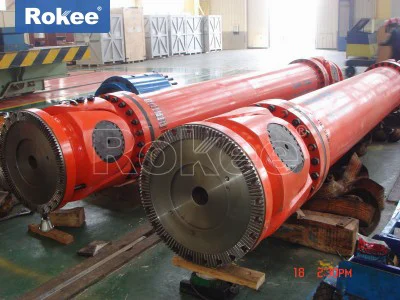
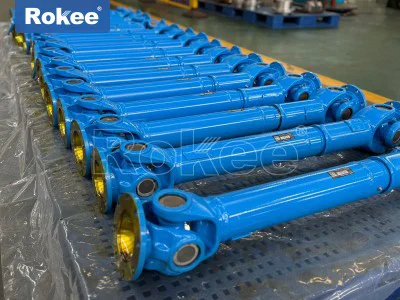
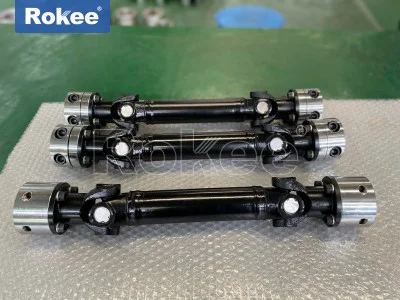
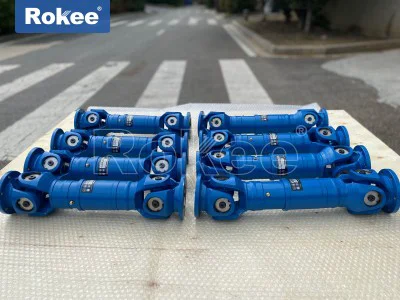
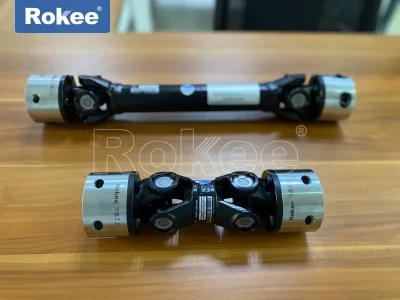
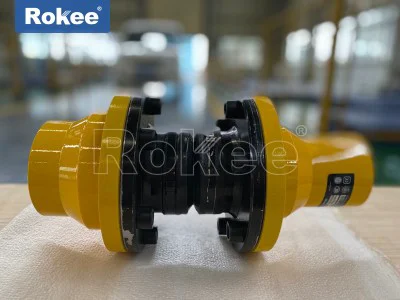
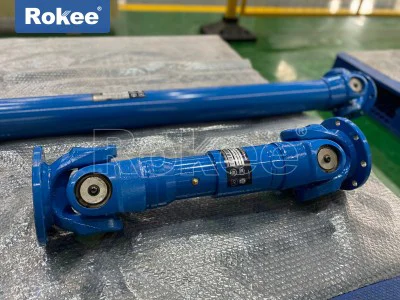
Before delving into the replacement and maintenance of wearing parts, it is necessary to first understand the basic structure of the universal coupling used in the PU sandwich panel line and identify the key wearing parts. The universal coupling commonly used in such production lines is mainly the cross-axis universal joint coupling, which consists of two yokes connected to the drive shaft and driven shaft, a cross-shaped connecting member (cross shaft), bearing cups, bearings, snap rings, and fasteners such as bolts and nuts. Among these components, the cross shaft, bearings, bearing cups, snap rings, and the spline pair (if equipped) are the most prone to wear and are classified as key wearing parts. The cross shaft, as the core force-transmitting component, bears the torque and shear force during operation, and its trunnions (four legs extending from the center) are in direct contact with the bearings, leading to gradual wear due to friction. Bearings, which are installed between the cross shaft trunnions and the bearing cups, are responsible for reducing friction and ensuring the flexible rotation of the cross shaft; they are easily damaged due to insufficient lubrication, contamination, or excessive load. Bearing cups act as the housing for the bearings and are subject to pressure and friction during operation, which can cause wear on their inner walls or deformation. Snap rings are used to fix the bearing cups in the yokes, and they can become fatigued, deformed, or even break after long-term use, leading to the loosening of bearing cups. The spline pair, which is used to connect the coupling with the shaft in some cases, is prone to wear and backlash due to repeated axial sliding and torque transmission. Understanding the characteristics and wear mechanisms of these wearing parts is the premise for effective replacement and maintenance.
The wear of the universal coupling's wearing parts in the PU sandwich panel line is not accidental; it is the result of the combined action of multiple factors. Firstly, the working environment of the PU sandwich panel line is relatively harsh. During the production process, the line will generate a certain amount of dust, foam residues, and volatile chemical substances, which can easily enter the internal structure of the universal coupling, contaminate the lubricating oil, and accelerate the wear of bearings, cross shafts, and other components. Secondly, the continuous operation of the production line leads to long-term high-load operation of the universal coupling. The torque and speed transmitted by the coupling fluctuate with the start-up, shutdown, and load changes of the production line, resulting in alternating stress on the wearing parts, which easily causes fatigue wear and even cracks. Thirdly, improper installation and alignment are important factors leading to premature wear of wearing parts. If the drive shaft and driven shaft are not properly aligned during installation, the universal coupling will bear additional bending moment and shear force during operation, increasing the wear of the cross shaft and bearings. In addition, insufficient lubrication or the use of inappropriate lubricants will significantly reduce the lubrication effect between the friction pairs, leading to dry friction or semi-dry friction, which accelerates the wear of the wearing parts. Finally, the material quality and processing accuracy of the wearing parts themselves also affect their service life; low-quality materials or substandard processing will make the parts more prone to wear and damage.
To timely detect the wear and damage of the universal coupling's wearing parts and avoid sudden failures, it is necessary to conduct regular inspections of the universal coupling during the operation of the PU sandwich panel line. The inspection work should be divided into daily routine inspections and regular comprehensive inspections, forming a systematic inspection mechanism. Daily routine inspections should be carried out by operators before starting the machine and during operation. Before starting the machine, check the appearance of the universal coupling for obvious damage, such as cracks on the yokes, looseness of bolts and nuts, and falling off of snap rings. At the same time, check whether the lubricating oil level is normal and whether there is oil leakage. During operation, pay close attention to the running state of the universal coupling, listen for abnormal noises such as clicking, squeaking, or grinding, which may indicate wear or loosening of the bearings, cross shaft, or other parts. Observe whether there is abnormal vibration of the coupling; excessive vibration may be caused by misalignment, wear of wearing parts, or imbalance. In addition, check the temperature of the coupling during operation; if the bearing part is overheated (usually exceeding 70°C), it may indicate insufficient lubrication or bearing damage, and the machine should be shut down for inspection immediately.
Regular comprehensive inspections should be carried out at fixed intervals, usually every 6 months or after the production line has been in operation for 500 to 1000 hours, depending on the intensity of the production line's operation and the working environment. During comprehensive inspections, the universal coupling needs to be partially or completely disassembled to check the wear status of each wearing part in detail. For the cross shaft, check whether there are cracks, rust, or excessive wear on the trunnions; the wear amount of the trunnions should not exceed 2% to 3% of the diameter, otherwise, replacement is required. Check the surface of the cross shaft for scratches or indentations, which may affect its load-bearing capacity. For bearings, check whether they can rotate flexibly without jamming or abnormal noise; if the bearing has obvious wear, pitting, or damage to the rolling elements and raceways, it should be replaced immediately. Check the inner wall of the bearing cup for wear, deformation, or scratches; if the inner wall is severely worn, leading to loose fit with the bearing, the bearing cup should be replaced. For snap rings, check whether they are intact, without deformation or fatigue cracks; if the snap ring is deformed or cracked, it cannot effectively fix the bearing cup and must be replaced. For the spline pair, check whether the spline teeth are worn, whether there is excessive backlash, and whether the sliding is smooth; if the spline teeth are severely worn or the backlash exceeds 1.5 times the initial value, replacement or repair is required. In addition, during the comprehensive inspection, the alignment of the drive shaft and driven shaft should be checked and calibrated if necessary, using tools such as laser alignment instruments or dial indicators to ensure that the angular deviation is not more than 1° and the radial deviation is not more than 0.1mm/m, so as to reduce the additional load on the universal coupling.
When the wearing parts of the universal coupling are found to be severely worn, damaged, or have reached the replacement limit through inspection, they must be replaced in a timely manner. The replacement of wearing parts should follow standardized operating procedures to ensure the replacement quality and avoid secondary damage to the coupling or other components. Before starting the replacement work, it is necessary to make full preparations. First, cut off the power supply of the production line and lock the power switch to ensure that the equipment cannot be started accidentally during the replacement process, so as to ensure the safety of the operators. Then, prepare the necessary tools and materials, including socket wrenches, pliers, hammers, punches, grease guns, shop rags, and new wearing parts that match the model and specification of the universal coupling. It should be noted that the new wearing parts must be of the same model and specification as the original parts to ensure compatibility and normal operation. Before replacing, clean the surface of the universal coupling and the surrounding area to remove dust, oil stains, and foam residues, so as to avoid contamination of the internal components during disassembly.
The specific replacement steps are as follows: first, remove the fasteners such as bolts and nuts that connect the yokes of the universal coupling to the drive shaft and driven shaft. When removing the bolts, it is recommended to use a socket wrench to avoid damaging the bolt heads; if the bolts are rusted or stuck, a proper amount of rust remover can be sprayed to loosen them. After removing the bolts, separate the yokes from the drive shaft and driven shaft, and place them in a clean and flat area to avoid collision and damage. Next, disassemble the universal coupling to take out the worn parts. For the cross-axis universal coupling, first remove the snap rings that fix the bearing cups in the yokes; the snap rings can be removed by driving them out with a hammer and punch or by squeezing them with pliers and lifting them out of the groove. After removing the snap rings, use a suitable socket (the outer diameter of the socket is slightly smaller than the bearing cup, and the inner diameter of the other socket is larger than the bearing cup) to drive the bearing cups out of the yokes. Place the two sockets at opposite ends of the yoke, use a vise or hammer to drive the bearing cups until one bearing cup is free from the yoke, then remove it and turn the yoke 180 degrees, and drive the remaining bearing cup out in the same way. After removing the bearing cups, take out the cross shaft and the bearings. During the disassembly process, pay attention to the assembly position and direction of each part, and can mark them if necessary to facilitate subsequent assembly.
After disassembling the worn parts, clean the yokes, cross shaft (if not replaced), and other components with shop rags to remove oil stains, dust, and debris. Check the yokes for cracks, deformation, or wear; if there are any abnormalities, they should be repaired or replaced in time. Then, install the new wearing parts in the reverse order of disassembly. First, install the new bearings on the trunnions of the cross shaft; apply an appropriate amount of lubricating grease to the surface of the bearings and the trunnions before installation to ensure good lubrication. Then, install the cross shaft with bearings into the yokes, and press the bearing cups into the yokes to ensure that the bearing cups are in place. Install the new snap rings into the grooves of the yokes to fix the bearing cups; ensure that the snap rings are fully seated and cannot be loosened. After installing the internal components, connect the yokes to the drive shaft and driven shaft, and tighten the bolts and nuts according to the specified torque. It should be noted that the bolts should be tightened evenly in a diagonal order to ensure that the connection is firm and the stress is uniform. After the replacement is completed, manually rotate the universal coupling to check whether it rotates flexibly without jamming or abnormal noise, and check whether the connection parts are loose. If everything is normal, the power supply can be turned on for trial operation.
In addition to timely replacement of worn parts, scientific and regular maintenance is also an important measure to extend the service life of the universal coupling and reduce the wear of wearing parts. The maintenance work mainly includes lubrication, cleaning, rust prevention, and regular calibration of alignment. Lubrication is the core of the maintenance work, as it can reduce friction between the friction pairs of the universal coupling, slow down wear, and prevent corrosion. The selection of lubricants should be based on the working conditions of the PU sandwich panel line; for general working conditions, lithium-based grease or molybdenum disulfide calcium-based grease can be used, while for high-temperature or heavy-load working conditions, high-temperature resistant lubricants should be selected. The lubrication cycle should be determined according to the operation intensity and working environment: for continuous operation under normal conditions, lubrication should be performed every 300 to 500 hours or every 3 months; for harsh working conditions such as high temperature, dust, and heavy load, the lubrication cycle should be shortened to 100 to 200 hours or once a month. The lubrication method is to inject lubricating grease through the grease nipple with a high-pressure grease gun until the old grease overflows from the gap, so as to ensure that the lubricating grease fills the entire friction pair and removes the old grease and contaminants. For universal couplings without grease nipples, they need to be disassembled and manually coated with lubricating grease.
Cleaning work should be carried out regularly to remove dust, oil stains, foam residues, and other contaminants on the surface and internal structure of the universal coupling. The surface of the coupling can be cleaned with a shop rag dipped in an appropriate amount of cleaning agent, while the internal components such as the cross shaft, bearings, and bearing cups can be cleaned with cleaning agent and then dried with compressed air to avoid residual moisture leading to rust. In addition, the area around the universal coupling should be kept clean to prevent contaminants from entering the coupling during operation. Rust prevention work is particularly important for universal couplings used in humid or corrosive environments. After cleaning, a layer of anti-rust oil can be applied to the surface of the coupling to prevent oxidation and rust. For key components such as the cross shaft and bearings, anti-rust treatment can be carried out regularly to extend their service life.
Regular calibration of the alignment of the drive shaft and driven shaft is also an important part of maintenance. Due to the vibration and thermal expansion of the equipment during long-term operation, the alignment of the shafts may change, leading to additional load on the universal coupling and accelerating the wear of wearing parts. Therefore, the alignment of the shafts should be checked every 6 months or during equipment overhauls, and calibrated in time if deviations are found. The alignment can be carried out using laser alignment instruments or dial indicators, which have high accuracy and can ensure that the shafts are within the allowable alignment range. In addition, the fasteners such as bolts and nuts of the universal coupling should be checked regularly; the bolts should be retightened after the initial operation of 50 hours, and then checked every 500 hours to ensure that they are not loose. Anti-loosening gaskets or thread glue can be used to enhance the anti-loosening effect of the bolts.
In the process of replacement and maintenance of the universal coupling's wearing parts, it is also necessary to pay attention to some key matters to ensure the safety and effectiveness of the operation. Firstly, safety operation is the top priority; operators must cut off the power supply and lock the power switch before starting the operation, and wear appropriate personal protective equipment such as gloves and safety shoes to avoid personal injury. Secondly, when disassembling and assembling the universal coupling, avoid using excessive force or violent operation to prevent damage to the yokes, cross shaft, and other components. When using tools such as hammers and punches, use soft metal pads to avoid direct impact on the parts. Thirdly, the new wearing parts must be inspected before installation to ensure that they are free from cracks, deformation, and other defects, and their model and specification are consistent with the original parts. Fourthly, after the replacement and maintenance are completed, a trial operation must be carried out to check whether the universal coupling operates normally, whether there is abnormal noise or vibration, and whether the connection parts are firm. If any abnormality is found, the machine should be shut down immediately for re-inspection and troubleshooting. Finally, a complete maintenance record should be established, including the time of maintenance, the type and quantity of replaced wearing parts, the inspection results, and the operation status after maintenance. This is conducive to tracking the service life of the universal coupling and its wearing parts, summarizing maintenance experience, and optimizing the maintenance plan.
In conclusion, the universal coupling is a key component in the transmission system of the PU sandwich panel line, and the wear and damage of its wearing parts directly affect the stable operation of the production line. By establishing a systematic inspection mechanism, mastering the correct replacement methods and maintenance skills, and carrying out regular inspection, replacement, and maintenance work, we can effectively extend the service life of the universal coupling, reduce the frequency of equipment failures, ensure the continuity and stability of the PU sandwich panel production, and ultimately improve production efficiency and product quality. It is necessary for relevant enterprises and maintenance personnel to attach great importance to the replacement and maintenance of the universal coupling's wearing parts, integrate the maintenance work into the daily production management, and continuously optimize the maintenance plan according to the actual working conditions, so as to provide a reliable guarantee for the normal operation of the PU sandwich panel line. The replacement and maintenance of wearing parts is not only a simple repair work, but also an important part of the equipment management system, which requires the joint efforts of operators, maintenance personnel, and management personnel to ensure that every link is implemented in place, and the potential safety hazards are eliminated in the bud.