Universal Shaft Supply
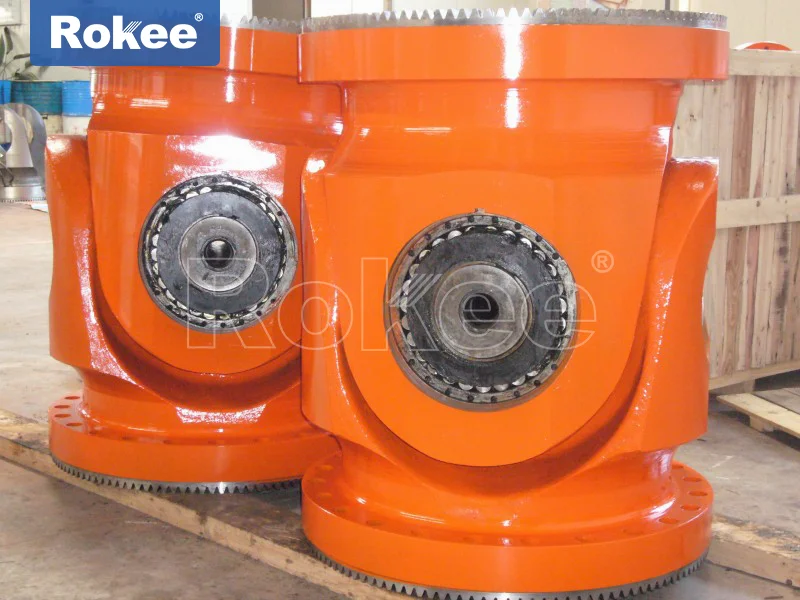
As an irreplaceable core part of modern mechanical transmission systems, universal shafts have gradually become a fundamental connecting medium for power delivery across countless industrial segments, construction equipment, transportation machinery and special processing facilities. The core value of universal shaft supply lies in matching diversified mechanical transmission demands through mature structural design, optimized raw material configuration and refined production craftsmanship, helping mechanical equipment resolve the long-standing technical difficulty of torque transmission between non-coaxial installation parts, and laying a stable foundation for continuous and efficient operation of complete machine sets. From small precision processing equipment requiring low-torque smooth rotation to large heavy metallurgical production lines bearing frequent impact loads, standardized and customized universal shaft products delivered via systematic supply channels can adapt to differentiated working conditions, making flexible axis compensation transmission accessible for machinery manufacturers and equipment maintenance teams around global industrial markets.
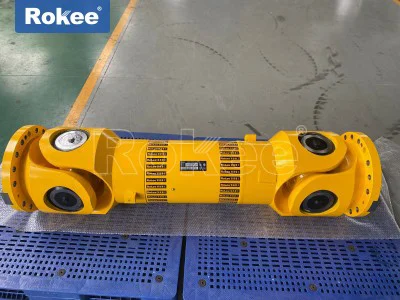
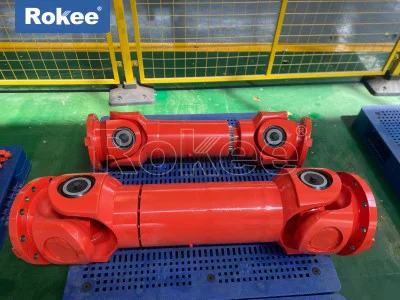
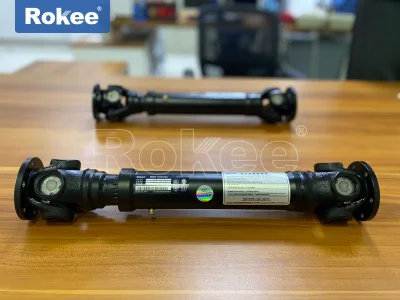
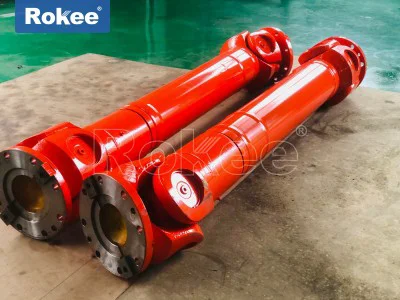
The inherent working logic of universal shafts originates from spatial hinge transmission mechanics, which differentiates them fundamentally from rigid fixed couplings that demand strict coaxial alignment of driving and driven ends. The most widely circulated cross-axis structured universal shaft relies on two end yoke assemblies and an intermediate cross spider fitted with precision rolling bearings to convert uniaxial rotary movement into multidirectional pendulum motion of the cross component, then redirect such motion to the opposite output shaft to complete torque transfer under inclined axis status. A single independent universal joint unit inevitably generates periodic instantaneous speed fluctuation during rotation when two connected shafts form an inclined angle, a natural mechanical characteristic that may trigger minor vibration and unstable power output in high-precision transmission scenes; to eliminate such speed deviation, mainstream supplied products adopt double-joint combined layout in most finished shafts, arranging two universal joint forks of the intermediate connecting pipe on the identical geometric plane to realize constant-speed synchronous transmission between input and output terminals, effectively offsetting irregular speed variation brought by angular deflection. Apart from conventional cross-axis construction, diversified structural variants enrich the overall supply spectrum of universal shafts, including ball-cage constant-speed models built with inner star sleeve, outer spherical shell and circulating steel balls that support stable high-speed operation under relatively large inclined angles, ball-fork lightweight types assembled with grooved fork bodies and embedded steel beads applicable to low-load compact installation space, and telescopic spline integrated configurations that add axial length compensation function besides angular deviation correction. Telescopic structures adopt internal and external involute spline matching between intermediate shaft tubes, allowing free sliding displacement along the central axis during equipment startup, shutdown or thermal expansion deformation, resolving installation gap errors and runtime dimensional change issues that frequently appear in long-distance power transmission layouts. Such abundant structural classification enables supply service providers to classify finished goods by load grade into ultra-light, light, medium and heavy-duty specifications, covering torque transfer demands ranging from dozens of newton meters to tens of thousands of newton meters across different machinery categories.
Raw material formulation is the core foundation deciding overall service performance and durability of supplied universal shaft products, and raw material selection follows targeted matching principles corresponding to actual load intensity, ambient temperature and corrosion exposure degree of target application scenarios. Medium carbon structural steel occupies the primary proportion of conventional universal shaft blank production, featuring stable machining performance and moderate comprehensive mechanical property after standard stress relief heat treatment, perfectly fitting medium-load, normal-temperature general industrial equipment such as food processing machinery, small packaging production lines and ordinary conveyor drive systems. For heavy-duty universal shafts used in steel rolling mills, mine crushing equipment and large engineering vehicles bearing repeated shock torque, alloy steel becomes the preferred raw material thanks to outstanding tensile strength, anti-fatigue capacity and impact resistance; blank components made from alloy steel go through quenching and tempering integral heat treatment to gain balanced hardness and internal toughness, while key friction positions including cross shaft journal surfaces and spline tooth profiles receive local surface hardening via high-frequency induction quenching or carburizing nitriding treatment, forming high-hardness wear-resistant outer layer with tough core matrix to extend effective abrasion life of easily worn parts under continuous heavy rotation. In recent years, emerging lightweight application fields including high-end new energy equipment and partial aerospace auxiliary transmission components gradually introduce carbon fiber composite raw materials for partial universal shaft customized supply; composite material shaft tubes cut down overall dead weight drastically while maintaining required torsional rigidity, reducing extra idle load loss during high-speed rotation and improving whole transmission energy utilization efficiency. For universal shafts deployed in chemical industry with acid-base mist erosion or coastal high-salt humid working surroundings, partial contact surfaces receive galvanizing, anti-corrosion paint spraying or special passivation surface finishing to slow down electrochemical corrosion and prolong spare part replacement cycle of end-user equipment. Every batch of raw material entering production links goes through elemental composition detection and mechanical performance sampling inspection before cutting and rough machining, eliminating hidden risks caused by unqualified blanks in finished product supply chain.
Complete production flow of universal shafts covers raw material blanking, precision numerical control machining, multi-stage heat treatment, surface finishing, component pre-assembly, dynamic balance calibration and finished product overall assembly, each working procedure directly influences final delivery quality of supplied commodities. After raw steel bars are cut into specified length blanks according to design dimensions, five-axis numerical control machining centers finish benchmark plane milling, yoke fork hole fine boring and spline hobbing; dimensional precision of cross shaft bearing installation holes is strictly controlled within micron-level tolerance, and perpendicularity error between four hole axes of cross joint fork is limited to tiny range to guarantee smooth later bearing assembly without abnormal clamping friction during rotation. Post-machining semi-finished components enter segmented heat treatment workshops classified by material type and application requirement, completing integral toughening or local surface hardening as predetermined process parameters; temperature holding duration and cooling medium proportion are adjusted dynamically based on workpiece thickness and target hardness index to avoid over-hard brittleness or insufficient surface wear resistance caused by improper thermal processing. All finished single parts proceed to surface polishing and deburring afterward, removing tiny machining burrs that might scratch matching surfaces during assembly, then sorted and stored by specification code to prepare for centralized assembly scheduling according to customer supply orders. Before final finished shaft assembly, independent universal joint assemblies and intermediate shaft tubes undergo high-precision dynamic balance testing on specialized calibration equipment; unbalanced positions are corrected via partial material grinding to restrict radial runout of finished rotating universal shafts within controlled scope, effectively lowering operation vibration and noise after installation on end-user machinery, a processing detail especially critical for high-speed transmission equipment supporting continuous nonstop production. Assembled finished universal shafts pass final full-inspection of angular rotation flexibility, telescopic sliding smoothness and fastening connection tightness before entering finished product warehouse waiting for outbound delivery, forming standardized stock supply and customized order production dual modes to respond to different client procurement cycles.
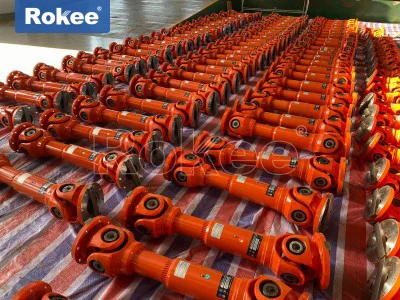
Systematic universal shaft supply service includes regular spot inventory distribution and non-standard customized development two major business modules, adapting to diversified purchasing habits of downstream equipment manufacturers, after-sales maintenance merchants and industrial project contractors across global market segments. Spot stocked products focus on commonly used cross-axis standard universal shafts with mature dimensional parameters, covering mainstream specification sizes widely applied in general machinery, automotive auxiliary transmission and medium-load processing equipment; sufficient pre-stored inventory enables rapid order delivery within short lead time for clients facing urgent equipment breakdown maintenance or small-batch routine spare part replenishment demands, shortening equipment idle downtime caused by waiting for component supply. Customized development service targets special working condition scenarios where standard specifications cannot meet transmission requirements, such as ultra-large inclined angle installation layout, ultra-low temperature alpine engineering machinery, high-dust open-pit mining equipment and compact limited-space precision automation lines; technical teams collaborate closely with customer mechanical design departments to collect detailed operational parameters including rated working torque, continuous rotation speed, maximum allowable axis deflection angle and specific ambient environment index, then complete independent structural optimization design, raw material re-matching and targeted processing craft adjustment to produce exclusive non-standard universal shaft products matching unique equipment layout. Meanwhile, supply service extends auxiliary technical guidance before and after sales to improve overall matching success rate of delivered products; pre-sales technical consultation assists clients in completing preliminary specification selection calculation by combining equipment power parameter and transmission formula, avoiding improper model procurement leading to premature product overload damage; post-delivery installation guidance reminds purchasers of key assembly standards such as double joint intermediate fork coplanar placement and graded uniform bolt tightening sequence, eliminating early-stage failure induced by irregular field mounting.
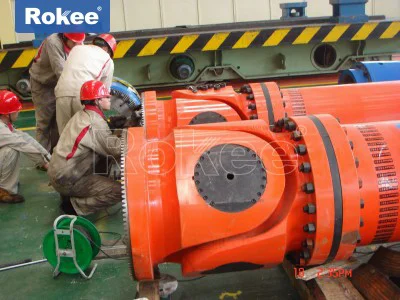
The application boundary of supplied universal shaft products keeps expanding with continuous upgrading of global industrial manufacturing technology, penetrating nearly all mainstream mechanical production and engineering construction fields relying on its unique angular compensation transmission advantage. Within metallurgical industry production lines, heavy-duty customized universal shafts connect rolling mill main drive motors and roller sets; frequent thermal expansion of roller components during high-temperature steel rolling generates continuous axis positional shift, and universal joints absorb such real-time position variation via inclined rotation while stably transmitting huge rolling torque to guarantee uninterrupted continuous steel forming production. Paper-making industrial high-speed press equipment adopts constant-speed ball-cage universal shaft products to link driving motor and press roller assemblies, low-vibration constant-speed transmission characteristic prevents paper web wrinkling or fracture caused by unstable instantaneous rotation speed, satisfying high-precision continuous papermaking technical standard. Agricultural machinery field equips tractors, harvesters and various matched farm implements with medium-load universal shafts; bumpy field operation makes relative axis displacement constantly occur between tractor power output end and working attachment drive part, and flexible universal joint structure adapts irregular terrain-induced position deviation to keep farm implement power input stable during field work. Construction engineering machinery including loaders, excavators and road rollers installs tailored universal shafts inside chassis transmission systems; complex uneven construction ground creates frequent dynamic axis deflection between engine and walking drive assembly, and universal shaft’s angular compensation capacity becomes the core guarantee for normal walking and working of whole engineering vehicle. Renewable energy industry gradually increases universal shaft matching dosage in small and medium-sized wind turbine auxiliary transmission parts, resolving installation alignment deviation between rotor auxiliary transmission end and generator input terminal brought by tower frame fabrication tolerance and natural wind-induced slight structural deformation. Precision automated production lines used in electronic component manufacturing adopt miniaturized sealed universal shafts with fine machining tolerance inside internal transmission mechanisms, compact structural design fits narrow installation space of modular automation equipment while sealed bearing configuration isolates fine production dust to reduce internal friction component abrasion frequency.
Reasonable model selection and standardized daily maintenance directly determine practical service cycle of universal shafts after end-user procurement from supply channels, and scientific application management effectively reduces unnecessary spare part repurchasing frequency and equipment maintenance cost for downstream clients. During preliminary selection phase, four core dimension indicators must be comprehensively verified: actual maximum working torque containing instantaneous startup impact load, long-term continuous operation rated rotating speed, maximum runtime axis inclined angle and specific service environment condition including temperature, dust concentration and corrosive medium existence; calculated torque value adds appropriate safety coefficient according to load fluctuation frequency, avoiding long-term overloaded operation exceeding product designed bearing limit which easily triggers cross shaft fracture or bearing burnout failure. Even though universal shafts possess inherent axis deviation compensation capability, excessive installation inclined angle far exceeding product design allowable range will sharply raise internal component friction resistance, lower overall transmission efficiency and accelerate premature wear of needle roller bearings and cross shaft surfaces, so field installation tries to control actual working deflection angle within middle section of designed permissible range to balance transmission flexibility and component durability. Regular periodic lubrication stands as the most critical daily maintenance item for all types of supplied universal shafts; bearing and cross shaft friction positions rely on injected lubricating grease to isolate metal direct contact and lower abrasion loss, lubrication filling interval shortens appropriately for high-temperature, heavy-dust or continuous 24-hour nonstop operation environments to compensate grease premature deterioration caused by harsh ambient factors. Daily routine equipment inspection focuses on abnormal vibration, irregular running noise and flange connection bolt looseness of installed universal shafts; emerging abnormal operation signs indicate possible internal bearing damage or spline excessive wear, requiring timely shutdown disassembly inspection to prevent fault expansion causing complete shaft fracture and secondary damage of matched driving equipment. For universal shafts deployed in severe corrosion or ultra-high temperature working surroundings, periodic external anti-rust coating repair and sealing ring replacement are arranged to block corrosive medium invading internal precision moving parts and extend overall component service lifespan.
Ongoing technological evolution of mechanical manufacturing industry pushes continuous iterative upgrade of universal shaft supply system, with product optimization focusing on higher transmission efficiency, stronger environmental adaptability and lower later maintenance cost three core directions in recent industrial development progress. New-type sealing structural improvement gradually popularizes inside conventional cross-axis universal joint products, integrated multi-lip composite sealing rings replace single-layer rubber seals of early designs, effectively blocking fine dust, cooling liquid and corrosive vapor entering bearing internal cavity from outside working environment, reducing frequent lubricant leakage and foreign matter induced bearing blocking failure to cut regular maintenance workload of end users. Advanced numerical control compound machining technology optimizes dimensional consistency of bulk supplied universal shaft parts, refined processing tolerance shrinks assembly matching clearance of moving components, further lowering idle friction loss during transmission and improving overall mechanical energy conversion efficiency of complete transmission system. Modularized universal shaft design concept gains wider promotion in supply side production planning, standardized independent universal joint unit, intermediate shaft tube and connecting flange realize interchangeable matching among same series different specification products; when partial component damages happen during end-user equipment operation, damaged single part can be replaced separately instead of purchasing entire finished universal shaft, helping clients save spare part procurement expenditure and shorten equipment maintenance waiting period via flexible split component supply service. Meanwhile, customized lightweight high-performance universal shaft supply proportion keeps rising in emerging industrial tracks, optimized hollow tubular shaft tube structure replaces solid bar design under premise of guaranteeing required torsional rigidity, reducing finished product dead weight to lessen extra dynamic load on matched driving equipment and improve whole machine energy-saving performance. As global industrial equipment develops toward high automation, high load density and diversified environmental adaptability, universal shaft supply chains will continue combining new material research results and intelligent processing technology to enrich product specification categories and upgrade supporting technical service capability, consolidating the indispensable core status of universal shafts in global mechanical transmission component market for long-term industrial development.