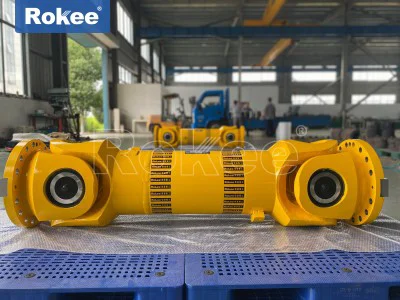
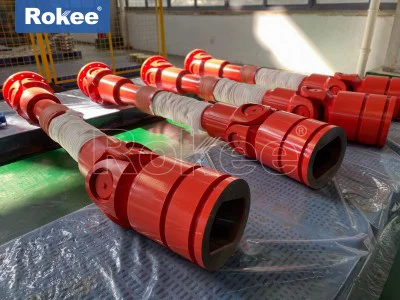
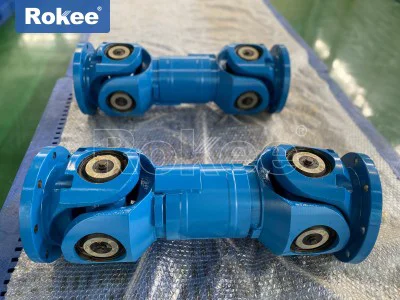
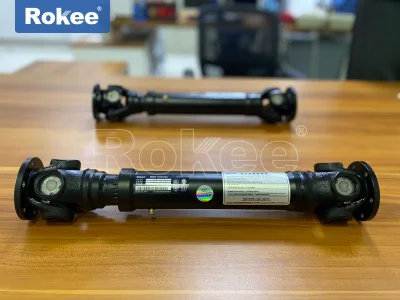
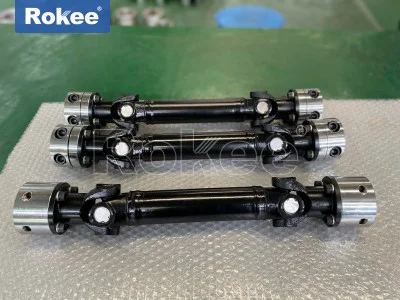
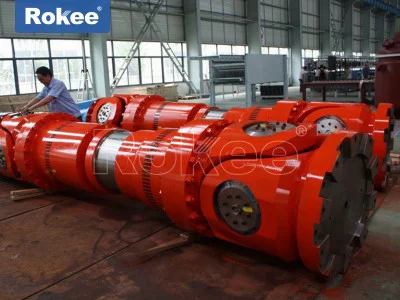
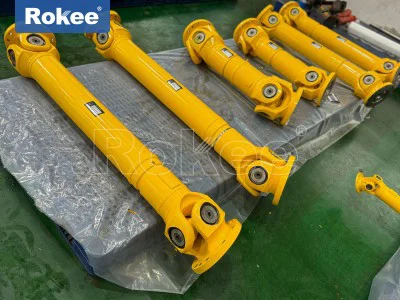
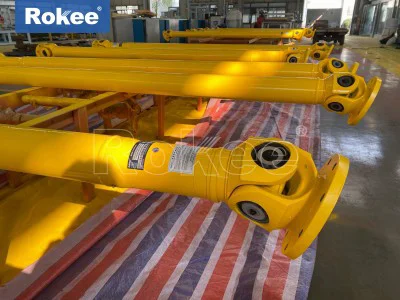
Cardan Shaft Production
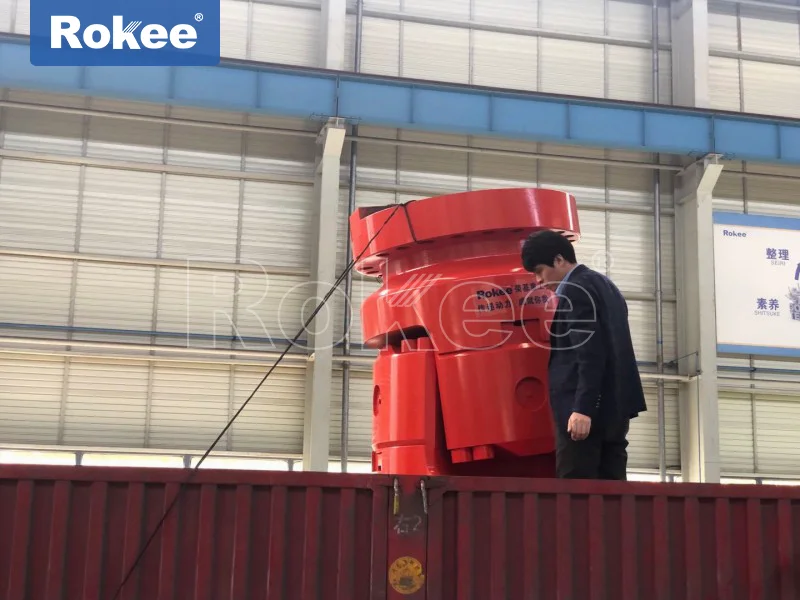
Cardan shafts stand as indispensable mechanical transmission components widely applied in mechanical transmission systems, serving core functions of transmitting rotational torque and power between non-coaxial or dynamically offset mechanical parts. Their operational stability, structural durability and transmission accuracy directly determine the overall working efficiency and service reliability of complete mechanical equipment, making the standardization, refinement and precision of production processes the core foundation of product performance. The entire production of cardan shafts covers systematic procedures from raw material selection and pretreatment to component forming, precision processing, thermal treatment, surface optimization, assembly debugging and finished product inspection, with every manufacturing link requiring strict process control and standardized operation to adapt to complex and variable working conditions in industrial transmission scenarios.
Raw material selection is the primary premise to guarantee the basic mechanical properties of cardan shafts. The core working parts of cardan shafts need to bear alternating torque, impact load and continuous friction during operation, so the selected metal materials must possess excellent comprehensive properties including high strength, good toughness, fatigue resistance and wear resistance. In conventional production practices, high-quality alloy structural steel is the mainstream material choice for shaft tubes, universal joint forks and cross shaft components. Such materials feature uniform internal grain structure, stable chemical composition and outstanding mechanical adaptability, which can effectively avoid structural deformation, fracture and premature wear in long-term high-load operation. Before formal production, all raw materials will go through strict manual and instrumental inspection to verify material uniformity and internal compactness, eliminating raw materials with fine cracks, impurity inclusions and uneven texture that may affect product quality. After passing inspection, raw materials are cut and blanked according to process specifications, with reserved processing margins for subsequent forging and machining procedures, laying a solid foundation for follow-up precision manufacturing.
Forging forming is a key procedure to optimize the internal structure and enhance the load-bearing capacity of cardan shaft components. Different from direct cutting and forming, forging can reshape the internal grain distribution of metal materials, make the grain structure more dense and continuous, and significantly improve the mechanical strength, impact resistance and fatigue resistance of components, which is particularly critical for core stressed parts such as universal joint forks and cross shafts. In the production process, pre-treated material blanks are heated to the optimal forging temperature through uniform heating equipment to ensure the metal has good plasticity and fluidity. The heated blanks are then processed by precision forging equipment to complete integral forming of forks, shaft heads and cross shaft structures. During forging, technicians strictly control forging pressure, forming speed and die closing accuracy to avoid structural defects such as insufficient filling, folding and deformation of components. After forging, the components are placed in a constant-temperature environment for slow cooling to eliminate internal forging stress, prevent residual stress from causing structural deformation or micro-cracks in subsequent processing and use, and further stabilize the mechanical properties of forged parts.
Precision machining is the core link to realize the dimensional accuracy and structural matching of cardan shafts. After forging and stress relief treatment, components have basically completed structural forming, but their surface flatness, dimensional tolerance and assembly matching degree still cannot meet the actual working requirements, so fine machining processes such as turning, milling, drilling and grinding are required. Modern cardan shaft production relies on high-precision numerical control processing equipment to complete automated and standardized machining. The shaft tube part undergoes rough turning first to remove redundant forging margins, then finish turning to optimize the outer circle flatness and dimensional consistency, ensuring the straightness of the overall shaft body. For universal joint forks and cross shafts, milling equipment is used to process assembly grooves and matching surfaces, ensuring the geometric accuracy of key matching parts. Drilling and tapping processes are carried out for connection installation positions to guarantee the standardization of subsequent assembly and fixation. After preliminary machining, all components will undergo fine grinding treatment, which can remove tiny tool marks and surface burrs generated in the machining process, reduce surface roughness, and improve the wear resistance and matching accuracy of component surfaces. Every machining procedure is implemented in strict accordance with process dimensions, with real-time detection of dimensional errors during processing to ensure all parts meet the design tolerance range.
Thermal treatment is an essential process to further optimize the mechanical properties of cardan shaft products and is a key step to determine the service life of components. Although forging has optimized the material structure, the hardness, toughness and fatigue resistance of components still need to be adjusted and enhanced through professional thermal treatment processes. Conventional thermal treatment processes for cardan shafts include overall quenching and tempering as well as local induction hardening. The overall quenching and tempering treatment acts on the entire shaft body and core components, which can effectively adjust the internal hardness and toughness of materials, achieve a balanced state of high strength and high toughness, avoid brittle fracture of components under impact load, and improve the overall structural stability of the cardan shaft. For key friction and matching parts such as splines and cross shaft contact surfaces that bear long-term friction and extrusion, local high-frequency induction hardening is adopted. This process can form a high-hardness wear-resistant layer on the component surface while maintaining the high-toughness state of the core material, forming a gradient mechanical structure with hard surface and tough core. This structural feature greatly improves the wear resistance and contact fatigue resistance of key parts, effectively delaying surface wear and structural failure in long-term transmission operation. After thermal treatment, all components are subjected to stress relief tempering to eliminate thermal stress generated in the heating and cooling process, stabilize material properties and prevent subsequent deformation and failure.
Surface treatment focuses on improving the surface quality and environmental adaptability of cardan shafts, effectively solving the problems of surface oxidation, corrosion and abrasion attenuation in the service process. After thermal treatment and fine grinding, the surface of components still has tiny oxidized layers and residual processing impurities, which need to be removed through professional surface pretreatment including polishing and derusting. Polishing treatment further optimizes the surface finish of components, eliminates microscopic uneven structures, and reduces friction resistance during mechanical operation. Derusting and degreasing processes completely remove surface oxide scale, oil stains and impurities to create a clean surface foundation for subsequent protective treatment. On this basis, uniform surface protective treatment is carried out to form a dense and stable protective film on the component surface. This protective layer can effectively isolate air, moisture and corrosive substances in the working environment, prevent metal oxidation and electrochemical corrosion, and greatly improve the environmental adaptability and service durability of cardan shafts in humid, dusty and complex industrial working conditions. Meanwhile, the smooth surface after treatment can reduce friction loss during transmission operation, lower mechanical wear and energy consumption, and improve the overall transmission efficiency of the equipment.
Assembly and dynamic balance debugging are key links to ensure the stable operation of finished cardan shafts. Cardan shafts are assembled from multiple precision components including shaft tubes, universal joint forks, cross shafts, bearing parts and connecting accessories. Before formal assembly, all components are comprehensively inspected again to confirm no dimensional deviation, surface defects and performance abnormalities, and cleaned thoroughly to avoid impurity residues affecting assembly accuracy and operation stability. The assembly process follows standardized process sequences, with technicians completing positioning, matching and fastening of all parts step by step. In the assembly process, the matching clearance between moving parts is strictly controlled to ensure flexible rotation of the universal joint structure without jamming or excessive looseness, and guarantee accurate torque transmission and angle adaptation functions. After the completion of static assembly, all finished cardan shafts must undergo professional dynamic balance debugging. In the high-speed rotating working state, tiny unbalanced errors of the shaft body will cause vibration, noise and additional load, which will accelerate component wear and affect transmission stability. The dynamic balance equipment detects the unbalanced amount of the rotating shaft body in all directions, and performs precision correction by removing tiny materials or adding balancing structures to ensure the overall dynamic balance of the cardan shaft. The debugged finished product can effectively avoid vibration and resonance problems in high-speed operation, reduce mechanical loss, and ensure long-term stable and quiet operation of the transmission system.
Finished product inspection is the final barrier to control the overall quality of cardan shaft products, running through the final stage of production and processing. The inspection work covers dimensional accuracy detection, surface quality inspection, mechanical performance verification and assembly performance testing. Professional precision detection tools are used to recheck the key dimensions, straightness, flatness and matching tolerance of finished products to ensure all parameters meet design and use standards. The surface inspection focuses on checking whether there are surface cracks, scratches, peeling and corrosion defects to ensure the integrity of the surface protective layer and the smoothness of the working surface. Mechanical performance sampling inspection is carried out on batch products to verify the strength, toughness and fatigue resistance of the products, ensuring that the overall performance meets the load-bearing and transmission requirements of industrial working conditions. At the same time, the flexible rotation performance, torque transmission stability and angle adaptation performance of the assembled cardan shaft are tested to confirm that the product can adapt to multi-angle power transmission and stable operation under variable load conditions. All products that pass the comprehensive inspection are sorted and stored, while unqualified products are returned to the corresponding processing links for rectification and reprocessing, strictly controlling the qualified rate of finished products.
The whole production process of cardan shafts is a systematic and refined manufacturing system, which integrates material science, precision machining, thermal treatment technology and mechanical balance technology. Every production link is interrelated and mutually restrictive, and the quality of each process directly affects the final performance and service life of the product. With the continuous upgrading of industrial mechanical equipment, the working conditions of cardan shafts are becoming more complex, and the requirements for product precision, durability and transmission stability are constantly improving. This also promotes the continuous optimization and innovation of cardan shaft production processes. In modern production, standardized process management, automated processing equipment and refined quality control methods have become the core support for improving product quality and production efficiency. By strictly controlling every detail from raw material selection to finished product delivery, the manufactured cardan shafts can maintain stable and efficient power transmission performance in various complex mechanical scenarios, provide reliable structural support for the normal operation of industrial equipment, and reflect the rigorous and standardized characteristics of modern mechanical component manufacturing technology.