Industrial Cardan Shaft Helps PU Sandwich Panel Line Achieve Continuity And Automation

The modern manufacturing industry of polyurethane (PU) sandwich panels is evolving rapidly toward full-process continuity and intelligent automation, aiming to eliminate intermittent production links, reduce manual intervention, and achieve stable, high-efficiency, and standardized batch production. PU sandwich panels are widely applied in construction insulation, industrial plant enclosure, cold chain logistics facilities, and clean room engineering due to their excellent thermal insulation, sound insulation, structural stability, and lightweight characteristics. As market demand continues to expand and product quality standards become more stringent, the traditional semi-automatic and discontinuous production modes can no longer meet the requirements of large-scale, high-precision, and low-consumption manufacturing. The core bottleneck restricting the upgrading of PU sandwich panel production lines mainly lies in the unstable power transmission of key equipment, asynchronous operation of multi-station mechanisms, and frequent production pauses caused by mechanical displacement and vibration. As a core universal transmission component, the industrial cardan shaft has become a key supporting factor for the continuous and automated operation of PU sandwich panel production lines by virtue of its unique angular compensation performance, stable torque transmission capability, and strong adaptability to complex working conditions, effectively solving multiple pain points in traditional production processes and promoting the overall optimization of production line operation efficiency and product quality consistency.
The production process of PU sandwich panels involves multiple interconnected and collaborative working procedures, including metal sheet unwinding, leveling, rolling forming, PU material high-pressure foaming and pouring, composite pressing, continuous curing, fixed-length cutting, and finished product conveying. Each procedure is completed by independent mechanical equipment, and the entire production system requires highly synchronous operation of all links to avoid production interruption and product quality defects. In the actual production environment, affected by equipment installation errors, long-term operational mechanical deformation, thermal expansion and contraction caused by production temperature changes, and structural vibration during high-speed operation, the driving shaft and driven shaft of various transmission equipment in the production line often produce angular deviation, radial displacement, and axial offset. Traditional rigid transmission structures are unable to adapt to such multi-dimensional shaft position changes, which easily leads to uneven power transmission, fluctuating operating speed of forming rollers and pressing equipment, and asynchronous coordination between foaming systems and conveying mechanisms. These problems will directly cause uneven foaming density of PU materials, inconsistent bonding strength between metal sheets and core materials, panel surface flatness defects, and even delamination and cracking of finished products. More importantly, unstable transmission conditions will force frequent equipment shutdowns for debugging and maintenance, completely breaking the continuous production rhythm and seriously restricting the realization of automated batch production.
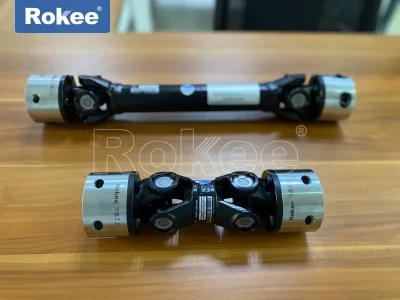
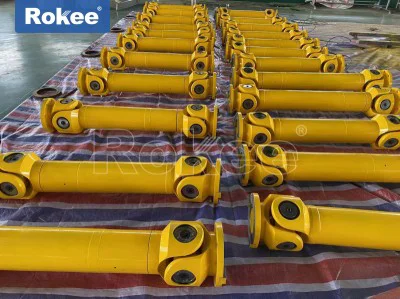
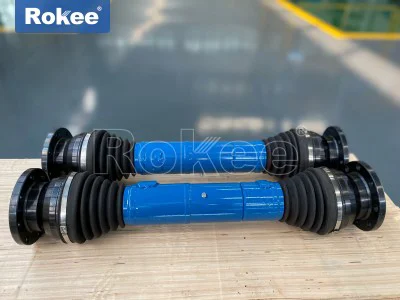
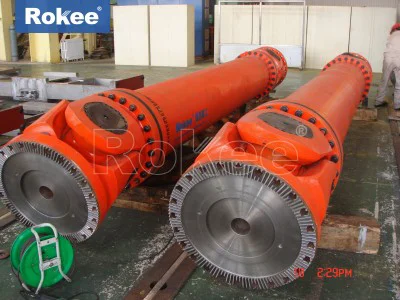
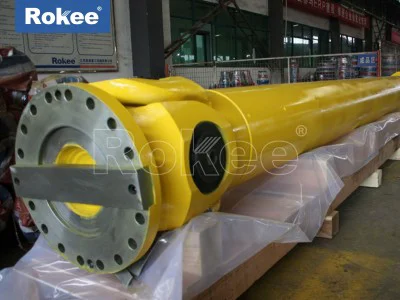
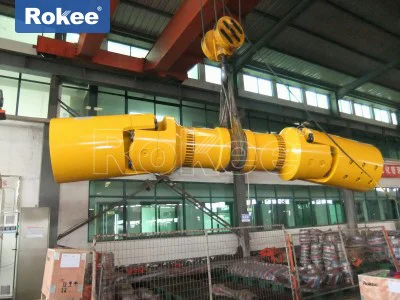
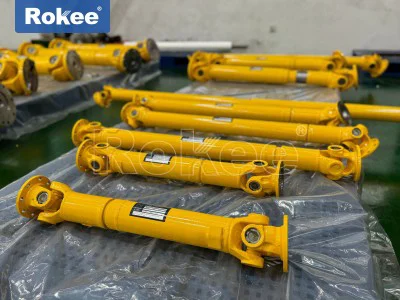
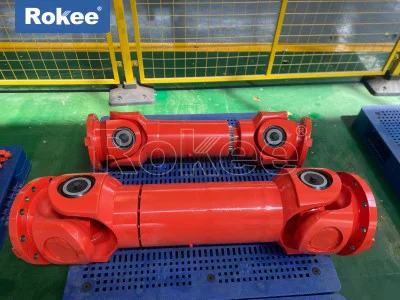
Industrial cardan shafts are designed with a scientific universal joint structure composed of cross shafts, joint forks, and precision bearing components, which fundamentally makes up for the defects of rigid transmission parts in adapting to shaft position deviation. Different from common fixed couplings, the cardan shaft can realize flexible power transmission under the condition of non-collinear installation and dynamic offset of the driving and driven shafts. Its core working advantage lies in the real-time compensation of angular and radial displacements generated during equipment operation. When the production line is running at high speed, even if the transmission shafts of rolling forming equipment, pressing machines, and conveying devices produce continuous tiny offset changes due to mechanical vibration and thermal deformation, the universal joint structure of the cardan shaft can flexibly adjust the transmission angle to ensure that the torque and power output by the driving motor are stably and synchronously transmitted to each driven mechanism without power loss or speed jitter. This stable transmission state ensures that the operating rhythm of each station in the PU sandwich panel production line remains highly unified, eliminating the quality fluctuations and production interruptions caused by asynchronous equipment operation.
The continuity of PU sandwich panel production is highly dependent on the uninterrupted and coordinated operation of the entire equipment system, and the cardan shaft plays an irreplaceable basic role in maintaining the long-term stable operation of the production line. In the rolling forming stage of metal sheets, multiple groups of forming rollers need to maintain consistent rotating speed and pressure to ensure the uniform forming of sheet profiles. Slight speed differences between adjacent rollers will lead to sheet stretching, wrinkling, or dimensional deviation, resulting in unqualified semi-finished products. The cardan shaft accurately transmits power to each group of forming rollers, realizes zero-difference synchronous operation of multi-group roller structures, and maintains the continuity of sheet forming processing. In the PU foaming and composite pressing stage, the stable operation of the mixing and pouring system and the pressing conveyor belt directly determines the foaming uniformity and composite bonding effect of the sandwich panel. The cardan shaft can resist the mechanical impact and vibration generated during high-pressure foaming and pressing, avoid instantaneous speed fluctuation of the equipment, ensure that the PU foaming material is evenly filled between the upper and lower metal sheets at a stable feeding speed, and form a dense and uniform core structure after curing. This stable and continuous processing environment completely avoids intermittent defects such as partial hollowing and uneven thickness of the core material caused by equipment pause and speed change.
Automation upgrading of PU sandwich panel line requires the equipment system to realize automatic docking, intelligent operation, and unmanned continuous production in the whole process, and the stable transmission performance of cardan shafts provides reliable mechanical support for the realization of automated control logic. Modern automated production lines rely on unified program control to coordinate the operation of unwinding, forming, foaming, pressing, cutting, and conveying equipment. The entire system has strict requirements on the real-time response and operation accuracy of each mechanical actuator. Traditional transmission components are prone to transmission lag and operation deviation after long-term operation, which will lead to the mismatch between the actual operating state of the equipment and the system control parameters, triggering automatic alarm and shutdown of the production line, and reducing the automation operation efficiency. The industrial cardan shaft features high transmission sensitivity and low mechanical resistance, which can ensure that the equipment responds quickly to control instructions and maintains high-precision synchronous operation for a long time. It effectively reduces the error rate of automated equipment operation, avoids frequent program correction and manual intervention, and enables the production line to realize long-term unattended continuous operation according to preset production parameters.
In addition to ensuring transmission stability and operation synchronization, industrial cardan shafts also optimize the overall operational economy and sustainability of automated PU sandwich panel production lines. The flexible transmission structure effectively buffers the mechanical vibration and impact generated during equipment start-up, operation, and load changes, reducing the wear and fatigue loss of key equipment parts such as motors, bearings, and roller shafts. Traditional rigid transmission is prone to rigid friction and impact wear under dynamic offset conditions, leading to frequent failure of transmission parts, short service life of equipment, and frequent shutdown maintenance. The cardan shaft converts rigid transmission into flexible adaptive transmission, greatly reducing the failure rate of the power transmission system, extending the service cycle of production equipment, and minimizing the downtime loss caused by equipment maintenance. For automated continuous production lines, reducing unplanned downtime is equivalent to directly improving effective production capacity, while the reduction of parts replacement and maintenance labor costs further optimizes the overall production cost structure.
Moreover, the efficient and stable transmission performance of cardan shafts helps reduce invalid energy consumption in the production process. In traditional transmission systems, shaft misalignment and unstable operation will cause a large amount of power loss in the form of mechanical friction and vibration heat, resulting in high energy consumption and low energy utilization efficiency of the production line. The cardan shaft realizes efficient power transmission through precise structural coordination and flexible angle compensation, minimizing power loss during transmission. Under the long-term continuous operation mode of automated production lines, this energy-saving advantage is continuously amplified, effectively reducing the comprehensive energy consumption per unit product of PU sandwich panels and realizing green and low-consumption production while ensuring high-efficiency continuous output. This performance optimization not only improves the economic benefits of production operations but also conforms to the development trend of energy-saving and emission reduction in the modern manufacturing industry.
The structural adaptability of industrial cardan shafts also creates favorable conditions for the modularization and integrated upgrading of PU sandwich panel production lines. With the continuous innovation of PU sandwich panel production technology, production lines are gradually developing toward modular combination and multi-functional integration, with more compact equipment layout and more complex mechanical coordination relations. The cardan shaft has the characteristics of compact structure, flexible installation, and strong adaptability to space layout, which can adapt to various complex installation space constraints of integrated production lines. It can realize stable power transmission between equipment with different installation heights and spatial positions, breaking the layout limitation of traditional transmission structures on production line equipment. This flexible adaptability enables the production line to complete functional expansion and structural optimization on the premise of maintaining continuous and automated operation, facilitating enterprises to upgrade production processes and expand product specifications according to market changes, and improving the flexibility and scalability of automated production systems.
In the actual production and operation process, the application of industrial cardan shafts has completely changed the operation mode of traditional PU sandwich panel line, realizing the transformation from intermittent segmented production to full-process continuous automated production. In the traditional production mode, each processing link needs manual debugging and equipment calibration, and production pauses are required after each batch of production, with low production efficiency and unstable product quality. After adopting cardan shaft transmission, the entire production line realizes seamless docking of all processes from sheet feeding to finished product output. The equipment operates stably and synchronously for a long time, manual debugging and intervention links are greatly reduced, the production beat is continuous and stable, and the consistency of product size, density, bonding strength, and surface quality is significantly improved. The rejection rate caused by equipment transmission instability is effectively controlled, and the overall yield and production efficiency of the production line are significantly improved.
Looking at the overall development trend of the PU sandwich panel manufacturing industry, continuous and automated production has become the inevitable direction of industrial upgrading, and the performance of basic transmission components directly determines the upper limit of production line operation efficiency and product quality. As a key transmission component connecting various core equipment of the production line, the industrial cardan shaft solves the core mechanical problems restricting continuous automated production, including shaft misalignment transmission, operational vibration interference, asynchronous multi-station operation, and frequent equipment failure. It provides a solid mechanical foundation for the stable, efficient, and low-consumption operation of automated production lines. With the continuous progress of mechanical manufacturing technology, the structural precision and transmission performance of industrial cardan shafts are constantly optimized, which will further adapt to the high-speed, high-precision, and intelligent development needs of PU sandwich panel production lines, and continuously empower the industry to move toward higher-level continuous automated manufacturing.
In conclusion, the industrial cardan shaft is not only a basic power transmission component but also a key technical support for the iterative upgrading of PU sandwich panel production technology. Its unique angle compensation capability, stable synchronous transmission performance, excellent vibration resistance and wear resistance, and strong structural adaptability perfectly match the core requirements of continuous and automated production of PU sandwich panels. By optimizing the power transmission state of the production line, stabilizing the operation rhythm of each processing station, reducing equipment failure and downtime, and improving production efficiency and product consistency, it effectively promotes the transformation and upgrading of the PU sandwich panel manufacturing industry from traditional labor-intensive intermittent production to modern intelligent continuous automated production, creating long-term and stable value for industrial manufacturing optimization and efficiency improvement.