Cardan Shaft Torque Capacity
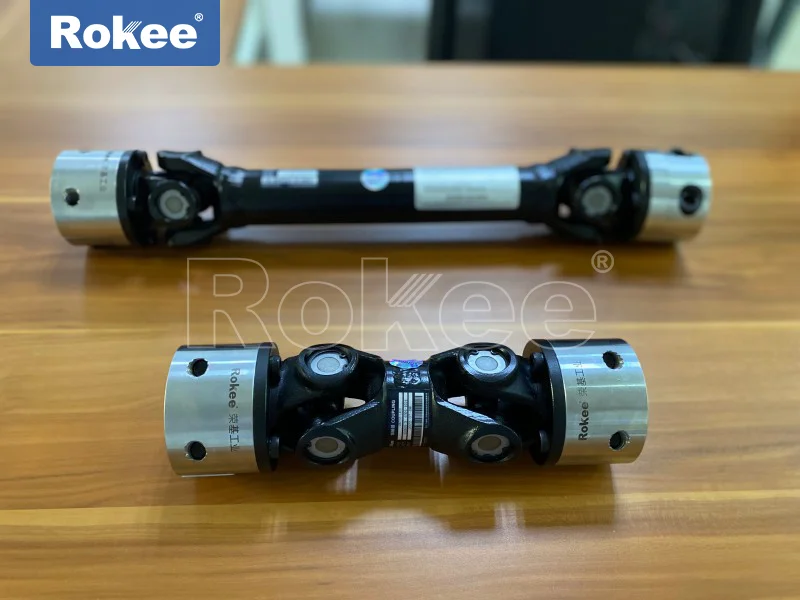
Cardan shafts serve as indispensable mechanical transmission components in a wide range of power transmission systems, responsible for transferring rotational force and torque between non-coaxial or dynamically offset mechanical parts. The torque capacity of a cardan shaft stands as the core performance indicator that determines its working reliability, service life, and operational stability under various mechanical load conditions. It refers to the maximum torque that the shaft structure can withstand continuously and instantaneously without generating plastic deformation, structural damage, or functional failure during power transmission. A comprehensive understanding of the inherent characteristics, influencing factors, and optimization logic of cardan shaft torque capacity is essential for rational mechanical system matching, stable equipment operation, and long-term structural maintenance across industrial, transportation, and engineering machinery fields.
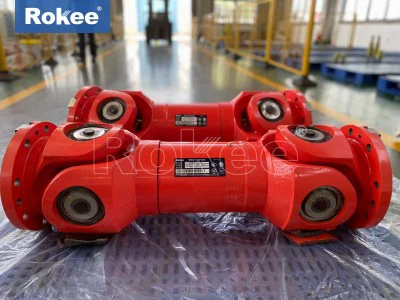
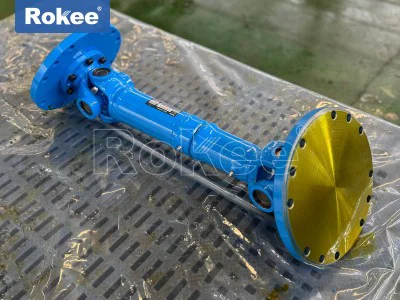
The fundamental torque bearing performance of a cardan shaft is rooted in its structural design and material mechanical properties. Unlike rigid transmission shafts, cardan shafts adopt a composite structure composed of universal joints, intermediate shaft tubes, and connecting yokes, which endows them with unique adaptive deflection capabilities while introducing distinct torque transmission characteristics. The basic torque bearing limit is first restricted by the mechanical strength of the core structural materials. High-quality structural steel and alloy materials commonly used for cardan shaft manufacturing possess specific yield strength, tensile strength, and shear strength, which define the threshold of elastic deformation and plastic deformation of the shaft under torsional load. When the applied torque is within the elastic bearing range of the material, the cardan shaft can recover its original structural state after load removal, maintaining stable transmission accuracy and structural integrity. Once the torque exceeds the material’s elastic limit, irreversible torsional deformation will occur, leading to increased transmission clearance, angular deviation during operation, and in severe cases, structural fracture of the shaft tube or joint failure.
Beyond material properties, the dimensional and structural parameters of the cardan shaft are critical determinants of its torque capacity. The wall thickness and outer diameter of the intermediate shaft tube directly affect the torsional rigidity and shear resistance of the overall structure. Shaft tubes with larger outer diameters and reasonable wall thickness distributions can disperse torsional shear stress more evenly during power transmission, reducing local stress concentration and thereby improving the overall torque bearing limit. In contrast, excessively thin shaft tube structures are prone to local warping and shear deformation under high torque loads, while unreasonable thickness matching will lead to unbalanced stress distribution and premature structural fatigue. Meanwhile, the structural size and geometric design of universal joint yokes and cross bearings also play a vital role in torque transmission. The transition fillet design of the yoke, the contact area of the cross shaft, and the matching clearance between moving parts all determine the local torque bearing capacity. Structural designs that avoid sharp corners and abrupt dimensional changes can effectively reduce stress concentration points, preventing local structural damage under high torque impact and ensuring the full play of the overall torque performance of the cardan shaft.
Operating working conditions bring dynamic changes to the actual torque capacity of cardan shafts, making the static theoretical bearing limit different from the actual working bearing capacity. Angular deflection is one of the most typical influencing factors. Cardan shafts often need to work with a certain installation angle and dynamic deflection angle to adapt to the relative displacement of connected equipment. As the operating deflection angle increases, the instantaneous torque transmission fluctuation of the cardan shaft becomes more obvious, and the alternating shear stress and bending stress borne by the structural parts increase synchronously. Under large-angle deflection conditions, the effective torque transmission efficiency decreases, and the actual sustainable safe torque value is significantly lower than the static rated torque capacity. Long-term operation under such offset conditions will accelerate material fatigue accumulation and reduce the effective service torque range of the shaft.
Rotational speed is another key dynamic factor affecting torque capacity. The interaction between high rotational speed and torque load will generate centrifugal force and dynamic vibration inside the cardan shaft structure. At high operating speeds, tiny structural clearances and microscopic material defects will be amplified, leading to periodic vibration and impact load during torque transmission. This dynamic superposition of loads makes the actual stress borne by the shaft far exceed the static torque stress, thus reducing the safe torque bearing threshold. In low-speed and high-torque working scenarios, the cardan shaft mainly bears static shear and torsional stress, and the structural failure risk mostly comes from static overload deformation; while in high-speed variable-torque working environments, fatigue failure caused by alternating dynamic loads becomes the main failure form, which puts forward higher requirements for the fatigue resistance and dynamic torque stability of the shaft structure.
Load characteristics also profoundly affect the effective torque capacity of cardan shafts. Continuous stable load, intermittent impact load, and variable alternating load bring completely different structural stress effects. Under steady and continuous torque load, the internal stress of the cardan shaft structure is stable, and the material maintains a uniform stress state, so the shaft can operate stably close to the theoretical torque limit for a long time. However, in mechanical systems with frequent start-stop, forward-reverse rotation switching, and sudden load changes, the cardan shaft will bear instantaneous impact torque far exceeding the rated working torque. Instantaneous impact load will produce instantaneous high stress in local structural parts, causing microscopic material damage. Repeated impact accumulation will form fatigue cracks, gradually expand structural damage, and finally lead to the decline of overall torque bearing capacity until functional failure. Therefore, the actual usable torque capacity of a cardan shaft in impact load working conditions needs to be reserved with a sufficient safety margin based on the static rated torque.
Structural assembly accuracy and matching state also determine the actual torque transmission performance and bearing limit of cardan shafts. The coaxiality of installation, the symmetry of joint assembly, and the tightness of connecting parts all affect the uniformity of torque transmission. Poor assembly accuracy will cause eccentric load and asymmetric stress distribution during shaft operation. Even under the standard rated torque, local parts will bear excessive concentrated stress, resulting in premature wear and deformation, which virtually reduces the overall effective torque capacity of the equipment. In addition, the running-in state of moving friction pairs inside the universal joint also plays a role in torque transmission. Insufficient running-in or abnormal friction resistance will cause torque transmission loss and local stress fluctuation, affecting the stability of torque bearing performance during long-term operation.
Environmental factors cannot be ignored in analyzing the torque capacity of cardan shafts either. Extreme temperature, humid environment, and dust corrosion will change the surface state and internal material properties of the shaft structure. Low-temperature environments will reduce the toughness of structural materials and increase the brittleness of the shaft, making the structure more sensitive to torque impact and prone to brittle fracture under medium and high torque loads. High-temperature environments will cause material thermal deformation and strength attenuation, reducing the elastic limit and torsional resistance of the structure. Humid and corrosive working environments will cause surface oxidation, rust, and local corrosion of the shaft tube and joint parts. Corroded structural parts will form local material thinning and defect areas, which become weak points for torque bearing, greatly reducing the overall structural torque limit and easily inducing local damage under conventional working torque.
The attenuation law of cardan shaft torque capacity in the full life cycle is a key content of practical application and maintenance. In the initial running-in stage of a new cardan shaft, the friction pairs of universal joints gradually adapt to each other, and the structural matching state tends to be stable. At this stage, the torque bearing performance is in a rising and stable state with high transmission efficiency and stable load capacity. In the long-term stable operation stage, the shaft maintains a fixed torque bearing range, which can meet the conventional power transmission needs of mechanical equipment. With the extension of service time, microscopic fatigue damage, surface wear, and structural aging gradually accumulate inside the material. The structural rigidity and shear resistance decrease slowly, and the effective torque capacity shows a slow attenuation trend. In the later stage of service life, the accelerated expansion of fatigue defects will lead to a sharp decline in torque bearing performance. At this time, the shaft is prone to overload failure even under normal working torque, which cannot meet the safe operation requirements of equipment.
Reasonable structural optimization and configuration matching can effectively improve the torque capacity and working stability of cardan shafts. In the design stage, optimizing the section structure of the shaft tube, adopting a uniform and symmetrical wall thickness design, and optimizing the transition structure of stress concentration parts can significantly improve the structural torsional resistance and stress dispersion ability, so as to increase the safe torque bearing range. Optimizing the internal structure of universal joints, increasing the effective contact area of force-bearing parts, and improving the matching precision of moving pairs can reduce local stress concentration and torque transmission loss, giving full play to the material’s mechanical performance limit. In the equipment matching stage, selecting cardan shafts with appropriate torque levels according to the actual working load, speed, and deflection angle of the mechanical system, and reserving a reasonable safety margin for impact load and variable load conditions, can avoid structural overload failure and ensure long-term stable torque transmission performance.
Scientific daily maintenance and operation management are crucial to maintaining the stable torque capacity of cardan shafts. Regular inspection of structural operation state, timely detection of abnormal vibration, noise and deflection deviation in the operation process, can avoid long-term operation of the shaft in abnormal stress state. Maintaining good lubrication of universal joint moving parts can reduce friction and wear, avoid local heating and material performance attenuation caused by poor lubrication, and keep the stability of torque transmission. Regular correction of installation coaxiality and fastening of connecting structures can eliminate eccentric load and loose impact load caused by assembly deviation, ensuring uniform stress of the shaft structure during torque transmission. For cardan shafts working in harsh environments, regular surface protection and corrosion removal can avoid structural strength attenuation caused by environmental corrosion, delaying the attenuation speed of torque capacity.
In practical industrial applications, the torque capacity of cardan shafts is closely related to the overall operating efficiency and safety of mechanical systems. In engineering machinery, agricultural equipment, transportation machinery and other fields, cardan shafts undertake the core task of power transmission between power sources and execution components. Stable torque bearing capacity ensures continuous and efficient power output of equipment, while insufficient or attenuated torque capacity will directly lead to power transmission failure, equipment shutdown, and even mechanical safety accidents. Therefore, in the whole process of equipment design, selection, operation and maintenance, taking the torque capacity of cardan shafts as a key performance index, combining structural characteristics and working condition parameters to carry out scientific matching and precise maintenance, is an important guarantee to improve the overall reliability and service life of mechanical equipment.
In summary, the torque capacity of cardan shafts is a comprehensive performance determined by material properties, structural design, working conditions, assembly accuracy and service state. It is not a fixed static value but a dynamic performance index that changes with working environment and service cycle. Mastering the influencing mechanism of various factors on torque capacity, optimizing structural design and equipment matching scheme, and implementing standardized operation and maintenance management, can maximize the torque bearing performance of cardan shafts, maintain the stability and efficiency of power transmission systems, and provide reliable basic support for the safe operation of various mechanical equipment. With the continuous development of mechanical manufacturing technology and structural optimization theory, the torque bearing efficiency and dynamic adaptability of cardan shafts will be further improved, adapting to more complex and high-load mechanical transmission working scenarios.