Case Analysis Of Integrated Application Of Cross Cardan Shaft And PU Sandwich Panel Line
In the field of modern industrial composite material manufacturing, the continuous production of polyurethane sandwich panels has become a mainstream technological form due to its advantages of high production efficiency, stable product structure and good material composite performance. The overall operational stability of the PU sandwich panel production line depends heavily on the coordination and transmission accuracy of each mechanical functional unit, and the performance of the power transmission system directly determines the forming quality and continuous operation capacity of the entire production line. As a core flexible transmission component, the cross cardan shaft has unique structural and functional advantages in solving the problems of angular deviation, spatial dislocation and dynamic vibration interference in the transmission process of automated production lines. The integrated application of cross cardan shafts in PU sandwich panel production lines effectively makes up for the functional defects of traditional rigid transmission structures, optimizes the synchronous operation effect of multi-unit equipment, and provides reliable mechanical guarantee for high-precision and high-efficiency continuous production of sandwich panels. Based on the actual production operation scenario, this paper analyzes the working mechanism of cross cardan shaft, the transmission demand characteristics of PU sandwich panel production line, the integrated application logic of the two, the practical application effects and existing optimization directions, so as to provide technical reference for the mechanical performance upgrading of composite panel production equipment.
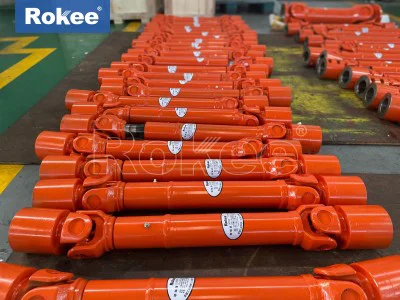
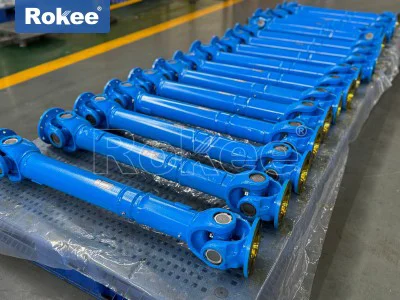
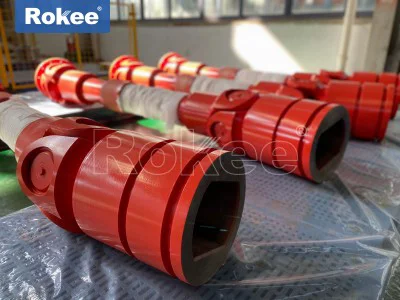
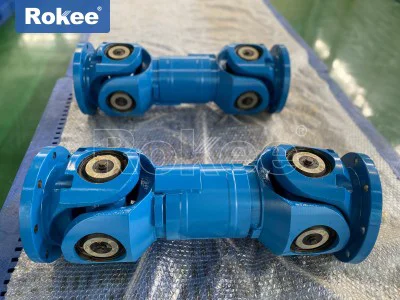
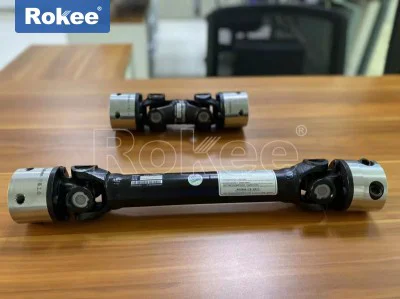
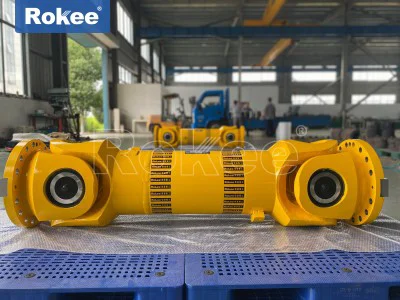
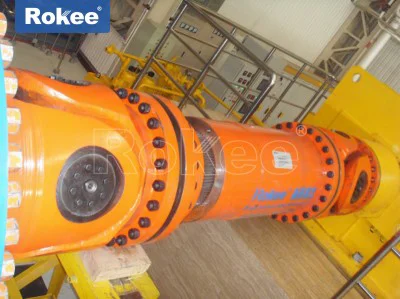
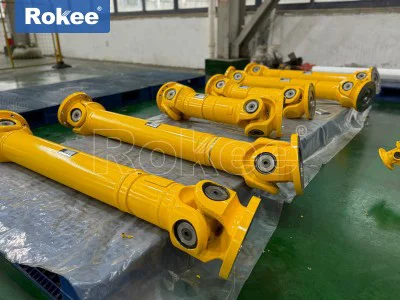
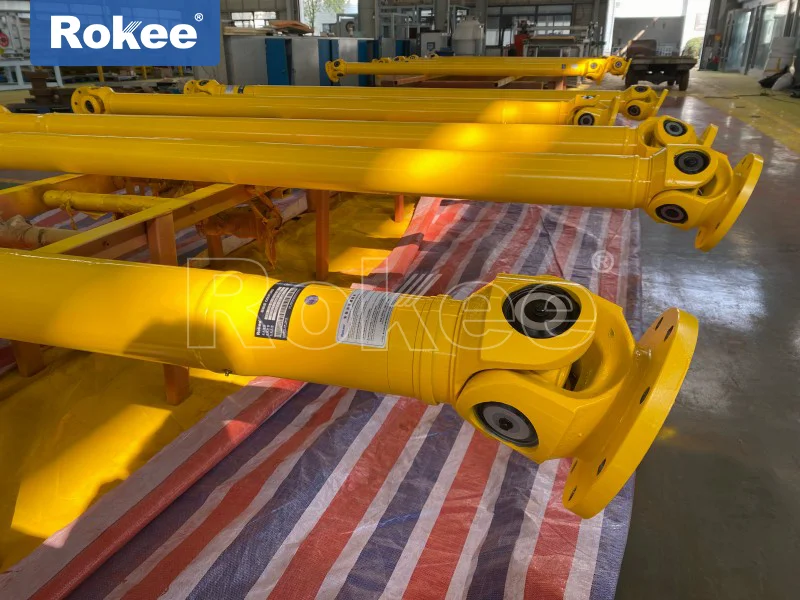
The cross cardan shaft is a universal transmission component designed based on Hooke’s joint principle, with a simple and robust core mechanical structure composed of cross shaft body, joint yokes and bearing assemblies. Different from rigid coupling structures that require strict coaxial alignment of transmission shafts, the cross cardan shaft relies on the mutually perpendicular hinge structure of four shaft necks of the cross spindle to realize stable transmission of rotational motion and torque between spatially offset and angularly deflected shafts. In the dynamic operation process, the cross shaft can flexibly adapt to the angular deviation and minor radial displacement between the driving shaft and the driven shaft, automatically compensate for the position changes caused by equipment operation vibration, thermal expansion and mechanical wear, and maintain continuous and uniform power output. This unique deviation compensation capability enables the cross cardan shaft to adapt to complex and variable industrial transmission environments, avoid transmission efficiency attenuation and mechanical stress concentration caused by shaft misalignment, and effectively reduce equipment operation failure rates. In addition, the structural design of the cross cardan shaft enables it to bear large torque load while maintaining flexible transmission, which meets the high-load and long-time continuous operation requirements of large-scale automated production lines, and has excellent mechanical stability and service durability in industrial working conditions.
The complete production process of PU sandwich panels involves multiple interconnected functional units, and the whole production flow includes raw material unwinding, surface layer pretreatment, roll forming, PU foam mixing and pouring, double-belt constant pressure lamination, constant temperature curing, fixed-length cutting and finished product conveying and stacking. Each production link is closely matched, and the synchronous operation of all equipment units is the core premise to ensure the uniformity of panel structure and the stability of product quality. In the actual production process, the equipment of each functional section has different operation vibration frequencies and dynamic displacement ranges due to the differences in structural forms and processing functions. The traditional rigid transmission connection is difficult to adapt to the minor spatial position changes of the transmission shaft caused by equipment vibration and thermal deformation during long-term operation, which is prone to problems such as transmission jitter, speed difference between front and rear equipment, uneven roller pressure, and ultimately leads to defective products such as inconsistent foam core thickness, incomplete bonding between surface layer and core material, and panel surface flatness deviation. Moreover, the rigid transmission structure will generate additional mechanical friction and stress loss under the condition of shaft misalignment, which not only reduces the overall transmission efficiency of the production line, but also accelerates the wear of transmission parts, increases the frequency of equipment maintenance and downtime, and restricts the continuous and efficient production of PU sandwich panels.
The integrated matching application of cross cardan shaft and PU sandwich panel line perfectly solves the pain points of traditional transmission systems in composite panel production. In the overall transmission layout of the production line, cross cardan shafts are mainly applied to the power connection parts between the main drive motor and the forming roller set, between the front and rear traction rollers of the double-belt lamination system, and between the transmission shafts of the linkage conveying equipment of each functional unit. In the roll forming stage of the panel surface layer, multiple groups of forming rollers need to maintain synchronous and constant-speed rotation to ensure the consistent forming precision of the metal surface layer. The cross cardan shaft can automatically compensate for the tiny angular deviation and axial displacement between the roller transmission shafts caused by long-term operation wear and equipment vibration, eliminate the speed fluctuation of a single roller, and ensure the overall synchronization of the forming roller group. This stable synchronous transmission effect avoids the problems of surface layer wrinkling, deformation and uneven stretching caused by inconsistent roller speed, and lays a foundation for the flatness and dimensional accuracy of the subsequent composite forming of sandwich panels.
In the core lamination and curing stage of PU sandwich panel production, the upper and lower double-belt pressing mechanisms need to maintain stable and parallel operation with constant pressure, which is the key to ensure the full foaming and uniform bonding of PU core materials. The power transmission system of the double-belt mechanism bears large cyclic load during continuous operation, and the transmission shaft is prone to minor position offset under the action of long-term pressure and operation vibration. The flexible transmission characteristic of the cross cardan shaft can effectively buffer the cyclic mechanical impact in the transmission process, adapt to the dynamic position change of the double-belt transmission shaft, maintain the consistent operation speed and pressure of the upper and lower belts, and avoid the relative sliding and speed difference between the belts. This optimized transmission state enables the PU foam material injected between the upper and lower surface layers to complete uniform expansion and polymerization reaction under stable constant pressure conditions, effectively preventing product defects such as local hollowing, uneven core density and insufficient bonding strength caused by unstable pressure and speed in the traditional production process.
In the subsequent traction conveying and fixed-length cutting links of the production line, the synchronous coordination of traction speed and cutting precision directly affects the dimensional consistency and yield of finished panels. The cross cardan shaft realizes seamless power transmission between the traction drive device and the conveying roller group, maintains the continuity and stability of the panel conveying speed, and avoids the conveying pause and jitter caused by transmission failure. Stable conveying speed ensures that the fixed-length cutting device can complete accurate positioning and cutting according to the set parameters, effectively reducing the dimensional error of finished panels and improving the overall qualification rate of products. At the same time, the excellent vibration damping and stress relief performance of the cross cardan shaft reduces the overall vibration amplitude of the production line during high-speed operation, optimizes the production operation environment, and further stabilizes the composite forming quality of PU sandwich panels.
From the perspective of comprehensive production benefit optimization, the integrated application of cross cardan shafts also significantly improves the operational economy and stability of the PU sandwich panel production line. The traditional rigid transmission structure is easy to produce severe mechanical wear and fatigue damage under long-term misalignment operation, requiring frequent replacement of transmission parts and regular calibration of equipment precision, which increases equipment maintenance costs and production downtime losses. After adopting cross cardan shaft for flexible transmission, the automatic deviation compensation function avoids abnormal mechanical stress and friction loss in the transmission process, greatly reduces the wear degree of transmission components, extends the service life of equipment transmission parts, and reduces the frequency of equipment shutdown maintenance. The stable and efficient transmission state ensures the long-term continuous and stable operation of the production line, improves the effective operation rate of the equipment, and significantly increases the continuous production capacity of PU sandwich panels. In addition, the improvement of transmission accuracy and operation stability effectively reduces the proportion of defective products caused by transmission system failures, improves the overall production yield, and creates good economic benefits for industrial production.
In the actual industrial application process, the matching effect of cross cardan shaft and PU sandwich panel line is affected by installation precision, model matching degree and daily maintenance management. In the equipment installation and commissioning stage, reasonable calibration of the initial installation angle and axial position of the cross cardan shaft can give full play to its maximum deviation compensation performance and avoid transmission efficiency loss caused by excessive initial offset. According to the different load demands of different functional sections of the production line, selecting cross cardan shafts with corresponding torque bearing capacity and structural specifications can avoid structural deformation and functional failure caused by overload operation. In daily production and maintenance, regular inspection of the lubrication state of the cardan shaft bearing components and the tightness of the connecting structure can effectively prevent mechanical failure caused by lubrication failure and structural loosening, and maintain the long-term stable operation performance of the transmission system.
With the continuous upgrading of composite material manufacturing technology, PU sandwich panel production lines are developing towards higher speed, higher precision and more intelligent automated production. The continuous optimization of the structural design of cross cardan shafts will further adapt to the high-load and high-frequency operation requirements of modern production lines. The integrated application of flexible transmission components represented by cross cardan shafts in composite material production equipment has broken through the technical bottlenecks of traditional mechanical transmission, realized the organic coordination of equipment operation stability and production precision, and provided strong technical support for the high-quality and high-efficiency production of PU sandwich panels. In the future, with the further integration of mechanical flexible transmission technology and automated production technology, the matching application effect between cross cardan shafts and composite panel production lines will be further improved, which will promote the overall upgrading of the production technology and equipment level of the sandwich panel manufacturing industry.