Efficient Universal Joint Coupling Promotes Energy Saving And Consumption Reduction Of PU Sandwich Panel Line
In the modern lightweight building material manufacturing industry, PU sandwich panel production lines operate as core continuous production equipment, undertaking the integrated processing procedures of raw material feeding, foaming compounding, roller forming, continuous curing and fixed-length cutting. Long-term uninterrupted high-load operation is a typical working state of such production lines, and the energy consumption level of the whole production process directly determines the production cost and green manufacturing level of building panel manufacturers. In the overall energy consumption structure of PU sandwich panel production lines, in addition to the fixed energy consumption of heating, foaming and power drive systems, the invalid energy loss generated in the mechanical power transmission link has always been a hidden factor restricting the optimization of production line energy efficiency. Most traditional transmission connecting parts have defects such as poor misalignment adaptability, large transmission resistance and easy vibration and wear during long-term operation, which will cause continuous energy dissipation, increase motor load, and even trigger unstable equipment operation, further aggravating energy waste and equipment loss. As a high-efficiency and adaptable transmission component, the universal joint coupling effectively solves the common transmission pain points of PU sandwich panel production lines through optimized mechanical structure and efficient power transmission performance, and becomes a key part to realize energy saving, consumption reduction and stable operation upgrading of continuous production lines.
The power transmission system is the core power guarantee for the synchronous operation of each functional unit of the PU sandwich panel line. The production line is composed of multiple sets of transmission shafts, forming rollers, metering pumps, traction devices and auxiliary operating components, and there are inevitable angular deviation, axial displacement and radial offset between the driving shaft and the driven shaft in the long-term operation process. This kind of shaft body misalignment is caused by equipment installation errors, mechanical thermal deformation after long-term operation, base settlement and continuous mechanical vibration, and it is difficult to completely eliminate through conventional debugging and maintenance. Traditional rigid connection structures lack flexible compensation capability, and when shaft body misalignment occurs, additional friction resistance and mechanical torsion will be generated in the power transmission process. A large amount of electric energy is converted into useless heat energy and vibration energy instead of being applied to effective production operations, resulting in low power utilization efficiency and continuous increase in equipment operating energy consumption. At the same time, the uncompensated misalignment force will cause uneven stress on transmission parts, accelerate the wear of bearings, shafts and connecting accessories, lead to frequent equipment minor faults, and indirectly cause energy waste caused by repeated start-up and debugging of the production line.
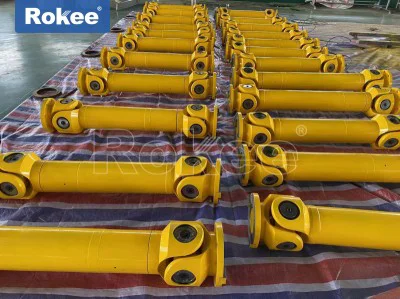
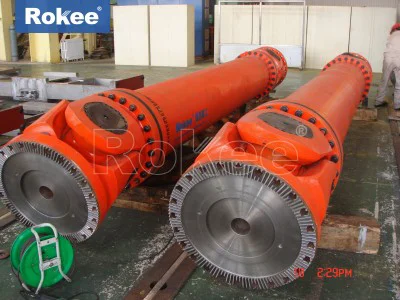
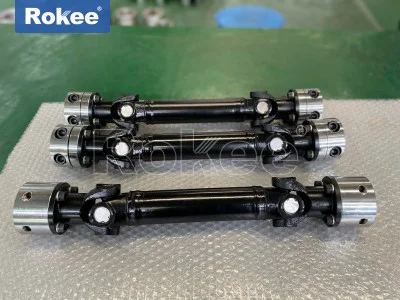
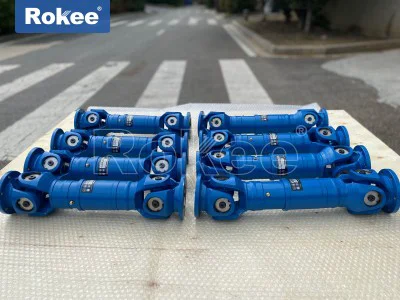
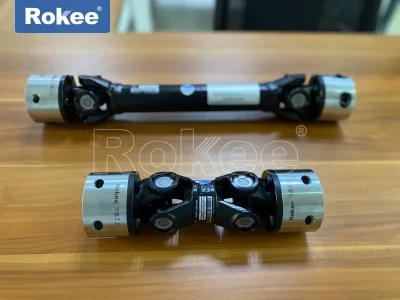
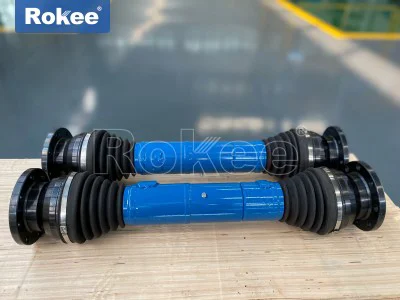
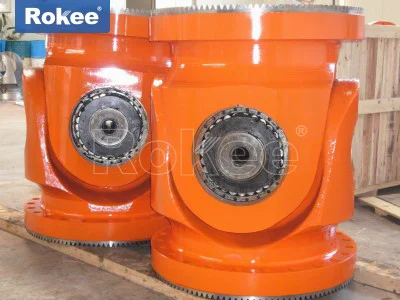
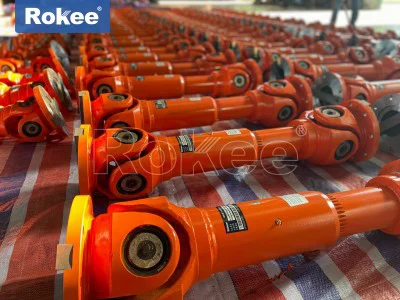
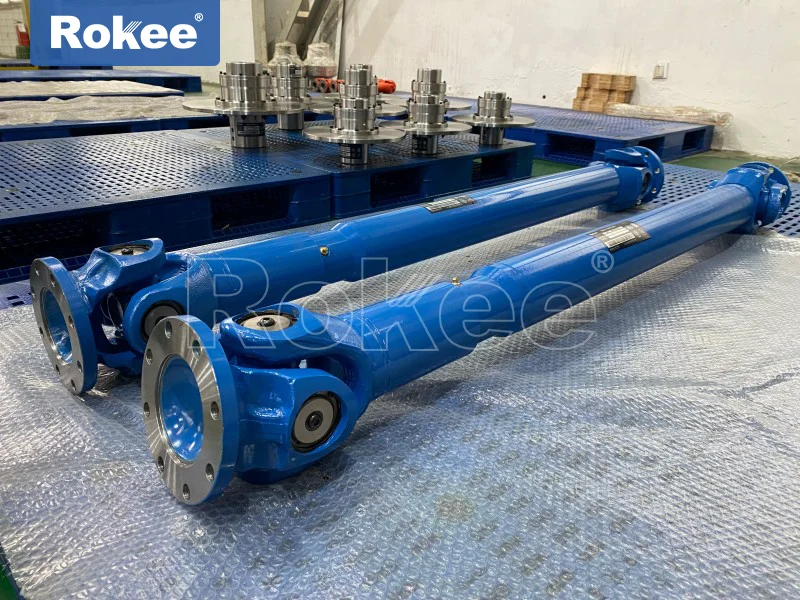
The efficient universal joint coupling is designed with a flexible compensation structure based on mechanical transmission principles, which fundamentally makes up for the functional defects of traditional transmission connectors in continuous production equipment. The unique cross shaft and universal fork structure enables the coupling to flexibly adapt to angular deviation, axial displacement and small-range radial displacement between the connected shafts in real time during the rotating power transmission process. This adaptive compensation function ensures that the power transmission path always maintains a smooth and uniform state, avoids additional friction and torsion resistance caused by shaft misalignment, and greatly reduces invalid energy loss in the transmission link. In the high-frequency and continuous operation scenario of PU sandwich panel production lines, this stable and low-loss transmission advantage can form cumulative energy-saving benefits. Different from rigid couplings that rely on high-precision shaft alignment to reduce loss and elastic couplings that are prone to deformation and fatigue loss, the universal joint coupling balances structural stability and flexible adaptability, maintains efficient power transmission state under long-term high-load operation, and avoids efficiency attenuation caused by component aging and deformation.
The high transmission efficiency of universal joint couplings is the core support for the energy-saving and consumption-reducing operation of PU sandwich panel production lines. In the full-load continuous production state of the panel line, the transmission efficiency of optimized universal joint couplings can remain at an ultra-high level throughout the operation cycle, realizing almost lossless transmission of motor power to various execution components of the production line. In the key production links of PU sandwich panels such as raw material metering, roller forming and continuous traction, stable and efficient power transmission is crucial to production energy consumption and product quality. In the PU raw material metering and mixing link, the precise and constant-speed operation of the metering pump depends on stable power input. The universal joint coupling eliminates transmission lag and power fluctuation caused by misalignment loss, ensures the consistent operating speed of the metering pump, makes the mixing ratio and foaming state of polyurethane raw materials more stable, avoids raw material waste and reprocessing energy consumption caused by uneven batching, and realizes indirect energy saving and consumption reduction in the raw material processing link.
In the roller forming and continuous traction link of sandwich panels, the universal joint coupling shows more prominent energy-saving advantages. The forming and traction unit needs to maintain continuous and uniform torque output to ensure the flatness and structural uniformity of the panel surface. Traditional transmission structures are prone to intermittent vibration and torque fluctuation due to poor misalignment compensation ability, resulting in unbalanced stress on the plate body, unstable forming size, and even defective products. The production line needs to consume extra power to adjust the operating state and make up for defective product losses. The universal joint coupling always maintains synchronous and stable rotation of the driving and driven shafts, ensures uniform torque transmission in the whole forming and traction process, reduces equipment vibration and running fluctuation, avoids repeated debugging and redundant power consumption caused by unstable operation, and effectively improves the effective utilization rate of electric energy. While reducing transmission energy loss, it optimizes the forming quality of PU sandwich panels, reduces the scrap rate in the production process, and realizes the dual improvement of production efficiency and energy utilization efficiency.
Long-term energy-saving operation benefits brought by universal joint couplings are also reflected in the reduction of equipment operation loss and maintenance energy consumption. The continuous vibration and eccentric friction caused by shaft misalignment are the main causes of rapid aging and damage of transmission components of PU sandwich panel line. Frequent component replacement and equipment shutdown maintenance will not only affect the continuous production efficiency, but also generate additional energy consumption for equipment restart, commissioning and maintenance operations. The flexible compensation performance of the universal joint coupling can effectively buffer the mechanical vibration and eccentric load generated during equipment operation, reduce the friction and wear of shafts, bearings and matching parts, and extend the service life of the whole transmission system. The stable operating state reduces the failure rate of the production line, avoids a large amount of invalid energy consumption caused by frequent start-stop and repeated debugging, and reduces the energy and time cost of equipment daily maintenance and overhaul. For industrial production lines that operate continuously throughout the year, this long-term stable low-loss operation mode can form considerable cumulative energy-saving effects, helping enterprises reduce comprehensive production energy consumption.
In addition to direct transmission energy saving and indirect maintenance energy consumption reduction, the application of efficient universal joint couplings also optimizes the overall operation matching state of PU sandwich panel production lines and releases greater energy-saving potential of the whole equipment. The traditional transmission system has low efficiency and poor stability, which makes it impossible for the production line to operate at the optimal rated operating state for a long time, and the motor often runs in a high-load and low-efficiency state. After adopting the high-efficiency universal joint coupling, the power transmission resistance of the whole line is reduced, the motor operating load is significantly reduced under the same production output, the motor runs in a high-efficiency power-saving interval for a long time, and the no-load and light-load invalid energy consumption of the equipment is effectively suppressed. At the same time, the synchronous operation accuracy of each functional unit of the production line is improved, the coordination between foaming speed, forming speed and traction speed is more precise, the overall operation efficiency of the production line is improved, and the unit product energy consumption is further reduced on the premise of ensuring product quality and output.
In the context of the global manufacturing industry's transformation to green and low-carbon development, the energy-saving optimization of building material production equipment has become an important part of industrial upgrading. As a typical high-continuity and high-energy-consumption production line, the PU sandwich panel production line has huge energy-saving space in mechanical transmission optimization. The efficient universal joint coupling, as a low-cost and high-benefit energy-saving transformation component, does not need to carry out large-scale transformation of the production line structure. It can realize significant energy-saving and consumption-reducing effects only by optimizing the transmission connection links. Its strong adaptability can meet the operation requirements of different specifications and models of continuous PU sandwich panel production lines, and can adapt to various complex working conditions such as long-term continuous operation, high-load torque transmission and slightly deformed equipment bases in industrial production.
The practical application effect of industrial production shows that the optimized universal joint coupling can effectively reduce the comprehensive energy consumption of PU sandwich panel production lines. By eliminating invalid transmission loss, reducing equipment vibration and wear, stabilizing production operation state and optimizing motor operation efficiency, it can effectively reduce the unit energy consumption of panel production. Compared with the traditional transmission connection mode, the transmission system equipped with high-efficiency universal joint couplings has lower heat generation during operation, which also reduces the energy consumption of auxiliary heat dissipation equipment of the production line, forming a linkage energy-saving effect of the whole equipment operation. In addition, the stable and efficient transmission state helps to improve the consistency of product processing quality, reduce the energy waste and raw material waste caused by defective products and rework, and further improve the green manufacturing level of PU sandwich panel production.
With the continuous improvement of industrial energy-saving and emission-reduction standards and the continuous escalation of market competition, refined energy-saving optimization of production equipment has become an inevitable choice for building material manufacturing enterprises to reduce costs and increase efficiency. The energy-saving advantage of efficient universal joint couplings in PU sandwich panel production lines lies in precise optimization of the core transmission link, realizing minimal energy loss and maximal power utilization. It not only solves the long-standing transmission pain points of continuous panel production lines, but also provides a reliable and economical technical path for the green upgrading of building material production equipment. In the future, with the continuous optimization and upgrading of mechanical structure and material technology of universal joint couplings, their energy-saving efficiency and operation stability in high-load continuous production scenarios will be further improved, which will bring more sustainable energy-saving and consumption-reducing benefits to the PU sandwich panel manufacturing industry and promote the high-quality and low-carbon development of the lightweight building material manufacturing industry.