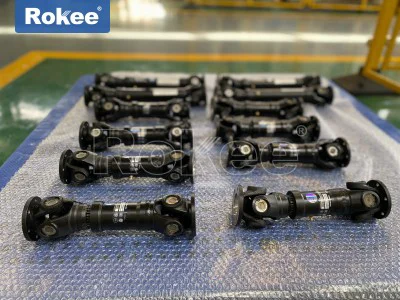
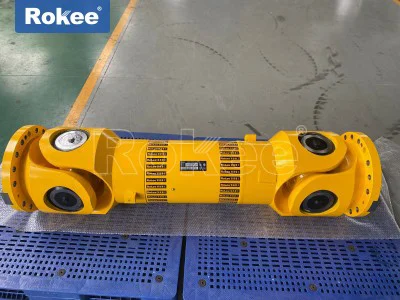
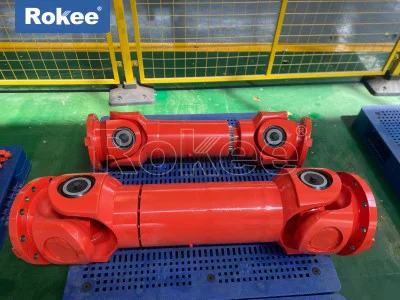
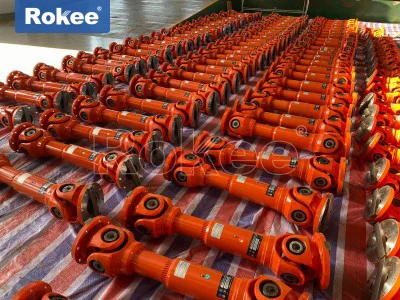
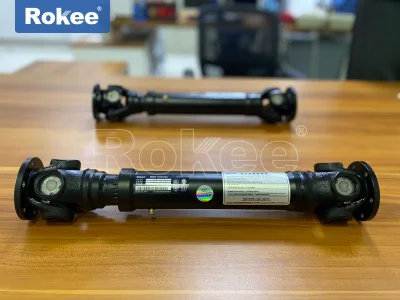
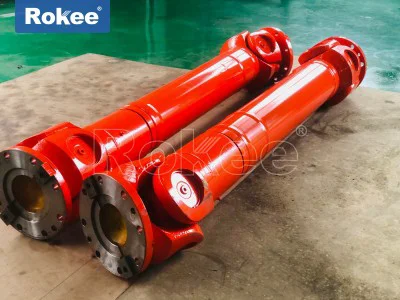
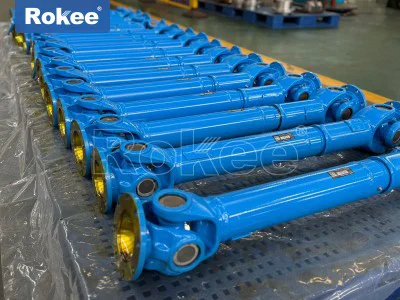
Universal Joint Coupling For Steel Plant
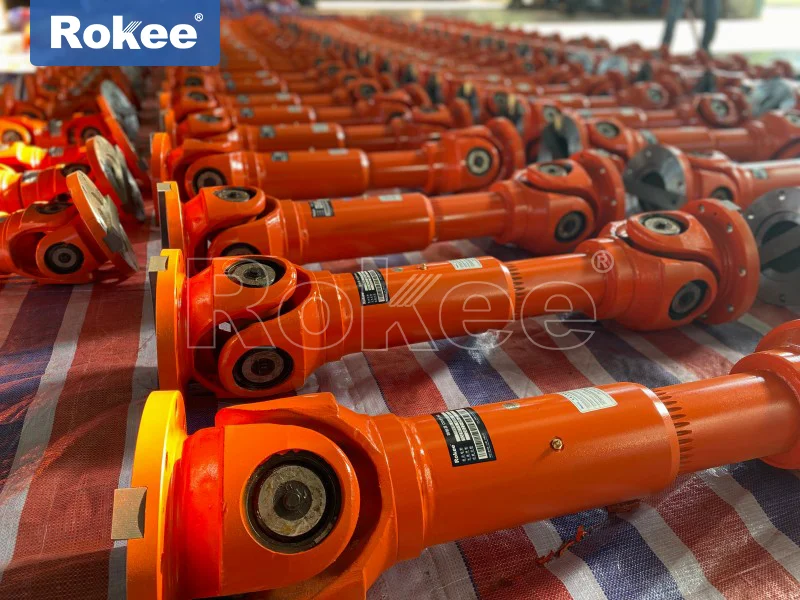
Universal joint couplings serve as indispensable core transmission components in the full-range production equipment of steel plants, specially engineered to adapt to the extremely harsh operating environments unique to the metallurgical industry. Unlike ordinary industrial couplings with limited environmental adaptability, these professional transmission parts are designed to tackle heavy load impact, continuous high-temperature radiation, severe mechanical vibration, and frequent shaft misalignment that prevail in steelmaking, rolling, and material handling processes. Their core function is to stably transmit rotational torque and mechanical motion between non-coaxial driving and driven shafts, effectively compensating for angular, axial, and radial displacement deviations generated during long-term equipment operation. By maintaining consistent power transmission efficiency under extreme working conditions, they avoid equipment jitter, power loss, and component damage caused by shaft alignment errors. As a key guarantee for the continuous and stable operation of steel production lines, these couplings directly influence production continuity, equipment operation stability, and overall operational efficiency of metallurgical systems.
The complex and rigorous working conditions of steel plants constitute the core basis for the specialized design of universal joint couplings for metallurgical scenarios. Steel production processes cover high-temperature smelting, hot rolling, cold rolling, and heavy-duty material transportation, all of which impose stringent requirements on mechanical transmission components. In hot rolling workshops, equipment operates in long-term high-temperature environments with persistent heat radiation, while frequent start-stop operations and rolling impacts generate alternating heavy loads on transmission shafts. Meanwhile, mechanical vibration caused by high-speed operation of rolling mills and the accumulation of oxide scale and dust in the workshop constantly interfere with the coaxial accuracy of equipment shafts, resulting in continuous dynamic displacement between connected shafts. Ordinary rigid couplings fail to adapt to such variable misalignment conditions and are prone to deformation, fracture, and transmission failure. Common flexible couplings also cannot withstand long-term heavy-load impact and high-temperature aging, leading to rapid performance attenuation and short service life. Universal joint couplings break through these limitations with their unique hinged structure, achieving flexible power transmission while bearing heavy loads, and perfectly matching the dynamic and harsh working characteristics of steel plant equipment.
The structural design of steel plant universal couplings is highly optimized for metallurgical heavy-duty working conditions, forming a robust and efficient transmission system with multiple core components cooperating closely. The overall structure mainly consists of double fork joints, a central cross shaft, and high-precision needle roller bearing assemblies, constituting a spatial hinge transmission mechanism with excellent displacement compensation capability. The cross shaft, as the core force-bearing component, adopts an integrated structural design to ensure overall rigidity, avoiding structural loosening and torque attenuation under long-term alternating loads. The fork joints on both sides are connected to the cross shaft through sealed needle roller bearings, which greatly reduce friction resistance during rotation and improve transmission flexibility. This structural design allows the coupling to adapt to a certain range of angular deflection between the driving and driven shafts, and can automatically compensate for tiny axial and radial displacements generated by equipment operation, thermal expansion, and mechanical wear. In addition, the whole structure is compact and sturdy, with strong impact resistance, and will not produce excessive vibration and noise even during high-load and high-frequency operation, effectively maintaining the stability of the entire transmission system of steel plant equipment.
Material selection is the key factor that endows universal joint couplings with excellent durability and environmental adaptability in steel plant scenarios, and all core components adopt high-performance materials tailored for extreme working conditions. The cross shaft and fork joints are forged from high-strength alloy materials with outstanding tensile strength, hardness, and fatigue resistance. After multiple precision heat treatment processes including quenching and tempering, the components obtain stable mechanical properties, effectively resisting deformation and fatigue damage caused by long-term heavy load, impact force, and high-temperature thermal stress. The needle roller bearings are made of wear-resistant alloy materials with low friction coefficient and high-temperature resistance, which can maintain stable lubrication and operation state in dusty and high-temperature environments, reducing component wear failure. Meanwhile, the external protective structure is equipped with high-temperature and aging-resistant sealing materials, which can effectively isolate internal components from external dust, oxide scale, and cooling water vapor in steel workshops. This scientific material matching enables the coupling to maintain stable transmission performance and long service life in harsh metallurgical environments, reducing frequent component replacement caused by material failure.
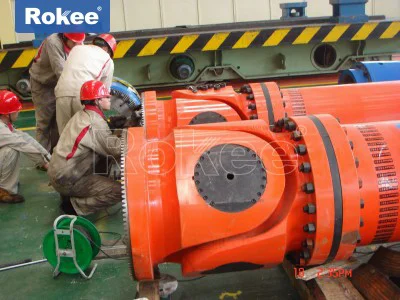
Universal joint couplings have extensive and key application scenarios in various core production links of steel plants, covering the whole process from raw material transportation to finished product rolling. In the rolling mill production line, they are widely installed in the transmission system of roughing mills, finishing mills, and leveling mills, undertaking the torque transmission task of roller operation. They adapt to the continuous vibration and dynamic shaft misalignment during rolling, ensuring uniform and stable rotation of rollers and improving the flatness and dimensional accuracy of steel products. In the steelmaking link, the couplings are applied to the transmission equipment of continuous casting machines, supporting the stable operation of casting roller sets and avoiding casting defects caused by unstable power transmission. In addition, they are also used in heavy-duty conveying equipment such as steel coil conveyors and lifting transmission devices, bearing the heavy-load power transmission demand of large-scale material handling. In all these scenarios, the coupling’s excellent misalignment compensation and heavy-load resistance effectively solve the common transmission problems of metallurgical equipment, providing solid support for high-efficiency and continuous production.
The outstanding performance advantages of universal joint couplings make them far more suitable for steel plant working conditions than other types of transmission couplings, bringing multiple practical values to metallurgical production. First of all, they have superior multi-directional displacement compensation capability, which can adapt to angular, axial and radial misalignment of shafts generated by equipment installation errors, thermal expansion, and operational wear, avoiding transmission jamming and torque loss caused by shaft deviation. Secondly, they feature ultra-high load-bearing capacity and impact resistance, which can withstand instantaneous heavy impact loads during steel rolling and equipment start-stop, ensuring continuous and stable power output. In addition, the optimized structural and sealing design gives the couplings excellent environmental adaptability, resisting high-temperature aging, dust abrasion and moisture erosion, and maintaining stable performance in harsh workshop environments. Compared with rigid couplings that are prone to fracture and ordinary flexible couplings that have poor load resistance, they greatly reduce equipment failure rates, lower production downtime losses, and improve the overall operational efficiency of steel production lines.
Scientific installation and daily maintenance are crucial to giving full play to the performance of universal joint couplings and extending their service life in steel plant applications. During installation, workers need to ensure reasonable coaxiality of the connected shafts within the adaptable range of the coupling, avoid excessive deflection angle that causes abnormal stress on components, and complete fastening installation of connecting parts to prevent loosening under long-term vibration. In daily production operation, regular inspection of the coupling’s operating state is required, focusing on checking for abnormal vibration, noise, and temperature rise during equipment operation, so as to timely discover potential faults such as bearing wear and component loosening. Regular lubrication maintenance should be carried out for internal bearing components, with professional high-temperature resistant lubricants selected to adapt to steel plant environments and ensure low-friction operation of moving parts. Meanwhile, the external sealing structure needs regular inspection and replacement to prevent dust and oxide scale from entering the interior and causing component wear. Standardized operation and maintenance can maximize the working performance of the coupling, reduce failure downtime, and create stable operating conditions for long-term and high-efficiency production of steel equipment.
With the continuous upgrading and intelligent development of steel production technology, the performance requirements for universal joint couplings in metallurgical scenarios are constantly improving, driving the continuous optimization and innovation of related product design. Modern steel production tends to high-speed, high-precision, and automated operation, which puts forward higher standards for the transmission stability, fatigue resistance, and service life of couplings. The iterative optimization of structural design further improves the displacement compensation accuracy and load-bearing efficiency of couplings, adapting to the high-precision transmission demand of new intelligent rolling equipment. The upgrading of material processing technology enhances the high-temperature resistance, wear resistance, and fatigue resistance of components, enabling couplings to adapt to more extreme intensive production conditions. In addition, the integrated and lightweight design of modern couplings simplifies installation and maintenance procedures, reduces manual operation costs, and improves equipment operation efficiency. As a key supporting component of steel production equipment, universal joint couplings will continue to iterate with the development of the metallurgical industry, providing more reliable and efficient transmission solutions for high-quality and high-efficiency steel production.