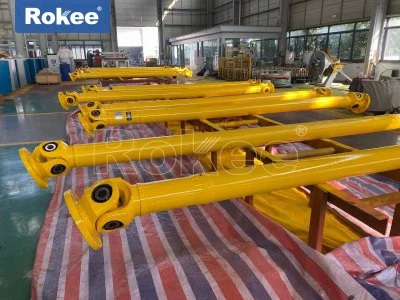
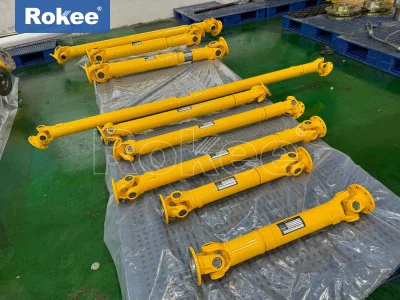
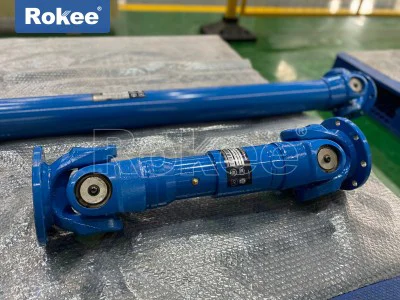
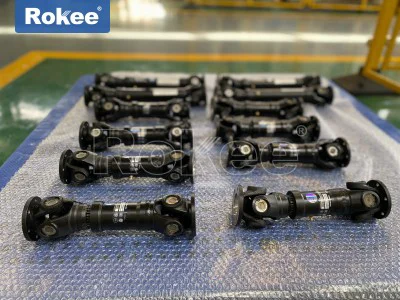
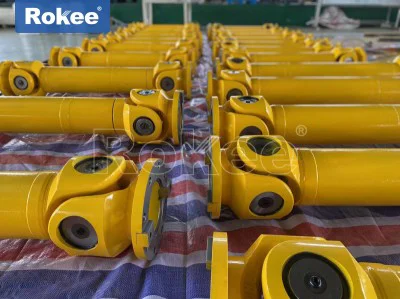
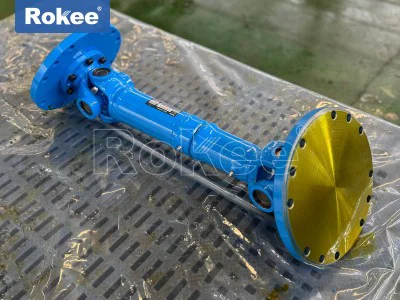
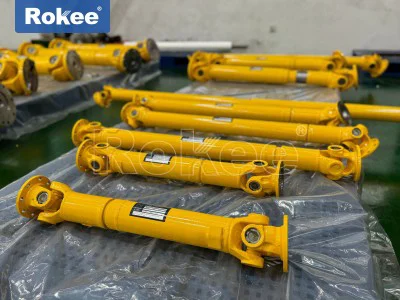
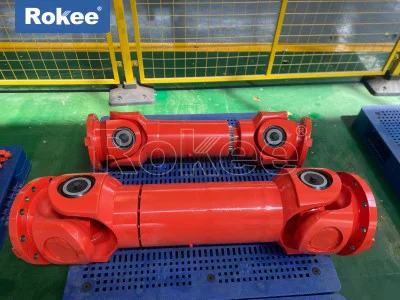
Universal Joint Coupling For Metallurgy
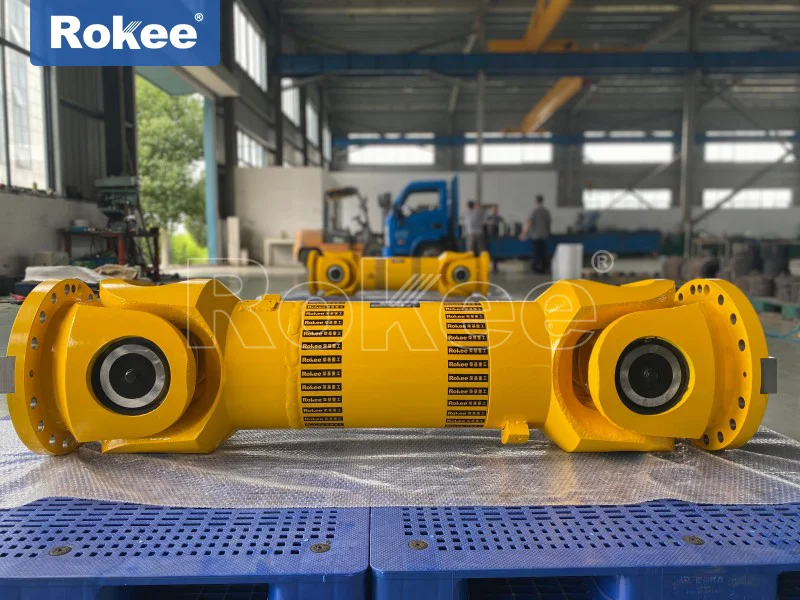
Universal joint couplings stand as indispensable core transmission components in modern metallurgical industrial systems, serving as the key connecting medium for power transmission among various heavy-duty metallurgical equipment. Unlike ordinary coupling products for general machinery, metallurgical universal joint couplings are specially optimized to adapt to the extreme and complex working conditions of the metallurgical industry, including heavy load impact, continuous high-frequency operation, harsh dust and high-temperature environments, and frequent shaft misalignment. Their core functional advantage lies in the ability to stably transmit torque and rotational power while compensating for angular deviation, axial displacement and radial offset between connected shafts, effectively solving the transmission failure problems caused by equipment vibration, installation errors and thermal deformation of metallurgical machinery. Widely applied in rolling mills, forging equipment, sintering machines and other core metallurgical facilities, these couplings guarantee the continuous, stable and efficient operation of the entire production line, reduce equipment failure rates, and lay a solid foundation for high-efficiency and low-consumption metallurgical production.
The structural design of metallurgical universal joint couplings is highly targeted at the heavy-duty operating characteristics of the metallurgical industry, adopting a robust and integrated mechanical structure composed of core components such as double fork yoke assemblies, integral cross shafts and precision roller bearing groups. Each component undergoes rigorous structural optimization and mechanical performance improvement to adapt to long-term heavy-load operation. The fork yoke assemblies adopt an integral forging molding process, which effectively avoids structural cracks and deformation risks caused by long-term impact loads, and improves the overall structural rigidity and pressure resistance of the coupling. The central cross shaft is the key force-bearing and transmission component, undertaking the dual tasks of torque transmission and angle adjustment. Its special geometric structure enables flexible articulation between the two fork yokes, realizing stable power output within a certain angular deflection range. The matching precision roller bearings are tightly fitted between the cross shaft and the yoke holes, which can reduce friction resistance during rotation, avoid dry friction and mechanical wear, and ensure the smoothness of high-speed and high-torque transmission. In addition, the overall structure reserves sufficient deformation tolerance space to cope with subtle displacement changes of equipment shafts caused by thermal expansion and cold contraction in metallurgical production.
The unique working principle of metallurgical universal joint couplings enables them to achieve efficient and reliable power transmission under complex misalignment conditions, which is fundamentally different from rigid couplings with fixed connection modes. Based on the geometric transmission mechanism of cross shaft hinge joint, the coupling connects the driving shaft and driven shaft of metallurgical equipment into a complete transmission system. When the driving shaft rotates and outputs power, the torque is first transmitted to the driving-end fork yoke, and then transferred to the driven-end fork yoke through the flexible hinge action of the cross shaft, finally driving the driven shaft to operate synchronously. During the operation of metallurgical equipment, affected by production vibration, equipment aging and thermal deformation, the connecting shafts will inevitably produce irregular angular deviation and axial displacement. The universal joint coupling can automatically adapt to these changes through the flexible rotation of the cross shaft and bearing assembly, without generating additional mechanical stress or transmission dead angle. This adaptive transmission mode ensures that the torque transmission ratio remains stable in the dynamic operation process, avoids power loss and transmission jitter, and perfectly meets the continuous and stable power supply requirements of metallurgical production processes.
Material selection is the core factor that determines the service performance and service life of universal joint couplings for metallurgy, and all key components adopt high-strength and wear-resistant alloy materials suitable for extreme working conditions. Different from ordinary carbon steel materials used in conventional couplings, the cross shaft and fork yoke of metallurgical couplings are mostly made of high-quality alloy steel with excellent comprehensive mechanical properties, which has high tensile strength, yield strength and impact toughness, and can resist instantaneous heavy load impact and long-term fatigue load in metallurgical production. After precision forging, quenching and tempering heat treatment processes, the material internal structure is homogenized, effectively eliminating internal stress, improving surface hardness and wear resistance, and avoiding surface abrasion, glue failure and component fatigue fracture caused by long-term high-frequency friction. The built-in roller bearings are made of high-carbon chromium bearing steel with fine grinding treatment, which has low friction coefficient and strong high-temperature resistance, and can maintain stable operating performance in high-temperature environments generated by metallurgical processing. Meanwhile, the surface of key components is treated with anti-corrosion and anti-oxidation processes, which can resist the erosion of dust, oxide scale and high-temperature flue gas in metallurgical workshops and delay component aging.
Metallurgical universal joint couplings have outstanding performance advantages in adapting to harsh industrial working conditions, making them irreplaceable in heavy-duty metallurgical transmission systems. First of all, they have excellent misalignment compensation capability, which can cope with multi-dimensional displacement such as angle, axial direction and radial direction between equipment shafts, and solve the transmission instability problem caused by installation errors and equipment operation deformation. Secondly, the couplings feature ultra-high load-bearing performance, which can withstand long-term continuous heavy torque transmission and instantaneous overload impact, fully matching the high-load operation characteristics of rolling, forging and stamping processes in metallurgical production. In terms of operational stability, the optimized bearing and hinge structure greatly reduces transmission vibration and noise, realizes smooth power transmission, and avoids equipment resonance and component damage. In addition, the whole machine has good high-temperature resistance and dust-proof performance. The closed structural design can effectively block the invasion of external dust and oxide scale, prevent internal bearing jamming and transmission failure, and ensure long-term stable operation in high-temperature and dusty metallurgical production environments.
The application scenarios of universal joint couplings in the metallurgical industry cover the whole process of metal smelting, processing and forming, and they are installed in the core transmission links of various key metallurgical equipment. In the steel rolling process, the couplings are applied to the transmission system of rolling mills, responsible for connecting the main motor and the rolling roller shaft, stably transmitting high torque power to ensure the uniform and continuous operation of the rolling roller, and guaranteeing the dimensional accuracy and processing quality of steel products. In the forging and pressing process, they match with heavy forging equipment and hydraulic transmission systems, adapt to the frequent impact load generated by forging operations, and ensure the synchronization and stability of equipment action. In the sintering and pelletizing links of raw material pretreatment, the couplings serve the transmission equipment of sintering machines and cooling machines, adapting to the low-speed and heavy-load continuous operation mode. Meanwhile, they are also widely used in auxiliary equipment such as conveyor systems and lifting equipment in metallurgical workshops, providing reliable power transmission support for the whole metallurgical production line and realizing the coordinated operation of various production links.
Daily maintenance and scientific application management are crucial to prolong the service life and maintain the stable performance of metallurgical universal couplings. In the daily operation process, regular inspection of the coupling operating state is required, focusing on checking whether there is abnormal vibration, noise and temperature rise during equipment operation, so as to judge whether the internal bearing is worn or the hinge gap is abnormal. Regular cleaning of the coupling surface is necessary to remove accumulated dust, oxide scale and oil dirt, prevent foreign matters from entering the internal hinge structure and affecting transmission flexibility. Lubrication maintenance is the key link of daily maintenance; professional high-temperature resistant lubricating grease should be regularly injected into the bearing and hinge parts to reduce internal friction and wear and avoid dry friction damage caused by long-term operation. In the equipment shutdown and maintenance stage, the structural tightness of the coupling should be checked, and loose connecting parts should be fastened in time to prevent transmission deviation caused by structural looseness. At the same time, excessive overload operation and long-term high-frequency start-stop operation should be avoided in production application to reduce fatigue loss of components and ensure the long-term stable and reliable operation of the coupling.
With the continuous upgrading and intelligent development of modern metallurgical industry, the technical iteration and performance optimization of universal joint couplings for metallurgy are also advancing continuously. The current development trend of metallurgical couplings focuses on high load, high precision, long life and low energy consumption, adapting to the large-scale and high-efficiency development of metallurgical production equipment. Modern optimized products adopt more refined integrated forging structures and composite material processing technology, further improving structural rigidity and fatigue resistance, and realizing lighter weight under the same load level, reducing equipment operation energy consumption. At the same time, combined with intelligent manufacturing technology, new-type couplings are endowed with better operational stability and fault tolerance, which can adapt to more complex and diversified metallurgical processing conditions. In the future, with the continuous progress of metallurgical industrial technology, universal joint couplings will further realize structural innovation and performance upgrading, provide more reliable and efficient transmission solutions for intelligent and green metallurgical production, and promote the continuous optimization and upgrading of the whole metallurgical equipment manufacturing industry.