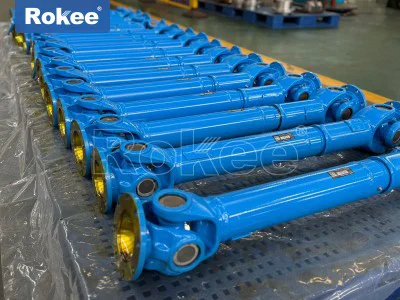
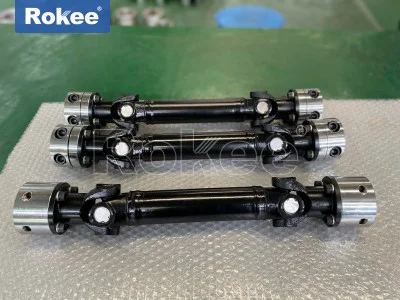
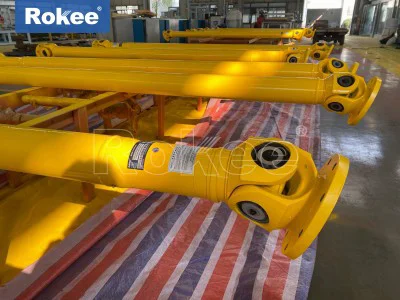
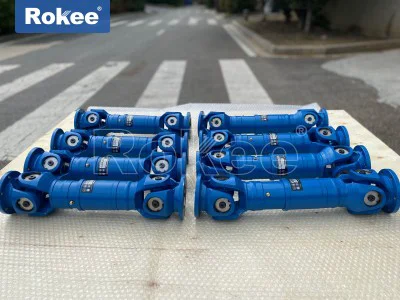
Universal Joint Coupling For Pump
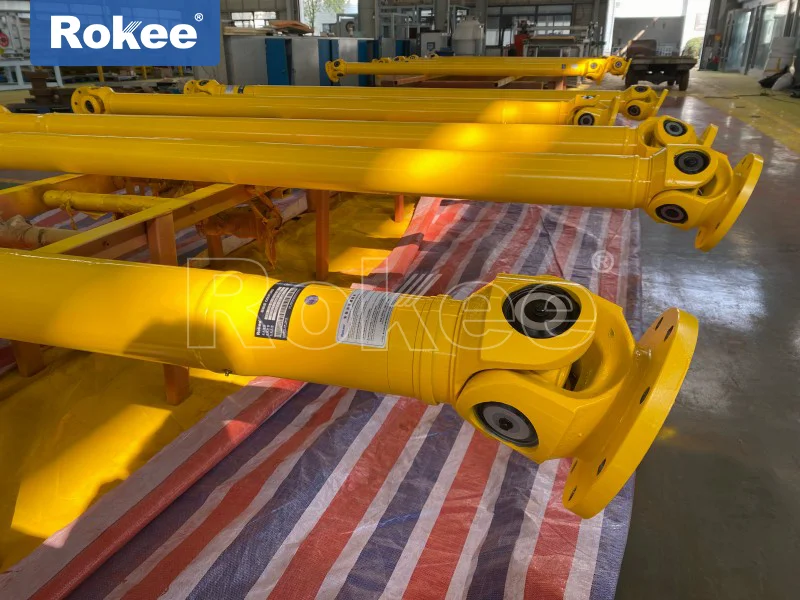
Universal joint couplings serve as indispensable mechanical transmission components in modern pump systems, acting as a critical bridge between pump bodies and driving power sources to ensure stable and efficient torque transmission. Unlike rigid coupling structures that require precise shaft alignment, these flexible connecting parts are uniquely designed to accommodate angular, axial, and radial misalignments that commonly occur during pump operation. In practical pumping scenarios, equipment installation deviations, mechanical vibration, thermal expansion and contraction, and long-term operational wear often lead to shaft offset, which rigid couplings cannot adapt to and will eventually cause transmission failure or component damage. Universal joint couplings effectively solve this industry pain point through their hinged and flexible structural design, maintaining continuous and stable power output even when the connected shafts deviate from the ideal linear state. They are widely compatible with various types of pumps, including industrial water pumps, sludge pumps, and fluid delivery pumps, delivering reliable transmission performance, reducing operational failures, and extending the overall service life of pumping equipment in complex and variable working environments.
The core working principle of universal joint couplings for pumps lies in their unique hinged mechanical structure, which mainly consists of cross shafts, yoke arms, and rotating connecting components that coordinate with each other to realize flexible power transmission. The cross shaft serves as the central rotating core, connecting two sets of symmetrically distributed yoke structures, allowing the upper and lower connected shafts to produce free angular deflection within a certain range during rotation. When the pump is running, the driving shaft transmits rotational torque to the driven shaft through the cross shaft hinge, and the flexible connection mode can automatically compensate for minor misalignments generated by equipment operation. In the dynamic working state of pumps, slight displacement and angle deviation between the motor shaft and the pump shaft are inevitable due to base vibration, medium impact force, and temperature changes. Traditional rigid transmission structures will generate huge additional stress under such conditions, leading to shaft deformation, bearing wear, and even equipment shutdown. In contrast, the universal joint coupling can buffer and release these abnormal stresses through structural flexibility, ensuring that the torque transmission process remains smooth and uninterrupted, and fundamentally improving the operational stability of the entire pump transmission system.
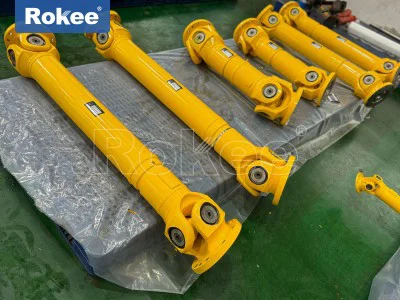
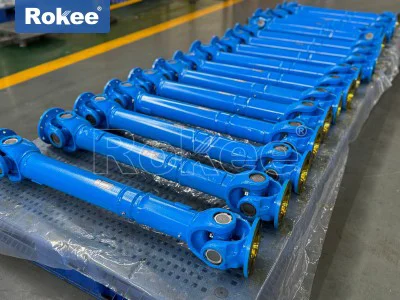
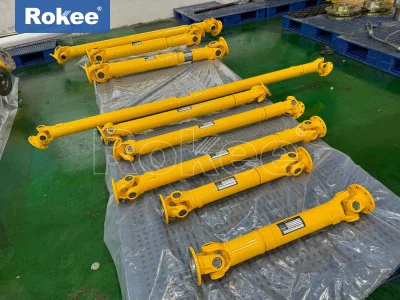
Structural characteristics endow pump universal joint couplings with outstanding adaptability to complex working conditions, making them superior to ordinary coupling products in industrial pumping applications. Most pump-specific universal joint couplings adopt an integrated compact structural design, which occupies a small installation space while ensuring high structural rigidity and torque bearing capacity. The optimized hinge gap design effectively avoids rotational jitter and torque loss during high-speed operation, enabling the coupling to maintain high transmission efficiency whether the pump runs at low speed with high torque or high speed with stable load. In addition, the structural modular design facilitates daily inspection and partial replacement of components, avoiding the need to replace the entire transmission assembly due to the damage of a single part, which greatly reduces equipment maintenance costs and downtime losses. Different from general mechanical universal joints, pump-oriented products are optimized for continuous cyclic operation, with enhanced structural fatigue resistance to adapt to long-term uninterrupted operation of pumping equipment. This targeted structural optimization makes the coupling more suitable for the continuous and stable operation requirements of fluid delivery systems in industrial production, municipal engineering, and environmental protection fields.
Material selection is a key factor determining the service life and comprehensive performance of universal couplings for pumps, and high-quality industrial materials are universally adopted to adapt to harsh pumping working environments. The main body and stress-bearing components of the coupling are mostly made of high-strength alloy steel materials, which undergo strict forging and heat treatment processes to achieve high tensile strength, hardness, and impact resistance. This material performance enables the coupling to withstand instantaneous impact torque and long-term cyclic load generated during pump start-up, shutdown, and variable-load operation, effectively preventing structural deformation and fracture. Meanwhile, the surface of the coupling is usually treated with anti-rust, anti-corrosion, and wear-resistant processes, which can resist the erosion of water, sludge, and weak corrosive media in pumping working scenarios. For pumps operating in high-humidity, dusty, or medium-corrosion environments, the optimized material formula and surface treatment process can significantly reduce component wear, oxidation, and corrosion speed. Reasonable material matching not only improves the durability of the coupling but also ensures that the transmission performance will not decay significantly after long-term operation, maintaining consistent and reliable power transmission efficiency throughout the equipment life cycle.
Universal joint couplings bring remarkable operational advantages to pump systems in actual industrial applications, effectively solving many common pain points in pump transmission operation. The most prominent advantage is their excellent misalignment compensation capability, which can adapt to angular deviation, axial displacement, and radial offset between the driving shaft and the pump shaft, eliminating transmission obstacles caused by installation errors and operational deformation. This performance greatly reduces the precision requirements for equipment installation and debugging, shortening the equipment commissioning cycle and improving the efficiency of on-site construction. In terms of operational stability, the flexible hinge structure of the coupling can effectively absorb mechanical vibration and impact generated during pump operation, reducing vibration transmission between the motor and the pump body, thus lowering the overall operating noise of the equipment and reducing the vibration wear of bearings, seals, and other precision components. Moreover, the high transmission efficiency of the universal joint coupling minimizes power loss during torque transmission, enabling the pump to convert electric energy into fluid delivery power more efficiently, which helps reduce equipment operating energy consumption. For variable-load pumping working conditions, the coupling can adapt to frequent load changes, ensuring stable power output and avoiding pulsating fluid delivery caused by unstable transmission.
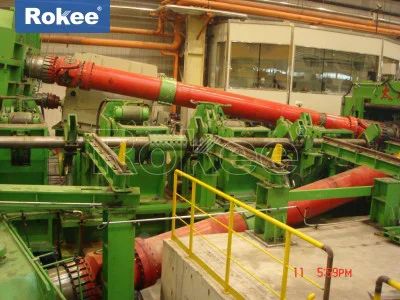
The application scenarios of universal joint couplings for pumps cover a wide range of industrial and civil fluid delivery fields, showing strong universal applicability and scenario adaptability. In industrial production, they are widely used in various medium and large-scale water supply and drainage pumps, chemical fluid delivery pumps, petroleum slurry pumps, and mining slag pumps, adapting to high-load and continuous industrial production operation requirements. In municipal engineering fields, the couplings match urban water supply pumps, sewage treatment pumps, and flood drainage pump equipment, ensuring stable operation of public fluid delivery systems under variable working conditions. In addition, they are also applied in agricultural irrigation pumps, building water supply pumps, and environmental protection purification pump equipment, meeting the transmission needs of different power and operating intensity pumps. For special working condition pumps such as submersible pumps and vertical pumps with complex installation structures and limited space, the compact and flexible structural characteristics of universal joint couplings can well adapt to narrow installation spaces and special shaft connection angles. Whether it is low-power conventional pumps or high-power heavy-duty pumping equipment, the coupling can achieve matching transmission effects, providing reliable basic guarantee for the normal operation of various fluid delivery systems.
Daily maintenance and scientific use are crucial to maintaining the long-term stable performance of pump universal joint couplings and extending their service life. In routine equipment operation management, regular visual inspection of the coupling’s appearance and structural state is required to check for surface wear, component looseness, and structural deformation, and hidden dangers should be eliminated in a timely manner. The hinge moving parts of the coupling need regular lubrication maintenance, and high-quality special lubricating grease should be filled according to the operating frequency and working environment to reduce friction loss between moving parts and avoid dry wear and abnormal noise. For pumps operating in harsh environments with high dust and strong corrosion, the cleaning and maintenance cycle of the coupling should be appropriately shortened to prevent impurities from adhering to the hinge structure and affecting rotational flexibility. During equipment startup and operation, frequent overload startup and sudden load surge should be avoided, so as to prevent instantaneous excessive torque from causing structural damage to the coupling. In addition, regular detection of shaft alignment state is needed to ensure that the coupling operates within a reasonable misalignment range, avoiding accelerated wear caused by long-term excessive deviation. Standardized maintenance management can effectively maintain the transmission performance of the coupling, reduce equipment failure rates, and ensure the long-term stable and efficient operation of the pump system.
With the continuous upgrading of industrial pumping equipment and the improvement of fluid delivery system operation requirements, the technological development of pump universal joint couplings is moving towards high efficiency, durability, and intelligent adaptation. Modern industrial production puts forward higher requirements for pump equipment’s energy-saving performance, stability, and service life, which also drives the iterative optimization of coupling structure and performance. New structural optimization designs are committed to further reducing torque loss and vibration transmission, improving transmission efficiency while enhancing the structural fatigue resistance of products to adapt to longer-term continuous operation. Innovative material technologies are continuously applied to coupling manufacturing, improving the product’s corrosion resistance, wear resistance, and high-temperature resistance, enabling it to adapt to more extreme pumping working conditions. At the same time, the modular and lightweight design trend makes the installation, disassembly, and maintenance of the coupling more convenient, reducing the comprehensive use cost of equipment. In the future, with the integration of mechanical transmission technology and intelligent monitoring technology, universal joint couplings for pumps will realize real-time monitoring of operating state, providing more reliable and intelligent guarantee for the safe and efficient operation of various fluid delivery pumping systems.