Flexible Universal Shaft Coupling
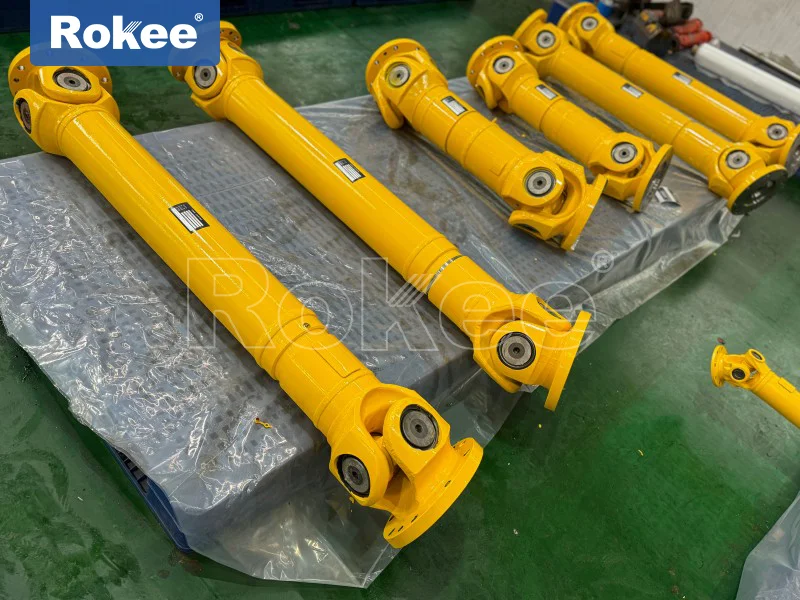
Flexible universal shaft coupling is a core mechanical transmission component designed to connect two rotating shafts while enabling adaptive power transmission under non-coaxial operating conditions. Unlike rigid couplings that rely on precise shaft alignment and fail to tolerate positional deviations, this specialized coupling integrates flexible articulated structures to effectively compensate for angular, radial, and axial misalignments between driving and driven shafts. It maintains stable torque output and consistent rotational speed transmission even during dynamic mechanical operation, where shaft positions may shift slightly due to equipment vibration, load changes, or structural deformation. Widely adaptable to diverse mechanical systems, it balances transmission efficiency, operational flexibility, and equipment protection. By mitigating mechanical friction, vibration impact, and transmission resistance caused by shaft misalignment, it reduces component wear and extends the service life of entire transmission systems, making it a fundamental component in general machinery, industrial transmission, and mobile mechanical equipment.
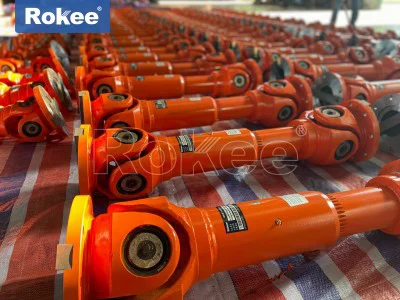
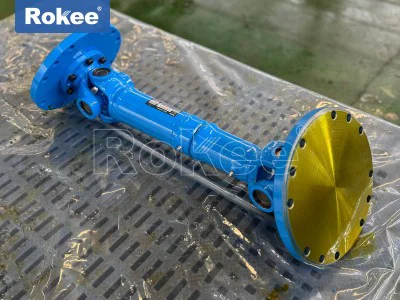
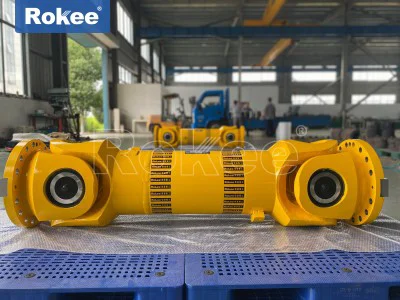
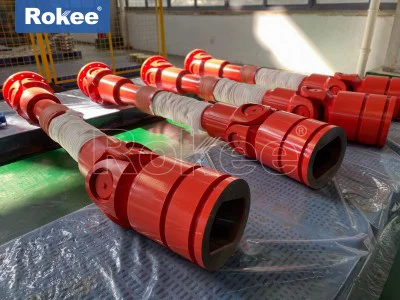
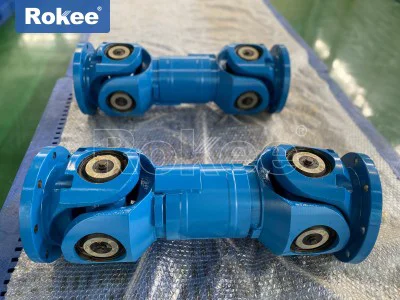
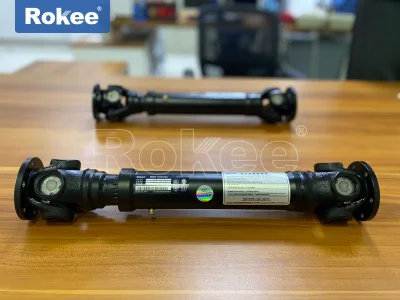
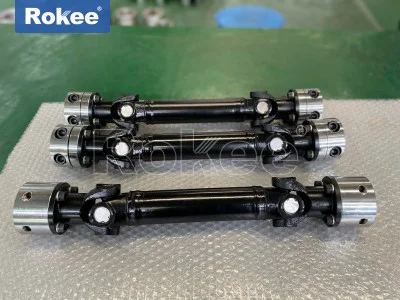
The structural design of flexible universal coupling focuses on flexible articulation and stable torque transmission, with a mature and optimized mechanical composition that adapts to complex operating environments. The core structure mainly includes symmetric fork-shaped yokes installed on the input and output shafts, a central cross spider connecting the two yokes, and auxiliary rotating and fastening accessories such as precision bearings and locking components. The cross spider serves as the key movable hinge, enabling the two yokes to perform multi-angle relative rotation and spatial deflection, which lays the foundation for the coupling’s flexible compensation capability. Different from traditional single-function couplings, the integrated structural design avoids excessive transmission gaps while ensuring flexible movement. The bearings fitted at the connection positions of the cross spider and yokes reduce sliding friction during rotation, realizing smooth high-speed operation. Meanwhile, the overall compact structural layout saves installation space, allowing the coupling to be applied in limited mechanical assembly scenarios. All structural components cooperate synergistically to ensure that torque can be transmitted efficiently without interruption even when the connected shafts produce continuous small-range displacement and angle deviation during operation.
Material selection directly determines the comprehensive performance and service adaptability of flexible universal shaft coupling, and high-quality matched materials endow the product with excellent durability and operational stability. Most mainstream couplings adopt high-strength alloy materials for core load-bearing components such as cross spiders and yokes, which feature high tensile strength, strong impact resistance, and good structural rigidity, effectively resisting torque impact and mechanical fatigue generated during long-term high-load operation. For scenarios requiring enhanced flexibility and vibration reduction, composite structures combining metal and high-elasticity polymer materials are adopted. The elastic auxiliary components can absorb partial vibration and buffer instantaneous load pressure, further optimizing transmission stability. In addition, the surface of core metal components is treated with anti-corrosion and wear-resistant processes, which effectively avoids performance degradation caused by oxidation, rust, and mechanical abrasion in humid, dusty, or medium-corrosive working environments. Reasonable material matching balances hardness and flexibility, preventing structural deformation or fracture under extreme working conditions while ensuring long-term stable flexible compensation performance.
The working principle of flexible universal shaft coupling is based on spatial linkage mechanics and adaptive flexible articulation, realizing loss-reducing power transmission under misalignment conditions. When the driving shaft starts to rotate, it drives the connected active yoke to perform synchronous rotational motion, and the torque is stably transmitted to the driven yoke through the central cross spider, thereby driving the operation of the driven shaft. In this process, the cross spider can freely adjust the deflection angle and spatial position according to the real-time relative displacement of the two shafts. When angular misalignment occurs between the input and output shafts, the hinge structure automatically adapts to the angle change to ensure continuous and uniform torque transmission without generating rotational jitter or power stagnation. When axial or radial displacement exists between shafts, the flexible movable structure can offset the displacement difference, avoiding additional mechanical stress on the shaft body and transmission components. This adaptive transmission mode eliminates the transmission limitations of rigid structures, realizes dynamic balance of power output, and ensures that the mechanical transmission system maintains high efficiency and stability throughout variable load and variable displacement operation.
Flexible universal shaft coupling possesses distinct performance advantages that make it superior to traditional coupling products in complex industrial working conditions. Its most prominent advantage is the multi-dimensional misalignment compensation capability, which can simultaneously adapt to angular deflection, radial offset, and axial telescopic displacement, solving various transmission problems caused by inaccurate installation alignment and dynamic shaft displacement during equipment operation. Secondly, it has excellent vibration and noise reduction performance. The flexible hinge structure and elastic matching components can effectively absorb mechanical vibration generated by equipment operation and instantaneous load impact, reduce vibration transmission between shafts, and lower operating noise of the entire transmission system. In addition, the product features high transmission efficiency with almost no power loss during torque transmission, ensuring accurate and consistent power output. It also has strong fatigue resistance and stable long-term operation performance, not prone to failure or performance attenuation after long-term continuous operation. Moreover, its simple and compact structure brings convenient installation and later maintenance, reducing the time and cost of equipment debugging and daily upkeep.
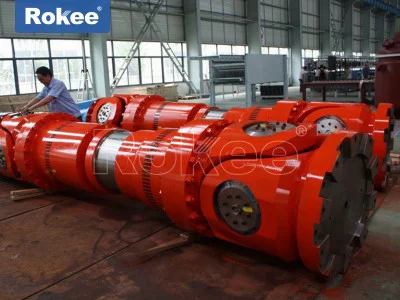
The application scenarios of flexible universal shaft coupling cover a wide range of mechanical equipment and industrial fields, thanks to its strong adaptability and comprehensive performance. In general industrial machinery, it is widely used in transmission systems of fans, water pumps, mixers, and conveying equipment, solving the problem of unstable power transmission caused by equipment vibration and shaft displacement during continuous operation. In heavy industrial equipment such as rolling machinery, drilling equipment, and papermaking machinery, it bears high-load torque transmission tasks, relying on its high strength and impact resistance to ensure stable operation of heavy-duty mechanical systems. In the field of mobile equipment and transportation machinery, the coupling adapts to frequent vibration and attitude change of equipment, providing reliable power transmission guarantee for vehicle transmission systems and mobile engineering machinery. It also plays an important role in new energy equipment and precision mechanical systems, where its vibration reduction and high-precision transmission characteristics protect precision components from mechanical impact and improve the overall operational accuracy of equipment.
Correct installation and daily maintenance are crucial to maximizing the service life and operational stability of flexible universal shaft coupling. During installation, it is necessary to ensure that the input and output shafts are aligned within the allowable misalignment range, avoiding excessive single-direction displacement that may cause abnormal stress on the coupling structure. The fastening components should be installed firmly to prevent component displacement or loosening during high-speed rotation, and the assembly gap of the hinge structure needs to be kept uniform to ensure flexible and unobstructed movable operation. In daily use, regular inspection of component wear is required, focusing on the abrasion degree of the cross spider, bearings, and elastic accessories. Worn or aging components should be replaced in a timely manner to avoid reduced compensation performance and transmission failure. For metal structural parts, regular cleaning and anti-corrosion maintenance should be carried out to prevent rust and dirt accumulation from affecting flexible movement and transmission efficiency. Standardized installation and scientific maintenance can effectively avoid common faults such as transmission jitter, abnormal noise, and component damage, ensuring long-term efficient and stable operation of the coupling.
With the continuous upgrading of modern mechanical equipment towards high speed, high precision, and high load, the technical development of flexible universal shaft coupling is also constantly advancing to adapt to evolving industrial demands. Current optimization directions mainly focus on structural lightweight and high-strength integration, adopting optimized structural algorithms to reduce the overall weight of the coupling while improving structural bearing capacity, which helps reduce equipment operation energy consumption. Material innovation is also a key development trend, with new high-elasticity, high-wear-resistant, and anti-fatigue composite materials being applied to improve the product’s adaptability to extreme working environments such as high temperature, low temperature, and strong corrosion. In addition, the integration of damping and noise reduction structures is further optimized to enhance the buffer protection capability of the transmission system. Future product design will also tend to be more personalized and customized, with targeted structural and performance optimization according to different equipment working conditions, providing more accurate and efficient flexible transmission solutions for diverse industrial mechanical systems.