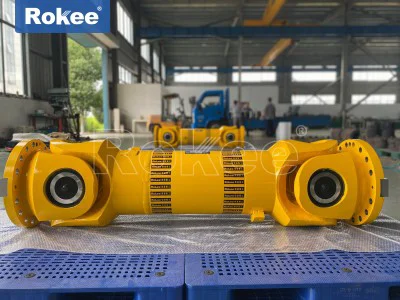
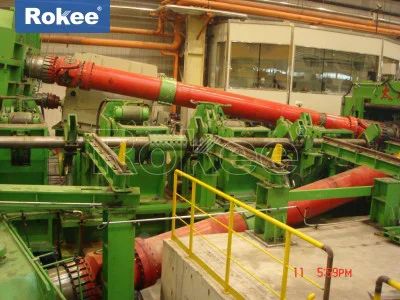
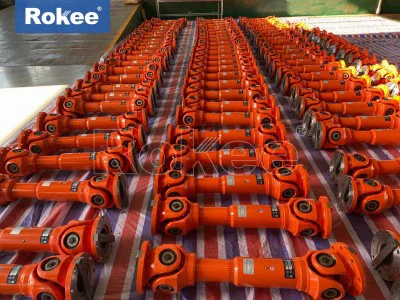
Cross Shaft Universal Joint Coupling
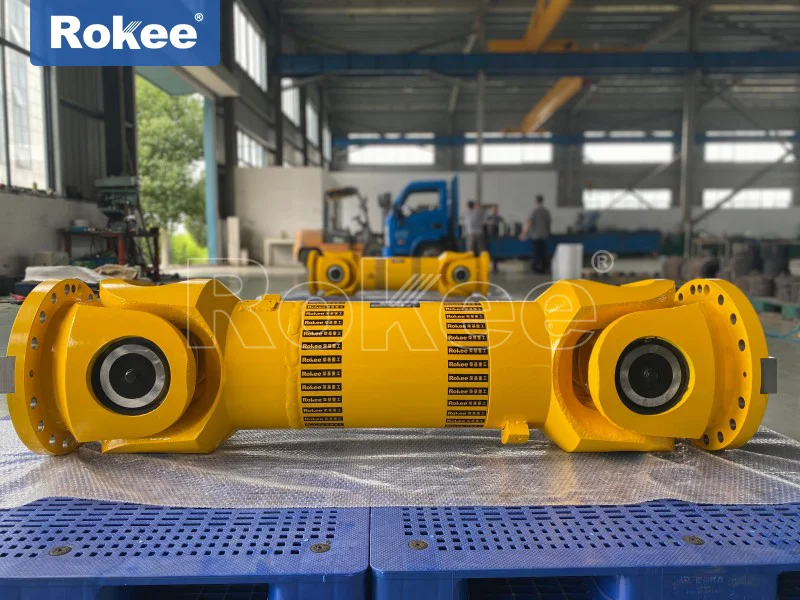
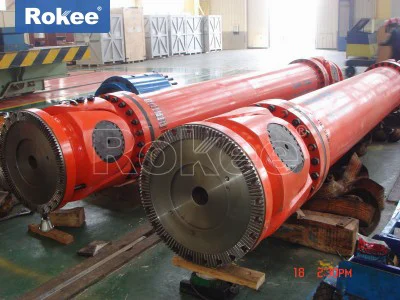
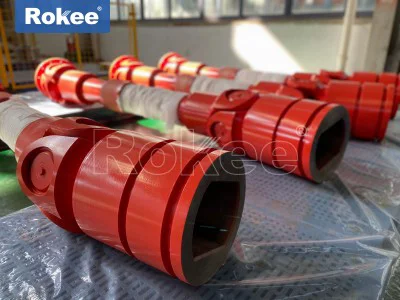
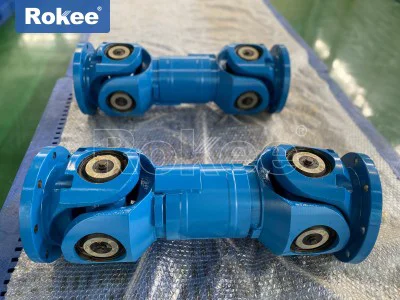
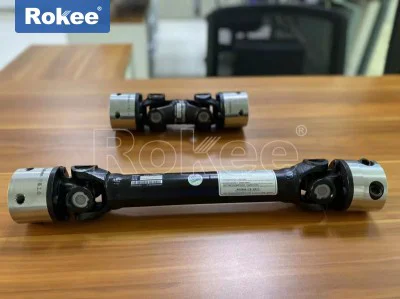
Cross shaft universal joint coupling, also widely recognized as cardan joint coupling, is a fundamental and versatile mechanical transmission component extensively applied in power transmission systems across various industrial and mechanical fields. This specialized coupling is engineered to transmit torque and rotational motion between two intersecting or misaligned shafts, effectively accommodating angular shaft deflection that rigid couplings cannot tolerate. Its ingenious spatial linkage structure mainly consists of cross shaft, universal joint forks and precision bearing assemblies, enabling flexible mechanical connection and stable power output under complex operating postures. Featuring simple structural composition, outstanding mechanical toughness and strong environmental adaptability, it has become an indispensable core part of rotary power transmission equipment. Compared with other flexible couplings, it balances load-bearing capacity and motion flexibility perfectly, suitable for medium and high torque transmission scenarios, and lays a solid foundation for the stable operation of various mechanical transmission systems.
The structural composition of cross shaft universal coupling adopts a modular and highly reliable design logic, with each core component undertaking independent and coordinated mechanical functions to ensure efficient power transmission. The central cross shaft, as the key force-bearing and connecting unit of the whole device, is processed with high-strength alloy materials and undergoes rigorous heat treatment and precision finishing, which endows it with excellent wear resistance, fatigue resistance and impact resistance to cope with long-term high-load rotation. Two symmetrically arranged universal joint forks are respectively fixed on the driving shaft and driven shaft, forming a movable hinge connection with the four shaft ends of the cross shaft. Precision needle roller bearings are installed at the matching positions of the cross shaft and joint forks, which greatly reduces the friction resistance during relative rotation and avoids mechanical jamming caused by dry friction. In addition, matching sealing and lubricating auxiliary structures are configured inside the coupling. The sealing structure can effectively block external dust, moisture and debris from entering the internal moving parts, while the lubricating system maintains a stable oil film between bearings and contact surfaces, significantly prolonging the service life of components and ensuring continuous and stable mechanical operation in complex working environments.
The working principle of cross shaft universal joint coupling is derived from the spatial four-bar linkage mechanical theory, realizing flexible torque transmission under angular misalignment through the coordinated movement of internal components. When the driving shaft starts to rotate, the fixed driving joint fork rotates synchronously with the shaft body and drives the cross shaft to perform circular rotary motion through the bearing assembly. Benefiting from the movable hinge structure between the cross shaft and the joint forks, the cross shaft can produce adaptive spatial swing and angle adjustment according to the deflection angle between the driving shaft and the driven shaft during operation. Subsequently, the motion and torque are stably transmitted to the driven joint fork, and finally drive the driven shaft to rotate synchronously. In the transmission process, even if the two shafts produce continuous angular deviation due to equipment vibration, installation errors or mechanical operation displacement, the flexible articulation of the cross shaft can always compensate for the misalignment difference in real time. Although the instantaneous rotational speed of the driven shaft will produce slight periodic fluctuation under a single universal joint structure, this minor speed change will not affect the overall stable operation of low and medium-speed mechanical equipment, and the transmission smoothness can be further optimized through double-section combined assembly in high-precision scenarios.
Cross shaft universal joint coupling possesses prominent performance advantages in mechanical transmission, making it stand out among various coupling products and gain wide market recognition. First of all, it has excellent angular compensation capability, which can adapt to the stable power transmission of two shafts with a certain angle intersection, solving the transmission failure problem of rigid couplings facing shaft deflection. Secondly, it has ultra-high load-bearing performance and torque transmission efficiency, which can stably transmit large torque and adapt to heavy-duty mechanical operation conditions, with low power loss in the transmission process and high mechanical energy utilization rate. In terms of structural adaptability, the compact and sturdy overall structure is not easy to deform under impact load and alternating load, with strong structural stability and anti-vibration ability. Moreover, the coupling has strong environmental adaptability, can work normally in high-temperature, low-temperature, dusty and other harsh working conditions, and is not sensitive to conventional mechanical vibration and position deviation. In addition, its modular structure design brings convenient assembly and disassembly, simple daily maintenance and low replacement cost of vulnerable parts, which greatly reduces the operation and maintenance cost of mechanical equipment and improves the overall operation efficiency of the system.
In practical industrial applications, cross shaft universal joint coupling covers a wide range of mechanical equipment and industrial scenarios, showing strong application versatility. In the field of engineering machinery, it is widely used in the power transmission structures of excavators, loaders, cranes and other equipment, adapting to the frequent angle changes and complex load conditions of mechanical arms and walking mechanisms. In automobile manufacturing, it serves as a key transmission component of vehicle transmission systems, realizing power transmission between the engine, gearbox and driving axle, and adapting to the posture changes of the vehicle chassis during driving and bumpy road conditions. In general industrial machinery, it is applied to conveying equipment, rotating machinery, metallurgical equipment and mining machinery, providing stable power connection for various rotating shafts with installation deviation and operation displacement. At the same time, it also plays an important role in agricultural machinery, port machinery and special industrial equipment. According to different load demands and working spaces, the coupling can adjust the structural size and component matching form, realizing customized application from light-load high-speed to heavy-load low-speed scenarios, and meeting the diversified power transmission needs of various industries.
Although cross shaft universal joint coupling has comprehensive performance advantages, it also has certain functional limitations in specific application scenarios, which need to be reasonably avoided in equipment design and use. The most typical limitation is the non-uniform speed transmission characteristic of single-section structure. When the driving shaft rotates at a constant speed and there is a large angle deviation between the two shafts, the instantaneous speed of the driven shaft will fluctuate periodically, which may cause slight vibration and impact of the transmission system in high-speed and high-precision equipment. In addition, its axial displacement compensation capability is relatively limited compared with telescopic flexible couplings, so it is not suitable for mechanical structures with large axial stretching and shrinking displacement during operation. Under extreme ultra-high speed operating conditions, the periodic swing of the internal cross shaft will produce certain centrifugal force and dynamic load, which may increase the vibration and noise of the equipment. Meanwhile, long-term operation under excessive deflection angle will accelerate the wear of bearings and cross shaft contact surfaces, reduce the service life of components, and even cause fatigue damage of parts in severe cases. Therefore, in high-precision, ultra-high speed and large axial displacement equipment, it is necessary to optimize the combination structure or select alternative coupling products according to actual working conditions.
Reasonable daily maintenance and scientific operation management are crucial to extend the service life and maintain the stable performance of cross shaft universal joint coupling. Lubrication maintenance is the core of daily maintenance work. It is necessary to regularly check the lubrication state of internal bearings and cross shaft friction parts, and replenish professional lubricating grease in time to ensure that the moving parts are always in a good lubrication state and reduce friction wear and mechanical aging. Regular inspection of the sealing structure is also essential. Damaged aging seals will lead to lubricant leakage and external impurities entering the interior, causing component wear and corrosion, so worn sealing parts need to be replaced in a timely manner. In the daily operation of equipment, excessive deflection angle and overload operation should be avoided to prevent excessive mechanical stress from causing structural deformation and fatigue damage of the coupling. It is also necessary to regularly check the fastening state of each connecting part to avoid equipment failure caused by loose connection. During long-term shutdown of equipment, dust and rust protection treatment should be carried out on the coupling surface and internal moving parts to ensure that the equipment can be started and operated normally again. Standardized maintenance management can effectively reduce equipment failure rate, stabilize transmission performance and create higher economic benefits for mechanical operation.
With the continuous upgrading of industrial mechanical equipment and the improvement of precision and efficiency requirements for power transmission systems, the optimization and development of cross shaft universal joint coupling technology are also advancing steadily. At present, the industry is committed to optimizing the material formula and processing technology of core components, adopting new high-strength and wear-resistant alloy materials and precision machining processes to further improve the load-bearing capacity, wear resistance and fatigue life of the coupling. Structural optimization design is also an important development direction. By improving the spatial structure of the cross shaft and bearing matching mode, the speed fluctuation defect of single-section transmission is reduced, and the operation smoothness of the coupling under high-speed and large-angle conditions is improved. In addition, the integrated and modular design is gradually popularized, which simplifies the assembly and maintenance process and improves the overall structural rigidity and operation stability. Meanwhile, combined with the development trend of intelligent equipment, some optimized products have realized adaptive vibration reduction and stable transmission functions, which can better adapt to the high-precision, high-efficiency and high-reliability operation requirements of modern industrial machinery. As a classic and efficient transmission component, cross shaft universal joint coupling will continue to be optimized and upgraded to adapt to the changing industrial application needs.