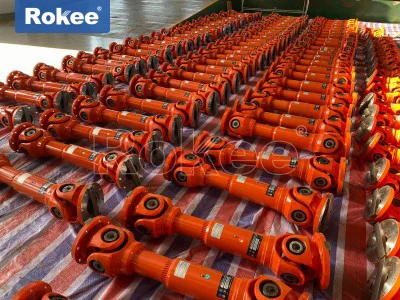
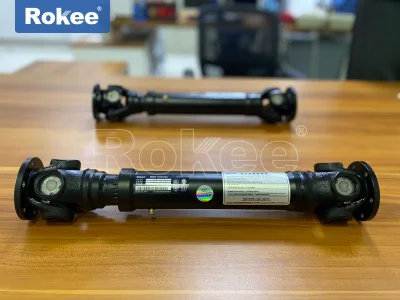
Double Universal Joint Coupling
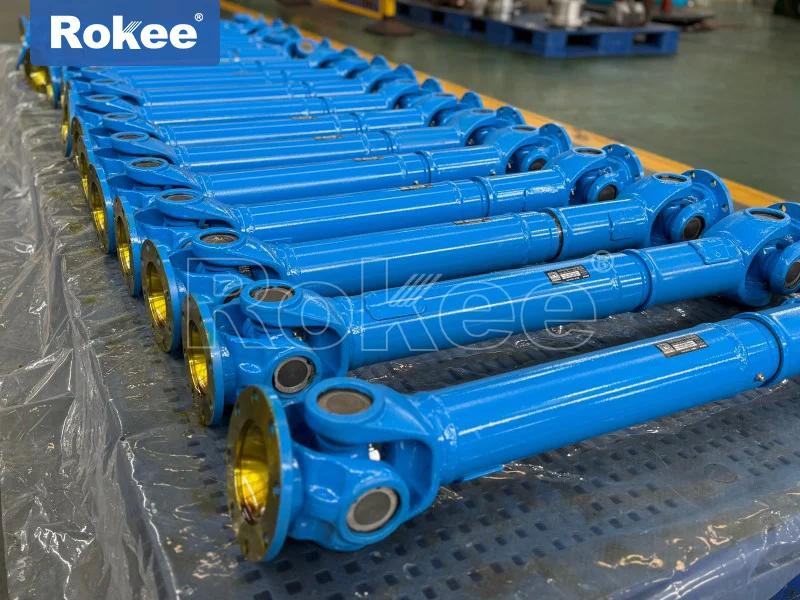
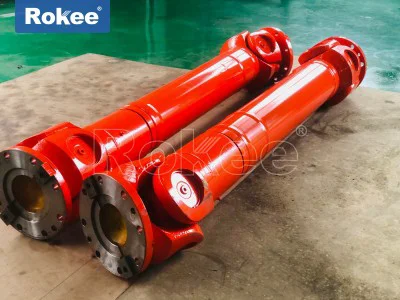
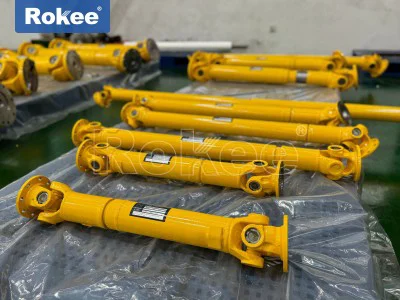
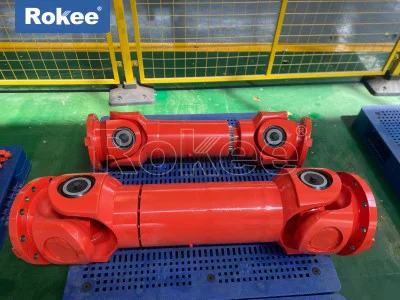
Double universal joint coupling, also widely known as double Cardan coupling, is a sophisticated mechanical transmission component optimized to address the inherent limitations of single universal joint structures in power transmission systems. Composed of two single universal joints connected in series via an intermediate shaft or connecting sleeve, this specialized coupling is engineered to transmit rotational torque and motion between two misaligned shafts with exceptional stability and consistency. Unlike single universal joints that generate obvious angular velocity fluctuations during offset operation, the double joint structure effectively counteracts speed variations through precise phase matching of the two joint units, achieving near-constant velocity power transmission. It is capable of accommodating substantial angular misalignment between driving and driven shafts, while also tolerating minor axial and radial displacement deviations in mechanical operation. Widely adopted in various mechanical transmission scenarios requiring flexible shaft connection and stable power output, it serves as a core connecting part for industrial machinery, power transmission equipment and mobile mechanical systems, delivering reliable, low-vibration and high-efficiency transmission performance in complex operating environments.
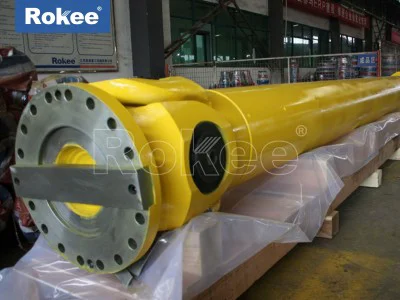
The fundamental structural composition of double universal joint coupling is built on the basis of single universal joint units with an added intermediate connecting structure, forming a complete and coordinated transmission assembly. Each individual universal joint consists of a cross-shaped spider component and two symmetrical yoke fittings, where the four journal ends of the cross spider are fitted with high-precision needle roller bearings to reduce frictional resistance during rotational movement. The two independent universal joint units are rigidly connected by a short intermediate shaft or integrated center sleeve, which acts as a transitional transmission medium to link the input end and output end of the entire coupling. Auxiliary structural parts including sealing sleeves, bearing covers and wear-resistant bushings are equipped at the joints of each component, playing key roles in fixing internal parts, preventing lubricant leakage and isolating external dust and impurities. The overall structural design abandons the defect of unbalanced stress of single joint transmission, and the symmetrical layout of double joints enables uniform distribution of torque and mechanical stress during operation. Every structural component is designed for collaborative operation, ensuring that the coupling can maintain structural integrity and transmission accuracy under long-term continuous operation and variable load conditions.
The working principle of double universal joint coupling centers on phase compensation and fluctuation cancellation to realize constant velocity transmission, which is the core advantage distinguishing it from ordinary single universal joints. A single universal joint inevitably produces periodic angular velocity changes when working with angular misalignment, causing unstable output speed, vibration and additional mechanical wear. In contrast, the double universal joint coupling adopts a two-stage transmission mode, with the two universal joints arranged at a 90-degree phase difference in structural design. When the first universal joint generates speed fluctuation during power transmission due to shaft offset, the second universal joint at the rear can precisely offset and eliminate this fluctuation through synchronous rotational operation. The intermediate shaft between the two joints synchronously adjusts its operating angle following the misalignment change of the main shafts, realizing dynamic compensation for angular deviation. This working mechanism ensures that the output shaft maintains a stable and consistent rotational speed regardless of the angular misalignment degree within the adaptable range. Even in scenarios with continuous dynamic changes of shaft position and angle, the coupling can still achieve smooth and uninterrupted torque transmission without obvious speed jitter or mechanical impact.
Double universal joint coupling possesses prominent performance advantages in misalignment compensation, transmission efficiency and operational stability compared with other traditional shaft connection components. In terms of misalignment adaptability, it can tolerate much larger angular misalignment between connected shafts than single universal joints and rigid couplings, and can simultaneously adapt to slight axial stretching and radial offset changes generated by mechanical operation and thermal expansion. Its unique double-joint phase compensation structure fundamentally suppresses the periodic vibration and torque fluctuation caused by misalignment transmission, greatly reducing mechanical vibration and noise during equipment operation. In terms of transmission efficiency, the high-precision bearing matching and optimized structural fit minimize internal friction loss, ensuring that most input torque is efficiently transmitted to the driven shaft with low power loss. Additionally, the integral structure with reinforced mechanical strength enables the coupling to withstand heavy torque loads and high-speed rotational operation, maintaining stable transmission performance under long-term cyclic working conditions. Its excellent wear resistance and structural stability also extend the service life of the entire transmission system, reducing frequent component replacement and equipment maintenance downtime.
Material selection and manufacturing craftsmanship directly determine the mechanical properties and service life of double universal joint coupling, with high-strength and wear-resistant materials being the primary choice for core components. The cross spider and yoke parts that bear main torque and friction are mostly made of high-strength alloy steel materials, which undergo strict forging and heat treatment processes to improve overall rigidity, tensile strength and fatigue resistance. This material processing method effectively avoids deformation, fracture and fatigue damage of core parts under high-load and high-speed operating conditions. The needle roller bearings matched with the cross spider adopt high-precision bearing steel with excellent surface hardness and wear resistance, ensuring low-friction flexible rotation while resisting long-term impact and abrasion. Sealing and auxiliary protection components are made of high-elasticity and aging-resistant synthetic materials, which can maintain stable sealing performance in variable temperature environments to prevent lubricant deterioration and external pollutant invasion. Advanced precision machining technologies are adopted in the manufacturing process to ensure high dimensional accuracy and structural fit of each part, eliminating assembly gaps and structural eccentric errors that may affect transmission stability.
Double universal joint coupling has extremely wide application scenarios in modern mechanical transmission systems, covering multiple fields of industrial equipment and mobile machinery. It is commonly applied in various power transmission equipment that requires flexible shaft connection and stable power output, including industrial transmission machinery, automated production equipment and large-scale conveying systems. In mechanical structures where the relative position of driving and driven shafts changes dynamically during operation, the coupling can effectively adapt to real-time angular and displacement deviations to ensure continuous and stable power transmission. It is also widely used in medium and high-speed rotating mechanical systems, where its constant velocity transmission characteristic can avoid equipment vibration and operation deviation caused by speed fluctuation. Moreover, it performs excellently in complex working environments with dust, vibration and variable loads, relying on its reliable sealing performance and sturdy structural stability to maintain long-term normal operation. Its flexible adaptability and high reliability make it an indispensable core connecting component in medium and heavy mechanical transmission systems.
To ensure the long-term stable operation and optimal performance of double universal joint coupling, standardized daily maintenance and scientific operation specifications are essential in practical application. Regular lubrication maintenance is the most critical link, as sufficient and high-quality lubricant can reduce internal friction and wear of bearings and joint moving parts, while alleviating mechanical fatigue caused by long-term operation. It is necessary to regularly check the sealing state of the coupling to prevent lubricant leakage and dust accumulation inside the structure, which may cause bearing jamming and transmission failure. During equipment operation, excessive overload operation and long-term ultra-high speed operation should be avoided, as exceeding the rated load and speed range will accelerate structural wear and lead to permanent deformation of components. Regular inspection of connection tightness and structural integrity is also required to timely eliminate hidden dangers such as loose assembly and component aging. Scientific maintenance habits can effectively maintain the transmission accuracy and mechanical performance of the coupling, extend its service life, and ensure the stable and efficient operation of the entire mechanical transmission system.
With the continuous upgrading of modern mechanical equipment towards high precision, high speed and high reliability, the technical optimization and performance improvement of double universal joint coupling are constantly advancing. Current optimization directions mainly focus on structural lightweight, transmission precision improvement and environmental adaptability enhancement, realizing more efficient and durable transmission performance through structural simplification and material upgrading. Innovative structural designs further reduce the self-weight and rotational inertia of the coupling, effectively improving the dynamic response speed of high-speed transmission systems and reducing energy consumption. Advanced surface treatment technologies are applied to core components to enhance wear resistance, corrosion resistance and high-temperature resistance, enabling the coupling to adapt to harsher working environments. In the future, with the development of intelligent mechanical transmission technology, double universal joint coupling will be further optimized in structural coordination and dynamic balance performance, and will be more widely applied in high-end intelligent equipment, precision transmission systems and special engineering machinery, continuing to play an irreplaceable core role in flexible mechanical power transmission fields.