Constant Velocity Cardan Coupling
In the field of mechanical power transmission, the constant velocity cardan coupling stands as a critical and versatile component, designed to address the core challenge of transferring rotational motion and torque between two shafts that are not perfectly aligned, while maintaining a consistent rotational velocity. Unlike traditional universal joints that suffer from velocity fluctuations when operating at angles, the constant velocity cardan coupling eliminates this drawback through sophisticated structural design, making it indispensable in a wide range of industrial, automotive, and heavy machinery applications. Its ability to accommodate angular, axial, and radial misalignments without compromising transmission stability or efficiency has made it a cornerstone of modern mechanical systems, where precision and reliability are paramount. To fully understand the value and functionality of this coupling, it is essential to explore its structural composition, key performance characteristics, diverse types, and practical applications, as each aspect contributes to its adaptability and effectiveness in various operating environments.
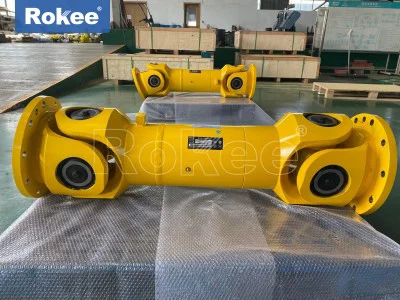
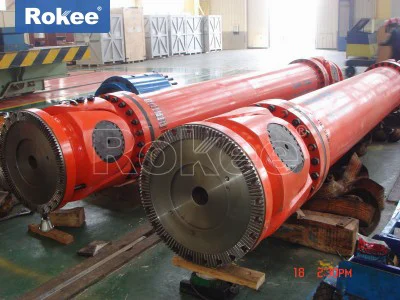
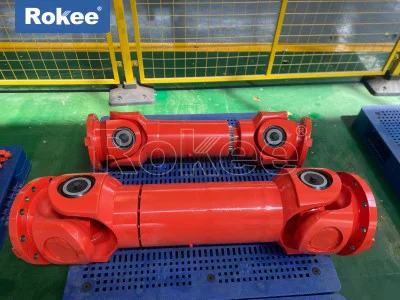
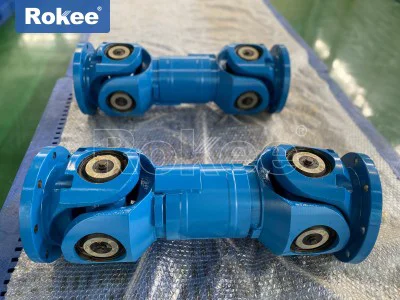
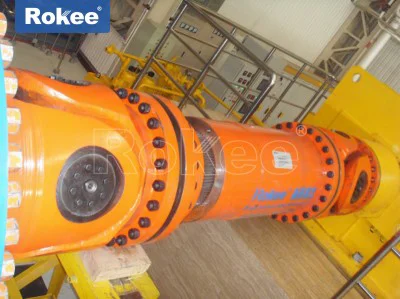
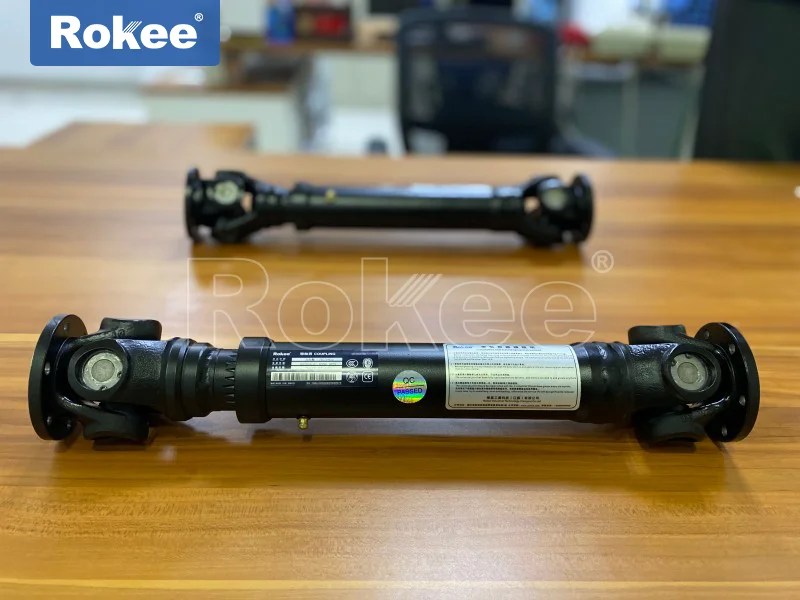
The structure of a constant velocity cardan coupling is a carefully engineered assembly of components that work in harmony to achieve smooth, constant velocity transmission across misaligned shafts. At its core, the basic configuration typically includes two yoke-shaped end fittings, a central cross-shaped member (commonly referred to as a spider), precision bearings, and in some cases, a telescopic shaft or splined connection to accommodate axial displacement. The yokes, which are U-shaped mechanical components, are securely attached to the driving and driven shafts respectively, usually through rigid connections such as splines, flanges, or keyed joints that prevent slippage and ensure full torque transfer. The spider, positioned at the junction of the two yokes, features four perpendicular arms that fit precisely into bearing housings machined into the open ends of each yoke. These bearings—often needle roller bearings for high-load applications—facilitate smooth rotational and oscillatory movement between the spider and the yokes, minimizing friction and wear while maintaining mechanical rigidity. The geometric arrangement of these components is critical: the rotational axes of the two yokes intersect at the exact center of the spider, and the bearings are sized and positioned to ensure that the angular velocity of the output shaft matches that of the input shaft, even as the angle between the two shafts changes. In more advanced designs, additional components such as centering elements may be integrated to maintain equal angles between the driving and driven shafts, further enhancing the constant velocity performance, especially in high-angle applications. The structural simplicity of the constant velocity cardan coupling, with its minimal number of moving parts, not only reduces the risk of mechanical failure but also simplifies maintenance and extends service life, making it suitable for both light-duty and heavy-duty applications.
The performance of a constant velocity cardan coupling is defined by a set of key characteristics that determine its suitability for different operating conditions, including torque capacity, angular misalignment tolerance, velocity consistency, friction levels, durability, and resistance to environmental factors. Torque capacity is one of the most critical performance metrics, as it refers to the maximum amount of rotational force the coupling can transmit without suffering damage or deformation. This capacity varies depending on the size of the coupling, the materials used in its construction, and the design of its components—larger couplings with high-strength materials can handle significantly higher torque loads, making them suitable for heavy machinery and industrial equipment. Angular misalignment tolerance is another essential feature, as the primary purpose of the coupling is to accommodate misalignment between shafts. Most constant velocity cardan couplings can handle angular misalignments ranging from 5 degrees to 45 degrees, with some specialized designs capable of accommodating even larger angles, making them adaptable to situations where shaft alignment is challenging due to installation errors, thermal expansion, or dynamic movement during operation. Unlike traditional universal joints, which exhibit significant velocity fluctuations as the angular misalignment increases, the constant velocity cardan coupling maintains a nearly constant output velocity regardless of the angle between the input and output shafts. This eliminates unwanted vibrations, noise, and additional dynamic loads that can damage other components in the transmission system, ensuring smooth and stable operation even at high speeds. Friction is minimized through the use of high-quality bearings and precision machining, which not only improves efficiency by reducing energy loss but also extends the service life of the coupling by reducing wear on moving parts. Durability is enhanced by the use of robust materials such as alloy steels, which offer excellent strength, toughness, and resistance to fatigue, even under continuous operation and heavy loads. Additionally, many constant velocity cardan couplings are designed to resist environmental factors such as dust, moisture, and corrosive substances, making them suitable for use in harsh industrial environments, outdoor applications, and marine propulsion systems.
There are several distinct types of constant velocity cardan couplings, each designed to meet specific performance requirements and application needs, with variations in structure, design, and functionality. The double cardan joint, also known as the double hooke’s joint, is one of the most common types, consisting of two universal joints connected by a short intermediate shaft, offset by 90 degrees to cancel out the velocity fluctuations inherent in single universal joints. This design effectively achieves constant velocity transmission by ensuring that the angular variations of one joint are balanced by the other, making it ideal for applications where high articulation angles or impulsive torque loads are common, such as steering columns in automotive vehicles and drivetrains in four-wheel drive vehicles. Unlike single universal joints, double cardan joints require a centering element to maintain equal angles between the driving and driven shafts, which may introduce some additional vibration at high speeds but significantly improves velocity consistency. Another type is the Rzeppa joint, a ball-type constant velocity joint that uses a cage and ball bearings to maintain constant velocity, even at large angular misalignments. This type is particularly well-suited for automotive applications, such as front-wheel drive and all-wheel drive vehicles, where it can accommodate the dynamic shaft angles encountered during steering and suspension movements. The Tracta joint is another variant, operating on the principle of double tongue and groove connections to transmit torque while maintaining constant velocity, and it is often used in applications where axial displacement is a concern, such as industrial machinery with variable shaft positions. Additionally, there are telescopic constant velocity cardan couplings, which incorporate a splined connection to allow for axial movement between the shafts, making them suitable for applications where thermal expansion or dynamic displacement causes changes in shaft length. Each type of constant velocity cardan coupling has its own unique advantages and limitations, and the selection of the appropriate type depends on factors such as torque requirements, angular misalignment, axial displacement, operating speed, and environmental conditions.
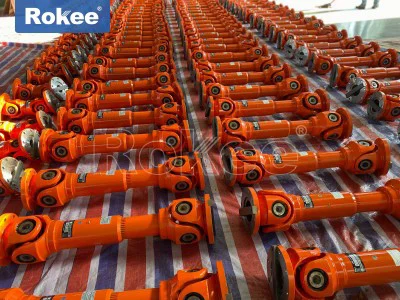
The applications of constant velocity cardan couplings are diverse and span across numerous industries, reflecting their versatility and reliability in power transmission. In the automotive industry, they are essential components in both passenger and commercial vehicles, particularly in front-wheel drive, all-wheel drive, and four-wheel drive systems. In these applications, the coupling transmits power from the engine to the wheels, even as the angle of the drive shaft varies due to steering and suspension movements, ensuring smooth acceleration, stable handling, and reduced vibration. They are also used in steering columns, where the double cardan joint design eliminates the need for precise phasing of universal joints, simplifying the packaging of components in the engine bay. Beyond automotive applications, constant velocity cardan couplings are widely used in industrial machinery, including pumps, compressors, generators, conveyors, and machine tools. In these systems, they accommodate misalignments between the motor and the driven equipment, which may arise from installation errors, thermal expansion, or dynamic loads, ensuring reliable and efficient operation. Heavy machinery, such as construction equipment, agricultural machinery, and mining equipment, also relies heavily on constant velocity cardan couplings to transmit high torque across misaligned shafts in harsh operating conditions. For example, in excavators, tractors, and bulldozers, the couplings handle the dynamic misalignments caused by the movement of the equipment’s arms and wheels, while maintaining constant velocity to prevent damage to the transmission system. Marine propulsion systems also utilize constant velocity cardan couplings to transmit power from the engine to the propeller, accommodating the angular misalignments that may occur due to the movement of the hull or the positioning of the engine. Additionally, they are used in aerospace applications, such as auxiliary power units and aircraft control systems, where precision, reliability, and resistance to extreme conditions are critical. Even in light-duty applications, such as small industrial machines and household appliances, constant velocity cardan couplings are used to ensure smooth power transmission between misaligned components, enhancing the performance and lifespan of the equipment.
The selection and installation of a constant velocity cardan coupling require careful consideration of several factors to ensure optimal performance and longevity. First, the torque capacity of the coupling must match or exceed the maximum torque generated by the system, as insufficient torque capacity can lead to premature failure. The angular misalignment tolerance of the coupling should also be compatible with the expected misalignment between the shafts, taking into account both static and dynamic misalignments that may occur during operation. Operating speed is another critical factor, as some couplings are designed for high-speed applications, while others are better suited for low to moderate speeds. The materials used in the coupling’s construction should be selected based on the operating environment—for example, stainless steel is preferred for corrosive environments, while alloy steels are ideal for high-load applications. Proper installation is also essential to ensure the coupling functions correctly: the shafts should be aligned as closely as possible to minimize stress on the coupling, and the bearings should be properly lubricated to reduce friction and wear. Regular maintenance, including lubrication, inspection for wear or damage, and replacement of worn components, is necessary to extend the service life of the coupling and prevent unexpected failures. By carefully selecting, installing, and maintaining constant velocity cardan couplings, engineers can ensure that power transmission systems operate efficiently, reliably, and smoothly, even in challenging conditions.
In conclusion, the constant velocity cardan coupling is a vital component in modern mechanical power transmission systems, offering a unique combination of structural simplicity, reliable performance, and versatility. Its ability to transmit torque and rotational motion across misaligned shafts while maintaining constant velocity addresses a critical challenge in mechanical design, making it indispensable in a wide range of applications from automotive to industrial, heavy machinery to aerospace. The carefully engineered structure, with its yokes, spider, and precision bearings, ensures smooth operation and durability, while the various types of couplings cater to specific application needs, from high-angle misalignments to axial displacement. As technology advances, the design and performance of constant velocity cardan couplings continue to evolve, with improvements in materials, manufacturing processes, and design techniques enhancing their torque capacity, efficiency, and resistance to harsh conditions. Whether in a passenger car’s drivetrain, an industrial pump’s transmission system, or a construction machine’s power unit, the constant velocity cardan coupling plays a crucial role in ensuring the reliable and efficient operation of mechanical systems, underscoring its importance in modern engineering and manufacturing.