Precision Cardan Coupling
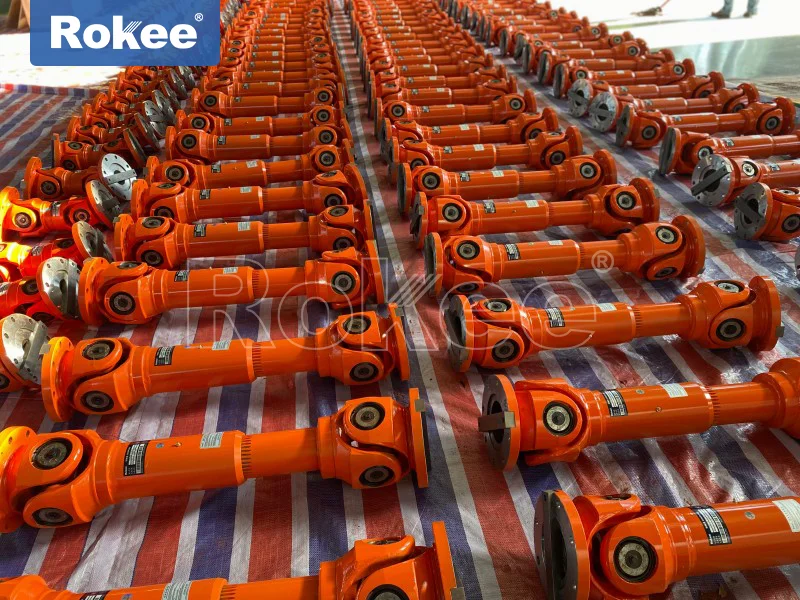
In the realm of mechanical power transmission, precision cardan couplings stand as indispensable components designed to address the critical challenge of transferring torque and rotational motion between shafts that are not perfectly aligned. Unlike rigid couplings that demand strict coaxial alignment of driving and driven shafts, precision cardan couplings are engineered to accommodate angular, parallel, and axial misalignments while maintaining consistent power delivery and high precision, making them essential in a wide range of industrial, automotive, aerospace, and precision machinery applications. These couplings, also known as precision universal joint couplings, combine sophisticated structural design with advanced material science to deliver reliable performance under varying operating conditions, from high-speed precision machinery to heavy-duty industrial equipment.
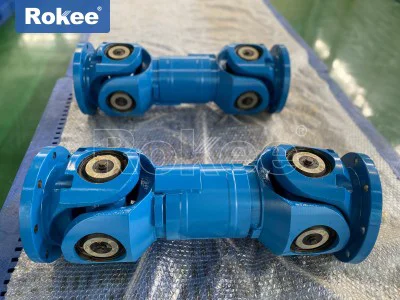
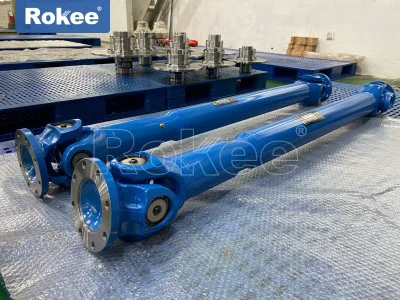
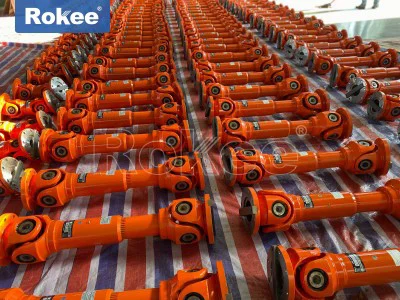
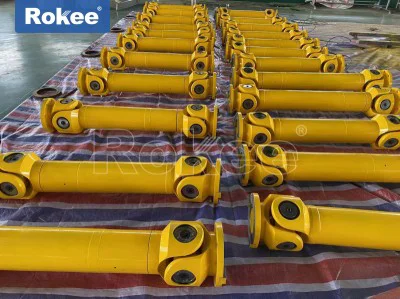
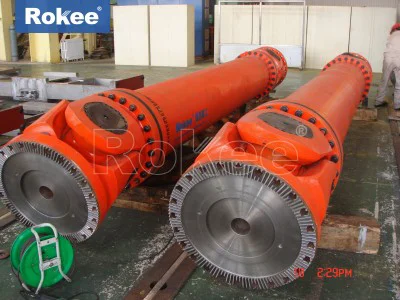
The structure of a precision cardan coupling is a carefully engineered assembly of interconnected components, each playing a critical role in ensuring smooth torque transmission and misalignment compensation. At the core of every precision cardan coupling lies the universal joint, which serves as the primary mechanism for accommodating angular misalignment. The universal joint typically consists of two fork-shaped yokes—one attached to the input (driving) shaft and the other to the output (driven) shaft—and a central cross-shaped component known as a spider or cross shaft. The cross shaft fits into precision-machined bearing seats within each yoke, allowing for rotational movement between the two yokes at varying angles. The bearings within the yoke seats are a key structural element; they reduce friction between the cross shaft and yokes, enabling smooth rotation even when the shafts are misaligned. Depending on the application requirements, these bearings may be plain bearings for lower speed applications or needle bearings for higher speed and heavier load scenarios, as needle bearings offer greater load-carrying capacity and reduced friction at elevated rotational speeds. In addition to the universal joint, precision cardan couplings often include a central shaft body that connects two universal joints in certain configurations, as well as splined connections that allow for axial displacement compensation. The central shaft body can be either solid or tubular, with tubular designs being preferred for applications where weight reduction is critical, such as aerospace or automotive systems. The splined connections, which consist of a grooved shaft and a mating sleeve, enable the coupling to adjust for axial movement between the driving and driven shafts, a common occurrence in machinery due to thermal expansion, vibration, or installation errors. All components of a precision cardan coupling are manufactured with high precision to ensure minimal backlash, which is essential for maintaining rotational accuracy in precision applications. The materials used in the construction of these components are carefully selected based on the application’s load requirements, operating environment, and performance demands, with common materials including high-strength steel, stainless steel, and aluminum alloys. High-strength steel is used for heavy-duty applications due to its exceptional torque-carrying capacity and durability, while stainless steel is preferred for applications exposed to corrosive environments, such as marine or chemical processing equipment. Aluminum alloys are utilized in lightweight applications where reducing overall system weight is a priority, without compromising on strength or precision.
The performance of precision cardan couplings is defined by a set of key characteristics that determine their suitability for different applications, with precision, torque capacity, misalignment compensation, speed tolerance, durability, and backlash control being the most critical. Precision is perhaps the most defining performance attribute of these couplings, as they are designed to maintain accurate rotational motion even when shafts are misaligned. This precision is achieved through tight manufacturing tolerances, high-quality bearings, and minimal backlash, ensuring that the rotational motion of the driving shaft is transmitted to the driven shaft with minimal deviation. In precision machinery such as CNC machine tools, robotics, and optical equipment, even the smallest amount of backlash or rotational error can compromise the quality of the end product, making the precision of the cardan coupling a critical factor. Torque capacity refers to the maximum amount of torque that the coupling can transmit without failure, and it varies depending on the size of the coupling, the materials used, and the design of the universal joint and central shaft. Precision cardan couplings are available in a wide range of torque capacities, from small couplings capable of transmitting a few newton-meters of torque for precision instruments to large couplings designed to handle thousands of newton-meters for heavy industrial machinery. The ability to compensate for misalignment is another key performance feature; precision cardan couplings can accommodate angular misalignment, parallel misalignment, and axial displacement, with angular misalignment being the most common type. Angular misalignment occurs when the driving and driven shafts intersect at an angle, and precision cardan couplings can typically accommodate angles ranging from 5 degrees to 45 degrees per joint, depending on the design. Parallel misalignment, where the shafts are offset but parallel, and axial displacement, where the shafts move along their central axis relative to each other, can also be compensated for by certain types of precision cardan couplings, particularly those with splined connections or telescopic designs. Speed tolerance is another important performance characteristic, as different applications require couplings to operate at varying rotational speeds. Precision cardan couplings are engineered to handle high rotational speeds without excessive vibration or wear, with some designs capable of operating at speeds up to 4,000 revolutions per minute (rpm) or higher. The speed tolerance is influenced by factors such as the balance of the coupling components, the type of bearings used, and the material properties, with well-balanced couplings and high-quality bearings enabling higher speed operation. Durability and reliability are essential for ensuring long service life and minimal downtime in industrial applications, and precision cardan couplings are designed to withstand the rigors of continuous operation, including vibration, shock loads, and varying temperatures. The use of high-strength materials, corrosion-resistant coatings, and robust bearing designs contributes to their durability, while proper lubrication helps reduce friction and wear, extending the service life of the coupling. Backlash, which is the amount of free movement between the driving and driven shafts when the direction of rotation is reversed, is a critical performance parameter in precision applications. Precision cardan couplings are designed with minimal backlash, often less than 0.1 degrees, to ensure that there is no lag or error in torque transmission when the direction of rotation changes, which is essential for applications such as robotics and CNC machining where precise motion control is required.
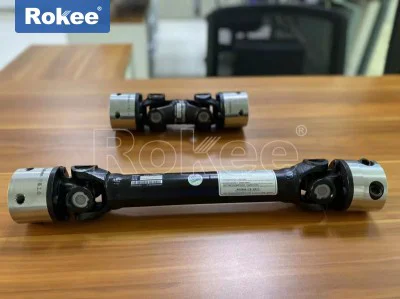
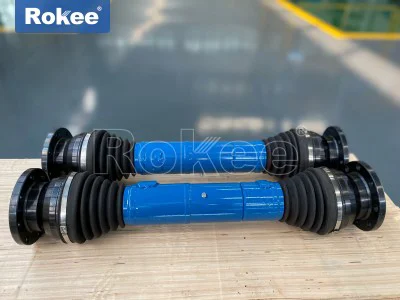
Precision cardan couplings are available in a variety of types, each designed to meet specific application requirements based on factors such as misalignment type, torque capacity, speed, space constraints, and environmental conditions. The most common types include single cardan couplings, double cardan couplings, telescopic cardan couplings, miniature cardan couplings, and constant-velocity (CV) cardan couplings. Single cardan couplings, also known as Hooke’s joints, are the simplest type and consist of a single universal joint with two yokes and a cross shaft. They are ideal for applications where moderate angular misalignment is present and space is limited, such as in small precision machinery, automotive drive shafts, and light industrial equipment. Single cardan couplings are cost-effective and easy to install, but they have a limitation: as the angular misalignment increases, they can introduce speed fluctuations, which may not be suitable for high-precision applications. Double cardan couplings address this limitation by incorporating two universal joints connected by an intermediate shaft, which cancels out the speed fluctuations associated with single cardan couplings. This design ensures constant velocity transmission even at high angular misalignments, making them suitable for applications that require precise speed control, such as CNC machine tools, robotics, and aerospace systems. The intermediate shaft can be fixed or adjustable, and some double cardan couplings feature a centering element to maintain equal angles between the driving and driven shafts, further enhancing rotational precision. Telescopic cardan couplings, also known as extendable cardan couplings, are designed to compensate for both angular misalignment and axial displacement. They feature a splined connection between the central shaft and one of the yokes, allowing the coupling to extend or contract along its axis to accommodate axial movement. This type of coupling is commonly used in applications where thermal expansion or dynamic movement causes axial displacement, such as in automotive drivetrains, industrial conveyors, and power transmission systems for large machinery. Miniature cardan couplings are compact designs specifically engineered for applications with limited space, such as precision instruments, medical equipment, and small robotics. These couplings are typically small in size, ranging from a few millimeters to several centimeters in diameter, and are manufactured with high precision to maintain rotational accuracy in compact systems. They are often made from lightweight materials such as aluminum alloys or stainless steel to minimize weight and ensure compatibility with small-scale machinery. Constant-velocity (CV) cardan couplings, which include variants such as Rzeppa joints and tripod joints, are designed to transmit torque at a constant angular velocity regardless of the angle between the shafts. Unlike single cardan couplings, which experience speed fluctuations at high angles, CV cardan couplings maintain a consistent speed, making them ideal for applications such as automotive front-wheel drive systems, where the drive shafts must accommodate large angles while delivering smooth power to the wheels. CV cardan couplings use a combination of spherical bearings and ball paths to ensure constant velocity, and they are available in both fixed and plunging designs to accommodate axial displacement.
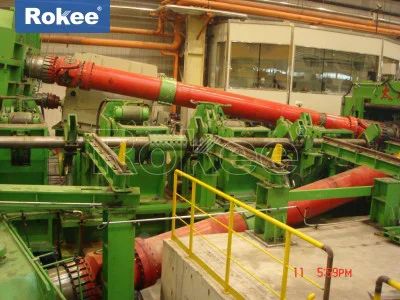
The versatility of precision cardan couplings is reflected in their wide range of applications across various industries, where their ability to transmit torque accurately while accommodating misalignment makes them indispensable. In the automotive industry, precision cardan couplings are used in drivetrains to connect the gearbox to the drive axle, allowing for angular misalignment caused by suspension movement and wheel runout. They are also used in steering systems, particularly in vehicles with adjustable steering columns, to transmit rotational motion from the steering wheel to the steering rack while accommodating varying angles. In the industrial machinery sector, these couplings are widely used in CNC machine tools, where they transmit torque from the motor to the spindle or other moving components with high precision, ensuring accurate machining operations. They are also used in conveyors, pumps, compressors, and mixers, where they accommodate misalignments between the motor and the driven equipment, reducing stress on bearings and extending the service life of the machinery. The aerospace industry relies on precision cardan couplings for a variety of applications, including helicopter rotor transmission systems, where they connect the engine to the rotor shaft and compensate for angular misalignment during flight. They are also used in aircraft landing gear systems, avionics equipment, and satellite components, where high precision, lightweight design, and durability are critical. In the robotics industry, precision cardan couplings are essential for robotic arms and manipulators, where they transmit torque to the joints while accommodating the angular misalignments required for flexible movement. They ensure that the robotic arm moves with precise control, making them suitable for applications such as automated assembly, pick-and-place operations, and medical robotics. The medical equipment industry uses miniature precision cardan couplings in devices such as surgical robots, diagnostic equipment, and medical pumps, where compact size, high precision, and reliability are essential. These couplings enable the precise transmission of rotational motion in small, delicate systems, ensuring that medical procedures are performed with accuracy and safety. In the renewable energy sector, precision cardan couplings are used in wind turbines to connect the gearbox to the generator, accommodating misalignments caused by wind-induced vibration and thermal expansion. They are also used in solar tracking systems, where they transmit torque to adjust the position of solar panels while accommodating angular misalignments. Additionally, precision cardan couplings find applications in marine equipment, such as ship propulsion systems, where they connect the engine to the propeller shaft and compensate for misalignments caused by hull flexing. They are also used in offshore platforms, where they must withstand harsh environmental conditions, including corrosion and extreme temperatures. In precision instruments, such as optical equipment, measuring tools, and laboratory devices, precision cardan couplings are used to transmit rotational motion with minimal backlash and high accuracy, ensuring that the instruments deliver reliable and precise results.
The evolution of precision cardan couplings has been driven by advancements in manufacturing technology, material science, and the growing demand for higher precision and reliability in mechanical systems. Modern manufacturing techniques, such as computer numerical control (CNC) machining, precision grinding, and 3D printing, have enabled the production of coupling components with tighter tolerances and improved surface finishes, enhancing the precision and performance of the couplings. Advances in material science have led to the development of new alloys and composites that offer higher strength, better corrosion resistance, and reduced weight, making precision cardan couplings suitable for increasingly demanding applications. For example, the use of carbon fiber composites in aerospace applications has allowed for the development of lightweight, high-strength couplings that can withstand extreme temperatures and vibration. Additionally, the integration of advanced lubrication systems, such as self-lubricating bearings, has reduced maintenance requirements and extended the service life of precision cardan couplings, making them more cost-effective for long-term use. As industries continue to evolve, the demand for precision cardan couplings is expected to grow, particularly in emerging fields such as electric vehicles, renewable energy, and advanced robotics. Electric vehicles, for instance, require lightweight, high-precision couplings to transmit torque from the electric motor to the wheels, while accommodating the unique misalignment challenges of electric drivetrains. In renewable energy, the expansion of wind and solar power generation will drive the need for durable, high-performance couplings that can withstand harsh environmental conditions and deliver reliable power transmission. In advanced robotics, the development of more complex and flexible robotic systems will require precision cardan couplings with minimal backlash and high torque capacity to ensure precise motion control. Despite their widespread use and continuous evolution, precision cardan couplings face certain challenges, such as the need to balance precision with cost, and the requirement to operate in increasingly harsh environments. However, ongoing research and development efforts are addressing these challenges, with new designs and materials being developed to enhance performance, reduce costs, and expand the range of applications for these essential mechanical components.
In summary, precision cardan couplings are critical components in modern mechanical power transmission systems, offering a unique combination of precision, misalignment compensation, torque capacity, and durability. Their carefully engineered structure, which includes universal joints, bearings, central shafts, and splined connections, enables them to transmit rotational motion accurately between misaligned shafts, while their key performance characteristics ensure suitability for a wide range of applications. The diverse types of precision cardan couplings, from single and double cardan couplings to miniature and CV couplings, cater to the specific needs of different industries, from automotive and aerospace to robotics and medical equipment. As technology continues to advance, precision cardan couplings will remain essential in driving innovation and efficiency in mechanical systems, playing a vital role in the development of new technologies and the improvement of existing ones. Their ability to solve the critical challenge of misaligned shaft power transmission makes them indispensable in modern engineering, and their continued evolution will ensure that they meet the growing demands of an increasingly complex and advanced industrial landscape.