High Speed Cardan Coupling

In the field of mechanical power transmission, high speed cardan couplings play an indispensable role as critical components that bridge the gap between misaligned shafts while ensuring efficient and reliable torque transfer at elevated rotational speeds. Unlike conventional couplings that are primarily designed for moderate speed applications, high speed cardan couplings are engineered to withstand the unique challenges posed by high rotational velocities, including centrifugal forces, vibration, and thermal stress, while maintaining structural integrity and transmission accuracy. These couplings are widely employed across a diverse range of industries, from automotive and aerospace to industrial machinery and power generation, where precise power delivery between non-collinear shafts is essential.
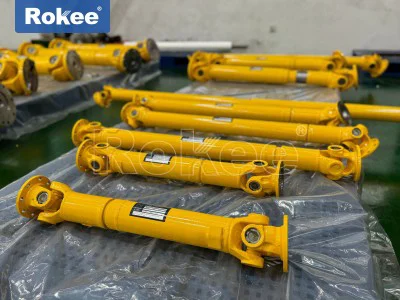
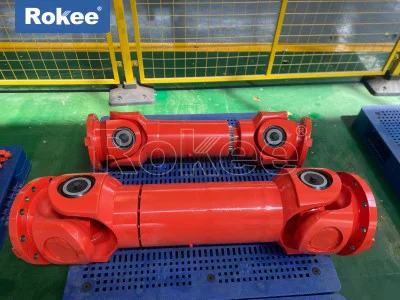
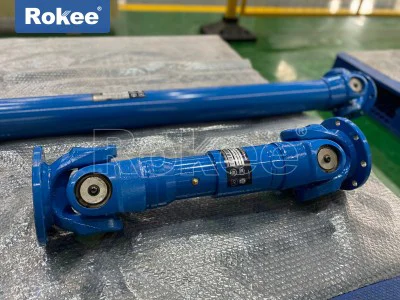
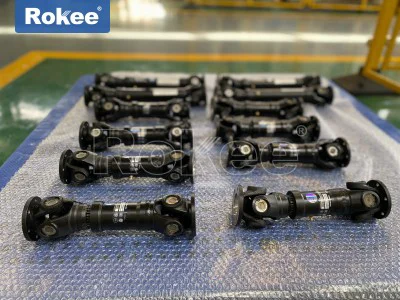
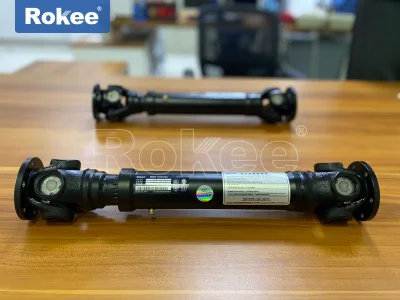
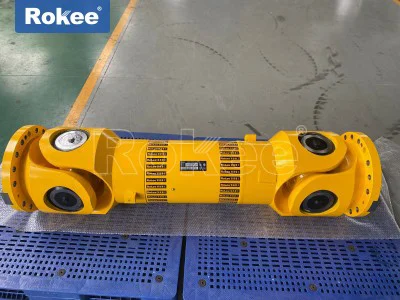
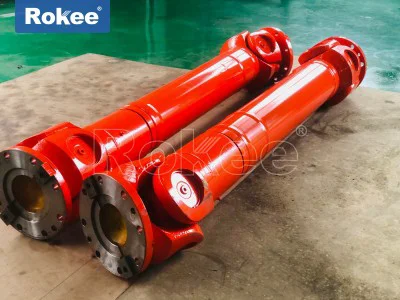
The structure of a high speed cardan coupling is a sophisticated assembly of precision components, each designed to work in harmony to accommodate misalignment, transmit torque, and resist the stresses associated with high-speed operation. At the core of every high speed cardan coupling is the universal joint, also known as a Cardan joint, which serves as the primary mechanism for compensating angular, radial, and axial misalignments between the driving and driven shafts. A basic universal joint consists of two yoke-shaped components, each attached to one of the shafts, and a central cross-shaped element called a spider or cross shaft. The spider is connected to the yokes through precision bearings, allowing the yokes to rotate independently of each other while maintaining a solid connection for torque transfer. In high speed applications, these bearings are typically needle roller bearings or high-precision ball bearings, which are chosen for their low friction, high load-carrying capacity, and ability to withstand the centrifugal forces generated at high rotational speeds. The yokes themselves are usually made from high-strength materials such as alloy steel or titanium, which are machined to tight tolerances to ensure balanced rotation and minimize vibration. In addition to the universal joint, many high speed cardan couplings feature a central shaft or spindle that connects two universal joints, forming a double cardan configuration. This central shaft is often hollow to reduce weight and improve balance, which is crucial for minimizing centrifugal stress at high speeds. The hollow design also helps to dissipate heat generated during operation, preventing thermal expansion from affecting the coupling’s performance. Some high speed cardan couplings also incorporate splined connections between the yokes and the shafts, allowing for axial adjustment to compensate for any axial displacement that may occur during operation. These splined connections are precision-machined to ensure smooth movement and maintain torque transfer efficiency, even when the shafts are subject to minor axial shifts.
The performance of high speed cardan couplings is defined by a set of key characteristics that determine their suitability for specific applications. One of the most critical performance parameters is the maximum rotational speed, which refers to the highest speed at which the coupling can operate safely without experiencing structural failure or excessive vibration. High speed cardan couplings are typically designed to operate at rotational speeds ranging from several thousand revolutions per minute (RPM) up to tens of thousands of RPM, depending on their size, material, and design. To achieve this, the coupling must be carefully balanced to minimize centrifugal forces, which can cause vibration, noise, and premature wear. Dynamic balancing is a crucial manufacturing process for high speed cardan couplings, ensuring that the mass of the coupling is evenly distributed around the rotational axis. This reduces vibration and stress on the coupling components and the connected shafts, extending the service life of the entire transmission system. Another key performance characteristic is torque capacity, which is the maximum amount of torque that the coupling can transmit without suffering damage. High speed cardan couplings are engineered to handle a wide range of torque levels, from small amounts in precision machinery to large torques in heavy-duty industrial applications. The torque capacity is determined by the strength of the materials used, the design of the universal joint and yokes, and the size of the coupling. In addition to torque capacity, high speed cardan couplings must also exhibit excellent misalignment compensation capabilities. Angular misalignment, which occurs when the shafts are not collinear but intersect at an angle, is the most common type of misalignment compensated by these couplings. High speed cardan couplings can typically accommodate angular misalignments ranging from 5 degrees up to 45 degrees, depending on the design. They can also compensate for radial misalignment, where the shafts are parallel but offset from each other, and axial misalignment, where the shafts move along their central axes. The ability to compensate for these misalignments is essential in applications where perfect shaft alignment is difficult or impossible to achieve, such as in automotive drivetrains, industrial machinery, and aerospace systems. Other important performance characteristics include transmission efficiency, wear resistance, and thermal stability. Transmission efficiency refers to the percentage of torque that is transferred from the driving shaft to the driven shaft without loss. High speed cardan couplings typically have high transmission efficiency, often above 98%, making them energy-efficient options for power transmission. Wear resistance is ensured by the use of high-quality materials and precision bearings, which reduce friction and minimize wear even during prolonged high-speed operation. Thermal stability is also crucial, as high rotational speeds generate heat that can affect the coupling’s performance. High speed cardan couplings are designed with heat dissipation features, such as hollow shafts or cooling fins, to prevent overheating and maintain consistent performance over a wide range of operating temperatures.
There are several types of high speed cardan couplings, each designed to meet the specific requirements of different applications. The most common type is the single cardan coupling, which consists of a single universal joint connecting two yokes. This type of coupling is simple in design, cost-effective, and suitable for applications where the angular misalignment is relatively small, typically up to 15 degrees. Single cardan couplings are often used in light-duty applications, such as small industrial machinery, automotive auxiliary systems, and precision equipment, where compact size and simplicity are important. However, a limitation of single cardan couplings is that they can cause speed fluctuations in the driven shaft when the angular misalignment is large. This is because the rotational speed of the driven shaft varies slightly as the universal joint rotates, which can lead to vibration and noise at high speeds. To address this issue, double cardan couplings, also known as constant velocity (CV) couplings, are used. A double cardan coupling consists of two universal joints connected by a central shaft, with the two joints offset by 90 degrees. This configuration cancels out the speed fluctuations caused by a single universal joint, ensuring that the driven shaft rotates at a constant speed regardless of the angular misalignment. Double cardan couplings are ideal for high speed applications where constant velocity is critical, such as automotive drivetrains, aerospace systems, and high-speed industrial machinery. They can accommodate larger angular misalignments, up to 45 degrees, and provide smoother operation at high speeds. Another type of high speed cardan coupling is the ball and socket cardan coupling, which uses a ball and socket joint instead of a cross-shaped spider. This design offers greater angular misalignment capacity and smoother operation, making it suitable for applications where high precision and low vibration are required. Ball and socket cardan couplings are often used in precision machinery, medical equipment, and aerospace applications, where even minor vibrations can affect performance. Additionally, there are telescopic cardan couplings, which feature a splined central shaft that allows for axial adjustment. These couplings are used in applications where the distance between the driving and driven shafts may change during operation, such as in automotive drivetrains with suspension systems or industrial machinery with thermal expansion. Telescopic cardan couplings can compensate for both axial displacement and angular misalignment, making them versatile and adaptable to a wide range of applications.
The applications of high speed cardan couplings are diverse and span across numerous industries, each leveraging the unique capabilities of these couplings to solve specific power transmission challenges. In the automotive industry, high speed cardan couplings are widely used in drivetrains, particularly in rear-wheel drive and four-wheel drive vehicles. They connect the transmission to the differential, allowing for angular misalignment between the two components as the vehicle moves over uneven terrain. Double cardan couplings are often used in high-performance vehicles and off-road vehicles, where constant velocity and the ability to accommodate large angular misalignments are essential. In addition, high speed cardan couplings are used in automotive auxiliary systems, such as power steering and air conditioning compressors, where precise torque transfer at high speeds is required. The aerospace industry is another major user of high speed cardan couplings, where they are employed in aircraft engines, landing gear systems, and auxiliary power units. In aircraft engines, high speed cardan couplings connect the engine to the accessory gearbox, transmitting torque at extremely high speeds while accommodating minor misalignments caused by thermal expansion and vibration. The lightweight and high-strength design of high speed cardan couplings makes them ideal for aerospace applications, where weight reduction and reliability are critical. In industrial machinery, high speed cardan couplings are used in a wide range of equipment, including pumps, compressors, turbines, and machine tools. For example, in centrifugal pumps and compressors, which operate at high speeds, high speed cardan couplings connect the motor to the pump or compressor shaft, compensating for any misalignment and ensuring efficient torque transfer. In turbines, such as gas turbines and steam turbines, high speed cardan couplings are used to connect the turbine to the generator, transmitting large amounts of torque at high speeds while maintaining stability. Machine tools, such as lathes, milling machines, and grinders, also use high speed cardan couplings to connect the motor to the spindle, ensuring precise rotation and accurate machining. The power generation industry also relies heavily on high speed cardan couplings, particularly in thermal power plants, hydroelectric power plants, and wind farms. In thermal power plants, high speed cardan couplings connect the steam turbine to the generator, transmitting the torque generated by the turbine to the generator to produce electricity. In hydroelectric power plants, they are used to connect the water turbine to the generator, accommodating the misalignment between the two components caused by the weight of the turbine and the water flow. In wind farms, high speed cardan couplings are used in wind turbines to connect the rotor to the gearbox, transmitting the torque generated by the wind to the gearbox for speed conversion. Other applications of high speed cardan couplings include marine propulsion systems, where they connect the engine to the propeller shaft, accommodating the angular misalignment caused by the movement of the ship; agricultural machinery, such as tractors and harvesters, where they are used to transmit power to various attachments; and medical equipment, such as MRI machines and surgical tools, where precise and smooth torque transfer at high speeds is essential.
In conclusion, high speed cardan couplings are essential components in modern mechanical power transmission systems, offering a unique combination of misalignment compensation, high torque capacity, and reliable performance at elevated rotational speeds. Their sophisticated structure, which includes universal joints, precision bearings, and high-strength materials, allows them to withstand the challenges of high-speed operation while maintaining efficiency and durability. The various types of high speed cardan couplings, including single, double, ball and socket, and telescopic designs, cater to the diverse needs of different applications, from automotive and aerospace to industrial machinery and power generation. As technology continues to advance, the design and performance of high speed cardan couplings are constantly evolving, with manufacturers focusing on improving balance, reducing weight, and enhancing durability to meet the growing demands of high-speed and high-performance applications. Whether in a high-performance sports car, a jet engine, or a industrial turbine, high speed cardan couplings play a vital role in ensuring the smooth and efficient operation of mechanical systems, making them an indispensable part of modern engineering.