Universal Shaft Coupling Links With Sandwich Panel Making Machine For Easier Operation
In the modern industrial manufacturing sector focused on building material production, the stable and efficient operation of sandwich panel making machines stands as a core foundation for ensuring continuous production rhythm, consistent product quality, and streamlined on-site operational workflows. Sandwich panels, widely applied in architectural enclosure engineering, industrial factory building construction, cold chain storage facilities, and temporary modular building projects, require standardized and precise processing procedures throughout the entire production process, including core material filling, surface plate pressing, edge sealing trimming, and fixed-length cutting. Every operational link of the production line relies on coordinated power transmission between multiple mechanical drive components, and the smooth connection between power drive units and executive working parts directly determines whether the entire production process can proceed stably without intermittent shutdowns, operational jitters, or mechanical wear failures. Among all the key mechanical connection parts that support the normal operation of sandwich panel making machines, the universal shaft coupling has gradually become an indispensable core matching component in the upgrading and daily operation of such production equipment by virtue of its unique flexible transmission performance, strong misalignment compensation capability, and simple and durable structural design. It effectively connects various drive shafts and driven shafts inside the sandwich panel making machine, optimizes the overall power transmission logic of the equipment, simplifies daily operational adjustment steps for operators, reduces unnecessary mechanical maintenance work, and fundamentally realizes the goal of simpler, more efficient, and more stable daily operation and long-term production application of the sandwich panel making machine.
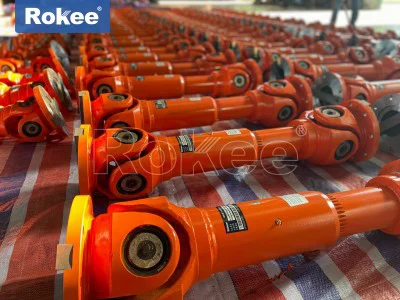
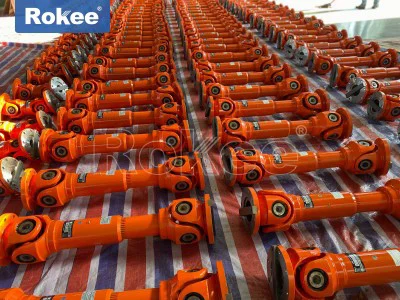
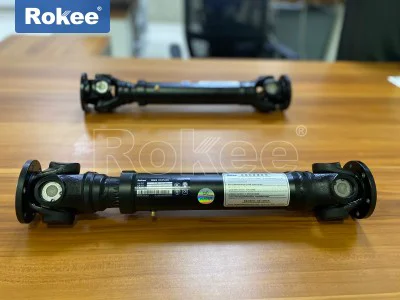
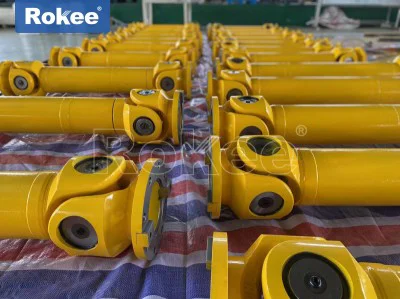
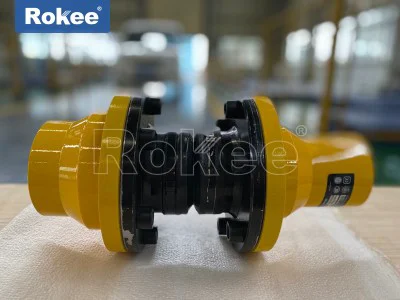
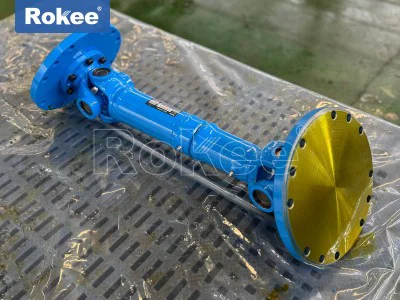
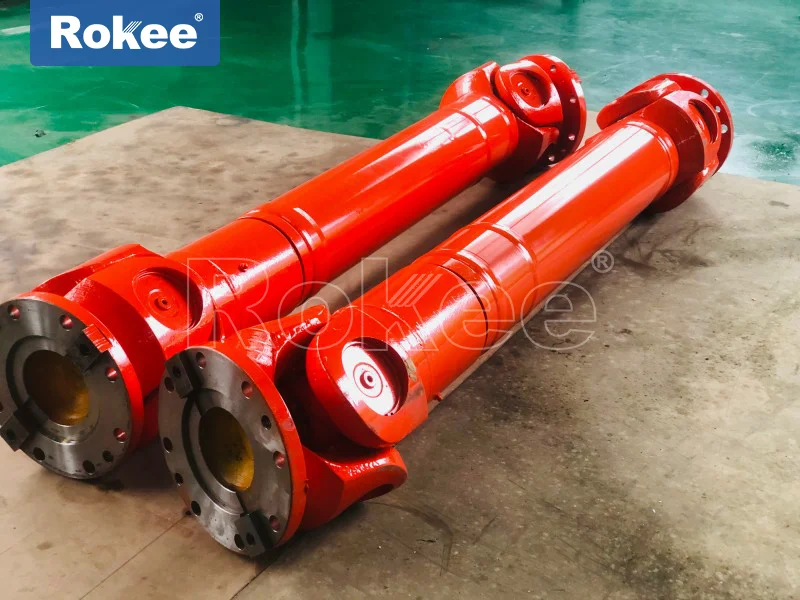
The basic working principle of universal shaft couplings is built on a mature spatial linkage mechanism structure, with the most commonly used cross-axis structural design becoming the mainstream configuration matched with medium and large industrial production machinery such as sandwich panel making machines. The core structure of this type of coupling is composed of two fork head components and an intermediate cross-axis connecting part, with precision bearings installed at each end of the cross-axis, enabling flexible rotational movement between the cross-axis and the fork heads without transmission obstruction or mechanical jamming during the power transfer process. The core functional advantage of this structural design lies in its ability to efficiently transmit rotational torque and operating power between two shafts that are not in a completely coaxial state, perfectly solving the common mechanical connection problems existing in the actual installation and long-term operation of sandwich panel making machines. Unlike rigid connection parts that require strict precise alignment between the driving shaft and the driven shaft, universal shaft couplings can well adapt to angular deviation, axial displacement, and minor radial misalignment between shafts caused by various objective factors in actual production scenarios. In the assembly and commissioning stage of sandwich panel making machines, limited by on-site installation space, equipment placement foundation flatness, and assembly precision of various accessories, it is difficult to achieve absolute coaxial installation of all drive and driven shafts, and rigid connection methods often lead to unsmooth power transmission, obvious mechanical vibration during equipment operation, and accelerated wear of shaft parts and bearing components. In contrast, the flexible connection mode provided by universal shaft couplings can automatically compensate for various misalignment deviations generated during equipment installation and subsequent long-term operation, ensuring that power can be continuously and stably transmitted from the power motor and reduction drive device to each functional execution module of the sandwich panel making machine, including the feeding conveying mechanism, pressing forming mechanism, and fixed-length cutting mechanism.
In the actual production and operation process of sandwich panel making machines, mechanical equipment will inevitably be affected by multiple external and internal factors that lead to changes in shaft alignment status, which puts forward high requirements on the adaptive adjustment capability of connecting and transmission components. During the long-term continuous production of sandwich panels, the mechanical structure of the equipment will generate certain vibration and slight structural deformation under the action of long-term operating load, and the thermal expansion and contraction of metal parts caused by the continuous operation heat of the power drive system will also cause subtle position changes between the connected shafts of different mechanical parts. In addition, daily routine maintenance, component replacement, and production parameter adjustment of the sandwich panel making machine will also lead to minor disassembly and reassembly of local mechanical structures, resulting in small changes in the relative position and angle between the driving shaft and the driven shaft. If the equipment adopts traditional rigid transmission connection parts, every slight position change will cause unbalanced power transmission, which not only affects the synchronous coordination of each production link of the sandwich panel, leading to uneven pressing thickness of the panel, inconsistent edge sealing specifications, and inaccurate cutting size, but also easily causes excessive mechanical stress on key shaft parts, intensifies friction and wear of internal mechanical components, and greatly shortens the service life of core equipment parts. More importantly, such unstable transmission conditions will force operators to spend a lot of time and energy on frequent shutdown debugging and position calibration of the equipment, repeatedly adjusting the installation position and connection tightness of transmission parts to ensure normal production, which greatly increases the operational difficulty of the equipment, reduces overall production efficiency, and brings unnecessary operational burden to front-line production personnel. The application of universal shaft couplings completely solves these practical pain points in the operation of sandwich panel making machines. With its unique structural design and flexible transmission characteristics, the coupling can automatically adapt to real-time small changes in shaft angle and position during equipment operation without frequent manual debugging and repeated position calibration by operators. It always maintains stable and consistent power transmission efficiency between all connected mechanical parts, ensures that each functional module of the sandwich panel making machine operates in a synchronous and coordinated state, and greatly simplifies the daily operation and maintenance work of the equipment.
The operational simplicity brought by the matching connection of universal shaft couplings and sandwich panel making machine is reflected in the whole process of equipment initial commissioning, daily start-stop operation, production parameter switching, and routine maintenance and upkeep. In the initial equipment installation and commissioning stage, the installation and docking work of universal shaft couplings is extremely convenient and quick, without the need for complex precision positioning tools and tedious alignment adjustment processes. Installation personnel only need to complete the fixed connection between the coupling and the driving and driven shafts according to the basic assembly steps, without spending a lot of time on fine-tuning the coaxial accuracy of the two shafts. This greatly shortens the equipment installation and commissioning cycle, enables the sandwich panel making machine to be put into formal production faster, and reduces the early preparation work pressure for production and processing enterprises. In the daily production process, operators need to frequently adjust production specifications according to different production order requirements, switching between sandwich panels with different thicknesses, different core material types, and different surface plate materials. Each production specification adjustment corresponds to the parameter change and position fine-tuning of multiple functional mechanisms inside the equipment. In the past, when using traditional rigid transmission connections, each specification adjustment needed to be matched with the synchronous debugging of transmission connection parts to avoid transmission failure caused by mechanism position changes, which made the operation process complicated and cumbersome, and required professional and skilled operators to complete the work. After adopting universal shaft couplings for connection and transmission, due to the good misalignment compensation and adaptive adjustment performance of the couplings, the position changes of the functional mechanisms caused by production specification adjustments will not affect the normal power transmission effect. Operators only need to complete the conventional parameter setting and mechanism adjustment work according to the standard operating procedures, without additional debugging of the transmission connection parts, the overall operation steps are greatly simplified, the operation threshold of the equipment is reduced, and even operators with ordinary operating proficiency can quickly complete production switching and daily equipment operation work.
In terms of daily equipment maintenance and later operation guarantee, the matching application of universal shaft couplings also brings obvious simplification advantages, effectively reducing the maintenance difficulty and workload of sandwich panel making machines, and ensuring the long-term stable and low-failure operation of the equipment. The structural design of universal shaft couplings is simple and compact, with few internal core components, strong overall structural durability, and good resistance to mechanical vibration and operational wear. Under the long-term continuous operating conditions of sandwich panel making machines, the couplings can maintain stable working performance for a long time without frequent failure and damage, reducing the frequency of replacement and maintenance of transmission components. In the past, the traditional rigid transmission connection parts were prone to deformation and damage under the influence of mechanical vibration and misalignment load, requiring maintenance personnel to regularly inspect the connection status, replace worn parts, and calibrate the connection position, which not only consumed a lot of maintenance time and labor costs, but also required frequent equipment shutdown for maintenance, affecting the continuity of production work. Universal shaft couplings hardly need frequent daily inspection and routine maintenance during long-term use. Maintenance personnel only need to carry out simple regular lubrication treatment and conventional appearance inspection according to the basic maintenance cycle, which can ensure the long-term normal operation of the couplings. Once individual parts need to be replaced after long-term use, the disassembly and assembly process of the universal shaft coupling is also very simple and fast, without the need for professional disassembly tools and complex disassembly steps. The replacement work can be completed in a short time, the equipment shutdown maintenance time is greatly shortened, the impact on the overall production progress is minimized, and the later operation and maintenance management work of the entire sandwich panel making machine becomes more labor-saving and efficient.
The stable power transmission effect brought by universal shaft couplings to sandwich panel making machines also indirectly optimizes the operational controllability of the equipment and improves the consistency and stability of finished sandwich panel products, making the entire production operation work more standardized and orderly. The production and processing of sandwich panels have high requirements on the synchronization and stability of each production link. The feeding speed of core materials, the pressing pressure of surface plates, and the cutting speed of finished panels all need to maintain a stable matching state. Any jitter and instability in power transmission will lead to uncoordinated operation of each mechanism, resulting in unstable product processing quality, defective products, and material waste. The universal shaft coupling can always maintain constant and balanced torque transmission during the operation of the equipment, effectively buffering the mechanical vibration generated during the operation of the drive motor and the mechanical mechanism, avoiding the transmission of vibration impact to each functional processing mechanism of the equipment, ensuring that each production link runs smoothly and stably. For operators, the stable operating state of the equipment means that there is no need to frequently monitor the operating status of the equipment and adjust operating parameters to deal with abnormal fluctuations. They only need to follow the fixed operating process to complete daily production tasks, the operational work is more relaxed and orderly, and the hidden operational risks caused by equipment abnormal vibration and unstable transmission are also effectively avoided. At the same time, the stable transmission performance reduces the defective rate of finished products, reduces the rework and waste of raw materials caused by product quality problems, enables production enterprises to obtain better production benefits while simplifying equipment operation, and realizes the dual improvement of operational efficiency and production quality.
From the perspective of long-term equipment operation and production sustainable development, the combination of universal shaft couplings and sandwich panel making machines is an important optimization measure for the mechanical transmission system configuration of building material production equipment, which not only meets the basic power transmission needs of the equipment, but also focuses on simplifying operational procedures, reducing operational difficulty, and optimizing operational efficiency. In the current building material manufacturing industry with increasingly fierce market competition and increasingly strict production efficiency requirements, simplifying equipment operation, reducing maintenance costs, and ensuring continuous and stable production have become important goals pursued by every production enterprise. Many traditional sandwich panel making machines have complex transmission structures and cumbersome operational and maintenance processes, which not only require high labor costs for operation and maintenance, but also easily affect production progress and product quality due to equipment failures and debugging delays. The application of universal shaft couplings perfectly solves these bottleneck problems in the operation of traditional equipment. With its reliable performance, simple structure, convenient installation and maintenance, and strong adaptive adjustment capability, it optimizes the power transmission foundation of the sandwich panel making machine, simplifies all links from equipment installation and commissioning, daily production operation to later maintenance and upkeep, reduces the operational and maintenance burden of enterprises, and helps the sandwich panel production line maintain an efficient, stable and continuous production state for a long time. As the building material manufacturing industry continues to develop towards intelligent production and efficient processing, the matching application of high-performance and easy-to-operate mechanical components such as universal shaft couplings will become more and more common in various professional production equipment, continuously empowering the simplification of equipment operation and the high-quality development of production work in the entire industry.