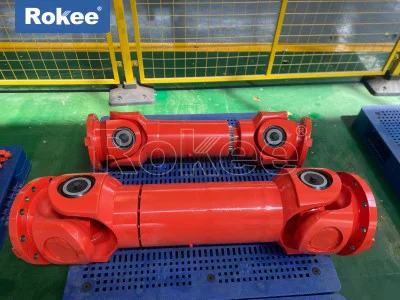
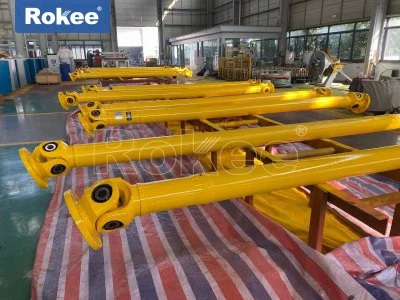
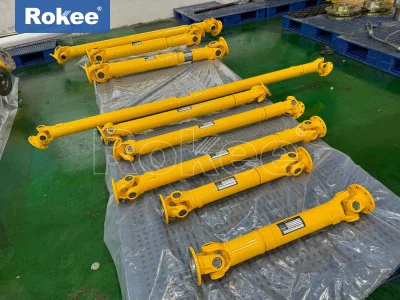
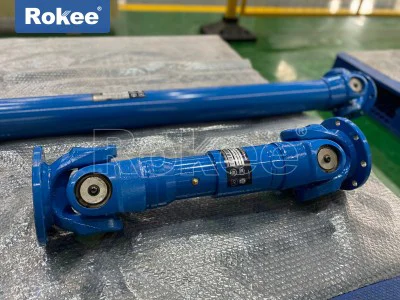
Performance Test Method Of Cardan Driveshaft For PIR Sandwich Panel Production Equipment
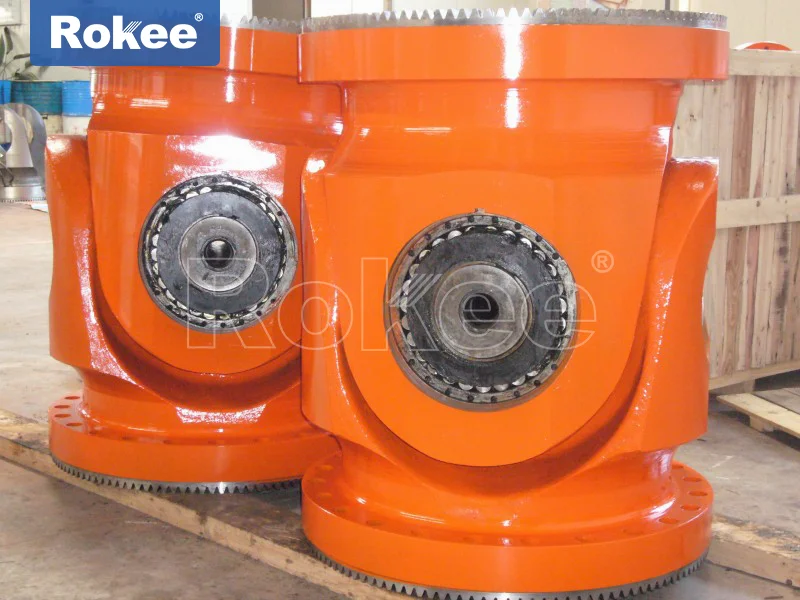
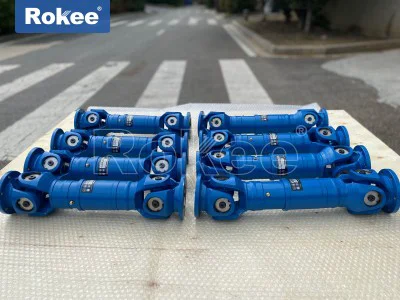
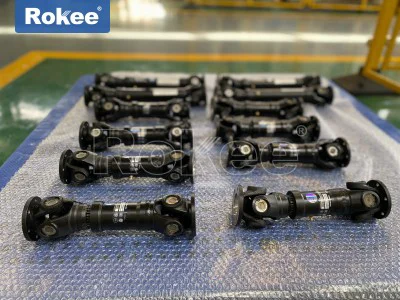
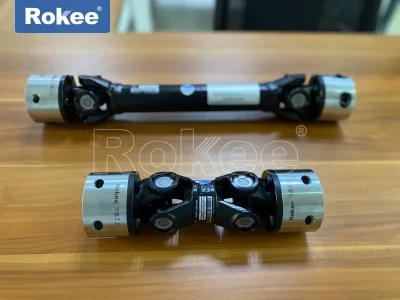
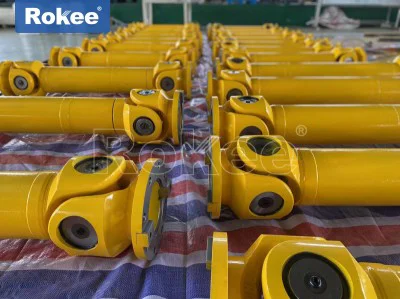
The cardan driveshaft is a critical transmission component in PIR sandwich panel production equipment, responsible for transmitting rotational power between non-coaxial mechanical units in the production line, such as the uncoiling system, roll forming system, foaming system, and cutting system. Its stable and reliable operation directly determines the continuity of the production process, the consistency of product quality, and the service life of the entire equipment. Unlike cardan driveshafts used in automotive or heavy machinery fields, those applied in PIR sandwich panel production equipment operate under specific working conditions: they need to adapt to long-term continuous operation, bear variable loads caused by the adjustment of production speed and material thickness, and compensate for the angular deviations between different equipment modules due to installation layout limitations. In addition, the production environment of PIR sandwich panels may involve certain temperature fluctuations and dust, which puts forward higher requirements for the wear resistance, fatigue resistance, and stability of the cardan driveshaft. Therefore, establishing a scientific and comprehensive performance test method is essential to verify the performance of the cardan driveshaft, ensure its compliance with the operational requirements of PIR sandwich panel production equipment, and avoid production interruptions, product defects, or equipment damage caused by driveshaft failure.
Before conducting the performance test of the cardan driveshaft, sufficient preparation work must be carried out to ensure the accuracy, safety, and smooth progress of the test. The preparation work mainly includes test sample selection, test equipment and tool preparation, test environment control, and pre-test inspection of the sample. Firstly, the test sample should be a cardan driveshaft that has completed the entire manufacturing process, including forging, machining, heat treatment, and surface treatment, and is consistent with the specifications and technical parameters of the one used in actual PIR sandwich panel production equipment. The sample should be free from obvious defects such as cracks, deformation, and surface scratches, and its key dimensions, such as the length of the shaft body, the size of the universal joint, and the specifications of the spline connection, should meet the design requirements. It is necessary to select at least three identical samples for the test to ensure the representativeness of the test results and avoid accidental errors caused by individual sample defects. Secondly, the selection of test equipment and tools should be based on the test items and technical requirements. The main test equipment includes a torque testing machine, a speed regulating motor, a vibration testing instrument, a temperature measuring device, a wear testing device, a balance testing machine, and a precision measuring tool such as a micrometer and a dial indicator. The torque testing machine should have a measurement range that covers the maximum working torque of the cardan driveshaft, with an error not exceeding ±1% to ensure the accuracy of torque measurement. The vibration testing instrument should be able to collect vibration signals in the horizontal, vertical, and axial directions of the driveshaft, with a frequency range of 0-1000Hz, which can meet the requirements of vibration detection under different operating speeds. The temperature measuring device should be able to accurately measure the surface temperature of the universal joint and the shaft body, with a measurement range of 0-200℃ and an error of ±2℃. The wear testing device should be able to simulate the actual working load and motion state of the driveshaft, realizing the wear test under long-term continuous operation. The balance testing machine should be able to detect the dynamic balance of the driveshaft at different speeds, ensuring that the unbalance amount meets the design requirements. All test equipment should be calibrated before use to ensure their measurement accuracy meets the test standards. Thirdly, the test environment needs to be controlled within a reasonable range. The test should be carried out in a clean, dry, and well-ventilated laboratory, with an ambient temperature of 20±5℃, a relative humidity of 40%-60%, and no obvious vibration or electromagnetic interference. The ambient temperature and humidity will affect the performance of the lubricating grease in the universal joint and the material properties of the driveshaft, so it is necessary to maintain the stability of the test environment during the test process. Finally, a comprehensive pre-test inspection of the sample is required. Check whether the universal joint of the cardan driveshaft is filled with the specified lubricating grease in the correct dosage, and ensure that all seals and bellows are installed correctly to prevent lubricating grease leakage during the test. Measure and record the circumferential clearance of the universal joint: apply a clockwise and counterclockwise torque of 10Nm alternately to the conjugate cross holes, and read the total pointer reading from the end to obtain the clearance value. Measure the radial clearance at 100mm of the driveshaft under a torque of 10Nm, and if the recorded clearance does not exceed 0.6mm, the sample is considered qualified for the subsequent test. In addition, mark a line along the total length parallel to the axis of the driveshaft to facilitate the observation of deformation during the test, and mark the non-functional surface to avoid confusion during the test process.
The performance test of the cardan driveshaft for PIR sandwich panel production equipment mainly includes dynamic balance test, torque transmission performance test, vibration performance test, fatigue life test, wear test, high-temperature resistance test, and stability test under variable working conditions. Each test item is designed to verify different performance indicators of the driveshaft, ensuring that it can meet the actual working requirements of PIR sandwich panel production equipment. The dynamic balance test is an important test item to ensure the stable operation of the cardan driveshaft. During the operation of the PIR sandwich panel production line, the cardan driveshaft rotates at a certain speed, and if there is an unbalance, it will generate vibration, which will affect the stability of the entire production line and accelerate the wear of the driveshaft and other related components. The dynamic balance test is carried out using a balance testing machine. First, install the cardan driveshaft sample on the balance testing machine, ensure that the installation is firm and coaxial, and adjust the position of the sample to make it in a horizontal state. Then, start the balance testing machine, adjust the speed to the rated working speed of the driveshaft in actual production, and gradually increase the speed to the maximum working speed (usually 120% of the rated speed) to detect the unbalance amount and its position. During the test, mark the position of the flange, tighten the safety nut of the flange when pulling the shaft along the marked direction, then check the balance of the shaft, rotate the cardan driveshaft 180 degrees at the installation position, and repeat the above procedure to ensure the accuracy of the balance test. The unbalance amount of the cardan driveshaft should not exceed the design limit value; otherwise, it needs to be corrected by adding or removing balance weights. After correction, the test should be repeated until the unbalance amount meets the requirements. The dynamic balance test should be carried out at different speeds, including the rated speed, the minimum working speed, and the maximum working speed, to verify the balance performance of the driveshaft under different operating conditions.
The torque transmission performance test is used to verify the ability of the cardan driveshaft to transmit torque stably and accurately under different working conditions, which is directly related to the power transmission efficiency of the PIR sandwich panel production line. The test is carried out using a torque testing machine and a speed regulating motor. First, connect one end of the cardan driveshaft sample to the speed regulating motor and the other end to the torque testing machine, ensuring that the connection is firm and there is no looseness. Before the test, adjust the universal joint of the driveshaft to the zero angle position, and record the connection stiffness of the two planes under the torque required for the articulation of the universal joint. Then, set the speed regulating motor to different speed levels (including the minimum working speed, rated speed, and maximum working speed of the driveshaft), and apply different torques to the driveshaft through the torque testing machine, with the torque increment of 10% of the maximum rated torque, up to the maximum rated torque of the driveshaft. During the test, record the input torque, output torque, and rotational speed of the driveshaft in real time, calculate the torque transmission efficiency (the ratio of output torque to input torque), and observe whether there is torque loss, slippage, or abnormal noise during the torque transmission process. At the same time, when the driveshaft is at zero angle, record the load required to make the sliding part of the driveshaft just move under the action of torque, and the maximum load should not exceed 4900N. The torque transmission efficiency of the cardan driveshaft should not be less than 98% under the rated working condition, and there should be no obvious torque loss or slippage. If the torque transmission efficiency is too low or there is abnormal torque transmission, it indicates that there is a problem with the universal joint, spline connection, or other parts of the driveshaft, which needs to be checked and adjusted.
The vibration performance test is used to detect the vibration amplitude and frequency of the cardan driveshaft during operation, and verify whether its vibration performance meets the requirements of the PIR sandwich panel production equipment. Excessive vibration will not only affect the stability of the production line but also cause fatigue damage to the driveshaft and other components over time. The test is carried out using a vibration testing instrument, which is installed at the two ends of the cardan driveshaft and the middle position of the shaft body to collect vibration signals in the horizontal, vertical, and axial directions. First, install the cardan driveshaft sample on the test bench, connect it to the speed regulating motor, and ensure that the installation is consistent with the actual working state. Then, start the speed regulating motor, adjust the speed to the rated working speed, and run it continuously for 2 hours. During the operation, the vibration testing instrument collects vibration signals in real time, records the vibration amplitude and frequency, and draws the vibration curve. After that, adjust the speed to the maximum working speed and the minimum working speed, and repeat the above test process. The vibration amplitude of the cardan driveshaft under the rated working speed should not exceed 0.1mm, and the vibration frequency should be stable, without obvious abnormal vibration peaks. If the vibration amplitude exceeds the limit value or there is an abnormal vibration frequency, it may be caused by unbalance, poor installation, or wear of the universal joint, which needs to be further inspected and handled. In addition, during the vibration test, it is necessary to observe whether there is abnormal noise in the driveshaft, which can assist in judging the operation state of the driveshaft.
The fatigue life test is one of the key test items to verify the service life of the cardan driveshaft, which simulates the long-term continuous operation state of the driveshaft in the PIR sandwich panel production line and detects its fatigue resistance. The PIR sandwich panel production equipment usually operates continuously for a long time, so the cardan driveshaft must have sufficient fatigue life to avoid frequent replacement and affect production efficiency. The fatigue life test is carried out using a fatigue testing machine, which can apply alternating torque to the driveshaft to simulate the actual load change during production. First, install the cardan driveshaft sample on the fatigue testing machine, and set the test parameters according to the actual working conditions: the alternating torque range is 50% to 100% of the maximum rated torque, the test frequency is not more than 1 cycle per second, and the test cycle number is set according to the design service life (usually not less than 100,000 cycles). During the test, the fatigue testing machine applies alternating torque to the driveshaft continuously, and records the operation state of the driveshaft in real time, including whether there is deformation, crack, or other damage. After the test reaches the set number of cycles, stop the test, and check the driveshaft for cracks, deformation, or wear. If the driveshaft has no obvious damage after the set number of cycles, it indicates that its fatigue life meets the design requirements. If cracks or deformation occur during the test, record the number of cycles when the damage occurs, and analyze the cause of the fatigue damage. In addition, the fatigue life test can also be carried out under different load conditions to verify the fatigue resistance of the driveshaft under variable load conditions, which is more in line with the actual working state of the driveshaft in the PIR sandwich panel production line.
The wear test is used to verify the wear resistance of the cardan driveshaft, especially the wear resistance of the universal joint bearings, spline connections, and other key parts. The wear of these parts will lead to increased clearance, reduced torque transmission efficiency, and even driveshaft failure. The wear test is carried out using a wear testing device, which can simulate the actual working load, speed, and lubrication conditions of the driveshaft. First, install the cardan driveshaft sample on the wear testing device, fill the universal joint with the specified lubricating grease, and adjust the test parameters: the rotational speed is the rated working speed, the load is the rated torque, and the test time is 100 hours (simulating the long-term continuous operation of the production line). During the test, the wear testing device records the wear amount of the key parts of the driveshaft in real time. After the test, disassemble the driveshaft, measure the wear amount of the universal joint bearings, spline connections, and other parts using precision measuring tools, and compare it with the design limit value. The wear amount of the key parts should not exceed the design limit value, and there should be no obvious wear, scratches, or other defects. At the same time, check the state of the lubricating grease, observe whether there is oxidation, deterioration, or contamination, and evaluate the lubrication effect. If the wear amount exceeds the limit value, it indicates that the material or surface treatment of the driveshaft does not meet the requirements, which needs to be improved. In addition, the wear test can also be carried out under different lubrication conditions to verify the influence of lubrication on the wear resistance of the driveshaft, providing a basis for the selection of lubricating grease in actual use.
The high-temperature resistance test is designed to verify the performance stability of the cardan driveshaft under high-temperature working conditions. In the production process of PIR sandwich panels, the foaming system will generate a certain amount of heat, which may cause the ambient temperature around the cardan driveshaft to rise. In addition, the friction between the internal parts of the driveshaft during operation will also generate heat, leading to an increase in the temperature of the driveshaft itself. Therefore, the cardan driveshaft must have good high-temperature resistance to ensure stable operation under high-temperature conditions. The high-temperature resistance test is carried out in a high-temperature test chamber. First, place the cardan driveshaft sample in the high-temperature test chamber, set the temperature of the test chamber to the maximum temperature that may be encountered in actual production (usually 80-120℃), and keep it for 4 hours to make the temperature of the driveshaft reach a stable state. Then, take out the sample, install it on the test bench, connect it to the speed regulating motor and torque testing machine, and carry out the torque transmission performance test and vibration performance test under the rated working condition. During the test, record the torque transmission efficiency, vibration amplitude, and temperature of the driveshaft in real time, and observe whether there is abnormal noise, deformation, or other defects. After the test, stop the operation, cool the driveshaft to room temperature, and check for cracks, deformation, or other damage. The cardan driveshaft should be able to maintain stable torque transmission efficiency and vibration performance under high-temperature conditions, with no obvious damage. If the torque transmission efficiency decreases significantly, the vibration amplitude exceeds the limit value, or there is damage such as cracks, it indicates that the high-temperature resistance of the driveshaft does not meet the requirements, which needs to be improved by optimizing the material or heat treatment process.
The stability test under variable working conditions is used to verify the adaptability of the cardan driveshaft to the variable working conditions of the PIR sandwich panel production line. In actual production, the production speed of the PIR sandwich panel production line may need to be adjusted according to the product specifications and production requirements, which will lead to changes in the rotational speed and torque of the cardan driveshaft. In addition, the thickness and material of the PIR sandwich panel may also change, resulting in changes in the load borne by the driveshaft. Therefore, the cardan driveshaft must have good adaptability to variable working conditions to ensure stable operation under different working conditions. The test is carried out using a speed regulating motor and a torque testing machine. First, install the cardan driveshaft sample on the test bench, and set the test parameters: the rotational speed is adjusted continuously between the minimum working speed and the maximum working speed, and the torque is adjusted continuously between 50% and 100% of the maximum rated torque. The test runs continuously for 8 hours, simulating the variable working conditions in actual production. During the test, record the torque transmission efficiency, vibration amplitude, and operation state of the driveshaft in real time, and observe whether there is abnormal noise, slippage, or other defects. After the test, check the driveshaft for cracks, deformation, or wear. The cardan driveshaft should be able to maintain stable performance under variable working conditions, with no obvious abnormalities. If there is a decrease in torque transmission efficiency, excessive vibration, or other abnormalities during the test, it indicates that the driveshaft has poor adaptability to variable working conditions, which needs to be improved by optimizing the structure or material.
After completing all the performance tests, it is necessary to conduct a comprehensive analysis of the test results to evaluate the overall performance of the cardan driveshaft. First, sort out the test data of each test item, including dynamic balance, torque transmission efficiency, vibration amplitude, fatigue life, wear amount, and performance under high-temperature and variable working conditions. Then, compare the test data with the design requirements and relevant standards to judge whether each performance indicator meets the requirements. For the test items that meet the requirements, record the specific test data as the performance reference of the cardan driveshaft. For the test items that do not meet the requirements, analyze the causes of the problems, such as unqualified dynamic balance may be caused by uneven material distribution or improper processing; low torque transmission efficiency may be caused by poor lubrication or loose connection; excessive vibration may be caused by unbalance or wear of the universal joint. According to the analysis results, put forward corresponding improvement measures, such as correcting the dynamic balance, optimizing the lubrication system, or improving the processing accuracy. In addition, the test results of multiple samples should be compared and analyzed to find out the variation law of the performance of the cardan driveshaft, provide a basis for the batch production quality control of the driveshaft, and ensure that the performance of the cardan driveshaft produced in batches is stable and consistent.
In conclusion, the performance test of the cardan driveshaft for PIR sandwich panel production equipment is a systematic and comprehensive work, which involves multiple test items and strict test procedures. By carrying out dynamic balance test, torque transmission performance test, vibration performance test, fatigue life test, wear test, high-temperature resistance test, and stability test under variable working conditions, the comprehensive performance of the cardan driveshaft can be fully verified, ensuring that it can meet the long-term continuous operation requirements of the PIR sandwich panel production line. The test preparation work is the premise of ensuring the test accuracy, and the scientific test procedures and strict result analysis are the key to evaluating the performance of the cardan driveshaft. Through the performance test, the potential defects of the cardan driveshaft can be found in time, the quality of the driveshaft can be improved, the failure rate of the driveshaft during use can be reduced, and the stability and efficiency of the PIR sandwich panel production line can be ensured. At the same time, the test method can also provide a reference for the design, manufacturing, and maintenance of the cardan driveshaft, promote the continuous improvement of the performance of the cardan driveshaft, and better meet the development needs of the PIR sandwich panel production industry. With the continuous upgrading of PIR sandwich panel production equipment, the performance requirements of the cardan driveshaft will be higher and higher, which requires continuous optimization and improvement of the performance test method, improving the test accuracy and efficiency, and providing more reliable technical support for the quality control of the cardan driveshaft.