Daily Inspection And Maintenance Process Of Universal Coupling In Sandwich Panel Making Line
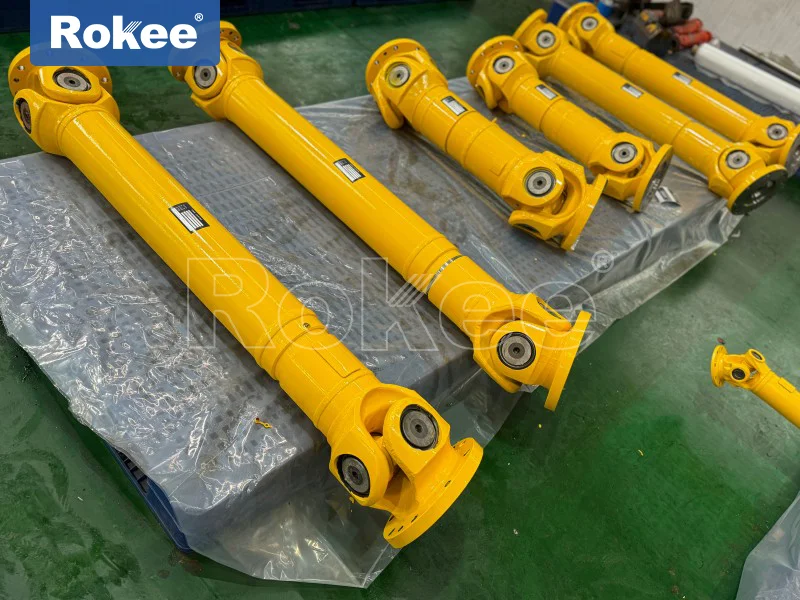
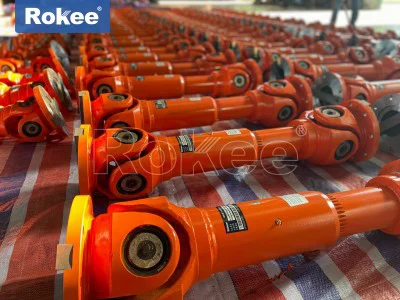
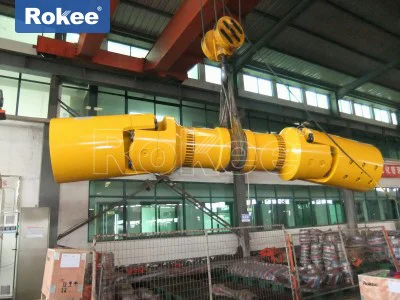
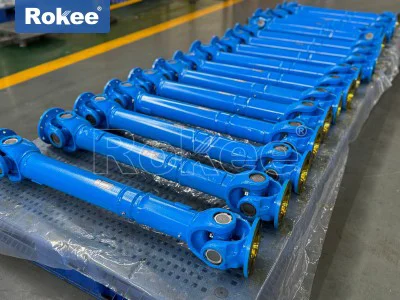
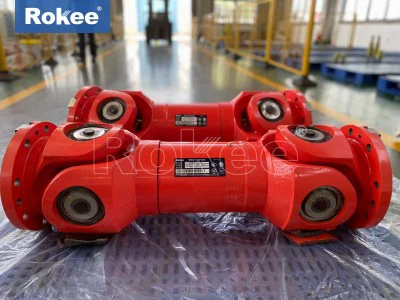
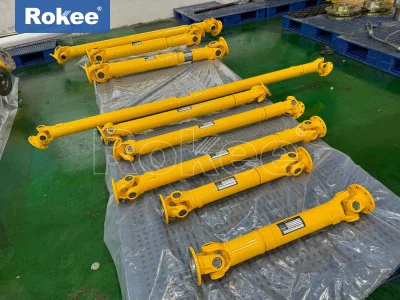
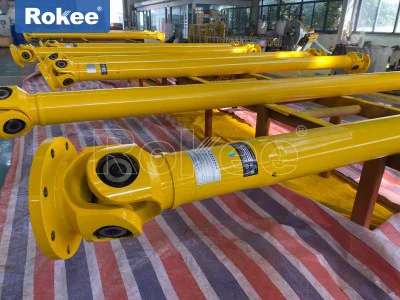
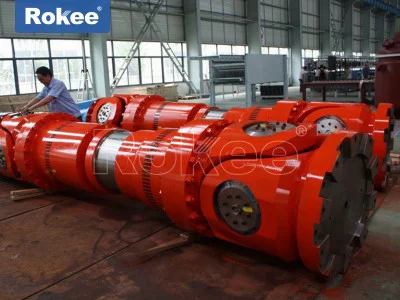
In the continuous and high-intensity operation of sandwich panel making lines, the universal coupling stands as an indispensable core transmission component that undertakes the critical task of transferring stable torque and rotational power between various driving units, reduction devices, and forming rollers throughout the entire production system. The normal and efficient operation of sandwich panel production heavily relies on the stable power transmission state of universal couplings, as these components need to adapt to complex operating conditions including slight axis deviation, axial position displacement, and frequent continuous start-stop operations during the whole production process of metal surface pressing, core material filling, composite bonding, and fixed-size cutting. Unlike ordinary transmission parts, universal couplings in sandwich panel making lines operate under long-term heavy-load working conditions, enduring continuous mechanical vibration, alternating torque impact, and subtle position deviation caused by equipment thermal expansion and mechanical fatigue. Once daily inspection and routine maintenance work are neglected, minor wear and hidden faults of the universal coupling will gradually accumulate and evolve into severe transmission jitter, power output instability, component jamming, and even sudden equipment shutdown faults. Such abnormal conditions will not only lead to uneven pressing thickness of sandwich panels, inconsistent composite bonding quality, and frequent product defective rates in the production process, but also trigger chain damage to matching motors, reducers, and forming roller sets, bringing unnecessary production stagnation and increased component replacement losses to the entire production workshop. Therefore, formulating and strictly implementing a standardized, systematic, and comprehensive daily inspection and maintenance process for universal couplings is the core basic work to ensure the long-term stable operation of the sandwich panel making line, maintain consistent product production quality, reduce unplanned downtime frequency, and extend the overall service life of transmission system components. Every operator and maintenance staff engaged in sandwich panel production and equipment management must strictly abide by the whole-process operation specifications of daily inspection, real-time monitoring, standardized maintenance, hidden danger elimination, and record management for universal couplings, and integrate refined maintenance work into every production shift and daily equipment management link to avoid passive equipment maintenance mode of repairing only after faults occur.
The daily inspection and maintenance work of universal couplings in sandwich panel making lines runs through the three key stages of before production startup, during continuous production operation, and after production shutdown every day, and each stage has targeted inspection focus, standardized operation steps, and maintenance implementation standards, all of which are closely linked and mutually complementary to form a closed-loop management system for full-cycle equipment protection. Before the official startup of the sandwich panel making line every working day, the first preparatory inspection work for universal couplings must be completed by special maintenance personnel on duty, and this pre-start inspection work needs to be carried out under the condition of complete equipment power-off and mechanical static state to ensure the safety of inspection operation and the accuracy of component state observation. The first step of the pre-start daily inspection is to conduct a comprehensive visual appearance inspection of all universal couplings distributed in each transmission node of the production line, including the overall structural state of the coupling main body, connecting flanges, cross shaft assemblies, bearing parts, spline connection sections, and all fastening bolt groups. Maintenance staff need to carefully observe whether there is obvious surface deformation, structural cracking, metal fatigue peeling, and surface corrosion on the outer surface of each universal coupling component, especially focusing on the stress concentration parts such as the welding connection position of flanges, the rotation transition area of cross shafts, and the meshing contact parts of spline sections. In the long-term operation process of sandwich panel production, universal couplings will inevitably be affected by mechanical vibration and torque impact, and local micro cracks or surface corrosion marks are prone to appear at the stress weak positions; if these subtle hidden dangers are not detected and handled in time during daily pre-start inspection, they will gradually expand with the continuation of production operation, eventually leading to component fracture and sudden production shutdown. In addition to appearance and structural inspection, the pre-start work also needs to carefully check the fastening state of all connecting bolts and positioning fasteners of the universal coupling, focusing on checking whether there is bolt looseness, screw thread slipping, nut missing, and fastener surface damage at the flange connection position and the fixed installation position of the coupling and the equipment shaft end. Due to the continuous mechanical vibration generated by the high-speed operation of forming rollers and transmission equipment in the sandwich panel making line, the fastening torque of coupling bolts will gradually attenuate over time, and loose fasteners will directly cause axis misalignment of the universal coupling, resulting in abnormal vibration and eccentric wear during subsequent power transmission.
On the basis of completing appearance inspection and fastener fastening check, the pre-start daily inspection of universal couplings also needs to focus on the comprehensive detection of the lubrication state of key moving parts, which is the most critical link to reduce component friction and delay wear and aging. The cross shaft bearings, rotating hinge points, and spline sliding contact parts of universal couplings are all core friction moving parts, and the long-term stable operation of these parts depends entirely on sufficient and high-quality lubrication protection. Maintenance personnel need to check the lubricant storage status of each lubrication filling point of the universal coupling one by one, observe whether the lubricant is evenly distributed on the friction contact surface, and check whether there is lubricant dryness, insufficient oil quantity, lubricant deterioration, and impurity mixing in the lubrication working area. In the actual production environment of sandwich panel making lines, there are often a small amount of metal dust, core material debris, and production waste residues floating in the air, and these impurities are easy to adhere to the surface of the universal coupling and mix into the lubricant, resulting in reduced lubrication effect, increased friction resistance, and accelerated wear of moving parts. During the pre-start inspection, for the parts with insufficient lubricant, it is necessary to supplement the matching special lubricating grease in strict accordance with the actual operation requirements of the coupling, and for the lubrication areas with deteriorated and contaminated lubricant, it is necessary to clean the residual old lubricant and internal impurities first, and then fill in new qualified lubricating grease to ensure that all friction moving parts are in the best lubrication state before equipment startup. At the same time, the pre-start inspection also needs to manually rotate the universal coupling connected transmission shaft by manpower to check the flexibility of rotation, judge whether there is jamming, stagnation, abnormal rotation resistance, and local blocking during the rotation process, and confirm whether the coupling can cooperate with the equipment shaft body to complete flexible angle compensation and axial displacement adjustment. If obvious rotation stagnation or abnormal resistance is felt during manual rotation, it indicates that there are hidden problems such as internal bearing wear, foreign matter jamming, or axis deviation inside the universal coupling, and relevant troubleshooting and adjustment must be carried out immediately, and the equipment is not allowed to be started for production until all hidden dangers are completely eliminated.
After completing all pre-start inspection and basic maintenance work and confirming that all universal couplings are in good qualified state, the sandwich panel making line can be started for trial operation and subsequent formal continuous production, and the daily dynamic inspection and real-time maintenance work of universal couplings during the production operation stage need to be carried out synchronously and uninterruptedly. Different from the static inspection before startup, the on-operation daily inspection of universal couplings focuses on dynamic operating state monitoring, abnormal fault early warning, and real-time minor problem disposal, aiming to discover potential abnormal signs in the initial stage of operation and avoid small faults evolving into large equipment failures. During the formal production operation of the sandwich panel making line, operators and maintenance patrol personnel need to conduct regular dynamic patrol inspection of all universal coupling positions every fixed time period, focusing on monitoring the operating vibration amplitude, rotating sound state, surface temperature change, and power transmission stability of each coupling in the working state. In terms of sound monitoring, patrol personnel need to carefully listen to the operating sound of the universal coupling in the transmission process, normal qualified universal couplings will only produce stable and uniform low-frequency operating sound with the operation of the equipment, while once abnormal harsh sounds such as clicking impact sound, friction grinding sound, and resonance vibration sound appear, it indicates that there are problems such as loose fasteners, insufficient lubrication, internal component wear, or axis misalignment. These abnormal sound signals are the most direct early warning signs of coupling faults, and once detected, it is necessary to mark the fault position in time and conduct real-time preliminary inspection without stopping the machine to judge the fault type and severity.
In terms of temperature monitoring during operation, the surface temperature of the universal coupling will rise slightly with the normal operation of the equipment, but the temperature rise range is kept within a stable and reasonable interval; if the local surface temperature of the coupling rises sharply and obvious overheating phenomenon occurs in a short time, it proves that the internal friction resistance is too large, the lubrication fails, or the component wear is serious. Long-term overheating operation will not only accelerate the aging and deterioration of lubricant, but also cause thermal deformation of coupling metal components, further aggravating axis misalignment and mechanical wear, forming a vicious cycle of equipment operation. Vibration state monitoring is also an important part of on-operation daily inspection, excessive vibration of universal coupling is usually caused by bolt looseness, unbalanced rotation, serious component wear, or inaccurate axis alignment, and continuous high-intensity vibration will not only shorten the service life of the coupling itself, but also affect the overall operation stability of the entire transmission system, leading to unstable operation of forming rollers, inconsistent panel pressing pressure, and ultimately affecting the dimensional accuracy and composite quality of finished sandwich panels. During the on-operation inspection process, for minor abnormal problems that do not affect normal continuous production, such as slight insufficient local lubrication and minor bolt torque attenuation, maintenance personnel can complete rapid supplementary lubrication and on-site fastening reinforcement during the normal operation interval of the production line to eliminate hidden dangers in a timely manner; for relatively serious abnormal conditions such as obvious abnormal sound, severe vibration, and rapid temperature rise, it is necessary to immediately report to the equipment management personnel, make a reasonable production adjustment plan, and arrange targeted maintenance and troubleshooting during the subsequent production gap to ensure production safety and equipment stability.
After the daily production task of the sandwich panel making line is all completed and the equipment is officially shut down and fully powered off, the post-shutdown finishing maintenance and comprehensive secondary inspection work of universal couplings need to be carried out in a timely manner, which is an important link to eliminate daily operation fatigue damage, clean equipment surface dirt, and consolidate daily maintenance effects, and also lays a good foundation for the normal startup and stable operation of the production line the next day. The first work of post-shutdown maintenance is to thoroughly clean the surface of all universal couplings, remove the accumulated metal dust, core material debris, oil dirt, and production waste residues attached to the coupling surface and around the installation position. These sundries accumulated on the surface of the coupling will not only affect the subsequent visual inspection work, but also easily penetrate into the internal moving gaps of the coupling with vibration during operation, causing component wear and lubricant pollution. Maintenance personnel need to use professional cleaning tools to clean all parts of the universal coupling carefully, ensure that the surface of each component and the surrounding working area are kept clean and tidy, and remove all potential hidden dangers caused by sundry accumulation. After completing the cleaning work, carry out a comprehensive re-inspection of the fastening state of all coupling connecting bolts and positioning parts again, because the bolts will be continuously affected by vibration and torque impact during the whole day of production operation, and the fastening state may change slightly; re-fastening and torque correction of all fasteners can effectively avoid bolt looseness caused by long-term vibration accumulation and ensure that the coupling connection state remains stable for a long time.
Subsequently, the post-shutdown maintenance work needs to conduct a comprehensive recheck of the lubrication state of the core friction parts of the universal coupling, check the loss and deterioration of the lubricant after one day of high-load operation, supplement lubricating grease for the parts with reduced lubricant consumption, and replace the deteriorated and contaminated lubricant in time to ensure that the coupling is in a good lubrication protection state during the equipment shutdown standby period. At the same time, during the post-shutdown static state, maintenance personnel need to recheck the axis alignment state and axial displacement compensation state of the universal coupling, observe whether there is obvious offset deformation between the connected shafts, and fine-tune and correct the slight axis deviation found to ensure that the coupling maintains the best installation and connection accuracy. In addition, it is necessary to check the wear degree of easily worn parts such as cross shaft bearings and spline sections of the universal coupling, record the wear status of each key component in detail, mark the parts with slight wear and impending replacement, and make a component replacement plan in advance to avoid sudden failure of worn parts affecting subsequent production. After all post-shutdown inspection and maintenance work are completed, special personnel need to fill in the daily inspection and maintenance operation record form of universal couplings in detail, truthfully record the inspection situation of each coupling every day, the maintenance content implemented, the hidden danger problems found and the disposal measures taken, and the component wear and replacement records. Perfect daily record management can form complete equipment maintenance data archives, facilitate equipment management personnel to grasp the long-term operation state and wear law of universal couplings, formulate more reasonable regular maintenance and component replacement cycles, and realize scientific and refined whole-life cycle management of coupling equipment.
In the actual daily operation and maintenance management process of universal couplings in sandwich panel making lines, it is also necessary to standardize the operation behavior of all staff, clarify the post responsibilities of operators and maintenance personnel, and avoid equipment damage and hidden danger omission caused by irregular operation and perfunctory maintenance. All staff involved in equipment operation and maintenance must receive professional pre-job training, be familiar with the structural characteristics of universal couplings, daily inspection key points, standardized maintenance operation steps, and common fault identification methods, and strictly prohibit non-professional personnel from randomly disassembling, adjusting or modifying the coupling structure at will. In the process of daily inspection and maintenance, it is necessary to adhere to the working principle of prevention first and treatment supplemented by focusing on daily refined maintenance rather than passive emergency maintenance after faults occur. Through long-term adherence to standardized daily inspection and maintenance processes, the friction loss and mechanical fatigue of universal couplings can be effectively reduced, the occurrence probability of sudden equipment faults can be greatly reduced, the continuous and stable transmission power supply of the sandwich panel making line can be ensured, the consistency and stability of finished panel production quality can be maintained, the unplanned downtime loss of production can be reduced, and the overall operation and maintenance cost of production line equipment can be optimized. The universal coupling, as a small but core transmission component, its daily inspection and maintenance work seems trivial and cumbersome, but it is directly related to the overall production efficiency and equipment operation safety of the entire sandwich panel production line. Only by attaching importance to every detail of daily inspection, implementing every maintenance operation standard, and persisting in long-term standardized closed-loop management, can the universal coupling always maintain good operating performance, provide reliable power transmission guarantee for the efficient and continuous operation of the sandwich panel making line, and create stable production benefits for production enterprises.