Long Telescopic Drive Shaft
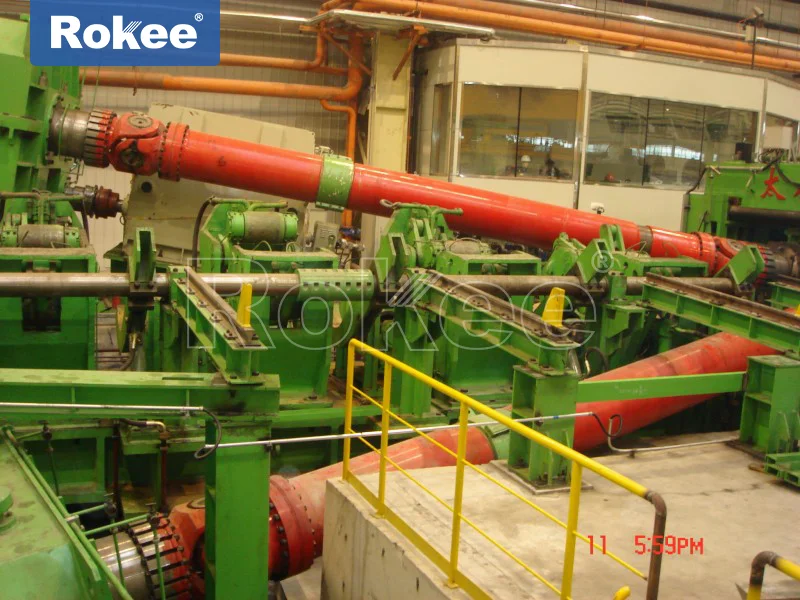
Long telescopic drive shafts are essential flexible power transmission components widely integrated into modern mechanical and industrial transmission systems, distinguishing themselves from conventional fixed-length drive shafts through their adjustable axial length and adaptive power transfer capabilities. Designed to address the inherent limitations of rigid transmission structures, these specialized shafts can automatically extend and retract within a preset range during equipment operation, effectively compensating for axial displacement, positional offset, and dimensional changes caused by mechanical movement, thermal expansion, and assembly deviations. Their core value lies in maintaining continuous, stable torque transmission while accommodating dynamic spatial variations between power output and input components, which greatly enhances the operational flexibility and reliability of mechanical systems. Suitable for long-distance power transmission scenarios that require frequent structural displacement and angle adjustment, long telescopic drive shafts combine high torsional rigidity, efficient energy transfer, and strong environmental adaptability, becoming an indispensable core part in engineering machinery, transportation equipment, and automated industrial machinery transmission systems.
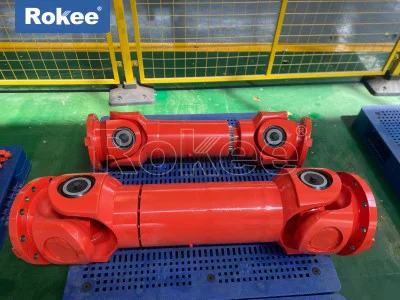
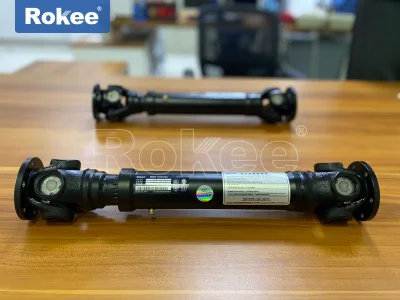
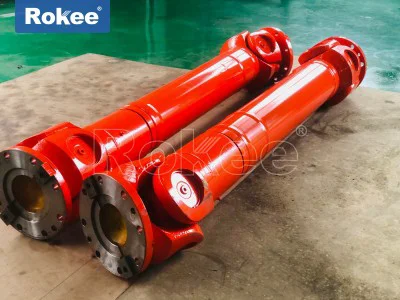
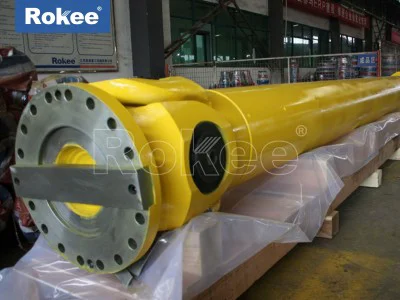
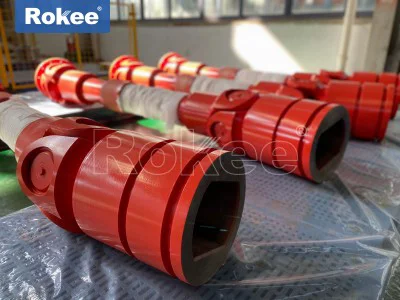
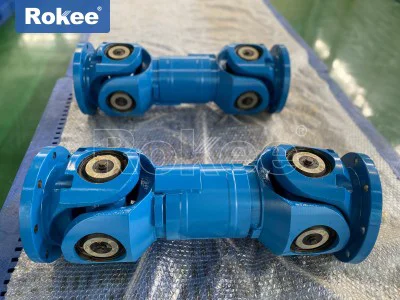
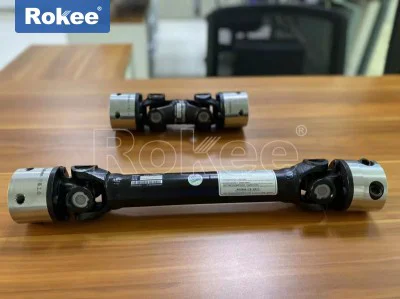
The unique structural composition of long telescopic drive shafts lays a solid foundation for their superior adaptive transmission performance, with each core component cooperating closely to realize length adjustment and stable power transfer functions. The primary structural unit consists of nested inner and outer spline shaft assemblies, which serve as the core telescopic mechanism of the entire device. The precision-machined male and female splines form a sliding fit structure that allows free axial stretching and retraction while ensuring synchronous rotational operation, avoiding torque loss and transmission jitter during length adjustment. Matched with high-performance universal joint assemblies at both ends, the shaft can adapt to multi-angle deflection during equipment operation, effectively resolving power transmission obstacles caused by angular misalignment between connected mechanical parts. In addition, the overall shaft body adopts high-strength forged alloy materials with optimized wall thickness and cross-sectional structure design, which significantly improves the structural stability of the long shaft body and prevents bending and deformation under long-distance transmission and heavy load conditions. Auxiliary sealing and lubrication structures are embedded inside the telescopic assembly to reduce sliding friction between spline pairs, slow down component wear, and extend the overall service life of the drive shaft in continuous working environments.
The working principle of long telescopic drive shafts centers on the organic combination of spline sliding compensation and universal joint deflection transmission, realizing adaptive power output in complex dynamic working conditions. In the static installation state, the telescopic structure can manually adjust the initial length according to the assembly spacing of mechanical equipment, eliminating assembly errors caused by dimensional deviations of peripheral parts and reducing the difficulty of equipment alignment and installation. During dynamic operation, when the distance between the power source and the executing mechanism changes due to equipment vibration, suspension movement, or thermal deformation, the nested spline assembly automatically slides axially to complete length compensation, ensuring that the transmission connection state remains tight and effective at all times. When the transmission angle deviates due to mechanical operation posture changes, the universal joint assembly flexibly adjusts the transmission angle to maintain consistent torque output speed and power transmission efficiency. Unlike fixed-length drive shafts that are prone to structural extrusion, torque overload, and even component fracture under displacement interference, the telescopic adjustment mechanism of long telescopic drive shafts can buffer and release structural stress, ensuring continuous and stable power transmission without interruption in variable working environments.
Long telescopic drive shafts possess remarkable performance advantages over traditional fixed transmission shafts, making them more adaptable to complex and diverse industrial working scenarios. First of all, their outstanding length adaptive compensation capability breaks through the spatial limitation of fixed-size transmission structures, enabling normal operation in mechanical systems with frequent spacing changes and dynamic displacement, which is impossible for rigid fixed-length drive shafts to achieve. Secondly, the optimized structural design endows the product with high torsional rigidity and load-bearing capacity, which can stably bear continuous heavy loads and instantaneous impact loads generated during mechanical operation, avoiding transmission failure caused by torque fluctuation. In terms of energy utilization, the precise matching of spline structures and universal joints minimizes friction resistance and power loss during transmission, maintaining high-efficiency power conversion throughout the working process. Moreover, the integrated structural design effectively reduces vibration and noise during long-distance power transmission, improving the overall operating stability of mechanical equipment. The compact nested structure also saves installation space, making it applicable to narrow and limited mechanical installation environments, while the durable material and anti-wear structure reduce the frequency of equipment failure and later maintenance costs.
The application scenarios of long telescopic drive shafts cover multiple industrial and mechanical fields, relying on their flexible transmission characteristics and stable performance to solve key power transmission problems in different equipment. In engineering machinery fields such as cranes, pavers, and loaders, these shafts are used for power connection between movable working arms and power devices, adapting to the telescopic and lifting displacement of working arms to ensure stable power output during equipment posture adjustment. In commercial vehicle and special transportation equipment, they undertake the power transmission task between the engine and the drive axle, compensating for spacing changes caused by suspension jitter and road condition fluctuations during vehicle driving, avoiding transmission system damage. In automated industrial production equipment, long telescopic drive shafts are applied to long-span transmission mechanisms of assembly lines and robotic transmission components, realizing precise power transmission during mechanical telescopic movement and position adjustment. In addition, they are also widely used in agricultural machinery and port handling equipment, adapting to complex working environments and frequent mechanical displacement to ensure the continuous and efficient operation of mechanical systems.
Material selection and precision manufacturing processes are crucial to determining the comprehensive performance and service life of long telescopic drive shafts, with every production link focusing on balancing structural strength and flexible adaptability. The main shaft body is mostly made of high-strength alloy steel materials with excellent tensile resistance, torsional resistance, and fatigue resistance, which can resist structural deformation and metal fatigue caused by long-term high-load operation and frequent telescopic movement. The spline parts that undertake sliding and torque transmission are processed by precision milling and grinding processes to ensure smooth surface finish and accurate matching tolerance, avoiding jamming and excessive wear during telescopic sliding. The universal joint components adopt integrated forging molding technology to improve structural toughness and impact resistance, adapting to frequent angle deflection and dynamic load impact. Meanwhile, professional surface treatment technologies such as quenching and anti-corrosion coating are applied to the shaft surface and internal matching parts, enhancing wear resistance, oxidation resistance, and corrosion resistance of the product, enabling it to adapt to harsh working environments such as high temperature, humidity, and dust. Strict precision detection is carried out for each finished product to ensure the stability of telescopic stroke, transmission accuracy, and structural consistency.
Daily maintenance and scientific use management are key to maintaining the long-term stable operation of long telescopic drive shafts and reducing equipment failure rates. In routine use, regular lubrication maintenance of the internal spline sliding pair and universal joint rotating parts is required to reduce dry friction between matching components, avoid accelerated wear and telescopic jitter, and ensure flexible and smooth length adjustment and angle deflection. It is necessary to regularly check the sealing structure of the telescopic assembly to prevent external dust, impurities, and moisture from entering the internal matching gap, which may cause spline corrosion, clamping stagnation, and reduced transmission accuracy. During equipment operation, overload operation beyond the bearing range should be avoided, as long-term overload torque will cause permanent deformation of the shaft body and fatigue damage of structural parts, affecting transmission stability and service life. Regular visual inspection and dynamic detection of the shaft body are also needed to check for surface cracks, structural looseness, and abnormal vibration during operation. Timely cleaning and minor maintenance can effectively delay component aging, maintain the optimal working state of the drive shaft, and reduce the cost of equipment replacement and downtime loss.
With the continuous upgrading of modern mechanical equipment towards high precision, high efficiency and multi-functional integration, long telescopic drive shafts are also evolving in structural optimization and performance upgrading to adapt to higher-end industrial application requirements. The current development trend focuses on lightweight structural design, adopting optimized section structure and high-performance new materials to reduce the self-weight of the shaft body while ensuring structural strength, which helps reduce equipment operation energy consumption and improve transmission response speed. In terms of structural performance, integrated modular design is gradually popularized, which simplifies the installation and disassembly process of the drive shaft, improves equipment assembly efficiency, and facilitates later maintenance and replacement. At the same time, enhanced anti-vibration and noise reduction optimization is carried out for long-distance transmission characteristics, effectively suppressing resonance and vibration problems generated during high-speed operation of long shafts, further improving the stability and comfort of mechanical equipment operation. In the future, with the continuous progress of manufacturing technology, long telescopic drive shafts will achieve higher transmission accuracy, stronger environmental adaptability and longer service life, and will be more widely used in intelligent equipment, high-end engineering machinery and emerging industrial fields, providing more reliable core support for modern mechanical transmission systems.