Integrated Application Of Cardan Shaft Coupling And PU Sandwich Panel Line

The integrated application of cardan shaft coupling and PU sandwich panel line represents a critical synergy in modern industrial manufacturing, combining the flexible power transmission capabilities of cardan shaft couplings with the high-efficiency, automated production processes of PU sandwich panel lines. This integration not only optimizes the operational stability and efficiency of the production line but also enhances the quality consistency of the final products, addressing the core challenges faced by traditional PU sandwich panel production in terms of power transmission, equipment coordination, and process precision. As industrial production moves toward automation, intelligence, and high reliability, the rational matching and integrated application of these two key components have become a key focus for enterprises seeking to improve production competitiveness and reduce operational costs. To fully understand the value of this integration, it is necessary to first explore the core characteristics of cardan shaft couplings and PU sandwich panel lines, then analyze their integration logic, practical application scenarios, and the optimization measures to maximize operational efficiency.
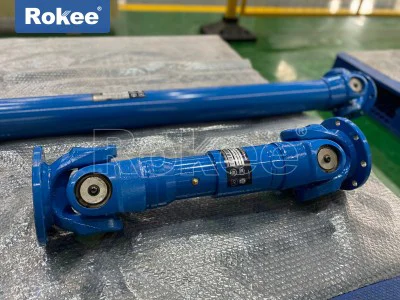
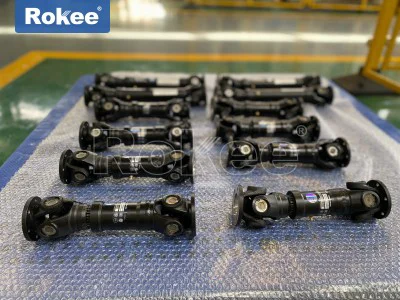
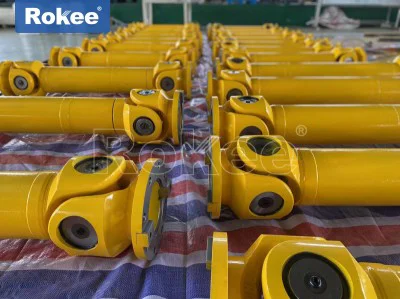
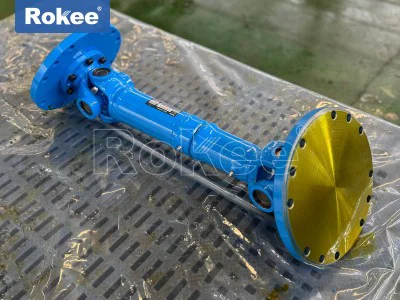
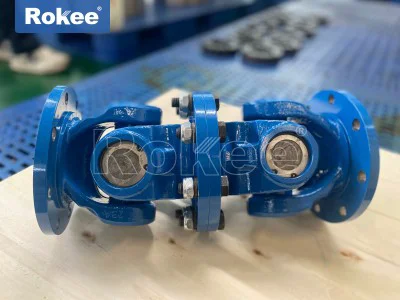
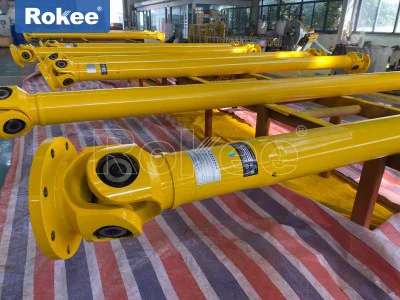
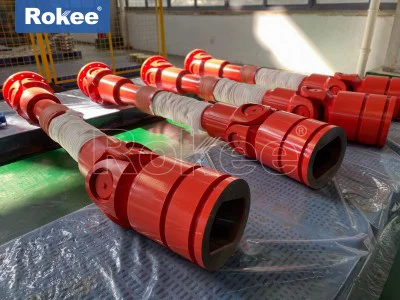
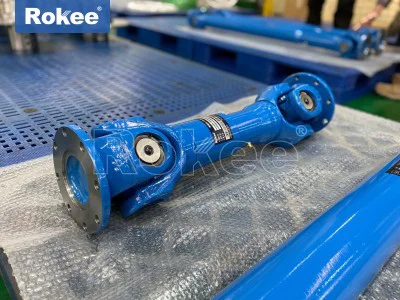
A cardan shaft coupling, also known as a universal joint coupling, is a mechanical component designed to transmit torque and motion between two shafts that are not collinear or have angular deviations. Its core structural design, typically consisting of universal joint forks, a cross shaft, needle bearings, and sealing and lubrication systems, endows it with unique performance advantages that are particularly suitable for complex industrial production environments. Unlike rigid couplings that require strict coaxial alignment of the connected shafts, cardan shaft couplings can flexibly compensate for angular, axial, and radial displacements between the driving and driven shafts, which is a key feature that makes them indispensable in complex production lines such as PU sandwich panel manufacturing. Generally, cardan shaft couplings can accommodate angular deviations ranging from 5° to 45°, and some special models can even handle larger deflection angles, while spline connections enable them to compensate for axial displacements over long distances. Additionally, they exhibit high load-bearing capacity and transmission efficiency, with the transmission efficiency of high-quality cardan shaft couplings reaching 98% to 99.8%, ensuring minimal energy loss during power transmission. This combination of flexibility, stability, and efficiency makes cardan shaft couplings an ideal choice for power transmission in PU sandwich panel lines, where multiple subsystems need to operate in coordination with varying installation positions and dynamic operational requirements.
PU sandwich panel lines are complex integrated production systems that combine mechanical, electrical, hydraulic, and chemical reaction technologies to realize the continuous and automated production of polyurethane sandwich panels. These panels are widely used in construction, cold chain, transportation, and other fields due to their excellent thermal insulation, sound insulation, fire resistance, and structural strength. The production process of PU sandwich panels involves multiple consecutive links, including uncoiling of facing materials, roll forming, preheating, PU foaming, lamination, curing, and cutting. Each link requires precise and stable power transmission to ensure the consistency of product quality and the smooth operation of the entire production line. A modern PU sandwich panel line is composed of multiple subsystems, such as the uncoiling system, roll forming system, foaming system, double-belt lamination system, cutting system, and conveying system. Each subsystem is driven by an independent power source, and the power needs to be accurately and stably transmitted to various executive components to ensure the synchronized operation of the entire production line. However, due to the limitations of the production process and the overall structure of the equipment, the installation and layout of each subsystem are often not on the same axis, resulting in angular deviations between the driving shaft and the driven shaft. Additionally, during long-term continuous operation, the equipment will generate vibration and thermal expansion, leading to changes in the relative position of the shafts. These factors pose significant challenges to the power transmission system of the PU sandwich panel line, requiring the transmission components to have strong compensation capabilities, stability, and flexibility—requirements that cardan shaft couplings are well-suited to meet.
The integrated application of cardan shaft coupling and PU sandwich panel line is based on the precise matching of their performance characteristics, aiming to solve the key pain points in the power transmission of the production line and optimize the overall operational efficiency. The core logic of this integration lies in using the unique angle and displacement compensation capabilities of cardan shaft couplings to connect the power sources of different subsystems in the PU sandwich panel line, ensuring stable and efficient power transmission even when the shafts are not collinear or there are dynamic position changes. In practical applications, cardan shaft couplings are widely used in key power transmission links of the PU sandwich panel line, including the connection between the motor and the roll forming machine, the power transmission of the double-belt lamination conveyor, and the connection between the drive mechanism and the cutting machine. Each application scenario fully leverages the performance advantages of cardan shaft couplings to address specific operational challenges.
In the roll forming link of the PU sandwich panel line, the facing materials (such as color steel sheets, galvanized sheets, or aluminum sheets) need to be continuously formed into the required shape through a series of roll forming rollers. The power transmission between the motor and the roll forming rollers requires high stability and synchronization, as any fluctuation in speed or torque will lead to uneven forming of the facing materials, affecting the flatness and structural accuracy of the final PU sandwich panel. Due to the installation space limitations and the layout requirements of the roll forming system, the motor shaft and the roll forming roller shaft are often not collinear, resulting in a certain angular deviation. In this scenario, the cardan shaft coupling plays a crucial role: it connects the motor shaft and the roll forming roller shaft, compensating for the angular deviation between the two shafts through its cross shaft and universal joint fork structure, ensuring that the power is transmitted stably and uniformly. At the same time, the high transmission efficiency of the cardan shaft coupling minimizes energy loss, reducing the operating load of the motor and lowering energy consumption. Additionally, during the long-term operation of the roll forming system, the vibration generated by the equipment will cause slight changes in the relative position of the shafts. The cardan shaft coupling can adapt to these dynamic changes through its flexible compensation capability, avoiding excessive stress on the shafts and bearings, thereby extending the service life of the equipment.
The double-belt lamination conveyor is another key component of the PU sandwich panel line, responsible for conveying the facing materials and the foamed PU core during the lamination and curing process. The stable operation of the conveyor directly affects the bonding quality between the PU core and the facing materials, as well as the uniformity of the panel thickness. The double-belt lamination conveyor is usually driven by multiple motors to ensure the synchronization of the upper and lower conveyor belts. The power transmission between the motors and the conveyor belt rollers requires precise coordination, and the installation positions of the motors are often scattered due to the long length of the conveyor. This results in significant angular and axial displacements between the motor shafts and the conveyor belt roller shafts. Cardan shaft couplings are used to connect these shafts, effectively compensating for the displacements and ensuring that the power is transmitted synchronously to each roller. This not only guarantees the stable operation of the conveyor belt but also ensures that the pressure applied to the PU sandwich panel during the lamination process is uniform, preventing problems such as uneven bonding, bubble formation, or uneven thickness. Furthermore, the cardan shaft coupling can absorb the vibration generated by the conveyor during operation, reducing noise and improving the overall stability of the production line.
In the cutting link of the PU sandwich panel line, the cured sandwich panels need to be cut into finished products of specified lengths according to production requirements. The cutting machine requires high-speed and stable power transmission to ensure the smoothness and accuracy of the cutting surface. The motor driving the cutting blade and the cutting blade shaft often have a certain angular deviation due to the structural design of the cutting machine. The cardan shaft coupling connects these two shafts, compensating for the angular deviation and ensuring that the torque is transmitted stably at high speeds. This avoids the occurrence of cutting burrs, uneven cutting surfaces, or even equipment jams caused by unstable power transmission, improving the quality of the finished products and reducing the rate of waste. Additionally, the cardan shaft coupling has good impact resistance, which can absorb the instantaneous impact load generated during the cutting process, protecting the motor and the cutting blade from damage and extending the service life of the cutting equipment.
While the integrated application of cardan shaft coupling and PU sandwich panel line brings significant advantages, it also requires rational selection, correct installation, and regular maintenance to ensure the long-term stable operation of the system. The selection of cardan shaft couplings should be based on the specific working conditions of the PU sandwich panel line, including the transmission torque, rotational speed, angular deviation, axial displacement, and operating environment. For example, in the high-speed transmission links such as the cutting machine, cardan shaft couplings with high dynamic balance performance should be selected to avoid vibration caused by unbalanced rotation at high speeds. In the heavy-load transmission links such as the roll forming system, cardan shaft couplings with high load-bearing capacity and wear resistance should be chosen to ensure stable power transmission under long-term heavy-load operation. Additionally, the material of the cardan shaft coupling should be compatible with the operating environment of the PU sandwich panel line; for example, in environments with high humidity or dust, corrosion-resistant and dust-proof cardan shaft couplings should be selected to prevent damage to the internal components.
Correct installation is another key factor affecting the performance of the integrated system. During the installation process, the coaxiality of the connected shafts should be adjusted as much as possible within the allowable range, and the angular deviation should not exceed the maximum limit allowed by the cardan shaft coupling. Generally, the angular deviation should be ≤15°, and the axial displacement should not exceed 5% of the length of the coupling. Additionally, the installation bolts should be tightened evenly to ensure uniform force distribution, avoiding abnormal wear caused by uneven stress. The sealing and lubrication systems of the cardan shaft coupling should also be checked during installation to ensure that the seals are intact and the lubricating grease is filled appropriately. Good sealing can prevent dust, moisture, and other impurities from entering the internal components, while sufficient lubrication can reduce friction between the moving parts, reducing wear and extending the service life of the coupling.
Regular maintenance is essential to ensure the long-term stable operation of the cardan shaft coupling in the PU sandwich panel line. During daily operation, the operation status of the cardan shaft coupling should be regularly inspected, including checking for abnormal vibration, noise, or temperature rise. If any abnormal phenomena are found, the operation should be stopped immediately for inspection and maintenance to avoid further damage to the equipment. The lubricating grease of the cardan shaft coupling should be regularly replaced according to the operating conditions; generally, the lubricating grease should be replaced every 3 to 6 months, or more frequently in harsh operating environments. The seals should also be regularly inspected and replaced if they are aged or damaged to prevent lubricating grease leakage and impurity intrusion. Additionally, the wear status of the cross shaft, needle bearings, and universal joint forks should be regularly checked, and worn parts should be replaced in a timely manner to ensure the normal operation of the coupling. For cardan shaft couplings used in high-speed or heavy-load links, regular dynamic balance calibration is also required to ensure stable operation at high speeds and avoid vibration caused by unbalanced rotation.
The integrated application of cardan shaft coupling and PU sandwich panel line also brings significant economic and environmental benefits. From an economic perspective, the stable power transmission provided by cardan shaft couplings reduces the failure rate of the production line, minimizing downtime and maintenance costs. The high transmission efficiency of the couplings also reduces energy consumption, lowering the overall operating costs of the enterprise. Additionally, the improved product quality resulting from stable operation reduces the waste rate, improving the production efficiency and economic benefits of the enterprise. From an environmental perspective, the reduced energy consumption helps to reduce carbon emissions, in line with the global trend of energy conservation and environmental protection. The stable operation of the production line also reduces the noise and vibration generated during production, improving the working environment of the workshop and protecting the health of workers.
With the continuous development of industrial automation and intelligent technology, the integrated application of cardan shaft coupling and PU sandwich panel line is also facing new development opportunities and challenges. In the future, with the application of new materials and new technologies, cardan shaft couplings will be further optimized in terms of load-bearing capacity, transmission efficiency, and service life, better adapting to the high-speed, heavy-load, and high-precision requirements of PU sandwich panel production lines. At the same time, the integration of intelligent monitoring technology into the cardan shaft coupling and PU sandwich panel line will enable real-time monitoring of the operation status of the coupling, predicting potential failures in advance and realizing predictive maintenance. This will further improve the operational stability and reliability of the production line, reducing maintenance costs and improving production efficiency.
In conclusion, the integrated application of cardan shaft coupling and PU sandwich panel line is a key technical measure to optimize the production process of PU sandwich panels, improve product quality, and reduce operating costs. The cardan shaft coupling, with its unique angle and displacement compensation capabilities, high transmission efficiency, and strong load-bearing capacity, effectively solves the key challenges in power transmission of PU sandwich panel lines, ensuring the stable and efficient operation of each subsystem. Through rational selection, correct installation, and regular maintenance, the integrated system can maximize its operational efficiency, bringing significant economic and environmental benefits to enterprises. As industrial technology continues to advance, the integration of these two components will become more closely, playing an increasingly important role in the development of the PU sandwich panel manufacturing industry. Enterprises should pay full attention to the value of this integration, continuously optimize the application scheme, and improve their core competitiveness in the market.