Cardan Coupling Plays An Important Role Of Transmission Innovation Of PU Sandwich Panel Production Line
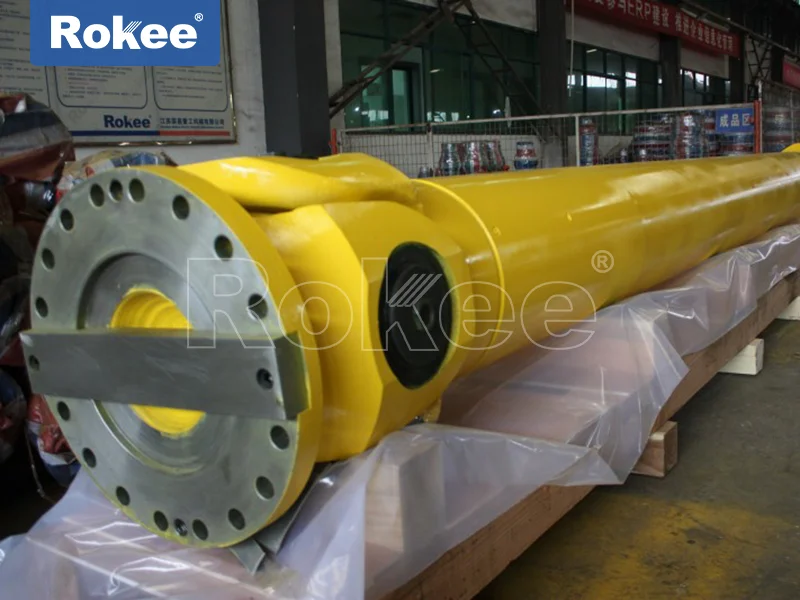
In the modern construction industry, polyurethane (PU) sandwich panels have become an indispensable building material due to their excellent thermal insulation, flame retardancy, environmental friendliness, and structural stability. These panels, composed of two outer facing materials and a rigid PU foam core, are widely used in external walls, roofs, cold storage facilities, and various prefabricated buildings, driving the continuous development and innovation of their production technology. The PU sandwich panel production line is a complex integrated system that involves multiple processes, including uncoiling of facing materials, roll forming, preheating, PU foaming, lamination, curing, and cutting. Each link requires precise and stable power transmission to ensure the consistency of product quality and the efficiency of the production process. Among the numerous components that make up the transmission system of the production line, the Cardan coupling, also known as the universal joint coupling, stands out as a key innovation-driven component, whose unique structural design and excellent transmission performance have significantly promoted the upgrading and transformation of the PU sandwich panel production line, becoming an indispensable core part of the transmission innovation.
To understand the important role of cardan coupling in the transmission innovation of PU sandwich panel production lines, it is first necessary to clarify the working characteristics of the production line and the core challenges faced by its transmission system. A modern PU sandwich panel production line is a continuous and automated production system that integrates mechanical, electrical, hydraulic, and chemical reaction technologies. It requires the coordinated operation of multiple subsystems, such as the uncoiling system, roll forming system, foaming system, double-belt lamination system, cutting system, and conveying system. Each subsystem is driven by a separate power source, and the power needs to be transmitted to various executing components accurately and stably to ensure that the entire production line operates in a synchronized manner. The transmission system of the production line is faced with several key challenges: first, the installation and layout of each subsystem are often not on the same axis due to the limitations of the production process and the overall structure of the equipment, resulting in angular deviations between the driving shaft and the driven shaft; second, during the long-term continuous operation of the production line, the equipment will generate vibration and thermal expansion, leading to changes in the relative position of the shafts, which requires the transmission component to have a certain compensation capacity; third, the production process of PU sandwich panels requires stable and uniform power transmission, especially in the foaming and lamination links, where even slight fluctuations in transmission speed or torque will affect the density of the PU foam core and the bonding effect between the core and the facing materials, thereby reducing product quality; fourth, the production line needs to adapt to different specifications of PU sandwich panels, which involves adjusting the speed and torque of each subsystem, requiring the transmission component to have good flexibility and adaptability.
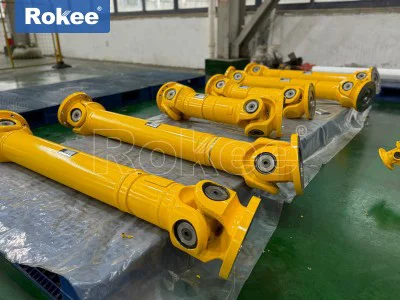
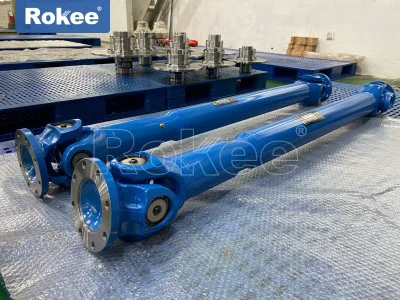
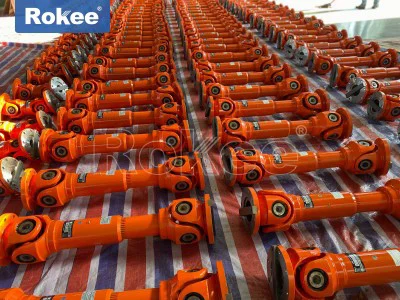
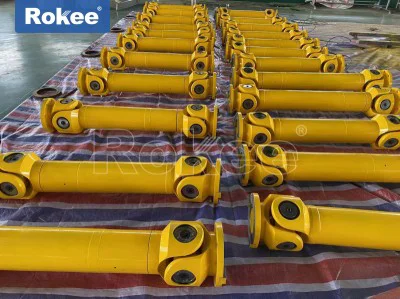
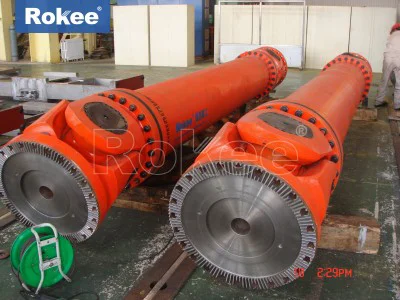
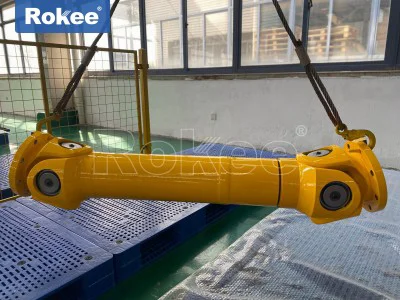
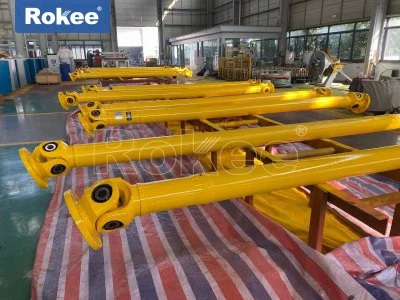
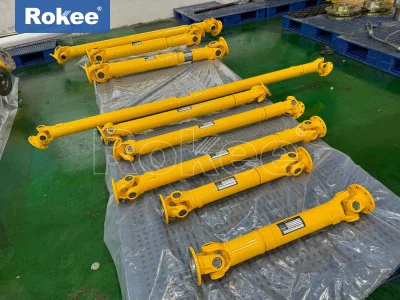
The Cardan coupling, with its unique structural advantages and excellent transmission performance, perfectly solves the above-mentioned challenges of the transmission system of the PU sandwich panel production line, and promotes the innovation and upgrading of the transmission system in multiple aspects. The Cardan coupling is a mechanical device designed to connect two rigid shafts with inclined axes and transmit rotary motion and torque. Its basic structure consists of a pair of hinges arranged close to each other, perpendicular to each other, and connected by a cross shaft, also known as the spider. This structural design allows the Cardan coupling to compensate for angular deviations between the driving shaft and the driven shaft, and can also adapt to a certain degree of axial and radial displacements, which is particularly suitable for the complex transmission environment of the PU sandwich panel production line. Unlike rigid couplings that require precise coaxial alignment of the two shafts, the Cardan coupling can realize stable power transmission even when there is an angular deviation between the shafts, which greatly reduces the installation accuracy requirements of the production line equipment, simplifies the installation process, and reduces the installation cost.
In the uncoiling and roll forming links of the PU sandwich panel production line, the Cardan coupling plays a crucial role in ensuring the stability and accuracy of the transmission. The uncoiling system is responsible for uncoiling the coiled facing materials (such as galvanized steel sheets, galvalume sheets, or aluminum sheets) stably and smoothly, and transmitting them to the roll forming system. The roll forming system then processes the facing materials into the required shape through a series of rollers. In these two links, the driving shaft of the motor and the driven shaft of the uncoiler or roll forming machine are often not on the same axis due to the layout of the equipment, and there may be a certain angular deviation. If a rigid coupling is used, the angular deviation will cause additional stress on the shafts and bearings, leading to increased wear of the components, increased vibration of the equipment, and even damage to the equipment in severe cases. The Cardan coupling, however, can effectively compensate for this angular deviation through its cross shaft structure. When the driving shaft rotates, the cross shaft drives the driven shaft to rotate synchronously, and at the same time, the hinges can swing freely to adapt to the angular deviation between the two shafts, ensuring that the torque is transmitted stably and evenly. This not only reduces the wear of the shafts and bearings, extends the service life of the equipment, but also ensures that the uncoiling speed and the roll forming speed are stable and consistent, preventing the facing materials from being stretched or wrinkled, and laying a good foundation for the subsequent foaming and lamination links.
The foaming and lamination links are the core links of the PU sandwich panel production line, and the stability of the transmission system directly determines the quality of the PU sandwich panels. In the foaming link, the raw materials such as polyol, isocyanate, foaming agent, and catalyst need to be accurately metered and mixed, and then continuously injected into the gap between the two facing materials. The double-belt lamination system then presses the facing materials and the PU foam core together, and conveys them to the curing area for foaming and solidification. In this process, the double-belt conveyor needs to maintain a stable speed and uniform tension to ensure that the PU foam core is evenly distributed between the two facing materials, and the bonding between the core and the facing materials is firm. The Cardan coupling is used to connect the motor and the driving roller of the double-belt conveyor, and its excellent transmission stability ensures that the speed of the double-belt conveyor is constant, avoiding speed fluctuations caused by uneven torque transmission. At the same time, due to the thermal expansion of the equipment during the foaming and curing process, the relative position of the motor shaft and the driving roller shaft will change slightly. The Cardan coupling can compensate for this slight displacement through its own structural flexibility, ensuring that the power transmission is not affected, and thus ensuring the uniformity of the thickness and density of the PU sandwich panels. In addition, the Cardan coupling has good damping performance, which can absorb the vibration generated by the motor and the double-belt conveyor during operation, reducing the impact of vibration on the foaming process, and further improving the quality of the PU foam core.
In the cutting link of the PU sandwich panel production line, the Cardan coupling also plays an important role in promoting transmission innovation. The cutting system needs to cut the continuously produced PU sandwich panels into the required length according to the user's requirements, and the cutting process needs to be carried out without stopping the production line to ensure the continuity of production and improve production efficiency. The cutting device is usually driven by a separate motor, and the power needs to be transmitted to the cutting blade accurately and quickly. Due to the limited installation space of the cutting device, the motor and the cutting blade shaft often have a certain angular deviation, which puts forward high requirements on the transmission component. The Cardan coupling, with its compact structure and excellent angular compensation capacity, can be installed in a narrow space, realizing stable power transmission between the motor and the cutting blade shaft. At the same time, the Cardan coupling can transmit high torque, ensuring that the cutting blade has sufficient power to cut the PU sandwich panels of different thicknesses, and the cutting speed is stable, avoiding the problems of uneven cutting surface or incomplete cutting caused by insufficient power or unstable speed. In addition, the Cardan coupling has the advantages of simple structure and easy maintenance, which can reduce the maintenance time and cost of the cutting system, ensuring the continuous operation of the production line.
The application of Cardan coupling not only solves the technical problems of the transmission system of the PU sandwich panel production line, but also promotes the innovation of the transmission system in terms of efficiency and energy saving. In the traditional PU sandwich panel production line, the transmission system often uses multiple rigid couplings and transmission shafts to connect each subsystem, which not only increases the complexity of the transmission system, but also leads to large energy loss during the transmission process due to the friction between the components. The Cardan coupling has high transmission efficiency, which can reduce energy loss during the power transmission process. Its structural design reduces the friction between the components, and the torque transmission is more direct, making the energy generated by the motor more effectively transmitted to the executing components, thereby reducing the energy consumption of the production line. In addition, the Cardan coupling can realize the flexible connection between each subsystem, reducing the number of transmission shafts and couplings used in the transmission system, simplifying the structure of the transmission system, reducing the weight of the equipment, and further reducing the energy consumption of the production line. With the increasing emphasis on energy conservation and environmental protection in the construction industry, the energy-saving advantage of Cardan coupling has become more and more prominent, providing strong support for the green innovation of the PU sandwich panel production line.
Another important role of Cardan coupling in the transmission innovation of PU sandwich panel production lines is to improve the flexibility and adaptability of the production line. Modern PU sandwich panel production lines need to produce panels of different specifications, thicknesses, and types to meet the diverse needs of the market. This requires the transmission system to be able to adjust the speed and torque of each subsystem according to the production requirements, and to adapt to the changes in the relative position of the equipment caused by the adjustment of the production process. The Cardan coupling has good flexibility, which can adapt to the adjustment of the speed and torque of the transmission system, and can compensate for the angular and displacement deviations caused by the adjustment of the equipment. For example, when the production line needs to adjust the thickness of the PU sandwich panel, the distance between the double belts of the lamination system needs to be adjusted, which will cause a change in the relative position of the motor shaft and the driving roller shaft. The Cardan coupling can quickly adapt to this change, ensuring that the power transmission is stable and reliable, and the production line can quickly switch to the production of new specifications of panels. This not only improves the flexibility and adaptability of the production line, but also shortens the production preparation time, improves production efficiency, and enhances the market competitiveness of enterprises.
The long-term stable operation of the PU sandwich panel production line is crucial to ensuring production efficiency and product quality, and the Cardan coupling plays an important role in improving the reliability and service life of the transmission system. The Cardan coupling is made of high-strength materials, which has good wear resistance, corrosion resistance, and fatigue resistance, and can withstand the high torque and high load generated during the operation of the production line. Its structural design is reasonable, and the components are not easy to be damaged, which reduces the frequency of equipment failure. In addition, the Cardan coupling is easy to maintain and maintain. Regular lubrication and inspection can ensure its long-term stable operation, reducing the maintenance cost and downtime of the production line. Compared with other types of couplings, the Cardan coupling has a longer service life, which can reduce the replacement frequency of components, further reducing the production cost of enterprises. In the long-term operation of the production line, the stable performance of the Cardan coupling ensures the continuous and stable operation of the transmission system, providing a reliable guarantee for the mass production of high-quality PU sandwich panels.
With the continuous development of the construction industry and the continuous improvement of the requirements for building materials, the PU sandwich panel production line is moving towards higher automation, intelligence, and high efficiency, which puts forward higher requirements for the transmission system. The Cardan coupling, as a key component of the transmission system, is also constantly innovating and improving to adapt to the new development needs of the production line. For example, the double Cardan coupling, which is composed of two single Cardan couplings and an intermediate shaft, can eliminate the speed fluctuation of the single Cardan coupling, realizing constant velocity transmission, which is more suitable for the high-speed operation of the PU sandwich panel production line. In addition, the application of new materials and new processes in the production of Cardan couplings has further improved their performance, such as the use of high-strength alloy materials to improve the bearing capacity and wear resistance of the coupling, and the use of precision machining technology to improve the transmission accuracy and stability. These innovations of the Cardan coupling have further promoted the innovation and upgrading of the transmission system of the PU sandwich panel production line, enabling the production line to achieve higher efficiency, better quality, and lower energy consumption.
In conclusion, the Cardan coupling plays an irreplaceable and important role in the transmission innovation of the PU sandwich panel production line. Its unique structural design and excellent transmission performance solve the key technical problems of the transmission system, such as angular deviation, displacement compensation, and stable transmission, ensuring the stability and accuracy of each production link. It promotes the innovation of the transmission system in terms of efficiency, energy saving, flexibility, and adaptability, improves the production efficiency and product quality of the PU sandwich panel production line, reduces the production cost and energy consumption, and extends the service life of the equipment. With the continuous progress of industrial technology, the Cardan coupling will continue to innovate and develop, and its application in the PU sandwich panel production line will be more extensive and in-depth, providing stronger support for the sustainable development of the PU sandwich panel industry. The integration of Cardan coupling and PU sandwich panel production line transmission system is not only a technological innovation, but also a powerful driving force for the transformation and upgrading of the entire building material production industry, contributing to the development of green, energy-saving, and high-efficiency construction projects.