SWP Cardan Shaft
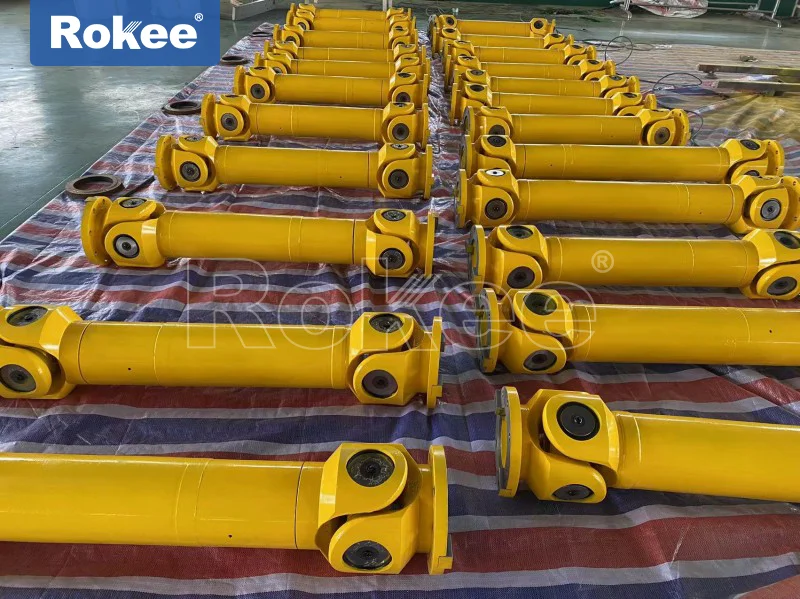
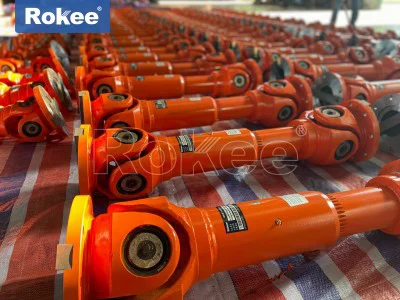
The SWP Cardan Shaft is a critical mechanical transmission component widely utilized in various industrial fields, designed to transmit torque and rotational motion between two shafts that are not aligned on the same axis or have relative positional changes. Unlike ordinary transmission shafts, it possesses unique structural characteristics that enable it to compensate for angular deviations, axial displacements, and radial offsets between connected shafts, ensuring stable and efficient power transmission even under complex working conditions.
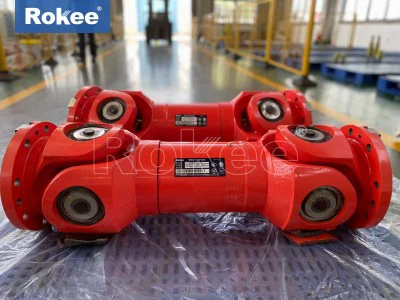
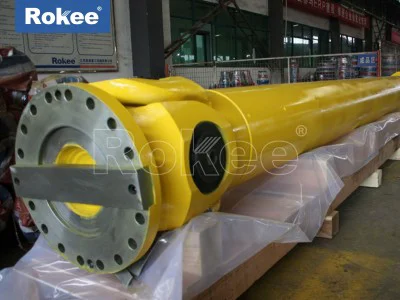
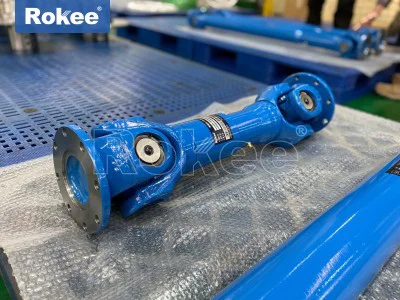
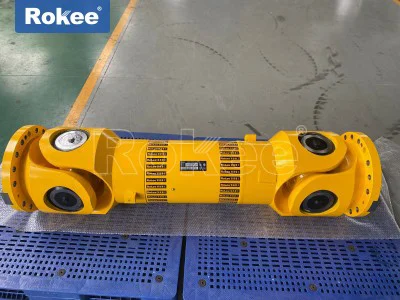
The structure of the SWP Cardan Shaft is meticulously designed to balance rigidity, flexibility, and durability, consisting of several core components that work in harmony to achieve reliable power transmission. At the heart of its structure is the universal joint, also known as the U-joint, which serves as the key component enabling angular compensation. The universal joint typically comprises a cross shaft and four bearing cups, with the cross shaft connecting two yokes that are perpendicular to each other. The bearing cups, fitted with high-precision bearings, allow the cross shaft to rotate freely within the yokes, enabling the two connected shafts to rotate at different angles while maintaining continuous torque transmission. This cross-shaft universal joint design is the fundamental structure of the SWP Cardan Shaft, ensuring its ability to adapt to misaligned shafts.
In addition to the universal joint, the SWP Cardan Shaft includes a shaft body, which is the main load-bearing component responsible for transmitting torque. The shaft body is usually made of high-strength alloy steel,经过 precision forging and heat treatment to enhance its tensile strength, fatigue resistance, and wear resistance. The cross-section of the shaft body can be cylindrical, hexagonal, or rectangular, depending on the specific application requirements, with cylindrical shafts being the most commonly used due to their simplicity in manufacturing and high structural stability. The shaft body is connected to the universal joint yokes through welding, forging, or bolted connections, ensuring a firm and reliable connection that can withstand high torque and dynamic loads.
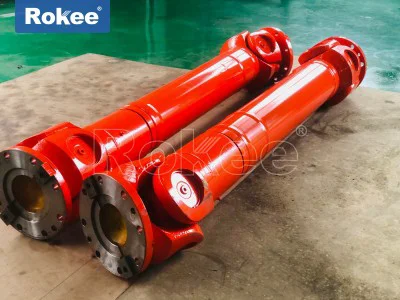
Another essential component of the SWP Cardan Shaft is the telescopic mechanism, which is integrated into the shaft body to compensate for axial displacement between the connected shafts. This mechanism typically consists of a splined shaft and a splined sleeve, where the splined shaft slides within the splined sleeve to adjust the overall length of the Cardan Shaft. The splines are precision machined to ensure smooth sliding while maintaining a tight fit, preventing backlash and ensuring efficient torque transmission. The telescopic mechanism is particularly important in applications where the distance between the two shafts changes during operation, such as in rolling mills, cranes, and other heavy machinery, as it allows the Cardan Shaft to adapt to these changes without affecting transmission performance.
Sealing and lubrication components are also integral to the structure of the SWP Cardan Shaft, ensuring its long-term stable operation. Sealing rings or boots are installed at the joints of the universal joint and telescopic mechanism to prevent dust, water, and other contaminants from entering the internal components, which could cause wear, corrosion, or failure. Lubrication is provided through grease or oil, which is injected into the bearings and splined connections to reduce friction, dissipate heat, and extend the service life of the components. Proper lubrication and sealing are crucial for maintaining the performance of the SWP Cardan Shaft, especially in harsh working environments with high dust, humidity, or temperature fluctuations.
The performance of the SWP Cardan Shaft is determined by its structural design, material selection, and manufacturing precision, with several key performance indicators that define its suitability for different applications. One of the most important performance characteristics is its angular compensation capability, which refers to the maximum angle between the two connected shafts that the Cardan Shaft can accommodate while maintaining stable torque transmission. The SWP Cardan Shaft typically has an angular compensation range of 5° to 45°, depending on the specific type and size, with some heavy-duty models capable of compensating for angles up to 25° or more. This wide angular compensation range makes it highly adaptable to various misalignment scenarios, such as those encountered in industrial machinery where shafts are installed at different angles or experience positional changes during operation.
Torque transmission capacity is another critical performance indicator of the SWP Cardan Shaft, which refers to the maximum torque that the shaft can transmit without deformation or failure. The torque capacity is determined by the material strength of the shaft body and universal joint components, as well as the design of the connections. SWP Cardan Shafts are available in a wide range of torque capacities, from small models capable of transmitting a few hundred Newton-meters to heavy-duty models that can handle several thousand Newton-meters of torque. This versatility allows them to be used in both light-duty and heavy-duty applications, from small industrial machinery to large-scale equipment such as rolling mills and marine propulsion systems.
Transmission efficiency is also a key performance factor of the SWP Cardan Shaft, which measures the ratio of the output torque to the input torque. Due to the precision design of the universal joint and telescopic mechanism, the SWP Cardan Shaft typically has a high transmission efficiency, ranging from 98% to 99.8%. This high efficiency is achieved by minimizing friction between the moving components, through the use of high-precision bearings and proper lubrication. High transmission efficiency is particularly important in applications where energy conservation is a priority, as it reduces energy loss and improves the overall efficiency of the machinery.
Durability and fatigue resistance are essential performance characteristics of the SWP Cardan Shaft, especially in applications where it operates under continuous or cyclic loads. The use of high-strength alloy steel and precision heat treatment processes enhances the fatigue resistance of the shaft body and universal joint components, allowing them to withstand repeated torque and bending loads without failure. The bearings used in the universal joint are also designed to have a long service life, with sealed designs that prevent contamination and ensure consistent lubrication. The overall durability of the SWP Cardan Shaft ensures that it can operate reliably for extended periods, reducing maintenance costs and downtime for the equipment it is installed in.
Vibration and noise reduction are additional performance features of the SWP Cardan Shaft, which are important for maintaining the stability and comfort of the machinery. The precision balance of the shaft body and universal joint components minimizes vibration during operation, which not only reduces noise but also prevents damage to other components of the machinery. The use of flexible connections and damping materials in some models further enhances vibration and noise reduction, making the SWP Cardan Shaft suitable for applications where low noise and vibration are required, such as in precision machinery and equipment used in the pharmaceutical and food processing industries.
The SWP Cardan Shaft is available in several different types, each designed to meet specific application requirements based on factors such as torque capacity, angular compensation range, telescopic capability, and installation space. One of the most common types is the SWP-A long telescopic Cardan Shaft, which features a long telescopic stroke and is designed for applications where there is a large axial displacement between the connected shafts. This type of Cardan Shaft is widely used in rolling mills, continuous casting machinery, and other heavy industrial equipment where the distance between shafts changes significantly during operation. The SWP-A type typically has a rotary diameter of up to 1200 mm and can transmit high torque, making it suitable for heavy-duty applications.
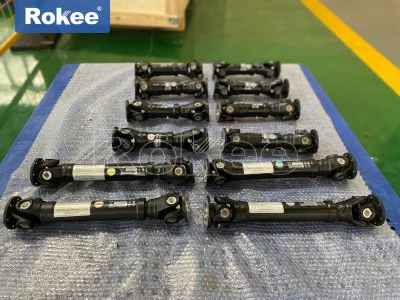
Another common type is the SWP-B short telescopic Cardan Shaft, which has a shorter telescopic stroke compared to the SWP-A type. This type is designed for applications where the axial displacement between shafts is relatively small but angular compensation is still required. The SWP-B type is more compact in design, making it suitable for use in machinery with limited installation space, such as small cranes, pumps, and fans. Despite its smaller size, it still maintains high torque transmission capacity and angular compensation capability, making it a versatile option for medium-duty applications.
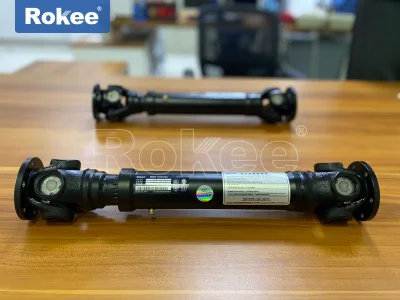
The SWP-C short non-telescopic Cardan Shaft is a type that does not have a telescopic mechanism, designed for applications where there is no axial displacement between the connected shafts but angular misalignment exists. This type is characterized by its compact structure and high rigidity, making it suitable for use in machinery where space is limited and precise torque transmission is required. The SWP-C type is commonly used in small industrial machinery, such as conveyors, mixers, and small pumps, where the shafts are misaligned but the distance between them remains constant.
The SWP-D long non-telescopic Cardan Shaft is another non-telescopic type, designed for applications where the distance between the connected shafts is large but there is no axial displacement. This type has a longer shaft body compared to the SWP-C type, allowing it to connect shafts that are far apart while maintaining angular compensation. The SWP-D type is widely used in large-scale machinery, such as marine propulsion systems, large fans, and generators, where the shafts are misaligned but the distance between them is fixed.
In addition to these standard types, there are also customized SWP Cardan Shafts designed to meet specific application requirements. These customized models may feature different shaft diameters, lengths, angular compensation ranges, or torque capacities, tailored to the unique needs of the machinery. For example, some customized models may have a higher angular compensation range to accommodate extreme misalignment, while others may be designed with lightweight materials to reduce the overall weight of the machinery.
The applications of the SWP Cardan Shaft are diverse, covering a wide range of industrial fields due to its unique structural and performance characteristics. One of the most important application areas is the metallurgical industry, where SWP Cardan Shafts are widely used in rolling mills, continuous casting machines, pipe straighteners, and piercing mills. In rolling mills, for example, the SWP Cardan Shaft connects the motor to the rolling rolls, transmitting high torque while compensating for the angular misalignment and axial displacement caused by the movement of the rolls. This ensures stable and efficient rolling of steel, aluminum, and other metal materials, improving the quality of the final product.
The construction and heavy machinery industry is another major application area for the SWP Cardan Shaft. Cranes, excavators, bulldozers, and other heavy equipment rely on SWP Cardan Shafts to transmit power from the engine to the wheels or working components. In cranes, for example, the SWP Cardan Shaft is used to connect the hydraulic motor to the hoisting mechanism, allowing for smooth and precise lifting of heavy loads. The angular compensation capability of the SWP Cardan Shaft is particularly important in these applications, as the working components of the machinery often move at different angles, requiring the shaft to adapt to these changes without affecting performance.
The marine industry also utilizes SWP Cardan Shafts in various applications, such as marine propulsion systems, shipboard cranes, and winches. In marine propulsion systems, the SWP Cardan Shaft connects the engine to the propeller, transmitting high torque while compensating for the misalignment between the engine and propeller shafts caused by the movement of the ship. The durability and corrosion resistance of the SWP Cardan Shaft make it suitable for use in marine environments, where it is exposed to saltwater and harsh conditions.
The paper and pulp industry is another important application area for the SWP Cardan Shaft. Paper machines, including Fourdrinier machines and tissue machines, use SWP Cardan Shafts to transmit power to the various rollers and components, ensuring smooth and consistent paper production. The high transmission efficiency and low vibration of the SWP Cardan Shaft help to maintain the quality of the paper, reducing defects and improving production efficiency. Additionally, the telescopic capability of some SWP Cardan Shaft types allows them to adapt to the thermal expansion and contraction of the paper machine components during operation.
The mining industry also relies on SWP Cardan Shafts for various applications, such as mining crushers, conveyors, and drilling equipment. In mining crushers, the SWP Cardan Shaft connects the motor to the crusher rotor, transmitting high torque to crush large rocks and minerals. The durability and fatigue resistance of the SWP Cardan Shaft are essential in this application, as the crusher operates under heavy loads and cyclic stresses. The angular compensation capability also allows the shaft to adapt to the misalignment caused by the movement of the crusher components during operation.
Other application areas of the SWP Cardan Shaft include the power generation industry, where it is used in generators and turbines to transmit power; the automotive industry, where it is used in some heavy-duty vehicles and special-purpose vehicles; and the agricultural industry, where it is used in farm machinery such as tractors and harvesters. In each of these applications, the SWP Cardan Shaft plays a critical role in ensuring reliable and efficient power transmission, adapting to the specific requirements of the machinery and working environment.
In conclusion, the SWP Cardan Shaft is a versatile and essential mechanical transmission component that offers unique structural advantages and excellent performance characteristics. Its ability to compensate for angular misalignment, axial displacement, and radial offset makes it suitable for a wide range of applications across various industrial fields. The different types of SWP Cardan Shafts, including telescopic and non-telescopic models, are designed to meet specific application requirements, ensuring that there is a suitable option for every type of machinery. With its high torque transmission capacity, high efficiency, durability, and low vibration, the SWP Cardan Shaft continues to play a crucial role in modern industrial machinery, contributing to the efficiency, reliability, and performance of the equipment it is installed in. As industrial technology continues to advance, the design and performance of the SWP Cardan Shaft are also expected to evolve, further expanding its application range and enhancing its functional capabilities.