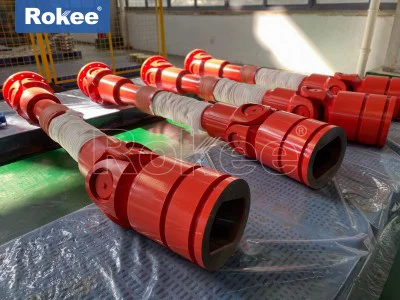
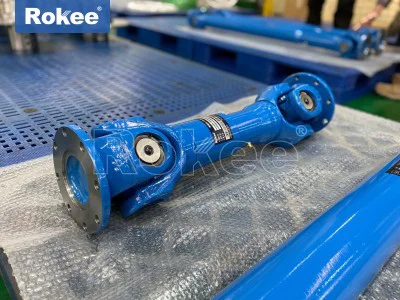
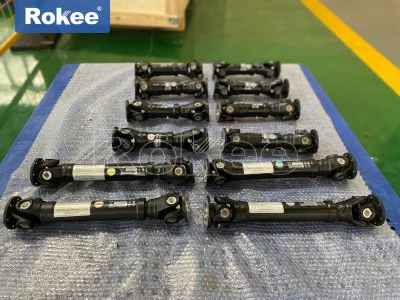
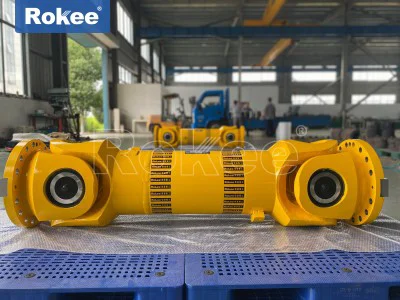
Cross Shaft Coupling

In the complex landscape of mechanical power transmission systems, cross shaft couplings stand as indispensable components, designed to bridge the gap between misaligned rotating shafts and ensure the seamless transfer of torque and rotational motion across a wide range of industrial and mechanical setups. Unlike rigid couplings that demand perfect collinearity of the connected shafts, cross shaft couplings introduce a controlled level of flexibility, allowing them to accommodate various forms of misalignment—including angular, axial, and radial deviations—that are inevitable in real-world operations due to installation errors, thermal expansion, mechanical deformation, and dynamic operational shifts. Their robust design, versatile performance, and diverse configurations make them a staple in numerous industries, from heavy industrial machinery to precision automotive systems, agricultural equipment, and aerospace assemblies. To fully understand the value and functionality of cross shaft couplings, it is essential to explore their structural composition, core performance characteristics, different types, and the wide array of applications where they play a critical role.
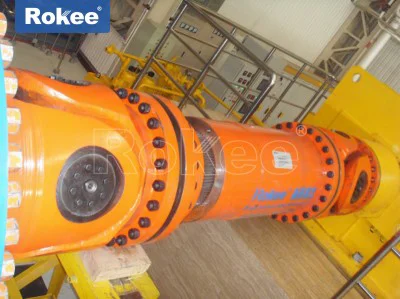
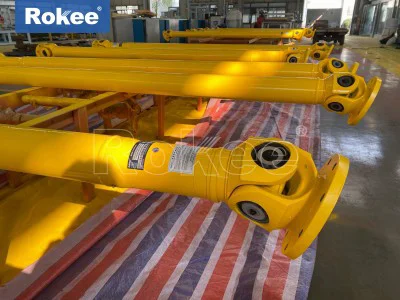
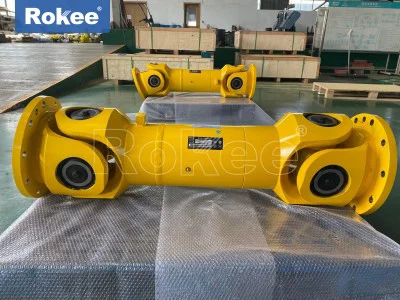
The structural design of a cross shaft coupling is a masterclass in mechanical simplicity and functional efficiency, with each component engineered to work in tandem to deliver reliable performance under varying loads and angular offsets. At its core, a standard cross shaft coupling consists of four primary structural elements: two yoke assemblies (also referred to as fork joints), a central cross-shaped shaft (commonly known as a spider), and four sets of precision bearings that facilitate smooth articulation between the yokes and the cross shaft. The yoke assemblies serve as the connection points between the coupling and the driving and driven shafts, typically secured via flanges, splines, or clamping mechanisms to prevent slippage under high torque loads. Crafted from high-strength alloy steels or carbon steels, these yokes are engineered to resist bending, torsional stress, and impact loads, with precision-machined bearing seats to house the bearing assemblies securely. The central cross shaft, the defining feature of this coupling type, is a rigid, cross-shaped metal component with four cylindrical journals arranged perpendicularly to one another—two aligned with the driving yoke and two with the driven yoke—forming a 90-degree angular offset between the two sets of journals. This cross-shaped design is what grants the coupling its signature flexibility, allowing it to maintain power transmission even when the two connected shafts form a significant angular offset.
The precision bearings, usually needle roller bearings, are equally vital to the coupling’s operation, as they minimize friction between the rotating cross shaft and the stationary yoke components, reducing wear, heat generation, and energy loss during operation. Unlike standard ball bearings, needle rollers offer a larger contact surface area, enhancing load-bearing capacity and durability under heavy radial and thrust loads. In addition to these core components, many cross shaft couplings incorporate sealing and lubrication elements to protect the internal components from contaminants such as dust, dirt, and moisture, which can degrade performance and shorten service life. Seals may be in the form of rubber or synthetic gaskets, while lubrication is typically provided by grease or oil, ensuring smooth movement of the bearings and reducing friction-induced wear. The simplicity of the cross shaft coupling’s structure not only makes it easy to manufacture and assemble but also contributes to its high reliability and low maintenance requirements, even in harsh operating environments.
The performance characteristics of cross shaft couplings are directly tied to their structural design, and they exhibit a unique combination of traits that make them suitable for a wide range of applications. One of the most prominent performance features is their exceptional misalignment compensation capability. Unlike rigid couplings that fail to accommodate any form of displacement, cross shaft couplings can effectively compensate for angular misalignment—with standard models typically handling angles between 15° and 25°, and special designs capable of accommodating angles up to 45°—while still transmitting torque efficiently. This ability to bridge misaligned shafts is critical in many mechanical systems, where perfect alignment is often impossible due to factors such as equipment vibration, thermal expansion, or structural deformation. In addition to angular misalignment, many cross shaft couplings can also compensate for axial displacement, typically ranging from ±10mm to ±50mm, through the use of spline connections that allow for limited axial movement between the yokes and the cross shaft. This axial compensation is particularly useful in systems where temperature changes cause the shafts to expand or contract, preventing excessive stress on the coupling and connected components.
Another key performance characteristic of cross shaft couplings is their high load-bearing capacity and torque transmission capability. Constructed from high-strength materials and designed to distribute stress evenly across their components, these couplings can transmit torque ranging from a few Newton-meters to several thousand Newton-meters, making them suitable for both light-duty and heavy-duty applications. The load-bearing capacity is further enhanced by the use of needle roller bearings, which distribute the load over a larger surface area, reducing pressure on individual components and minimizing wear. Cross shaft couplings also exhibit high transmission efficiency, typically ranging from 98% to 99.8%, meaning that very little energy is lost during power transmission. This high efficiency is particularly important in high-power applications, where energy conservation is a priority, and it helps to reduce operating costs and improve overall system performance.
Smooth operation and low noise are additional performance benefits of cross shaft couplings. The precision bearings and balanced design minimize friction and vibration, resulting in quiet operation even at high rotational speeds. Conventional models can operate at speeds ranging from 1000 to 5000 rpm, while precision-balanced models can reach speeds above 10,000 rpm, making them suitable for high-speed applications such as machine tools and aerospace equipment. Furthermore, cross shaft couplings are highly durable and resistant to wear and tear, even in harsh operating conditions such as high temperatures, high humidity, and exposure to contaminants. This durability is achieved through the use of high-quality materials, proper heat treatment (such as carburizing and quenching of the cross shaft to improve wear resistance), and effective sealing and lubrication systems. The combination of these performance characteristics—misalignment compensation, high load capacity, high efficiency, smooth operation, and durability—makes cross shaft couplings a reliable choice for a wide range of mechanical power transmission applications.
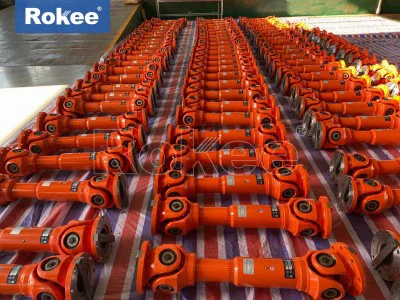
Cross shaft couplings are available in a variety of types, each designed to meet specific application requirements based on factors such as load capacity, misalignment compensation needs, space constraints, and operational conditions. The most common type is the cross axis type, which features a simple, robust design with strong load-bearing capacity, making it suitable for heavy-duty applications such as metallurgical machinery, heavy equipment, and industrial drives. Another common type is the cage type, which incorporates a cage structure to support the cross shaft and bearings, providing better constant speed transmission performance than the standard cross axis type. This makes cage type cross shaft couplings ideal for high-precision applications such as machine tools, where consistent rotational speed is critical to ensuring product quality.
The ball fork type cross shaft coupling is another popular variant, characterized by a compact structure that makes it suitable for applications with limited installation space. This type of coupling uses ball bearings instead of needle roller bearings, reducing friction and enabling smoother operation in light-duty to medium-duty applications such as automotive steering systems and small industrial machinery. The three-pin type cross shaft coupling is designed for applications requiring large angle compensation, with the ability to accommodate angles up to 45°, making it suitable for use in agricultural machinery, construction equipment, and other applications where significant shaft misalignment is common.
In addition to these standard types, there are also specialized cross shaft coupling designs tailored to specific application needs. For example, split fork designs feature a split yoke that allows for easy maintenance and replacement of bearings, which are the most common wear components in cross shaft couplings. This type is particularly useful in heavy-duty equipment where disassembling the entire coupling for maintenance would be time-consuming and costly. Integral fork designs, on the other hand, feature a one-piece yoke that provides greater structural rigidity and load-bearing capacity, making them suitable for applications with extremely high torque requirements, such as large industrial drives and marine propulsion systems. Non-retractable short designs are also available, which save space by eliminating the spline connection for axial compensation, making them ideal for applications where space is at a premium and axial displacement is minimal.
The versatility of cross shaft couplings is reflected in their wide range of applications across numerous industries, where their unique performance characteristics address specific power transmission challenges. In the automotive industry, cross shaft couplings are widely used in drive shafts, connecting the transmission to the rear axle in passenger cars, trucks, and other vehicles. In these applications, the coupling must accommodate the angular misalignment caused by the suspension system’s movement, while transmitting high torque efficiently. They are also used in steering systems, connecting the steering column to the steering gear, where their ability to compensate for angular misalignment ensures smooth and responsive steering.
In the industrial sector, cross shaft couplings play a critical role in metallurgical machinery such as rolling mills and continuous casting machines, where they connect large motors to the rolling stands and other components. These applications require high load-bearing capacity and the ability to compensate for angular and axial misalignment caused by thermal expansion and mechanical vibration. Heavy machinery such as excavators, loaders, and cranes also rely on cross shaft couplings to transmit power from the engine to the hydraulic pumps and other working components, where their durability and misalignment compensation capability are essential for reliable operation in harsh construction environments.
Agricultural machinery is another major application area for cross shaft couplings, with uses in tractors, harvesters, and other farm equipment. In these applications, the coupling must withstand high torque loads and accommodate significant angular misalignment between the engine and the various implements (such as plows, harrows, and mowers) connected to the tractor’s power take-off (PTO) shaft. The three-pin type and split fork type cross shaft couplings are particularly well-suited for agricultural applications, due to their large angle compensation capability and easy maintenance.
The aerospace industry also utilizes cross shaft couplings in various applications, such as aircraft engines and landing gear systems. In these high-precision, high-performance applications, the coupling must meet strict requirements for weight, durability, and rotational speed, with precision-balanced models used to ensure smooth operation at high speeds. Cross shaft couplings are also used in aircraft steering systems and other components where reliable power transmission and misalignment compensation are critical.
Other notable applications of cross shaft couplings include marine propulsion systems, where they connect the engine to the propeller shaft, compensating for the misalignment caused by hull deformation and thermal expansion. They are also used in machine tools, such as lathes, milling machines, and grinders, where their high precision and smooth operation ensure consistent performance and high-quality machining. Additionally, cross shaft couplings are found in test benches, such as engine dynamometers, where they facilitate easy installation and adjustment of the test equipment, and in renewable energy systems, such as wind turbines, where they connect the generator to the rotor, accommodating the misalignment caused by wind-induced vibration.
Despite their many advantages, it is important to note that cross shaft couplings have certain limitations that must be considered when selecting them for a specific application. One of the primary limitations is that a single cross shaft coupling does not provide constant velocity transmission. When the driving shaft rotates at a constant speed, the driven shaft rotates at a variable speed, with the degree of variation increasing as the angular misalignment between the shafts increases. This speed fluctuation can cause vibration, noise, and additional dynamic loads, which may be detrimental to the performance and lifespan of the connected equipment. To overcome this limitation, a double cardan joint configuration is often used, which consists of two cross shaft couplings connected by an intermediate shaft. By aligning the yokes in a specific manner, the speed fluctuations from each coupling cancel each other out, achieving near-constant velocity transmission. This configuration is commonly used in applications where constant speed is critical, such as automotive drive shafts and high-precision industrial machinery.
Another consideration when using cross shaft couplings is the need for proper lubrication and maintenance. The bearings and other moving components require regular lubrication to minimize friction and wear, and the seals must be inspected periodically to ensure they are functioning properly and preventing contamination. Failure to maintain proper lubrication can lead to premature wear of the bearings and cross shaft, reducing the coupling’s service life and potentially causing equipment failure. Additionally, the alignment of the connected shafts should be checked regularly, as excessive misalignment can increase stress on the coupling components and lead to premature failure.
In conclusion, cross shaft couplings are versatile and reliable components that play a critical role in mechanical power transmission systems across a wide range of industries. Their simple yet robust structural design, combined with exceptional performance characteristics such as misalignment compensation, high load-bearing capacity, high transmission efficiency, and smooth operation, makes them an ideal choice for applications where perfect shaft alignment is not possible or practical. The various types of cross shaft couplings, each tailored to specific application needs, further enhance their versatility, allowing them to be used in everything from light-duty automotive systems to heavy-duty industrial machinery and high-precision aerospace equipment. While they have certain limitations, such as non-constant velocity transmission in single-joint configurations, these can be effectively addressed through the use of double cardan joint designs and proper maintenance practices. As technology continues to advance, cross shaft couplings are likely to remain a fundamental component in mechanical power transmission, evolving to meet the changing needs of modern industries and applications.