Industrial Universal Shafts
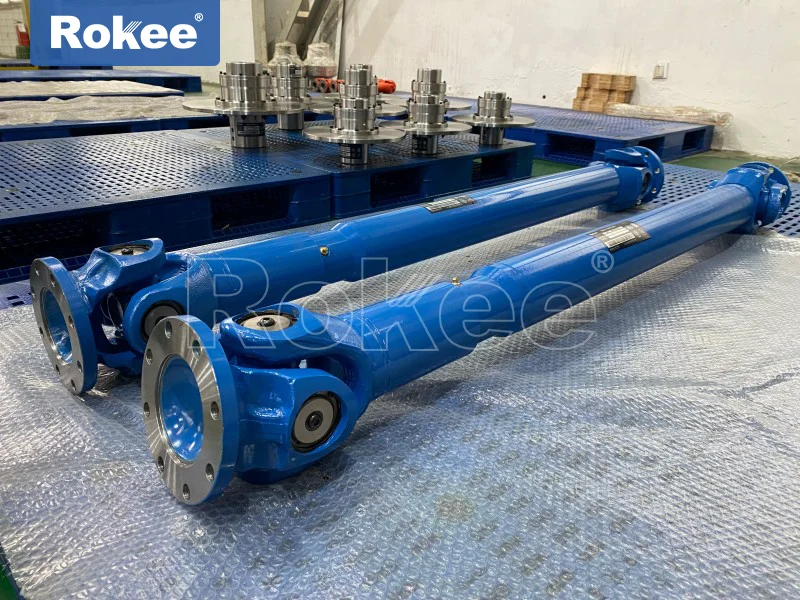
An industrial universal shaft, also commonly referred to as a cardan shaft, is a critical mechanical component designed to connect two non-coaxial shafts, enabling the efficient transmission of rotational motion and torque from a driving shaft to a driven shaft even when significant misalignment exists between them. This versatile component plays an indispensable role in numerous industrial systems, where it accommodates angular, axial, and radial displacements that would otherwise hinder the smooth operation of machinery. The design and functionality of industrial universal shafts are shaped by their structural components, performance characteristics, various types, and the specific application requirements they are engineered to meet. Understanding these aspects is essential for selecting the appropriate universal shaft for a given industrial scenario, ensuring optimal performance, durability, and operational efficiency.
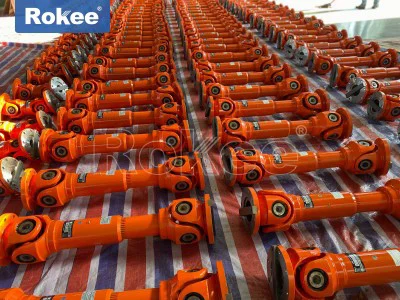
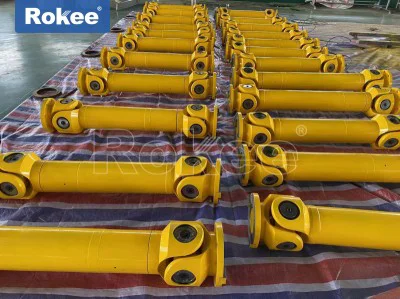
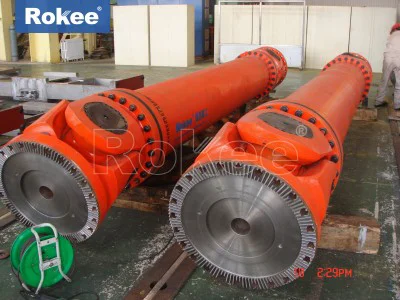
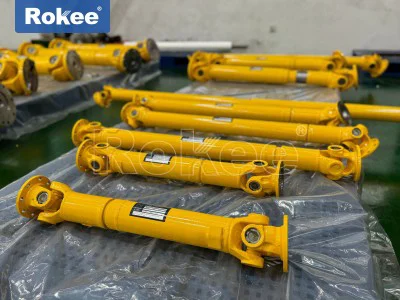
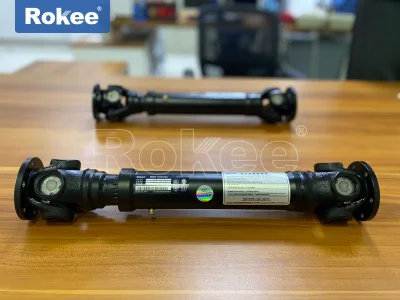
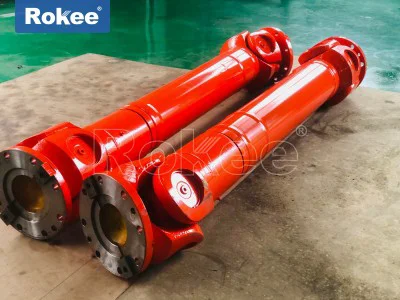
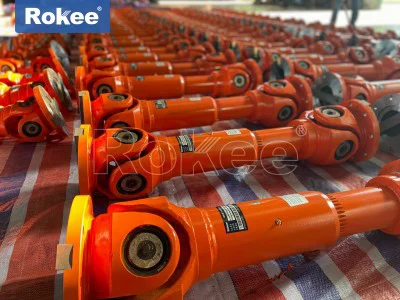
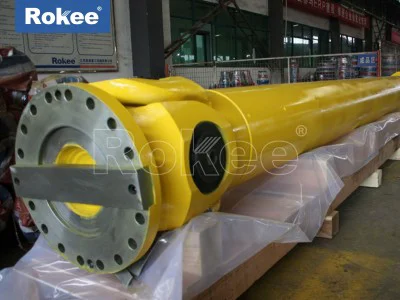
The structure of an industrial universal shaft is meticulously engineered to balance flexibility and strength, allowing it to transmit torque while adapting to misalignments. At the core of its structure are universal joints, also known as U-joints or cardan joints, which serve as the flexible connection points between the shaft and the connected components. A typical universal joint consists of a cross-shaped central member, often called a spider, with four cylindrical trunnions extending outward at right angles to each other. Each trunnion is fitted with a bearing, usually a needle bearing, which reduces friction and enables smooth rotation. The bearings are enclosed within yokes, which are fork-shaped components that attach to the driving and driven shafts. The yokes are connected to the spider’s trunnions via the bearings, allowing the yokes to rotate independently around the trunnion axes, thus accommodating angular misalignment between the two shafts. In addition to the universal joints and yokes, many industrial universal shafts incorporate a telescopic section, often featuring splined connections, which allows for axial movement between the shafts. This telescopic design compensates for changes in distance between the driving and driven components, which may occur due to thermal expansion, vibration, or structural movement during operation. Some universal shafts also include intermediate supports, particularly for longer shaft lengths, to reduce vibration and maintain stability, especially in high-speed or heavy-load applications. These supports typically feature elastic elements that absorb shocks and minimize wear, further enhancing the shaft’s durability. The materials used in constructing industrial universal shafts are carefully selected based on the application’s load, speed, and environmental conditions; common materials include high-strength carbon steel, alloy steel, and in some cases, stainless steel or lightweight alloys for specialized applications where corrosion resistance or weight reduction is critical. The structural components are often subjected to heat treatment processes such as carburizing, quenching, or tempering to enhance their surface hardness, fatigue strength, and overall durability, ensuring they can withstand the harsh conditions of industrial operations.
The performance of an industrial universal shaft is defined by a set of key characteristics that determine its suitability for specific applications. One of the most important performance metrics is torque transmission capacity, which refers to the maximum amount of torque the shaft can transmit without failure or excessive wear. This capacity is influenced by factors such as the size of the shaft, the material strength, the design of the universal joints, and the quality of the bearings. Industrial universal shafts are engineered to handle a wide range of torque requirements, from small torques in light-duty applications to extremely high torques in heavy-industry settings, where they may be required to transmit thousands of Newton-meters of torque. Another critical performance characteristic is angular misalignment capacity, which is the maximum angle between the driving and driven shafts that the universal shaft can accommodate while maintaining efficient power transmission. This angle varies depending on the type of universal joint and the shaft design; typical angular misalignment capacities range from 5 degrees to 45 degrees, with some specialized designs capable of accommodating even larger angles. Axial displacement capacity is also an important performance factor, as it determines how much the shaft can expand or contract axially to compensate for changes in distance between the connected components. This is particularly important in applications where temperature fluctuations cause thermal expansion of the machinery, as the telescopic section of the universal shaft allows for this movement without compromising torque transmission. Transmission efficiency is another key performance attribute, referring to the percentage of power transferred from the driving shaft to the driven shaft without loss. High-quality industrial universal shafts typically achieve transmission efficiencies of 98% or higher, with minimal power loss due to friction in the bearings and splined connections. Vibration and noise levels are also critical performance considerations, as excessive vibration can lead to premature wear of components, reduced machinery lifespan, and increased operational noise. Well-designed universal shafts minimize vibration through balanced components, high-precision manufacturing, and effective lubrication, ensuring smooth operation even at high speeds. Durability and maintenance requirements are additional performance factors; industrial universal shafts are designed to have a long service life under normal operating conditions, with minimal maintenance needs. Regular lubrication of the bearings and splined sections is typically the primary maintenance requirement, although some designs are engineered for low-maintenance or maintenance-free operation, reducing downtime and operational costs.
Industrial universal shafts are available in a variety of types, each designed to meet specific application requirements based on factors such as torque load, speed, misalignment type, and installation space. The most common type is the cross-shaft universal shaft, also known as the cardan shaft, which features a single or double cross-shaped spider connecting two yokes. Single cross-shaft universal shafts are simple in design, cost-effective, and suitable for applications with moderate angular misalignment and torque requirements. However, a single cross-shaft design exhibits non-uniform rotational speed, meaning the driven shaft’s angular velocity fluctuates slightly as the driving shaft rotates. This non-uniformity can cause vibration and noise in high-speed applications, which is why double cross-shaft universal shafts are often used in such scenarios. A double cross-shaft universal shaft consists of two cross shafts connected by an intermediate shaft, with the two cross shafts oriented 90 degrees out of phase. This configuration cancels out the rotational speed fluctuations, resulting in uniform power transmission, making it ideal for high-speed, high-precision applications. Another common type is the ball-and-cage universal shaft, also known as the constant-velocity (CV) joint shaft. This type features a spherical outer race, a star-shaped inner race, and a set of steel balls held in place by a cage. The steel balls roll along precision-machined grooves in both races, ensuring that the driving and driven shafts maintain the same angular velocity regardless of the misalignment angle. Ball-and-cage universal shafts are particularly suitable for high-speed applications with large angular misalignments, such as in precision machinery, industrial robots, and automotive drive systems, where smooth, constant-velocity transmission is critical. Other types of industrial universal shafts include ball-and-fork universal shafts, which are similar to ball-and-cage designs but use a fork-shaped inner race and fewer steel balls, making them suitable for medium-torque applications. There are also telescopic universal shafts, which incorporate a splined telescopic section to accommodate axial displacement, and rigid universal shafts, which are designed for applications with minimal misalignment but require high torque transmission. Additionally, specialized types such as three-pin universal shafts and trident universal shafts are used in specific applications where compact design and high angular misalignment capacity are required, such as in agricultural machinery and construction equipment.
The wide range of types and performance characteristics of industrial universal shafts makes them suitable for a diverse array of industrial applications, spanning multiple sectors where power transmission between non-coaxial shafts is required. One of the largest application areas is the steel manufacturing industry, where universal shafts are used in rolling mills, continuous casting machines, and steel processing equipment. In rolling mills, for example, universal shafts connect the drive motors to the rolling stands, transmitting high torque while accommodating the angular misalignment and axial movement caused by the heavy loads and thermal expansion of the machinery. They are essential for ensuring the smooth operation of the rolling process, which requires precise control of the rolling speed and torque to produce high-quality steel products. The mining industry is another major user of industrial universal shafts, where they are employed in mining equipment such as crushers, conveyors, and excavators. In crushers, universal shafts transmit torque from the drive motor to the crushing mechanism, accommodating the misalignment caused by the heavy vibrations and structural movement of the equipment. In conveyors, they connect the drive units to the conveyor rollers, ensuring efficient power transmission even when the conveyor is inclined or has slight misalignments. The paper and pulp industry also relies heavily on industrial universal shafts, particularly in paper mills where they are used in paper machines, calenders, and rollers. These applications require smooth, precise power transmission to ensure consistent paper thickness and quality, and universal shafts accommodate the misalignments between the various components of the paper machine. The automotive industry uses universal shafts in drive systems, particularly in rear-wheel-drive and four-wheel-drive vehicles, where they connect the transmission to the rear axle or transfer case. In this application, ball-and-cage universal shafts are often used to ensure constant-velocity transmission, providing smooth acceleration and handling. The construction machinery sector also uses universal shafts in equipment such as cranes, bulldozers, and loaders, where they transmit high torque while accommodating the large angular misalignments caused by the movement of the equipment’s arms and components. Other applications include the cement industry, where universal shafts are used in rotary kilns and cement mills; the sugar industry, where they facilitate power transmission in large processing machines; the aerospace industry, where lightweight, high-precision universal shafts are used in aircraft engines and auxiliary systems; and the marine industry, where they are used in ship propulsion systems to connect the engine to the propeller. In each of these applications, the universal shaft plays a critical role in ensuring the reliable and efficient operation of the machinery, reducing downtime and maintenance costs, and extending the lifespan of the equipment.
The design and development of industrial universal shafts continue to evolve in response to the changing needs of modern industry. As industrial equipment becomes more advanced, with higher speeds, heavier loads, and more complex operational requirements, universal shafts are being engineered to meet these challenges. Advances in materials science have led to the use of high-strength, lightweight alloys and composite materials, which reduce the weight of the shaft while maintaining or improving its torque capacity and durability. Precision manufacturing techniques, such as computer numerical control (CNC) machining and 3D printing, have improved the accuracy and consistency of the shaft’s components, reducing vibration and noise and enhancing overall performance. Additionally, the integration of advanced lubrication systems, such as automatic lubrication units, has further reduced maintenance requirements and extended the service life of universal shafts. The trend towards intelligent industrial systems has also influenced the design of universal shafts, with some models incorporating sensors to monitor torque, temperature, and vibration, providing real-time data to operators and enabling predictive maintenance. This helps to identify potential issues before they lead to equipment failure, minimizing downtime and improving operational efficiency. Despite these advances, the fundamental function of the industrial universal shaft remains the same: to connect non-coaxial shafts and transmit rotational motion and torque efficiently and reliably. Its versatility and adaptability make it an essential component in modern industrial systems, and its continued development will ensure it remains a critical part of industrial machinery for years to come.
In summary, the industrial universal shaft is a vital mechanical component with a well-engineered structure that enables it to accommodate misalignments while transmitting torque and rotational motion. Its performance characteristics, including torque capacity, misalignment capability, transmission efficiency, and durability, determine its suitability for different applications. The various types of universal shafts, from cross-shaft to ball-and-cage designs, are tailored to meet the specific requirements of diverse industrial sectors, including steel manufacturing, mining, paper and pulp, automotive, construction, and many others. As industry continues to advance, the industrial universal shaft will continue to evolve, incorporating new materials, manufacturing techniques, and technologies to meet the growing demands of modern machinery. Its role in ensuring the smooth, reliable operation of industrial equipment makes it an indispensable component in the global industrial landscape, contributing to increased productivity, reduced downtime, and improved operational efficiency across a wide range of applications.