Flanged Cardan Shaft
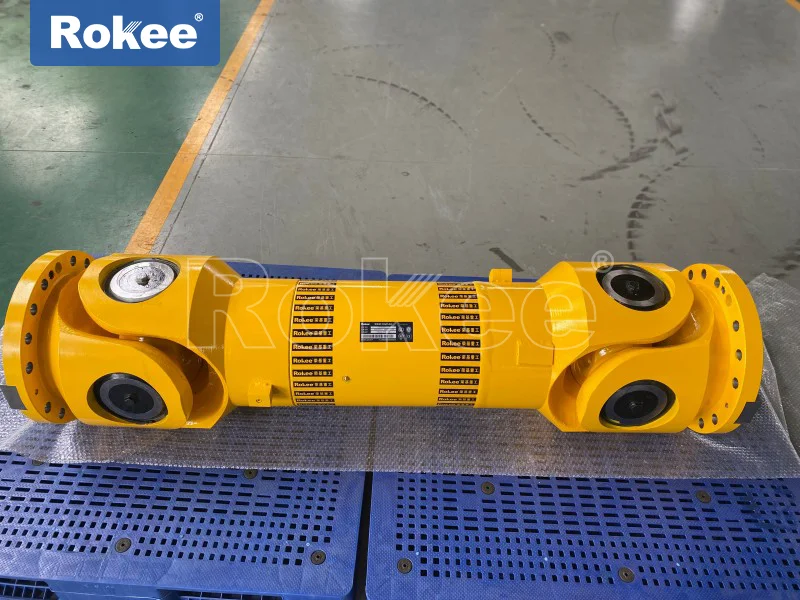
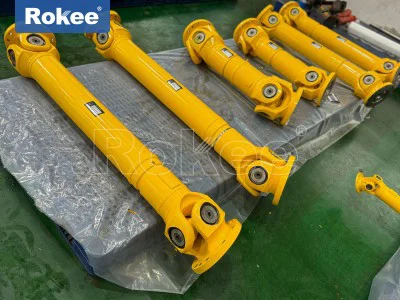
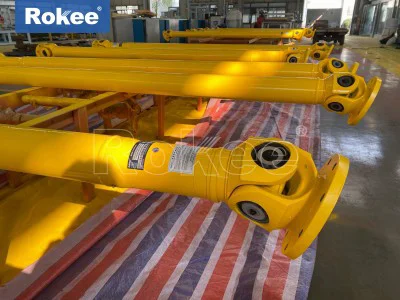
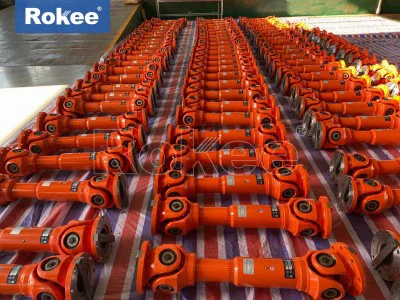
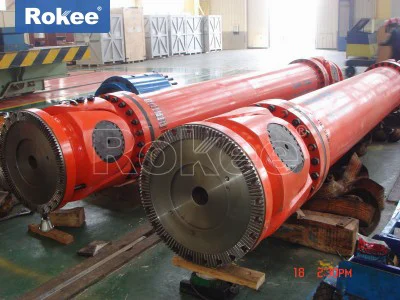
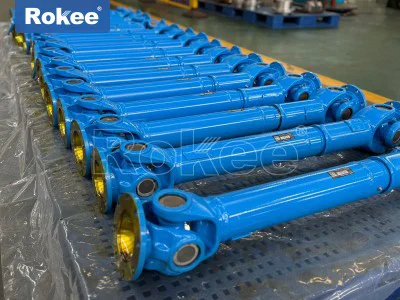
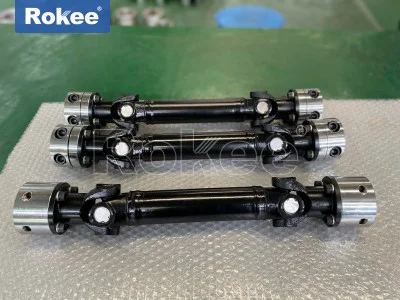
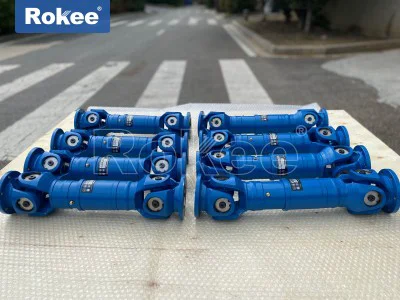
A flanged cardan shaft, also known as a flanged universal joint shaft, is a crucial mechanical component designed to transmit torque and rotational motion between two shafts that are not aligned in a straight line or are separated by a distance, while accommodating relative movements such as angular, radial, and axial deviations. Unlike standard cardan shafts, its distinctive feature lies in the flanged connections at both ends, which provide a secure, rigid, and easy-to-install interface with other mechanical components, making it widely used in various industrial, agricultural, automotive, and marine applications. The integration of flanges into the cardan shaft design enhances its versatility and reliability, allowing it to adapt to diverse working conditions and load requirements without compromising transmission efficiency.
The structure of a flanged cardan shaft is a sophisticated assembly of components that work together seamlessly to achieve efficient torque transmission and movement compensation. At its core, the shaft consists of several fundamental parts, each playing a critical role in ensuring overall performance and durability. The main body of the shaft is typically a hollow or solid tube, known as the shaft tube, which serves as the primary carrier of torque and provides structural support for the entire assembly. Hollow shaft tubes are often preferred in many applications due to their lightweight design, which reduces inertia and energy consumption while maintaining sufficient strength to withstand high loads. The material of the shaft tube is carefully selected based on the application requirements, with common options including high-strength steel, aluminum alloy, and cast iron. High-strength steel is widely used for heavy-duty applications due to its excellent tensile strength and resistance to wear and fatigue, while aluminum alloy is chosen for lightweight, high-speed scenarios where weight reduction is a priority. Cast iron, on the other hand, is utilized in applications with moderate loads and lower cost constraints.
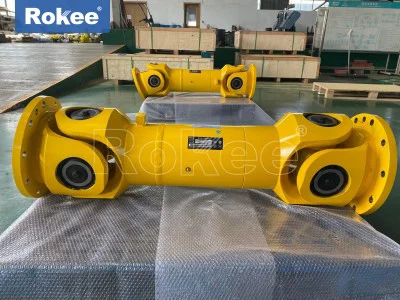
At both ends of the shaft tube, flanges are securely attached, either through welding, forging, or bolted connections, depending on the design requirements and load capacity. Flanges are flat, circular components with evenly spaced bolt holes around their perimeter, allowing them to be firmly fastened to the flanges of other components such as motors, gearboxes, pumps, or machinery housings. The design of the flanges is critical to ensuring a tight and reliable connection; they must be machined to high precision to maintain coaxiality with the shaft tube and prevent misalignment during operation, which could lead to vibration, noise, and premature wear. In addition to the shaft tube and flanges, the flanged cardan shaft incorporates universal joints, which are the key components enabling angular compensation. The most common type of universal joint used in flanged cardan shafts is the cross-shaft universal joint, also known as the Hooke’s joint, which consists of two U-shaped yokes and a cross-shaped shaft (cross pin) with bearings at each end. The yokes are connected to the flanges and the cross pin, allowing the shaft to pivot at various angles while transmitting torque. For longer flanged cardan shafts, a center support bearing is often installed in the middle of the shaft tube to provide additional stability, reduce vibration, and distribute the load evenly, thereby extending the service life of the shaft.
Another important component in some flanged cardan shaft designs is the telescopic section, which allows for axial compensation. This section typically consists of a splined shaft and a splined sleeve, which can slide relative to each other to accommodate changes in the distance between the two connected shafts due to thermal expansion, vibration, or installation errors. The splined connection ensures that torque is transmitted efficiently while allowing axial movement, and it is often lubricated to reduce friction and wear. Seals are also integrated into the design to protect the internal components from dust, debris, moisture, and other contaminants, which can damage the bearings and splines and affect the overall performance of the shaft. The combination of these components results in a robust and versatile mechanical system that can transmit torque reliably even under conditions of misalignment and relative movement.
The performance of a flanged cardan shaft is determined by a set of key characteristics that define its ability to adapt to different working conditions and meet specific application requirements. One of the most important performance parameters is torque capacity, which refers to the maximum amount of torque that the shaft can transmit without suffering permanent deformation or failure. Torque capacity is influenced by several factors, including the material of the shaft tube and flanges, the size and design of the universal joints, the cross-sectional area of the shaft tube, and the quality of the connections (welding, forging, or bolting). Flanged cardan shafts are available in a wide range of torque capacities, from small values for light-duty applications to extremely high values for heavy-duty industrial machinery. For example, light-duty flanged cardan shafts may have a torque capacity of a few hundred Newton-meters, while heavy-duty models can handle torque in excess of 1,000,000 Newton-meters, making them suitable for use in large-scale equipment such as metallurgical rolling mills and mining crushers.
Angular compensation capability is another critical performance characteristic of flanged cardan shafts. This refers to the maximum angle at which the two connected shafts can be misaligned while still maintaining efficient torque transmission. The angular compensation range varies depending on the design of the universal joint, with cross-shaft universal joints typically offering an angular compensation range of 5° to 45°, while some specialized designs can achieve angles of up to 44° or more. This ability to accommodate angular misalignment is essential in applications where the connected shafts are not perfectly aligned, such as in agricultural machinery, construction equipment, and marine propulsion systems, where the position of the shafts may change during operation due to load variations or structural movement.
Axial and radial compensation are also important performance features. Axial compensation allows the shaft to adjust to changes in the distance between the two connected components, as mentioned earlier, while radial compensation accommodates lateral misalignment between the shafts. These compensation capabilities help to reduce stress on the connected components, minimize vibration and noise, and improve the overall reliability and service life of the entire mechanical system. Transmission efficiency is another key performance parameter, which refers to the percentage of torque that is transmitted from the input shaft to the output shaft without loss. Flanged cardan shafts typically have high transmission efficiency, often exceeding 95%, due to their rigid structure and minimal friction between components. This high efficiency is particularly important in applications where energy conservation is a priority, such as in automotive and industrial machinery, where any loss of torque can result in increased energy consumption and reduced performance.
Durability and wear resistance are also essential performance characteristics of flanged cardan shafts, especially in harsh working environments such as mining, construction, and marine applications, where the shaft is exposed to heavy loads, high temperatures, dust, moisture, and corrosive substances. The use of high-quality materials, such as high-strength steel and corrosion-resistant alloys, along with proper heat treatment (such as quenching and tempering) and surface treatment (such as galvanizing or painting), enhances the durability and wear resistance of the shaft. Additionally, the use of high-quality bearings and seals reduces friction and protects internal components from contaminants, further extending the service life of the shaft. Vibration and noise reduction are also important performance considerations, as excessive vibration and noise can affect the performance of the connected machinery and create an uncomfortable working environment. The design of the flanged cardan shaft, including the use of balanced components, center support bearings, and damping materials, helps to minimize vibration and noise during operation.
Flanged cardan shafts are available in a variety of types, each designed to meet specific application requirements based on load capacity, working conditions, and compensation needs. One common classification is based on the presence or absence of length (axial) compensation, resulting in two main types: flanged cardan shafts with length compensation and flanged cardan shafts without length compensation. Flanged cardan shafts with length compensation, also known as telescopic flanged cardan shafts, incorporate a splined telescopic section that allows for axial movement, making them suitable for applications where the distance between the connected shafts may change due to thermal expansion, vibration, or installation errors. These shafts are widely used in applications such as rolling mills, paper machines, and marine drives, where axial movement is common.
Flanged cardan shafts without length compensation, on the other hand, do not have a telescopic section and are designed for applications where the distance between the connected shafts is fixed. These shafts are typically more compact and lightweight than telescopic models, making them suitable for use in tight spaces where axial movement is not required. They are commonly used in light-duty applications such as small pumps, fans, and light industrial machinery. Another classification of flanged cardan shafts is based on their load capacity, resulting in light-duty, medium-duty, heavy-duty, and super heavy-duty types. Light-duty flanged cardan shafts are designed for applications with low torque and high speed, such as in automotive driveshafts, small agricultural machinery, and light industrial equipment. They are typically made from aluminum alloy or lightweight steel, with small flange diameters and torque capacities ranging from a few hundred to several thousand Newton-meters.
Medium-duty flanged cardan shafts are suitable for applications with moderate torque and speed, such as in medium-sized pumps, compressors, conveyors, and agricultural machinery. They are often made from high-strength steel, with flange diameters and torque capacities ranging from medium to high levels. Heavy-duty flanged cardan shafts are designed to withstand high torque, heavy loads, and harsh working conditions, such as in mining machinery, construction equipment, metallurgical rolling mills, and large industrial compressors. They are made from high-strength alloy steel, with large flange diameters, robust universal joints, and torque capacities ranging from tens of thousands to hundreds of thousands of Newton-meters. Super heavy-duty flanged cardan shafts are specialized models designed for extremely high torque and load applications, such as in large-scale power generation equipment, offshore platforms, and heavy-duty marine propulsion systems. These shafts are typically custom-designed, with extremely large flange diameters and torque capacities exceeding 1,000,000 Newton-meters.
Flanged cardan shafts can also be classified based on the type of flange connection, which includes several variations such as bolted flange connections, welded flange connections, inner hole key connection flanges, jaw-type connecting flanges, and inner hole tooth connecting flanges. Bolted flange connections are the most common type, as they allow for easy installation and disassembly, making them suitable for applications where maintenance is required. Welded flange connections, on the other hand, provide a more rigid and permanent connection, making them suitable for heavy-duty applications where high torque and stability are required. Inner hole key connection flanges use a combination of inner keys and high-strength bolts to improve the fusion of the flanges and enhance torque transmission efficiency, making them suitable for applications with medium impact loads. Jaw-type connecting flanges use convex and concave teeth to transmit torque, providing high reliability and long service life, and are suitable for heavy impact load and high-frequency forward-reverse applications. Inner hole tooth connecting flanges use distributed tooth profiles to connect the universal joint flange and the half-coupling flange, offering convenient installation and self-alignment, and are commonly used in medium and heavy-duty applications.
Additionally, flanged cardan shafts can be classified based on the type of universal joint used, with the most common types being cross-shaft universal joints and ball cage universal joints. Cross-shaft universal joints are the most widely used due to their simplicity, robustness, and ability to handle high torque, making them suitable for most industrial and heavy-duty applications. Ball cage universal joints, on the other hand, offer better angular and axial compensation capabilities, as well as smoother operation at high speeds, making them suitable for high-speed applications such as automotive driveshafts and precision machinery.
The wide range of structural designs and performance characteristics of flanged cardan shafts makes them suitable for a diverse array of applications across various industries. One of the most common applications is in the automotive industry, where flanged cardan shafts are used as driveshafts to transmit torque from the transmission to the rear axle in rear-wheel-drive and four-wheel-drive vehicles. In these applications, the flanged cardan shaft must accommodate angular misalignment between the transmission and the rear axle, as well as axial movement due to suspension travel. Light-duty flanged cardan shafts made from aluminum alloy are often used in passenger cars to reduce weight and improve fuel efficiency, while heavy-duty steel flanged cardan shafts are used in trucks, buses, and off-road vehicles to handle higher torque and loads.
The industrial sector is another major user of flanged cardan shafts, with applications in a wide range of machinery and equipment. In metallurgical industry, heavy-duty flanged cardan shafts are used in rolling mills to transmit torque from the motor to the rolling stands, where they must withstand extremely high torque and accommodate angular and axial misalignment due to the thermal expansion of the rolls. In mining industry, flanged cardan shafts are used in crushers, conveyors, and excavators, where they operate in harsh environments with high loads, dust, and vibration. The robust design and high durability of these shafts make them suitable for withstanding the demanding conditions of mining operations. In the paper and pulp industry, flanged cardan shafts with length compensation are used in paper machines to transmit torque to the rollers, where they must accommodate axial movement due to the thermal expansion of the machinery and maintain precise speed control to ensure the quality of the paper.
Agricultural machinery also relies heavily on flanged cardan shafts for various applications. Tractors use flanged cardan shafts to transmit torque from the power take-off (PTO) to attached implements such as plows, harrows, and mowers. These shafts must accommodate angular misalignment as the tractor moves over uneven terrain and the implement changes position relative to the tractor. Light-duty and medium-duty flanged cardan shafts are commonly used in agricultural applications, with designs that prioritize durability and ease of maintenance. In construction industry, flanged cardan shafts are used in construction equipment such as cranes, bulldozers, and excavators, where they transmit torque to the wheels, tracks, or hydraulic pumps. These shafts must handle high torque and loads while accommodating the angular misalignment that occurs as the equipment moves and operates in uneven terrain.
The marine industry is another important application area for flanged cardan shafts, where they are used in marine propulsion systems to transmit torque from the engine to the propeller. Marine flanged cardan shafts must be designed to withstand the corrosive effects of saltwater, as well as high torque and axial loads. They are often made from corrosion-resistant alloys and feature specialized seals to protect internal components from moisture. In addition, marine flanged cardan shafts must accommodate angular misalignment between the engine and the propeller shaft, which can occur due to the flexing of the hull during operation. Smaller flanged cardan shafts are used in small boats and yachts, while larger, heavy-duty models are used in commercial ships and offshore platforms.
Other applications of flanged cardan shafts include aerospace, where lightweight and high-precision flanged cardan shafts are used in aircraft systems to transmit torque between components such as engines, gearboxes, and control surfaces. In the renewable energy sector, flanged cardan shafts are used in wind turbines to transmit torque from the rotor to the generator, where they must handle high torque and accommodate angular misalignment due to wind-induced vibrations. They are also used in solar energy systems to transmit torque to tracking mechanisms that adjust the position of solar panels to maximize sunlight absorption.
In conclusion, flanged cardan shafts are versatile and essential mechanical components that play a critical role in transmitting torque and rotational motion between misaligned or distant shafts across a wide range of industries. Their unique flanged design provides a secure and reliable connection to other mechanical components, while their structural composition, including the shaft tube, universal joints, flanges, and optional telescopic sections, enables them to accommodate angular, axial, and radial misalignment. The key performance characteristics of flanged cardan shafts, such as torque capacity, angular compensation, transmission efficiency, durability, and vibration reduction, make them suitable for diverse applications, from light-duty automotive and agricultural equipment to heavy-duty industrial and marine machinery. The various types of flanged cardan shafts, classified based on length compensation, load capacity, flange connection type, and universal joint type, allow for customization to meet specific application requirements. As technology continues to advance, the design and performance of flanged cardan shafts are expected to improve further, with the development of new materials, manufacturing processes, and design innovations that enhance their efficiency, durability, and versatility, making them even more indispensable in modern mechanical systems.