Transmission Core Of Sandwich Panel Production Line Performance Analysis Of Universal Coupling
The sandwich panel production line is a complex integrated system that integrates multiple processes such as material uncoiling, cutting, bonding, pressing, and forming, and its stable and efficient operation directly determines the quality and production efficiency of sandwich panels. As the core component of the transmission system in the sandwich panel production line, the universal coupling undertakes the key task of transmitting power between different equipment components with non-coaxial or angular offset. It is responsible for connecting the power source (such as a motor) with various functional components (such as uncoiling rollers, pressing rollers, and conveying rollers), ensuring that the torque and speed are transmitted stably and accurately, and thus maintaining the coordinated operation of the entire production line. In the actual production process, the performance of the universal coupling is affected by many factors such as structural design, material selection, working conditions, and maintenance level. Any performance degradation or failure of the universal coupling will directly lead to the shutdown of the production line, increase production costs, and even affect the quality of the final products. Therefore, in-depth analysis of the performance of the universal coupling in the transmission core of the sandwich panel production line is of great practical significance for optimizing the operation efficiency of the production line, reducing failure rates, and extending the service life of the equipment.
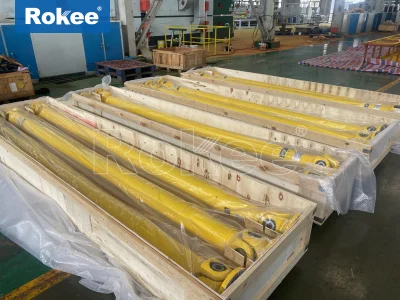
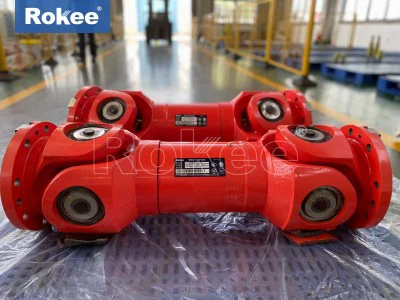
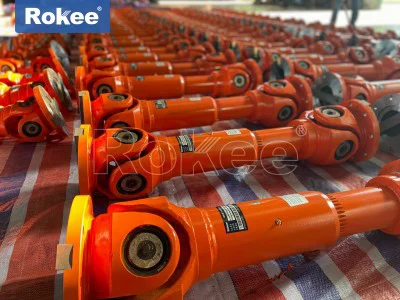
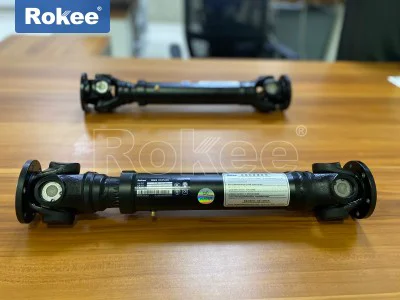
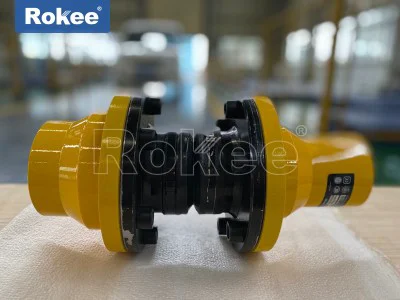
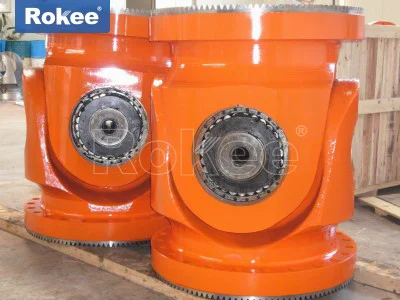
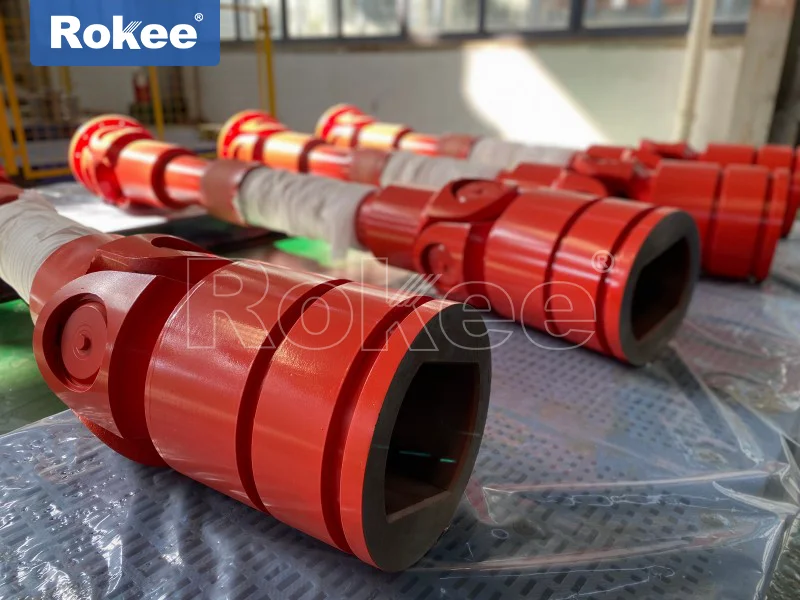
A universal coupling, also known as a universal joint, is a mechanical component used to connect two rigid shafts with inclined axes, enabling continuous rotation and reliable torque transmission even when there is an angular deviation between the two shafts. The basic structure of a universal coupling usually includes a pair of hinges arranged close to each other and perpendicular to each other, connected by a cross shaft. This structural design gives the universal coupling a significant advantage in angular compensation, allowing it to adapt to the installation deviation and relative movement between the shafts caused by factors such as manufacturing errors, installation inaccuracies, and equipment vibration during the operation of the sandwich panel production line. Unlike fixed couplings that require strict alignment of the two shafts, the universal coupling can flexibly compensate for angular deviations within a certain range, which is crucial for the stable operation of the sandwich panel production line where multiple equipment components are connected in series and have complex spatial layouts. In addition to angular compensation, some types of universal couplings also have a certain degree of axial and radial compensation capacity, which can further adapt to the relative displacement between the shafts caused by thermal expansion and contraction of equipment during operation or load changes, ensuring the smoothness of power transmission.
In the sandwich panel production line, the transmission system needs to adapt to different working conditions, such as the stable low-speed operation during the bonding process and the high-speed operation during the cutting and conveying process. Therefore, the universal coupling, as the core of power transmission, must have excellent performance in torque transmission, speed stability, wear resistance, and fatigue resistance. Torque transmission capacity is one of the most important performance indicators of the universal coupling, which refers to the maximum torque that the coupling can transmit without damage or permanent deformation. In the sandwich panel production line, the torque required for different processes varies greatly. For example, the pressing process requires a large torque to ensure that the core material and the surface panel are closely bonded, while the conveying process requires a stable and moderate torque to avoid damage to the sandwich panel due to excessive tension. Therefore, the universal coupling must be able to transmit the required torque stably according to the working conditions of different processes, and have a certain safety margin to cope with sudden load changes, such as the jamming of the conveying roller caused by foreign objects, to prevent the coupling from being damaged and causing production interruption.
Speed stability is another key performance indicator of the universal coupling. In the sandwich panel production line, the coordination of the speed of each equipment component is crucial to ensuring the quality of the product. For example, the speed of the uncoiling roller must be consistent with the speed of the conveying roller to avoid the surface panel being stretched or wrinkled; the speed of the pressing roller must be matched with the conveying speed to ensure uniform bonding pressure and avoid uneven thickness of the sandwich panel. The universal coupling, as the power transmission medium, its speed stability directly affects the speed coordination of the entire production line. However, due to the structural characteristics of the universal coupling, the rotational speed of the driven shaft will have a certain fluctuation when the angular deviation exists between the driving shaft and the driven shaft, which is called the non-uniformity of the universal coupling. This non-uniformity will cause vibration of the equipment, affect the stability of the production line, and even lead to the generation of noise and the accelerated wear of components. Therefore, in the design and selection of universal couplings for sandwich panel production lines, it is necessary to take measures to reduce the non-uniformity of speed, such as adopting double universal couplings (also known as double cardan shafts) arranged 90 degrees out of phase, which can effectively offset the speed fluctuation caused by a single universal coupling and improve the speed stability of power transmission.
Material selection has a decisive impact on the performance and service life of the universal coupling. The universal coupling in the sandwich panel production line is in a long-term continuous operation state, bearing alternating loads, friction, and impact, so the material must have high strength, wear resistance, fatigue resistance, and toughness. Common materials used for universal couplings include carbon steel, alloy steel, and stainless steel. Carbon steel has the advantages of low cost and easy processing, but its strength and wear resistance are relatively limited, and it is suitable for working conditions with small torque and low speed. Alloy steel, such as 40Cr, 45CrNiMo, etc., has higher strength, hardness, and fatigue resistance after heat treatment, and can withstand larger torque and impact, which is widely used in the transmission system of sandwich panel production lines. Stainless steel is mainly used in working environments with corrosion, such as production lines that use corrosive bonding agents, to prevent the coupling from being corroded and damaged. In addition to the material of the main body, the material of the key components of the universal coupling, such as the cross shaft and bearings, also needs to be carefully selected. The cross shaft is the core force-bearing component of the universal coupling, which needs to be made of high-strength and wear-resistant materials, and undergo heat treatment processes such as quenching and tempering to improve its surface hardness and internal toughness. Bearings are vulnerable components in the universal coupling, and their wear resistance and rotation flexibility directly affect the overall performance of the coupling. Therefore, high-quality rolling bearings with good lubrication performance are usually selected to reduce friction and extend the service life.
Working conditions are important factors affecting the performance of the universal coupling in the sandwich panel production line. The working environment of the sandwich panel production line is usually accompanied by dust, noise, vibration, and sometimes high temperature or humidity, which will have a negative impact on the operation of the universal coupling. Dust and debris generated during the production process can easily enter the gap between the components of the universal coupling, increasing friction between the components, accelerating wear, and even causing jamming of the coupling. Vibration generated by the operation of the equipment will be transmitted to the universal coupling, causing fatigue damage to the cross shaft, hinges, and other components over time, reducing the service life of the coupling. High temperature environment will affect the material properties of the universal coupling, such as reducing the strength and toughness of the material, and accelerating the aging of the lubricating oil, resulting in poor lubrication effect and increased friction. Humid environment or corrosive media will cause corrosion of the coupling components, especially for couplings made of carbon steel, which is prone to rust and damage. Therefore, in the actual operation process, it is necessary to take corresponding protective measures according to the working conditions, such as installing protective covers to prevent dust and debris from entering, installing shock absorption devices to reduce vibration, and selecting appropriate lubricating oil and lubrication methods to adapt to high temperature or humid environments.
Lubrication performance is an important guarantee for the stable operation of the universal coupling. The universal coupling has multiple moving pairs, such as the connection between the cross shaft and the hinges, and the rotation of the bearings. The friction between these moving pairs will not only consume power but also accelerate wear, reduce the service life of the coupling, and even cause jamming. Therefore, effective lubrication is essential to reduce friction, dissipate heat, prevent wear and corrosion, and ensure the smooth operation of the universal coupling. The selection of lubricating oil should be based on the working conditions of the universal coupling, such as torque, speed, temperature, and environment. For example, in high-temperature working environments, high-temperature resistant lubricating oil should be selected; in environments with high humidity or corrosion, anti-rust and anti-corrosion lubricating oil should be selected. The lubrication method usually includes regular manual lubrication and automatic lubrication. Regular manual lubrication is simple and low-cost, but it is easy to cause insufficient lubrication or excessive lubrication due to human factors. Automatic lubrication can realize regular and quantitative lubrication, ensuring the stability of the lubrication effect, and is suitable for large-scale sandwich panel production lines with high automation levels. In addition, it is necessary to regularly check the lubrication status of the universal coupling, timely supplement or replace the lubricating oil, and clean the lubrication channel to prevent the lubricating oil from deteriorating or being contaminated, which affects the lubrication effect.
Wear and fatigue are common failure modes of universal couplings in sandwich panel production lines, which directly affect the performance and service life of the coupling. Wear mainly occurs on the contact surfaces of the cross shaft, hinges, and bearings, which is caused by the relative movement and friction between the components under the action of load. The wear degree is related to factors such as material hardness, surface roughness, lubrication effect, and working load. According to the Archard model and Hertz contact theory, the wear depth of the universal coupling is related to the wear coefficient, load, sliding distance, and material hardness. With the increase of wear amount, the gap between the components of the universal coupling will increase, leading to greater fluctuation of the output angular velocity, reducing the speed stability of power transmission, and even causing vibration and noise of the equipment. When the wear amount exceeds a certain threshold, the universal coupling will lose its transmission accuracy, and even fail. Fatigue failure is caused by the alternating load acting on the universal coupling for a long time, leading to the generation and expansion of cracks in the components, and finally causing the fracture of the cross shaft or hinges. The fatigue life of the universal coupling is related to factors such as material fatigue strength, structural design, load size, and stress distribution. To reduce wear and fatigue failure, it is necessary to select appropriate materials and heat treatment processes, optimize the structural design to improve the stress distribution, ensure good lubrication, and avoid excessive load and impact.
In the actual operation of the sandwich panel production line, the performance of the universal coupling can be evaluated through various detection methods to timely find potential faults and take maintenance measures. Common detection methods include visual inspection, temperature detection, vibration detection, and noise detection. Visual inspection is the simplest and most direct method, which can check the appearance of the universal coupling, such as whether there are cracks, deformation, rust, and oil leakage, and whether the connecting bolts are loose. Temperature detection is used to monitor the temperature of the universal coupling during operation. Excessive temperature rise usually indicates problems such as poor lubrication, excessive friction, or overload, which need to be checked and handled in time. Vibration detection can monitor the vibration amplitude and frequency of the universal coupling. Abnormal vibration usually indicates problems such as wear, misalignment, or fatigue damage of the coupling components. Through vibration analysis, the type and location of the fault can be determined, and corresponding maintenance measures can be taken. Noise detection is used to monitor the noise generated by the universal coupling during operation. Abnormal noise, such as friction noise, impact noise, and vibration noise, usually indicates faults in the coupling, which need to be checked and eliminated in time. Regular performance detection and maintenance of the universal coupling can effectively extend its service life, reduce failure rates, and ensure the stable operation of the sandwich panel production line.
To optimize the performance of the universal coupling in the transmission core of the sandwich panel production line, it is necessary to start from the aspects of structural design, material selection, installation adjustment, lubrication maintenance, and operation management. In terms of structural design, the universal coupling should be designed according to the actual working conditions of the production line, such as torque, speed, and angular deviation, to ensure that it has sufficient torque transmission capacity and angular compensation capacity. At the same time, the structural design should be optimized to improve the stress distribution, reduce the non-uniformity of speed, and enhance the stability of power transmission. For example, the use of double universal couplings can effectively improve the speed stability; the optimization of the cross shaft structure can reduce stress concentration and improve fatigue life. In terms of material selection, high-quality materials with high strength, wear resistance, and fatigue resistance should be selected according to the working conditions, and appropriate heat treatment processes should be adopted to improve the material properties. In terms of installation adjustment, the installation accuracy of the universal coupling should be ensured, the angular deviation and axial displacement between the driving shaft and the driven shaft should be controlled within the allowable range, and the connecting bolts should be tightened to prevent loosening during operation. In terms of lubrication maintenance, appropriate lubricating oil and lubrication methods should be selected, and regular lubrication and oil change should be carried out to ensure good lubrication effect. In terms of operation management, the operation parameters of the production line should be strictly controlled to avoid overload operation of the universal coupling, and regular performance detection and maintenance should be carried out to find and eliminate potential faults in time.
In conclusion, the universal coupling is the core component of the transmission system in the sandwich panel production line, and its performance directly affects the stable operation, production efficiency, and product quality of the entire production line. The performance of the universal coupling is affected by many factors such as structural design, material selection, working conditions, lubrication maintenance, and operation management. To ensure the excellent performance of the universal coupling, it is necessary to conduct in-depth analysis of its performance characteristics, select appropriate types and specifications according to the actual working conditions of the production line, and strengthen daily maintenance and management. Through the optimization of structural design, the selection of high-quality materials, the improvement of installation accuracy, the strengthening of lubrication maintenance, and the strict control of operation parameters, the performance of the universal coupling can be effectively improved, its service life can be extended, the failure rate of the production line can be reduced, and the overall operation efficiency of the sandwich panel production line can be improved. With the continuous development of the sandwich panel industry, the requirements for the performance of the transmission system are getting higher and higher, which also puts forward new challenges for the design, selection, and application of universal couplings. In the future, it is necessary to further study the performance of universal couplings under complex working conditions, develop new materials and structural designs, and improve the adaptability and reliability of universal couplings, so as to provide more reliable power transmission guarantee for the development of the sandwich panel production industry.