Light Duty Universal Shaft

A light duty universal shaft, also commonly referred to as a light duty cardan shaft or light duty universal joint shaft, is a critical mechanical component engineered to transmit rotational power and torque between two shafts that are not aligned coaxially. Unlike heavy duty universal shafts designed for high-load, high-torque applications, light duty versions are optimized for scenarios where the torque requirements are moderate, the operating conditions are relatively mild, and compactness and flexibility are prioritized. These versatile components play an indispensable role in a wide range of mechanical systems, from small industrial machinery to light vehicles and household equipment, enabling smooth and efficient power transfer even when the input and output shafts are positioned at different angles or experience minor changes in distance during operation. The ability to accommodate angular misalignment while maintaining consistent power transmission makes the light duty universal shaft a cornerstone of modern light mechanical design, as it solves the fundamental challenge of connecting moving or offset components without sacrificing performance, durability, or efficiency.
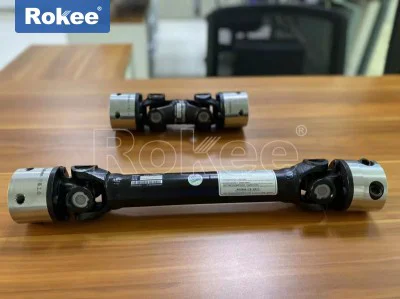
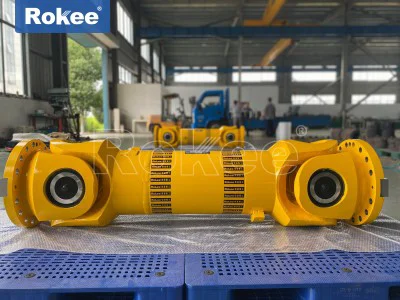
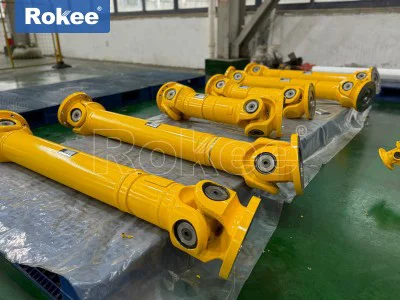
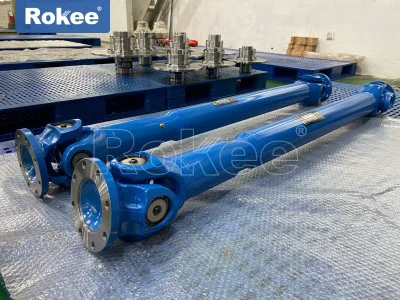
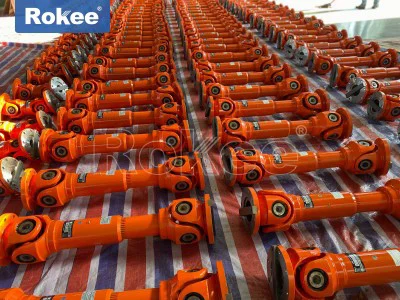
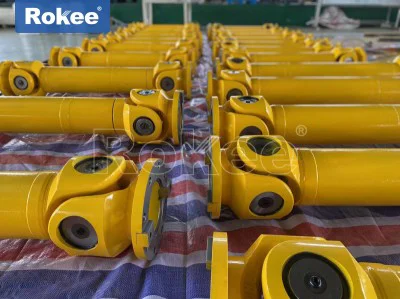
The structure of a light duty universal shaft is composed of several key components that work together seamlessly to achieve its core function, each contributing to the overall strength, flexibility, and reliability of the assembly. At the heart of the system are the universal joints, also known as U-joints, which serve as the flexible connection points between the drive shaft and the input/output shafts. A typical universal joint in a light duty shaft consists of a cross-shaped metal component, called a cross or spider, with four cylindrical trunnions extending from its center at right angles to each other. Each trunnion is fitted with a bearing, usually a needle roller bearing, which reduces friction and allows for smooth rotation between the cross and the yokes. The bearings are enclosed within bearing caps or sleeves, which are secured to the yokes—fork-shaped components that connect the universal joint to the drive shaft and the input/output shafts. The yokes are designed to wrap around the trunnions of the cross, creating a hinged connection that permits rotational movement around multiple axes, thus enabling angular misalignment between the connected shafts. The drive shaft itself, the central component of the assembly, is typically a hollow tubular structure made from high-strength materials such as steel, aluminum alloy, or composite materials. The hollow design is preferred because it provides a high strength-to-weight ratio, reducing the overall mass of the shaft while maintaining the structural rigidity required to withstand the moderate torques and rotational speeds encountered in light duty applications. A solid drive shaft would be heavier and more prone to vibration, making the hollow design more efficient for most light duty uses. In some cases, especially for applications where a longer shaft is required, the drive shaft may be constructed from multiple sections connected by additional universal joints or center support bearings, which help to reduce vibration and maintain stability during operation. Additionally, many light duty universal shafts feature a telescopic design, achieved through spline or sliding sleeve connections, which allows for axial length compensation to address installation tolerances and thermal expansion or contraction that occur during continuous operation. Sealing components are also integrated into the structure to prevent contamination from dust, moisture, or debris, which can cause premature wear of the bearings and other moving parts, thereby extending the service life of the shaft.
The performance of a light duty universal shaft is defined by a set of key characteristics that determine its suitability for specific applications, with each performance parameter tailored to meet the demands of light load scenarios. One of the most important performance metrics is torque capacity, which refers to the maximum amount of rotational force that the shaft can transmit without experiencing deformation or failure. Light duty universal shafts typically have a torque capacity ranging from 180 N·m to 22,000 N·m, depending on their size, material, and structural design, which is sufficient for most light industrial and consumer applications. Another critical performance characteristic is angular misalignment capacity, which is the maximum angle at which the input and output shafts can be offset while still maintaining efficient power transmission. Most light duty universal shafts can accommodate angular misalignments ranging from 5° to 35°, with some specialized designs capable of handling larger angles for specific applications. This flexibility is essential in systems where spatial constraints or component movement prevent perfect coaxial alignment of the shafts. Rotational precision is also a key performance factor, as it ensures that the output shaft rotates at a speed consistent with the input shaft, minimizing vibration and noise. While single universal joints may exhibit slight velocity fluctuations when operating at an angle—a phenomenon known as cardan error—this can be mitigated by using a double universal joint arrangement, where two U-joints are positioned out of phase to cancel out the fluctuations, resulting in constant velocity transmission. Durability and wear resistance are also important performance considerations, as light duty universal shafts are often used in applications that require continuous operation over extended periods. The use of high-quality materials, precision machining, and effective lubrication systems helps to reduce friction and wear, ensuring that the shaft can withstand the rigors of daily operation without frequent maintenance. Additionally, light duty universal shafts are designed to have a high strength-to-weight ratio, which not only reduces the overall weight of the mechanical system but also improves energy efficiency by minimizing the power required to rotate the shaft. Vibration damping is another performance feature, as excessive vibration can cause damage to other components in the system; many light duty shafts incorporate balanced shaft profiles and rubber or elastic elements to absorb vibration and ensure smooth operation.
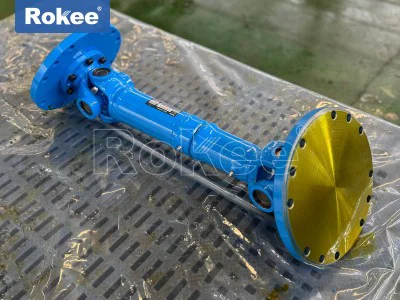
Light duty universal shafts are available in a variety of types, each designed to meet the specific requirements of different applications, based on factors such as torque capacity, angular misalignment needs, installation space, and operational environment. The most common type is the single universal joint shaft, which consists of a single U-joint connecting two yokes and a central drive shaft. This type is simple in design, cost-effective, and suitable for applications where the angular misalignment is relatively small (typically up to 15° to 20°) and velocity fluctuations are not a major concern, such as in small conveyors, fans, and light agricultural equipment. The double universal joint shaft, also known as the double cardan shaft, addresses the velocity inconsistency of single U-joints by incorporating two universal joints within a single assembly, connected by an intermediate shaft or floating yoke. A centering mechanism helps to maintain equal joint angles, resulting in constant velocity transmission, making this type ideal for applications where rotational precision is critical, such as in precision machinery, small vehicles, and equipment that requires smooth power transfer at varying angles. Another common type is the telescopic universal shaft, which features a sliding spline or sleeve connection that allows the length of the shaft to be adjusted. This type is particularly useful in applications where the distance between the input and output shafts may change during operation, such as in adjustable conveyors, telescopic cranes, and agricultural implements that require variable length power transmission. Flanged universal shafts are also widely used in light duty applications, featuring flanged ends that allow for easy and secure connection to the input and output shafts using bolts. This type is preferred for applications that require precise alignment and steady torque delivery, such as in printing machines, packaging lines, and small industrial pumps. Additionally, there are specialized types of light duty universal shafts designed for specific environments, such as corrosion-resistant versions made from stainless steel or coated materials for use in wet or chemical-rich environments, and high-temperature versions designed to withstand elevated operating temperatures in applications such as small furnaces or heat treatment equipment. Each type of light duty universal shaft is engineered with specific structural and performance characteristics to ensure optimal performance in its intended application.
The applications of light duty universal shafts are diverse and span across numerous industries, ranging from light industrial manufacturing to automotive, agricultural, and household sectors, due to their compact size, flexibility, and ability to transmit power efficiently in light load scenarios. In the industrial sector, light duty universal shafts are widely used in small conveyors, such as those used in packaging facilities, food processing plants, and small manufacturing workshops, where they transmit power from motors to conveyor rollers, enabling the movement of materials at moderate speeds. They are also commonly found in small pumps, fans, and blowers, where they connect the motor to the impeller or fan blade, accommodating minor misalignments between the motor and the equipment shaft. Precision machinery, such as printing machines, textile machines, and small lathes, also rely on light duty universal shafts to transmit power with high rotational precision, ensuring smooth operation and consistent product quality. In the automotive industry, light duty universal shafts are used in small vehicles, such as compact cars, motorcycles, and electric vehicles, where they transmit power from the transmission to the wheels, particularly in rear-wheel drive and four-wheel drive systems. They are also used in auxiliary systems, such as power steering mechanisms and air conditioning compressors, where they accommodate angular misalignments between the motor and the component. The agricultural sector uses light duty universal shafts in small agricultural equipment, such as small tractors, tillers, and harvesters, where they transmit power from the tractor’s PTO (power take-off) to various implements, allowing for flexible connection and operation in different field conditions. Household and consumer equipment also benefit from light duty universal shafts, including electric tools such as drills, grinders, and saws, where they transmit power from the motor to the tool head, accommodating the angular movement of the tool during use. Additionally, they are used in household appliances such as washing machines, dryers, and vacuum cleaners, where they connect the motor to the rotating components, ensuring smooth and efficient operation. In the renewable energy sector, light duty universal shafts are used in small wind turbines and solar tracking systems, where they transmit power from the turbine or tracking mechanism to the generator, accommodating the variable angles and movements of the components. The versatility of light duty universal shafts makes them an essential component in any system that requires the transmission of rotational power between non-coaxial shafts under light load conditions.
When selecting a light duty universal shaft for a specific application, several factors must be considered to ensure optimal performance and longevity. The first factor is torque requirement, as the shaft must be capable of transmitting the maximum torque generated by the system without failure. It is important to select a shaft with a torque capacity that exceeds the maximum operating torque of the application to provide a safety margin. Angular misalignment is another key factor, as different applications require different levels of misalignment accommodation; selecting a shaft that can handle the maximum expected misalignment will prevent premature wear and ensure smooth operation. The operating speed of the system is also important, as high rotational speeds can lead to vibration and increased wear if the shaft is not properly balanced. The material of the shaft should be chosen based on the operating environment; for example, stainless steel is preferred for corrosive environments, while aluminum alloy is suitable for applications where weight is a concern. Installation space is another consideration, as compact applications may require a smaller, more streamlined shaft design. Additionally, maintenance requirements should be taken into account; some shafts require regular lubrication to ensure smooth operation and extend service life, while others are sealed and require minimal maintenance. By carefully considering these factors, it is possible to select the most appropriate light duty universal shaft for any given application, ensuring reliable and efficient power transmission.
In conclusion, light duty universal shafts are essential mechanical components that play a vital role in transmitting rotational power between non-coaxial shafts in light load applications. Their compact structure, flexible design, and reliable performance make them suitable for a wide range of industries, from industrial manufacturing to automotive, agricultural, and household sectors. The structure of a light duty universal shaft, consisting of universal joints, a central drive shaft, yokes, bearings, and sealing components, is engineered to balance flexibility and strength, allowing for angular misalignment and axial compensation while maintaining efficient power transmission. The performance characteristics, including torque capacity, angular misalignment capacity, rotational precision, and durability, are tailored to meet the demands of light load scenarios, ensuring smooth and reliable operation. With a variety of types available, each designed for specific applications, light duty universal shafts offer versatility and adaptability to meet the unique needs of different systems. As mechanical systems continue to evolve towards smaller, more efficient designs, the importance of light duty universal shafts is likely to grow, with ongoing advancements in material technology and structural design further improving their performance and expanding their range of applications. Whether in a small industrial conveyor, a household appliance, or a light vehicle, the light duty universal shaft remains a critical component that enables the smooth and efficient operation of countless mechanical systems around the world.