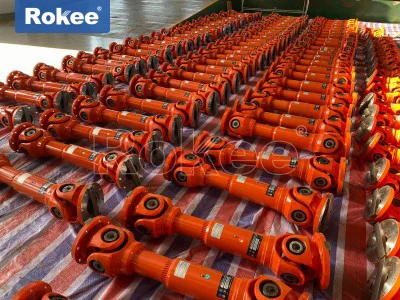
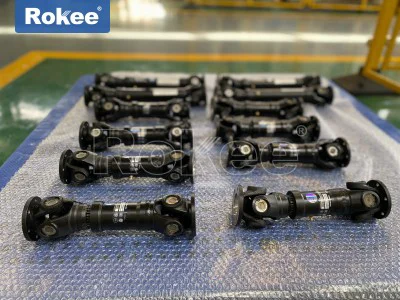
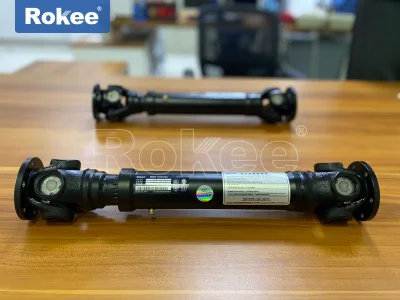
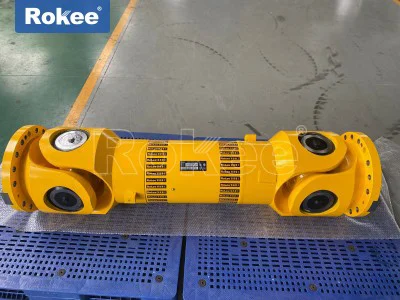
Heavy Duty Universal Shaft
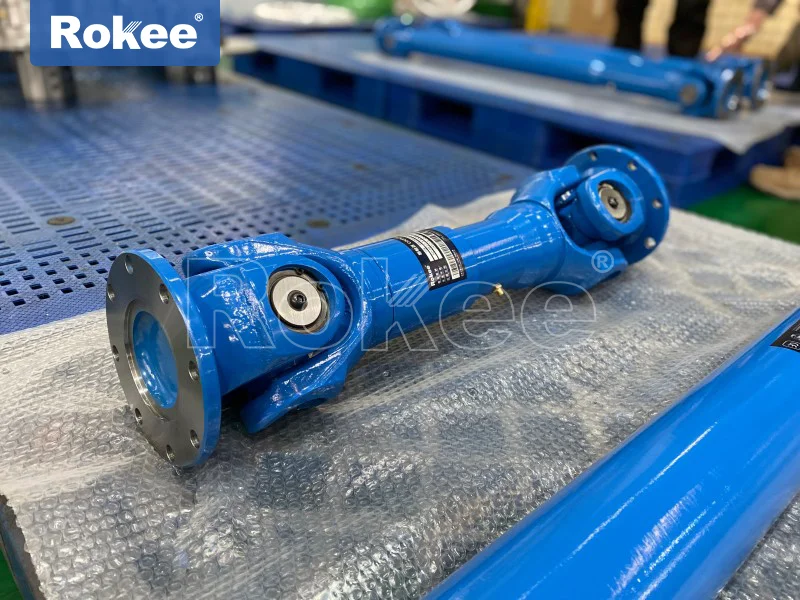
In the complex ecosystem of mechanical power transmission, the heavy duty universal shaft stands as an indispensable component, engineered to bridge the gap between rotating shafts that are not aligned in a straight line, while withstanding extreme loads, harsh working conditions, and ensuring reliable torque transfer. Unlike standard universal shafts designed for light or medium-duty applications, heavy duty variants are specifically tailored to handle high torque, high rotational speeds, and significant angular misalignments, making them a cornerstone in industries that rely on heavy machinery and large-scale equipment. From mining and construction to metallurgy and marine engineering, these robust components play a critical role in maintaining operational efficiency, reducing downtime, and ensuring the seamless transfer of power from the drive source to the working mechanism.
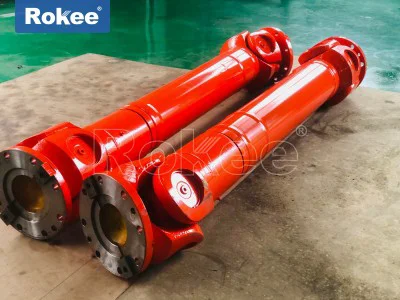
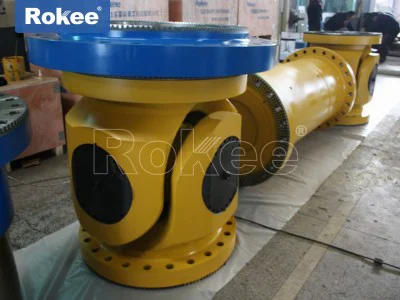
The structure of a heavy duty universal shaft is a carefully engineered assembly of components, each designed to work in tandem to withstand high loads, compensate for misalignments, and ensure long-term durability. At the core of most heavy duty universal shafts is the universal joint, also known as a U-joint, which serves as the flexible connection point between the two shafts. The universal joint typically consists of two yokes (or forks) attached to the ends of the driving and driven shafts, a cross shaft (or spider) that connects the two yokes, and bearings that allow the cross shaft to rotate freely within the yokes. The yokes are usually made from high-strength materials and are precision-machined to ensure a tight fit with the shafts, while the cross shaft is designed to distribute torque evenly across its four trunnions, each fitted with bearings to minimize friction and wear. In heavy duty applications, the bearings used are often needle roller bearings or spherical roller bearings, which offer high load-carrying capacity and resistance to shock and vibration. Additionally, many heavy duty universal shafts feature a telescopic section, which includes a splined shaft and a splined sleeve that allows for axial movement, compensating for changes in distance between the two shafts due to thermal expansion, installation errors, or dynamic loads. This telescopic design is particularly important in applications where the distance between the drive and driven shafts is not fixed, as it prevents excessive stress on the shaft and other transmission components. The outer casing or shaft tube of the heavy duty universal shaft is another critical structural element, providing protection to the internal components from dust, debris, moisture, and other environmental contaminants that could compromise performance. The shaft tube is often made from seamless steel or forged alloy steel, which offers high torsional rigidity and resistance to bending, ensuring that the shaft can transmit high torque without deformation.
The performance of a heavy duty universal shaft is defined by a set of key parameters that determine its ability to operate effectively under demanding conditions. Torque capacity is perhaps the most critical performanceindicator, as heavy duty applications require the shaft to transmit large amounts of torque without failure. The torque capacity of a heavy duty universal shaft can range from several thousand newton-meters to over 900,000 newton-meters, depending on its size, material, and design. This high torque capacity is achieved through the use of high-strength materials, robust structural design, and precision manufacturing processes that minimize weak points in the assembly. Another important performance characteristic is angular compensation capability, which refers to the maximum angle at which the two connected shafts can be misaligned while still maintaining efficient torque transfer. Heavy duty universal shafts typically offer angular compensation ranging from 5 degrees to 45 degrees, with some specialized designs capable of handling even larger angles. This flexibility is essential in applications where the shafts are not perfectly aligned due to equipment design, installation constraints, or dynamic movement during operation. Rotational speed is also a key performance factor, as heavy duty universal shafts must be able to operate at high speeds without excessive vibration or wear. The maximum rotational speed is determined by the material properties, bearing design, and balance of the shaft, with some heavy duty variants capable of operating at several thousand revolutions per minute. Torsional rigidity is another critical performance parameter, as it ensures that the shaft does not twist under load, which would lead to power loss and reduced transmission efficiency. High torsional rigidity is achieved through the use of thick-walled shaft tubes, high-strength materials, and precise machining to ensure uniform weight distribution. Additionally, heavy duty universal shafts must exhibit excellent wear resistance and durability, as they are often used in harsh environments with high levels of dust, debris, and corrosive substances. This is achieved through the use of wear-resistant materials, protective coatings, and effective lubrication systems that reduce friction and prevent premature component failure. Lubrication is particularly important, as it not only reduces friction between moving parts but also helps to dissipate heat and prevent corrosion, extending the service life of the shaft.
Heavy duty universal shafts are available in a variety of types, each designed to meet the specific requirements of different applications. The most common type is the cross-axis universal shaft, which features a simple yet robust design consisting of two yokes and a cross shaft. This type of universal shaft is widely used in heavy machinery due to its high load-carrying capacity, simple structure, and ease of maintenance. Cross-axis universal shafts are available in both single and double joint configurations; the single joint design is suitable for applications with moderate angular misalignment, while the double joint design (which includes two universal joints connected by an intermediate shaft) eliminates speed fluctuations that can occur with a single joint, making it ideal for high-precision applications. Another common type is the ball cage universal shaft, which consists of a star-shaped sleeve, a spherical shell, steel balls, and a retainer. This type of universal shaft offers constant speed transmission, even at large angular misalignments, and operates more smoothly than cross-axis variants, making it suitable for applications where precision and smooth operation are critical, such as in some automotive and industrial machinery applications. Ball fork universal shafts are another type, featuring a simpler structure consisting of a ball fork with a raceway and steel balls, and are typically used in light to medium-heavy duty applications where small angular misalignments and light loads are involved. Telescopic universal shafts, which include a splined section for axial compensation, are widely used in applications where the distance between the drive and driven shafts varies, such as in rolling mills, conveyor systems, and mining equipment. These shafts can provide axial displacement compensation ranging from 0 to 1000 millimeters, depending on the design. Additionally, there are specialized types of heavy duty universal shafts, such as those designed for high-temperature environments, corrosive environments, or applications requiring extreme torque capacity. For example, universal shafts used in marine applications may be made from corrosion-resistant materials such as stainless steel or copper alloys, while those used in high-temperature applications may feature heat-resistant coatings and specialized lubricants.
The applications of heavy duty universal shafts are diverse and span across numerous heavy industries, where their ability to transmit high torque, compensate for misalignments, and withstand harsh conditions is essential. One of the primary applications is in the mining industry, where heavy duty universal shafts are used in equipment such as crushers, conveyors, and mining excavators. In crushers, the universal shaft connects the motor to the crushing mechanism, transmitting the high torque required to break down large rocks and minerals. Conveyor systems in mines rely on universal shafts to connect the drive motor to the conveyor rollers, ensuring the continuous movement of materials over long distances, even when the shafts are misaligned due to the uneven terrain of mining sites. Mining excavators use universal shafts in their hydraulic systems and drive trains, allowing for the flexible movement of the excavator arm while transmitting the high torque needed for digging and lifting heavy loads. The construction industry is another major user of heavy duty universal shafts, with applications in equipment such as bulldozers, loaders, cranes, and concrete mixers. Bulldozers and loaders use universal shafts to connect the engine to the transmission and wheels, enabling the vehicle to move over rough terrain while maintaining power transfer. Cranes rely on universal shafts to transmit torque from the motor to the hoisting mechanism, allowing for the precise lifting and movement of heavy loads. Concrete mixers use universal shafts to connect the motor to the mixing drum, ensuring the continuous rotation of the drum even when there is misalignment between the motor and the drum. The metallurgical industry also heavily relies on heavy duty universal shafts, particularly in rolling mills, where they are used to connect the drive motor to the rolling stands. Rolling mills require high torque to shape metal into sheets, bars, or other forms, and universal shafts must be able to transmit this torque while compensating for the angular misalignment between the motor and the rolling stands. Additionally, universal shafts are used in other metallurgical equipment such as continuous casting machines and steelmaking furnaces. The marine industry uses heavy duty universal shafts in ship propulsion systems, connecting the engine to the propeller. These shafts must be able to withstand the high torque generated by the ship’s engine, as well as the corrosive effects of saltwater and the dynamic misalignments caused by the movement of the ship. Offshore wind turbines also use heavy duty universal shafts in their drive trains, connecting the turbine rotor to the generator, and must be able to withstand high winds, vibration, and harsh marine conditions. Other applications of heavy duty universal shafts include agricultural machinery (such as tractors and harvesters), paper mills, cement kilns, and power generation plants, where they play a critical role in ensuring the reliable operation of heavy equipment.
In addition to their primary applications, heavy duty universal shafts also play a crucial role in improving the efficiency and reliability of mechanical systems. By compensating for angular and axial misalignments, they reduce stress on other transmission components such as bearings, gears, and shafts, extending their service life and reducing maintenance costs. The ability to transmit high torque efficiently also ensures that the drive source’s power is fully utilized, improving the overall efficiency of the equipment. Furthermore, the robust design of heavy duty universal shafts allows them to operate in harsh environments with minimal maintenance, reducing downtime and increasing productivity. In many industries, downtime can result in significant financial losses, so the reliability of heavy duty universal shafts is essential to maintaining continuous operations. The design and manufacturing of heavy duty universal shafts continue to evolve, with advancements in materials science and manufacturing technology leading to even more robust and efficient designs. New materials such as high-strength alloy steels and composite materials are being used to reduce weight while maintaining or increasing torque capacity, making universal shafts more efficient and reducing energy consumption. Precision manufacturing processes such as computer numerical control (CNC) machining and finite element analysis (FEA) are being used to optimize the design of universal shafts, ensuring that they can withstand the most demanding conditions while minimizing material usage and production costs. These advancements are particularly important as industries continue to move towards more efficient, sustainable, and high-performance equipment.
It is important to note that the selection of the appropriate heavy duty universal shaft for a specific application depends on several factors, including torque requirements, angular misalignment, rotational speed, operating environment, and axial displacement needs. Choosing the wrong type or size of universal shaft can lead to premature failure, reduced efficiency, and increased maintenance costs. For example, an application with high angular misalignment would require a double joint cross-axis universal shaft or a ball cage universal shaft, while an application with varying shaft distances would require a telescopic universal shaft. The operating environment also plays a key role in selection; applications in corrosive environments require universal shafts made from corrosion-resistant materials, while high-temperature applications require heat-resistant designs. Proper installation and maintenance are also essential to ensuring the optimal performance and longevity of heavy duty universal shafts. Installation must be done with precision to minimize misalignment beyond the shaft’s capacity, and regular lubrication must be performed to reduce friction and wear. Regular inspections are also necessary to detect any signs of damage, such as wear on the bearings, cracks in the yokes, or deformation of the shaft tube, which can be addressed before they lead to catastrophic failure.
In conclusion, the heavy duty universal shaft is a vital component in modern heavy industries, serving as the backbone of power transmission systems that require high torque, flexibility, and durability. Its carefully engineered structure, which includes universal joints, telescopic sections, and robust shaft tubes, enables it to compensate for misalignments, transmit high torque, and withstand harsh working conditions. The key performance characteristics, such as torque capacity, angular compensation, rotational speed, and torsional rigidity, ensure that it can meet the demanding requirements of various applications. The diverse types of heavy duty universal shafts, from cross-axis to ball cage and telescopic variants, allow for customization to specific application needs, making them versatile and adaptable. Their wide-ranging applications across mining, construction, metallurgy, marine, and other industries highlight their importance in maintaining operational efficiency and productivity. As technology continues to advance, the design and performance of heavy duty universal shafts will continue to improve, further enhancing their ability to meet the evolving needs of modern heavy machinery and industrial systems. Whether in the depths of a mine, on a construction site, or in the hull of a ship, the heavy duty universal shaft remains an essential component that enables the seamless transfer of power, driving the world’s heavy industries forward.