Cardan Shaft Coupling And PU Sandwich Panel Machine Combination is Cost-effective Choice
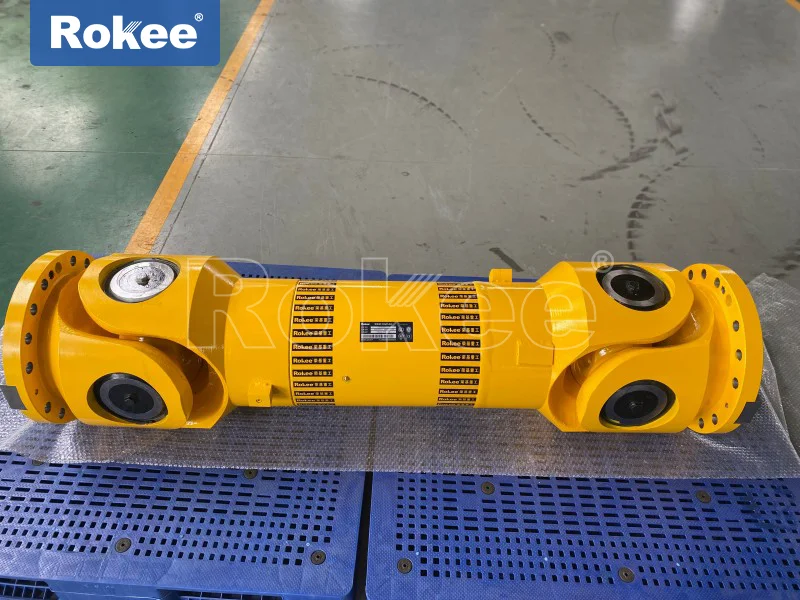
In the modern continuous production manufacturing sector focused on building insulation materials and modular construction components, the operational stability and long-term economic efficiency of automated production lines have become core factors that determine the sustainable development capabilities of processing enterprises. Among all kinds of essential production equipment in this industry, PU sandwich panel production machines stand out as foundational core equipment, undertaking the full-process continuous production tasks from raw material feeding, roll forming, polyurethane foaming composite pressing, constant temperature curing to fixed-length cutting and finished product stacking. The overall operating efficiency, product processing precision and continuous working stability of the entire PU sandwich panel production line are directly dependent on the smooth and reliable power transmission between various functional components inside the machine, and the cardan shaft coupling, as a key connecting and power transmission component linking the driving power unit and the driven operating mechanism, plays an irreplaceable pivotal role in the normal operation of the entire production equipment. The reasonable matching and integrated application of cardan shaft coupling and PU sandwich panel machine is not only a basic mechanical configuration choice for equipment normal operation, but also a highly practical and far-sighted cost-effective configuration scheme for production enterprises to optimize production links, reduce comprehensive operating consumption, extend equipment service life and improve long-term production benefits, bringing dual improvements in production stability and economic returns for enterprises engaged in the processing and production of thermal insulation sandwich panels.
PU sandwich panel production machines belong to large-scale continuous automated composite production equipment, and their internal mechanical operation structure has obvious characteristics of multi-station linkage and long-distance power transmission. The entire production line involves multiple core functional links that need synchronous power drive, including the uncoiling and tension control link of metal surface raw materials, the progressive roll forming link of metal plates, the precise metering and spraying link of polyurethane foaming materials, the constant-pressure composite pressing and conveying link of upper and lower surface materials and foam core materials, the constant-temperature shaping and curing link of composite panels, and the automatic fixed-length cutting and finished product conveying and stacking link. Each link is closely connected in sequence, and there is a strict synchronous coordination relationship between the operating speed and running rhythm of each functional mechanism. Once the power transmission between any two adjacent driving and driven shafts is unstable, displaced or blocked, it will directly lead to the disorder of the production rhythm of the entire line, cause uneven foaming of polyurethane core materials, inconsistent composite bonding thickness of sandwich panels, deviation of plate forming size and other product quality problems, and even trigger equipment shutdown and production interruption in serious cases, bringing unnecessary production losses and maintenance troubles to enterprises. Different from small-scale intermittent processing equipment, PU sandwich panel machines need to maintain long-term uninterrupted continuous operation for a long time, and the internal power transmission system has to bear continuous torque load, frequent start-stop impact and slight mechanical displacement generated by equipment operation and environmental temperature changes, which puts forward extremely high requirements on the fault tolerance, compensation capacity and operational durability of the connecting coupling components used for power transmission.
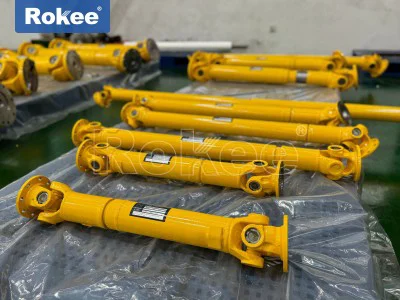
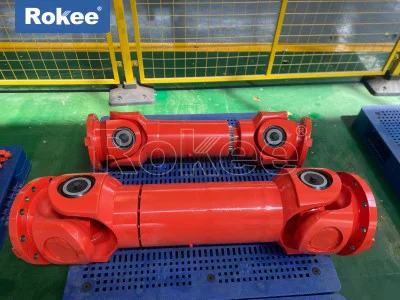
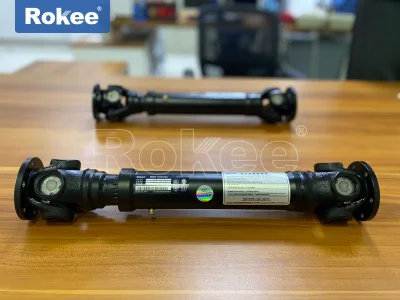
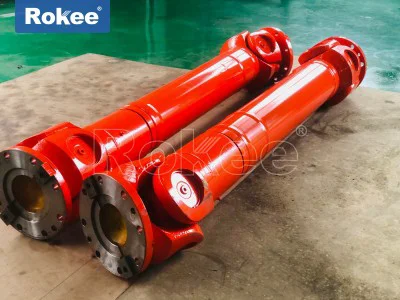
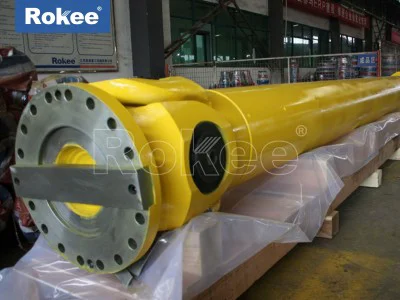
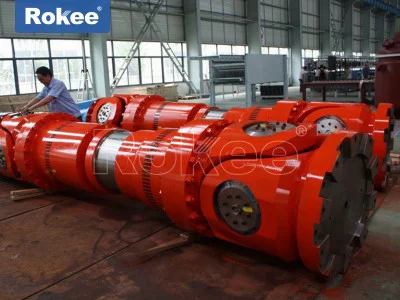
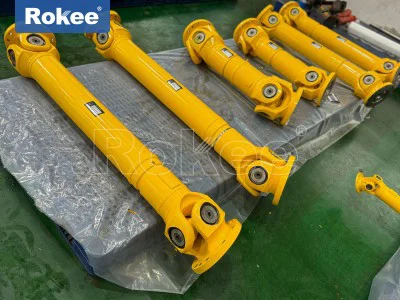
Most traditional rigid connection transmission parts used in ordinary mechanical equipment cannot adapt to the complex operating working conditions of PU sandwich panel production lines. Rigid connecting structures require extremely high installation alignment accuracy between the driving shaft and the driven shaft during equipment assembly, and any slight axial, radial or angular misalignment generated during equipment installation and subsequent long-term operation will cause huge additional mechanical stress on the transmission shaft and matching bearings, gears and other core components. This long-term accumulated stress will not only accelerate the wear and aging of key mechanical parts, increase the frequency of equipment failure and downtime maintenance, but also lead to unstable power transmission, fluctuating operating speed of each production station, and ultimately affect the overall forming quality and production qualification rate of PU sandwich panels. In addition, the later maintenance and replacement of rigid transmission connecting parts are cumbersome, requiring professional technicians to spend a lot of time on equipment shutdown debugging and disassembly and assembly replacement, which will inevitably occupy effective production time, reduce the overall production capacity of the production line, and indirectly increase the comprehensive production and operation costs of enterprises. In contrast, cardan shaft couplings adopt a unique articulated mechanical structure composed of cross shafts, fork-shaped joints and low-friction wear-resistant bearings, which fundamentally breaks through the limitation that traditional rigid couplings rely on perfect shaft body alignment to achieve power transmission. This special structural design enables the cardan shaft coupling to have excellent multi-directional displacement compensation capability, which can effectively adapt to axial displacement, radial deviation and angular deflection between the driving shaft and the driven shaft generated during equipment installation and long-term operation, and can maintain stable and consistent torque and rotational power transmission within a certain angle deflection range without being affected by minor mechanical displacement and installation errors.
The inherent structural and performance advantages of cardan shaft couplings are highly compatible with the actual operating needs of PU sandwich panel machine, and this high matching degree is the core foundation for the combined application of the two to present prominent cost-effective characteristics. In the actual production and operation process of PU sandwich panel production lines, the internal mechanical structure will inevitably produce slight vibration and displacement due to long-term continuous operation, motor start-stop impact and thermal expansion and contraction of mechanical parts caused by temperature changes in the foaming and curing link. The cardan shaft coupling can flexibly adapt to these subtle dynamic changes through its articulated movable structure, effectively buffer the mechanical vibration and impact force generated during power transmission, avoid the concentration of mechanical stress on a single shaft body or component, and greatly reduce the wear degree of key parts such as transmission shafts, bearings and gear sets inside the equipment. This effective buffering and protection effect directly extends the overall service life of the main body and core accessories of the PU sandwich panel machine, reduces the frequency of early aging damage and failure maintenance of equipment, and enables enterprises to save a lot of long-term equipment parts replacement costs and maintenance labor costs. For processing enterprises that take PU sandwich panel production as their core business, the reduction of equipment maintenance and replacement costs is an important part of controlling comprehensive production costs, and the stable operation of equipment can also avoid production shutdown losses caused by frequent equipment failures, ensuring the continuity and stability of production scheduling and order delivery.
In terms of production processing quality and production efficiency, the stable power transmission effect brought by the matching use of cardan shaft couplings also creates obvious practical value for PU sandwich panel production lines. The production and processing of PU sandwich panels have extremely strict requirements on the synchronization and speed stability of each production link. The roll forming of metal surface materials needs stable and uniform rotating power to ensure the consistency of plate bending and forming dimensions, the polyurethane foaming and composite pressing link needs synchronous and stable conveying speed to ensure the uniform distribution of foam materials and the firm bonding between layers, and the fixed-length cutting link needs precise and stable power transmission to ensure the accuracy of panel cutting dimensions. The excellent transmission stability of cardan shaft couplings ensures that the power output by the driving motor can be efficiently and synchronously transmitted to each driven operating mechanism without power loss and speed fluctuation caused by mechanical displacement and vibration. This stable transmission state makes the operating rhythm of each station of the PU sandwich panel production line highly coordinated, the product forming quality more stable and consistent, effectively reduces the number of unqualified products and reprocessing procedures caused by unstable equipment operation, improves the overall product qualification rate of the production line, and enables enterprises to make full use of raw materials, reduce raw material waste and reprocessing energy consumption, and further optimize the production cost per unit product.
From the perspective of equipment installation, debugging and later daily operation management, the combined application of cardan shaft coupling and PU sandwich panel machine also has obvious cost-saving and efficiency-enhancing advantages. Compared with other high-precision and high-stability transmission connection accessories with complex structures, the overall structure of the cardan shaft coupling is compact and reasonable, the installation and docking operation is simple and convenient, and there is no need for extremely high-precision shaft body alignment and complex debugging procedures during equipment assembly and later replacement and maintenance. This not only shortens the time required for equipment initial installation and commissioning, enables the production line to be put into formal production operation faster and creates production benefits in advance, but also reduces the professional technical requirements for on-site operation and maintenance personnel of the enterprise. Daily maintenance of the cardan shaft coupling only needs regular simple lubrication and routine inspection, without complex professional maintenance procedures and expensive special maintenance tools, which greatly reduces the difficulty of daily equipment management and the labor input of professional maintenance personnel. For small and medium-sized sandwich panel processing enterprises with limited production operation budgets and insufficient professional mechanical maintenance personnel, this low installation and maintenance threshold and simple operation and management mode can effectively reduce the daily operation and management cost of the enterprise, avoiding the additional economic burden caused by complex equipment maintenance and high professional personnel matching.
In the long-term equipment operation and capacity expansion upgrading process, the combination of cardan shaft coupling and PU sandwich panel machine also shows excellent flexibility and economic scalability. With the continuous changes in market demand for building thermal insulation materials, processing enterprises often need to adjust the production speed of the production line, replace production molds to produce sandwich panels of different specifications and sizes, and even carry out partial transformation and upgrading of the production line to adapt to new production processes. The cardan shaft coupling has strong adaptability to different production speed regulation and partial equipment structural adjustment. Its flexible displacement compensation performance can still maintain good transmission effect after the production line is properly adjusted and transformed, without the need for overall replacement of transmission connection components and secondary large-scale installation and debugging. This means that when enterprises carry out product structure adjustment and equipment performance optimization and upgrading, they do not need to invest a lot of additional funds to replace supporting transmission parts, and can complete production line upgrading and product iteration with lower transformation costs, effectively improving the capital utilization rate of enterprises and avoiding unnecessary waste of equipment investment funds. At the same time, the durable and wear-resistant material characteristics of the cardan shaft coupling ensure that it can maintain stable working performance in long-term high-load continuous operation, without frequent replacement due to performance attenuation, reducing the long-term equipment renewal investment cycle and comprehensive use cost.
In the fiercely competitive market environment of building thermal insulation materials processing, enterprises not only need to ensure the stable quality of PU sandwich panel products to meet market demand, but also need to continuously optimize all links of production operation to reduce comprehensive operating costs and improve their own market competitiveness. Many enterprises often only pay attention to the main performance parameters of PU sandwich panel production equipment when purchasing and configuring production lines, and ignore the important impact of matching key transmission components on equipment operation cost and production stability, resulting in frequent equipment failures, high maintenance costs and unstable product quality in the later stage of production, which virtually increases the comprehensive operation burden of enterprises. The matching combination of cardan shaft coupling and PU sandwich panel machine is a low-input and high-return configuration optimization choice. It does not require excessive additional procurement investment in the early stage of equipment configuration, but can bring multiple practical benefits such as stable equipment operation, reduced maintenance consumption, improved product qualification rate and extended equipment service life for long-term production operation.
All in all, the perfect adaptation in mechanical performance, production operation demand and long-term cost control makes the combination of cardan shaft coupling and PU sandwich panel machine a truly reliable and cost-effective choice for the field of PU sandwich panel production and processing. This matching mode not only solves the practical problems of unstable power transmission, easy wear and high maintenance cost of traditional transmission connection structures in the operation of sandwich panel production equipment, but also effectively balances the early equipment configuration investment and later long-term operation comprehensive cost of enterprises. For all processing enterprises focusing on PU sandwich panel production, adhering to this reasonable equipment matching combination can effectively help enterprises stabilize production rhythm, optimize product quality, reduce comprehensive operating costs, and lay a solid foundation for long-term stable operation and sustainable market competition development in the building thermal insulation material manufacturing industry.