Cooperative Operation Principle Of Cardan Driveshaft And PIR Sandwich Panel Equipment
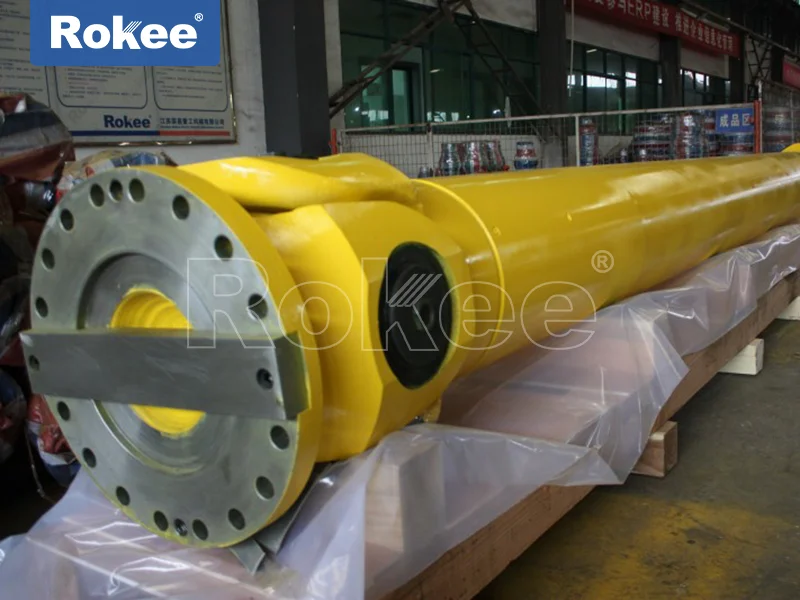
In the modern manufacturing industry, the integration of mechanical transmission systems and specialized production equipment has become a key factor in improving production efficiency, ensuring product quality, and reducing operational costs. The Cardan driveshaft, as a versatile and high-performance mechanical transmission component, plays an irreplaceable role in connecting different functional modules of PIR (Polyisocyanurate) sandwich panel equipment, which is widely used in the construction and industrial insulation fields. The cooperative operation between these two components is not a simple mechanical connection but a sophisticated synergy that involves structural adaptation, power transmission optimization, and operational stability maintenance. To fully understand the operational efficiency and reliability of PIR sandwich panel production lines, it is essential to delve into the cooperative operation principle of the Cardan driveshaft and PIR sandwich panel equipment, exploring how their structural characteristics complement each other, how power is transmitted stably and efficiently, and how they jointly respond to the dynamic changes in the production process.
PIR sandwich panels have emerged as a pivotal component in modern lightweight structural engineering and thermal insulation applications, thanks to their unique combination of low weight, high mechanical strength, superior thermal insulation, and excellent flame retardancy. The production of these panels relies on a continuous, automated manufacturing line that integrates multiple sequential processes, including uncoiling of facing materials, roll forming, preheating, high-pressure foaming, curing, cooling, cutting, and stacking. Each of these processes requires precise power input and coordinated operation to ensure the consistency and quality of the final product. The PIR sandwich panel equipment, as an integrated system, consists of multiple subsystems, each with specific functions and operational requirements. For instance, the uncoiling and roll forming subsystems need stable rotational power to process metal facing materials into desired profiles, while the foaming and curing subsystems require precise control of temperature and pressure, which in turn relies on the stable operation of transmission components to drive pumps, conveyors, and other auxiliary equipment. Due to the spatial layout limitations of the production line and the different operational speeds of each subsystem, the power transmission between these subsystems cannot be achieved through rigid connections alone. This is where the Cardan driveshaft comes into play, serving as a flexible bridge that compensates for spatial deviations and ensures stable power transmission between non-coaxial subsystems.
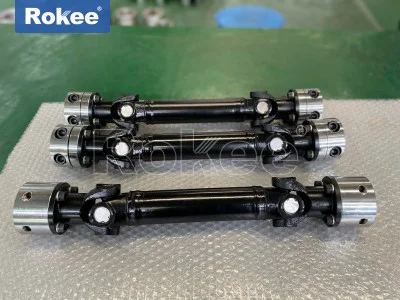
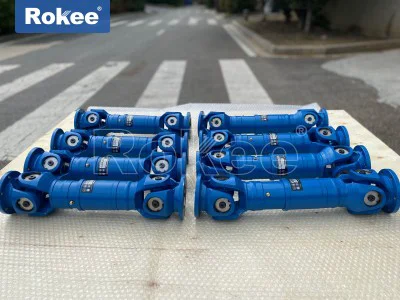
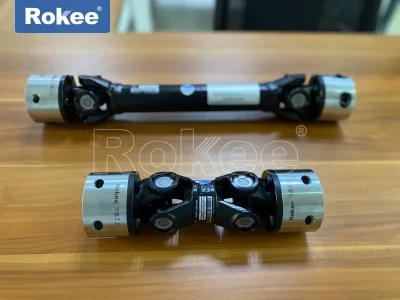
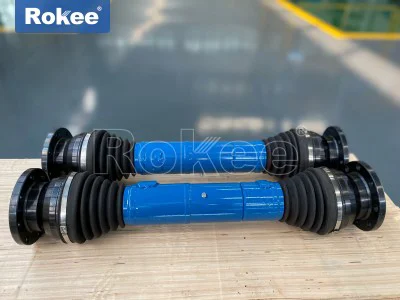
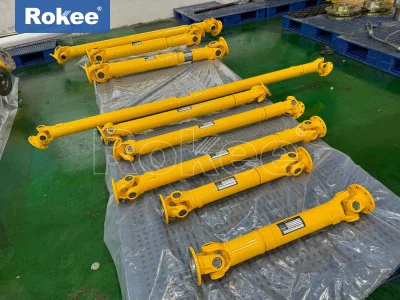
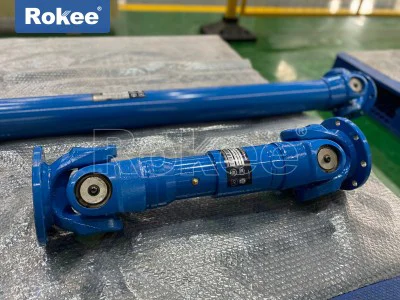
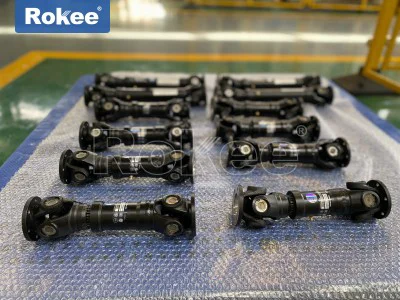
The Cardan driveshaft, also known as the universal joint driveshaft, is a mechanical device designed to connect two rigid shafts with inclined axes and transmit rotary motion and torque. Its basic structure consists of a pair of hinges arranged close to each other, perpendicular to each other, and connected by a cross shaft, also known as the spider, along with forks and bearings. This structural design endows the Cardan driveshaft with unique performance advantages that are perfectly suited to the operational needs of PIR sandwich panel equipment. Unlike rigid couplings that require precise coaxial alignment of the two shafts, the Cardan driveshaft can realize stable power transmission even when there is an angular deviation between the driving shaft and the driven shaft, which greatly reduces the installation accuracy requirements of the PIR sandwich panel equipment, simplifies the installation process, and reduces the installation cost. Additionally, the splined sliding connection in the Cardan driveshaft allows for axial displacement compensation, which is crucial in PIR sandwich panel production lines where thermal expansion and vibration during long-term operation can cause changes in the relative positions of the shafts. The Cardan driveshaft can adapt to these changes through its flexible structure, avoiding mechanical wear and damage caused by rigid connections and ensuring the long-term stable operation of the equipment.
The cooperative operation between the Cardan driveshaft and PIR sandwich panel equipment begins with the matching of their structural and performance parameters. The PIR sandwich panel production line has specific requirements for power transmission, including torque, rotational speed, and transmission efficiency, which directly determine the selection and design of the Cardan driveshaft. For example, the roll forming subsystem requires a stable torque input to ensure that the metal facing materials are shaped into uniform profiles without deformation, while the foaming subsystem needs a constant rotational speed to drive the high-pressure foaming pump, ensuring the precise mixing and uniform injection of the PIR foam mixture. The Cardan driveshaft must be designed to match these requirements, with appropriate cross-section size, material strength, and joint structure to ensure that it can transmit the required torque and rotational speed without deformation or failure. The material selection of the Cardan driveshaft is also crucial; high-strength alloy steel is often used to enhance its load-bearing capacity and wear resistance, which is essential for withstanding the long-term continuous operation of the PIR sandwich panel equipment. At the same time, the surface treatment of the Cardan driveshaft, such as quenching and tempering, can further improve its mechanical properties and corrosion resistance, adapting to the harsh operating environment of the production line, which may involve dust, moisture, and temperature changes.
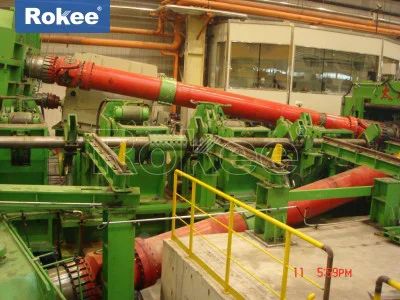
In the actual production process, the Cardan driveshaft is integrated into various key subsystems of the PIR sandwich panel equipment, realizing coordinated power transmission and operational synchronization. In the uncoiling and roll forming subsystem, the Cardan driveshaft connects the motor to the uncoiling roller and the roll forming roller. The motor provides the power source, and the Cardan driveshaft transmits the rotational motion and torque to the rollers, ensuring that the uncoiling speed and the roll forming speed are synchronized. This synchronization is critical because any deviation in speed can lead to uneven tension of the metal facing materials, resulting in wrinkles, deformation, or even breakage of the materials, which directly affects the quality of the final PIR sandwich panels. The Cardan driveshaft’s ability to compensate for angular deviations ensures that even if the motor and the rollers are not perfectly coaxial due to installation errors or equipment vibration, the power can still be transmitted stably, maintaining the consistency of the uncoiling and roll forming processes. Moreover, the flexible connection of the Cardan driveshaft can absorb the vibration generated by the motor and the rollers, reducing the impact of vibration on the equipment and the materials, further improving the stability of the production process.
The foaming and curing subsystems are the core of the PIR sandwich panel production line, and the cooperative operation between the Cardan driveshaft and these subsystems directly determines the quality of the PIR foam core. The PIR foam is formed by the reaction of polyisocyanate and polyol, which requires precise control of temperature, pressure, and mixing ratio during the foaming process. The high-pressure foaming pump, which is responsible for injecting the foam mixture between the two facing materials, is driven by the motor through the Cardan driveshaft. The Cardan driveshaft ensures that the rotational speed of the pump is stable and consistent, which is essential for the precise metering and uniform mixing of the raw materials. Any fluctuation in the rotational speed of the pump can lead to an imbalance in the mixing ratio of the foam mixture, resulting in uneven foaming, poor density, or insufficient bonding between the foam core and the facing materials. Additionally, the curing process of the PIR foam requires a stable temperature environment, which is maintained by the heating system of the production line. The fan and conveyor belt in the curing oven are also driven by the Cardan driveshaft, which ensures that the hot air circulates uniformly and the panels move at a constant speed through the oven, promoting the full curing of the foam core and ensuring the mechanical strength and thermal insulation performance of the panels.
Another key aspect of the cooperative operation between the Cardan driveshaft and PIR sandwich panel equipment is the adaptation to dynamic changes in the production process. PIR sandwich panels are produced in various specifications, including different thicknesses, widths, and facing materials, which requires the production line to adjust its operational parameters accordingly. For example, when changing the thickness of the panel, the speed of the conveyor belt, the pressure of the foaming pump, and the rotational speed of the roll forming rollers need to be adjusted. The Cardan driveshaft, with its excellent flexibility and adaptability, can quickly adapt to these changes. Its splined connection allows for adjustments in the length of the driveshaft, while its ability to compensate for angular deviations ensures that the power transmission remains stable even when the position of the subsystems is adjusted. This adaptability not only improves the versatility of the PIR sandwich panel equipment but also reduces the downtime required for equipment adjustment, improving production efficiency.
The stability and reliability of the cooperative operation between the Cardan driveshaft and PIR sandwich panel equipment are also affected by the lubrication and maintenance of the Cardan driveshaft. Due to the high-speed rotational motion and the presence of friction between the components of the Cardan driveshaft, regular lubrication is essential to reduce wear and tear, prevent corrosion, and ensure smooth operation. The lubricating oil forms a protective film between the moving parts, reducing friction and heat generation, which can extend the service life of the Cardan driveshaft and the PIR sandwich panel equipment. In addition, regular inspection and maintenance of the Cardan driveshaft, including checking for wear of the cross shaft, bearings, and forks, tightening loose fasteners, and replacing damaged components, can prevent sudden failures during production. A failed Cardan driveshaft can lead to the shutdown of the entire production line, resulting in significant economic losses. Therefore, proper lubrication and maintenance are crucial to ensuring the long-term cooperative operation of the two components.
In the context of global energy conservation and emission reduction, the PIR sandwich panel production line is also developing towards energy saving and high efficiency, which puts forward higher requirements for the cooperative operation of the Cardan driveshaft and the equipment. The Cardan driveshaft, with its high transmission efficiency, can reduce energy loss during power transmission, contributing to the energy-saving operation of the production line. For example, the use of high-strength and lightweight materials in the Cardan driveshaft can reduce its own weight, reducing the energy consumption required to drive the driveshaft itself. Additionally, the precise power transmission of the Cardan driveshaft ensures that the subsystems of the PIR sandwich panel equipment operate at the optimal speed, avoiding energy waste caused by excessive power input or speed fluctuations. The cooperative operation of the two components also helps to improve the overall efficiency of the production line, reducing the production cycle of each panel and increasing the output.
The cooperative operation principle of the Cardan driveshaft and PIR sandwich panel equipment is also reflected in the solution of common operational problems. For example, during the long-term operation of the production line, the equipment may experience vibration due to unbalanced loads, which can affect the stability of power transmission and the quality of the products. The Cardan driveshaft, with its flexible structure, can absorb part of the vibration, reducing the impact on the equipment and the production process. In addition, if there is a slight misalignment between the subsystems due to installation errors or equipment deformation, the Cardan driveshaft can compensate for this misalignment through its angular deviation compensation function, ensuring that the power transmission remains stable. This ability to adapt to minor faults and deviations improves the fault tolerance of the production line, reducing the frequency of equipment shutdowns and maintenance.
To further understand the cooperative operation mechanism, it is necessary to analyze the dynamic characteristics of the Cardan driveshaft during the operation of the PIR sandwich panel equipment. When the production line is running, the Cardan driveshaft is in a state of high-speed rotation, and the torque and rotational speed it transmits are not constant but change with the operational state of the equipment. For example, when the roll forming subsystem encounters a thick metal sheet, the torque required increases, and the Cardan driveshaft must be able to withstand this sudden increase in torque without deformation. The structural design of the Cardan driveshaft, including the cross-section size, the material strength, and the design of the cross shaft and bearings, is optimized to handle these dynamic loads. The use of high-quality bearings reduces the friction during rotation, ensuring that the Cardan driveshaft can operate smoothly even under high torque and high rotational speed conditions. Additionally, the dynamic balance of the Cardan driveshaft is crucial; any imbalance can cause vibration, which not only affects the stability of power transmission but also accelerates the wear of the driveshaft and the connected equipment. Therefore, the Cardan driveshaft must undergo strict dynamic balance testing before being installed in the PIR sandwich panel equipment, ensuring that it operates stably at high speeds.
The cooperative operation between the Cardan driveshaft and PIR sandwich panel equipment also involves the coordination of control systems. The PIR sandwich panel production line is usually equipped with an automatic control system that monitors and adjusts the operational parameters of each subsystem in real time. The Cardan driveshaft, as a key transmission component, is integrated into this control system. The control system monitors the rotational speed, torque, and temperature of the Cardan driveshaft, and adjusts the power input of the motor according to the operational needs of the equipment. For example, when the foaming subsystem requires a higher rotational speed of the pump, the control system increases the motor speed, and the Cardan driveshaft transmits the increased power to the pump, ensuring that the foaming process is carried out smoothly. If the control system detects an abnormality in the Cardan driveshaft, such as excessive vibration or a decrease in transmission efficiency, it will issue an alarm and stop the equipment in time, preventing further damage to the driveshaft and the equipment.
In summary, the cooperative operation of the Cardan driveshaft and PIR sandwich panel equipment is a complex and sophisticated process that involves structural matching, power transmission optimization, dynamic adaptation, and control system coordination. The Cardan driveshaft, with its unique structural advantages of angular deviation compensation and axial displacement adaptation, provides a flexible and stable power transmission solution for the PIR sandwich panel production line, overcoming the spatial layout limitations and operational challenges of the equipment. The PIR sandwich panel equipment, in turn, relies on the stable and efficient power transmission of the Cardan driveshaft to ensure the smooth operation of each subsystem, improving production efficiency and product quality. The proper lubrication and maintenance of the Cardan driveshaft are essential to ensuring the long-term reliability of their cooperative operation, while the integration of control systems further enhances the stability and intelligence of the production line. As the demand for PIR sandwich panels continues to grow and the production technology continues to advance, the cooperative operation principle of the Cardan driveshaft and PIR sandwich panel equipment will continue to be optimized, contributing to the development of the modern manufacturing industry towards higher efficiency, energy saving, and intelligence.