Installation Process Optimization Of Universal Coupling In Rockwool Sandwich Panel Production Line
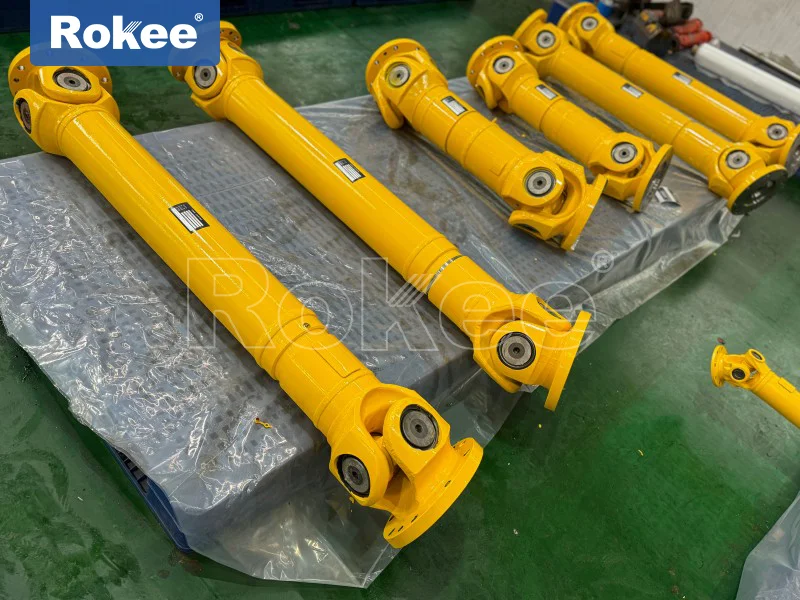
The rock wool sandwich panel production line is a highly automated integrated mechanical system that integrates multiple functional modules, including uncoiling, forming, rock wool conveying, bonding, hot pressing curing, cutting, and stacking. Each module relies on precise power transmission to ensure the continuity and stability of the production process, as well as the consistency of product quality. The universal coupling, as a key mechanical component in the power transmission system of the production line, undertakes the important task of connecting the driving shaft and the driven shaft of different functional modules, transmitting torque and motion stably even when the two shafts are not on the same axis or have angular deviations. Its installation quality directly affects the transmission efficiency of the entire production line, the service life of mechanical equipment, and the final quality of rock wool sandwich panels. However, in the actual installation process of universal couplings in rock wool sandwich panel production lines, there are often problems such as improper installation sequence, inaccurate alignment, insufficient lubrication, and ignoring the impact of environmental factors, which lead to frequent equipment failures, reduced production efficiency, increased maintenance costs, and even potential safety hazards. Therefore, optimizing the installation process of universal couplings in rock wool sandwich panel production lines is of great practical significance for improving production stability, reducing downtime, and extending the service life of equipment.
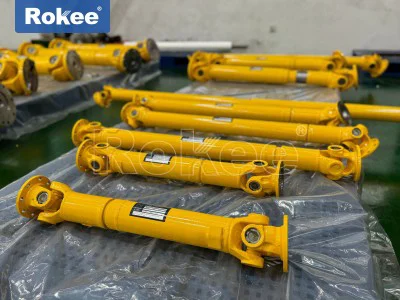
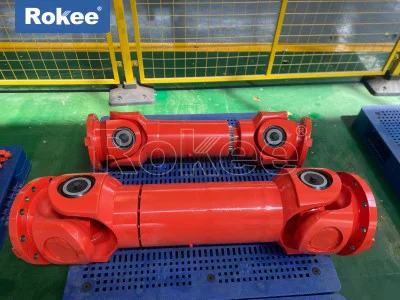
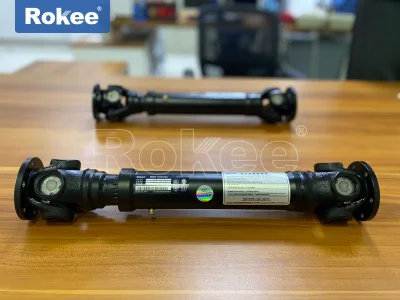
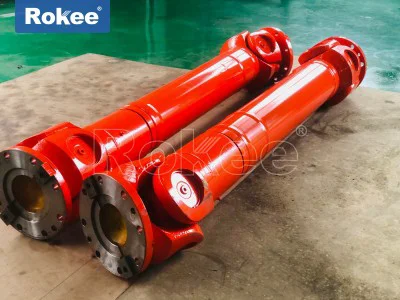
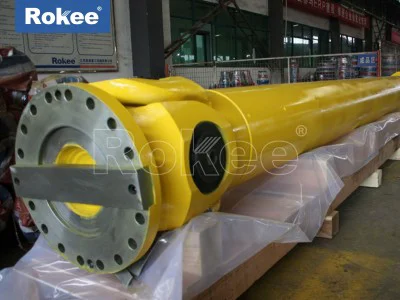
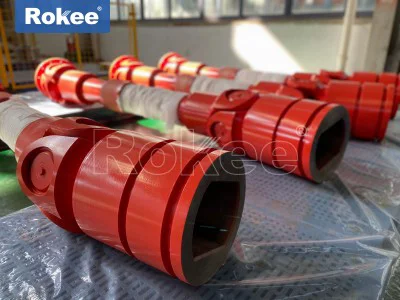
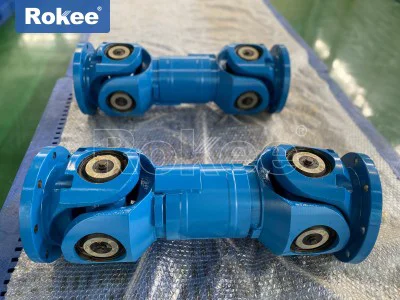
To effectively optimize the installation process of universal couplings, it is first necessary to have a clear understanding of the structural characteristics and working principles of universal couplings, as well as their application characteristics in rockwool sandwich panel production line. A universal coupling is a flexible transmission component that can compensate for angular misalignment, parallel offset, and axial displacement between two shafts while transmitting torque. Its basic working principle is based on the theory of spatial linkage mechanism. Taking the commonly used cross-axis universal coupling as an example, it uses a special structure composed of a cross shaft, bearings, and fork head components to convert the rotational motion of the input shaft into the swinging motion of the cross shaft, and then transmit the swinging motion to the output shaft, thereby realizing continuous torque transmission. Compared with ordinary couplings, universal couplings have the advantages of strong angular compensation capability, high load-bearing capacity, high transmission efficiency, and compact structure. The allowable angle between the two shafts of different structural types of universal couplings is usually between 5° and 45°, which can well adapt to the complex installation environment of rock wool sandwich panel production lines where each functional module is not on the same axis due to structural limitations. In the rock wool sandwich panel production line, universal couplings are widely used in the connection between the motor and the reducer, the reducer and the conveying roller, and between different conveying rollers, especially in the rock wool conveying system and the hot pressing curing system, where the working conditions are relatively harsh, requiring the universal coupling to have strong stability and wear resistance.
In the actual installation process of universal couplings in rock wool sandwich panel production lines, many common problems have been found through long-term practice, which seriously affect the operation effect of the coupling and the production line. One of the most common problems is the inaccurate alignment of the coupling. Due to the complex layout of the rock wool sandwich panel production line, the installation positions of each functional module are often limited by the site and the overall structure of the equipment, resulting in difficulty in ensuring the coaxiality of the driving shaft and the driven shaft during the installation of the universal coupling. If the alignment deviation exceeds the allowable range, it will cause additional torque and vibration during the operation of the coupling, accelerate the wear of bearings, cross shafts, and other components, increase the noise of the equipment, and even lead to the fracture of the coupling or the shaft in severe cases. Another common problem is improper lubrication. The universal coupling has multiple moving parts such as bearings and cross pins, which need sufficient lubrication to reduce friction and wear during operation. However, in actual installation, operators often neglect the importance of lubrication, either using inappropriate lubricants, or not filling enough lubricants, or not regularly replenishing and replacing lubricants, which leads to dry friction between moving parts, premature wear of components, and shortened service life of the coupling. In addition, the installation sequence is disorderly, the fasteners are not tightened according to the specified torque, and the impact of environmental factors such as dust and temperature on the installation quality are also important factors affecting the installation effect of the universal coupling. For example, in the rock wool processing link of the production line, a large amount of dust will be generated. If the dust enters the internal structure of the coupling during installation, it will affect the flexibility of the moving parts and accelerate the wear of the components; the high temperature environment in the hot pressing curing system will affect the performance of the lubricant and the material properties of the coupling, leading to reduced lubrication effect and increased component aging speed.
Aiming at the above problems existing in the installation process of universal couplings, combined with the working characteristics of the rock wool sandwich panel production line, a series of targeted optimization measures should be formulated to improve the installation quality and efficiency of the coupling, and ensure the stable operation of the production line. The first step of optimization is to standardize the pre-installation preparation work, which is the foundation of ensuring the installation quality. Before installing the universal coupling, it is necessary to conduct a comprehensive inspection of the coupling itself and the connected shafts. For the universal coupling, it is necessary to check whether there are cracks, deformations, or wear on the surface of the fork head, cross shaft, and bearings, whether the size of each part meets the design requirements, and whether the rotation of the moving parts is flexible without jamming. For the connected driving shaft and driven shaft, it is necessary to check the surface roughness, straightness, and coaxiality, remove the oil stains, rust, and dust on the surface of the shaft, and ensure that the surface of the shaft is clean and smooth, so as to avoid affecting the fit between the shaft and the coupling. At the same time, it is necessary to prepare the required tools and materials for installation in advance, including torque wrenches, dial indicators, laser alignment instruments, lubricants, fasteners, etc., and check the accuracy and completeness of the tools to ensure the smooth progress of the installation work. In addition, it is necessary to conduct pre-installation training for operators to make them familiar with the structural characteristics, installation procedures, and key points of the universal coupling, master the correct use methods of installation tools, and understand the potential risks and prevention measures during the installation process.
The second key link of optimization is to improve the alignment accuracy of the universal coupling. Alignment is the core of the installation of the universal coupling, and accurate alignment can effectively reduce the additional torque and vibration during the operation of the coupling, and extend the service life of the coupling and related components. In the traditional alignment process, dial indicators are often used for measurement, which has the problems of low measurement accuracy, slow speed, and high requirements for the operator's technology. With the development of measurement technology, laser alignment instruments can be adopted to replace traditional dial indicators for alignment work. Laser alignment instruments have the advantages of high measurement accuracy, fast speed, and intuitive display, which can accurately measure the angular misalignment and parallel offset between the driving shaft and the driven shaft, and display the deviation value in real time, facilitating the operator to adjust the position of the shaft in a timely manner. During the alignment process, it is necessary to adjust the position of the motor or reducer according to the deviation value measured by the laser alignment instrument, so that the coaxiality of the driving shaft and the driven shaft meets the design requirements. Generally, the angular misalignment should not exceed 0.2mm/m, and the parallel offset should not exceed 0.1mm. At the same time, it is necessary to pay attention to the influence of temperature on the alignment accuracy. In the rock wool sandwich panel production line, the temperature of the equipment will rise after operation, which will cause thermal expansion of the shaft and affect the coaxiality. Therefore, it is recommended to perform alignment work when the equipment is in a cold state, and recheck the alignment after the equipment runs for a period of time to ensure that the alignment accuracy remains within the allowable range during the operation of the equipment.
The third optimization measure is to standardize the lubrication process of the universal coupling. Proper lubrication is an important guarantee for the normal operation of the universal coupling, which can reduce friction between moving parts, reduce wear, prevent corrosion, and extend the service life of the coupling. First of all, it is necessary to select the appropriate lubricant according to the working conditions of the universal coupling in the rock wool sandwich panel production line. Since the coupling in the production line may be in a high-temperature, high-load, or dusty environment, it is necessary to select a lubricant with good high-temperature resistance, wear resistance, and anti-dust performance, such as lithium-based grease or molybdenum disulfide calcium-based grease. Secondly, it is necessary to strictly follow the specified lubrication amount and lubrication cycle for lubrication. During installation, the lubricant should be evenly applied to the bearings, cross pins, and other moving parts of the coupling, ensuring that each moving part is fully lubricated. The lubrication amount should be appropriate, too much lubricant will cause heat accumulation, and too little lubricant will not achieve the lubrication effect. For the lubrication cycle, it should be determined according to the working intensity of the coupling. For the coupling in continuous operation, it is recommended to lubricate every 250 to 500 operating hours; for the coupling in intermittent operation, it can be lubricated every 1000 operating hours; in high-temperature or dusty environments, the lubrication cycle should be shortened appropriately. In addition, it is necessary to regularly check the lubrication status of the coupling, and replenish or replace the lubricant in a timely manner if the lubricant is found to be deteriorated, contaminated, or insufficient.
The fourth optimization measure is to standardize the installation sequence and fastener tightening process. The installation sequence of the universal coupling has a direct impact on the installation quality. The correct installation sequence should be: first, install the coupling hub on the driving shaft and the driven shaft respectively, and fix it with keys and set screws; then, connect the two coupling hubs with the cross shaft and bearings; finally, install the dust cover and other accessories. During the installation process, it is necessary to ensure that the installation position of each part is correct, and there is no jamming phenomenon. When installing the coupling hub, it is necessary to heat the hub appropriately if it is an interference fit, so as to expand the inner hole of the hub and facilitate the installation of the shaft. The heating method should be selected according to the size of the hub and the on-site conditions, such as electric heating or hot dip heating. It should be noted that the heating temperature should not be too high to avoid damaging the material properties of the hub. After the hub is installed on the shaft, it should be cooled naturally to ensure a firm fit between the hub and the shaft. When tightening the fasteners, it is necessary to use a torque wrench to tighten according to the specified torque value. Over-tightening will cause deformation of the fasteners or the coupling, and under-tightening will lead to loosening of the fasteners during operation, resulting in vibration and noise. After the initial installation and tightening, the equipment should be run for one shift, and then the fasteners should be retightened to ensure that the fasteners remain firm during long-term operation.
The fifth optimization measure is to strengthen the protection of the universal coupling during installation and operation, and reduce the impact of environmental factors on the installation quality and service life of the coupling. In the rock wool sandwich panel production line, especially in the rock wool processing link, a large amount of dust will be generated, which is easy to enter the internal structure of the coupling, affecting the flexibility of the moving parts and accelerating the wear of the components. Therefore, during installation, it is necessary to install a dust cover on the coupling in a timely manner to prevent dust from entering. At the same time, it is necessary to regularly clean the dust on the surface of the coupling to keep the coupling clean. In the hot pressing curing system, the high temperature environment will affect the performance of the lubricant and the material properties of the coupling. Therefore, it is necessary to select a coupling with good high-temperature resistance, and regularly check the lubrication status of the coupling in the high-temperature area, and replace the lubricant in a timely manner. In addition, it is necessary to avoid the impact of external forces on the coupling during installation and operation, such as collision and extrusion, so as to prevent deformation or damage of the coupling.
In addition to the above optimization measures, it is also necessary to establish a perfect post-installation inspection and maintenance system to ensure the long-term stable operation of the universal coupling. After the installation of the universal coupling is completed, a comprehensive inspection should be carried out, including checking the alignment accuracy, lubrication status, fastener tightness, and the rotation flexibility of the coupling. The equipment should be tested for no-load operation and load operation in sequence. During the no-load operation, it is necessary to check whether there is abnormal noise, vibration, or overheating of the coupling; during the load operation, it is necessary to check the transmission efficiency of the coupling and the stability of the entire production line. If any abnormal situation is found, it should be shut down immediately for inspection and troubleshooting. After the equipment is put into formal operation, regular maintenance and inspection of the universal coupling should be carried out, including checking the wear status of components, the lubrication status, the tightness of fasteners, and the alignment accuracy. For worn or damaged components, they should be replaced in a timely manner to avoid further damage to the coupling and related equipment. At the same time, it is necessary to record the installation, maintenance, and replacement of the universal coupling in detail, so as to provide a basis for subsequent maintenance and optimization.
The optimization of the installation process of the universal coupling in the rock wool sandwich panel production line is a systematic project that involves pre-installation preparation, alignment, lubrication, installation sequence, environmental protection, and post-installation inspection and maintenance. By standardizing the pre-installation preparation work, improving the alignment accuracy, optimizing the lubrication process, standardizing the installation sequence and fastener tightening process, strengthening environmental protection, and establishing a perfect post-installation inspection and maintenance system, the installation quality and efficiency of the universal coupling can be effectively improved, the failure rate of the coupling can be reduced, and the service life of the coupling and related equipment can be extended. Practice has proved that after the optimization of the installation process, the downtime of the rock wool sandwich panel production line caused by the failure of the universal coupling is significantly reduced, the production efficiency is improved by 15% to 20%, the maintenance cost is reduced by 20% to 30%, and the quality of the rock wool sandwich panel is also more stable. At the same time, the optimized installation process is more standardized and operable, which can reduce the requirements for the operator's technology, reduce the occurrence of human errors, and improve the safety and reliability of the production line.
With the continuous development of the rock wool sandwich panel industry, the requirements for the automation level and production efficiency of the production line are getting higher and higher, which also puts forward higher requirements for the installation and operation of key components such as universal couplings. In the future, with the application of new technologies, new materials, and new equipment, the installation process of universal couplings will be further optimized. For example, the application of intelligent alignment equipment can realize automatic alignment and adjustment, further improve the alignment accuracy and efficiency; the development of new high-performance lubricants can better adapt to the harsh working environment of the production line, extend the lubrication cycle; the use of wear-resistant and corrosion-resistant materials can improve the service life of the coupling. At the same time, it is necessary to continuously summarize the experience in the actual installation and operation process, constantly improve the optimization scheme of the installation process, so that the universal coupling can better play its role in the rock wool sandwich panel production line, provide a strong guarantee for the stable, efficient, and high-quality operation of the production line, and promote the sustainable development of the rock wool sandwich panel industry.