Efficient Universal Coupling Helps Mineral Wool Sandwich Panel Production Line Reduce Cost And Increase Efficiency
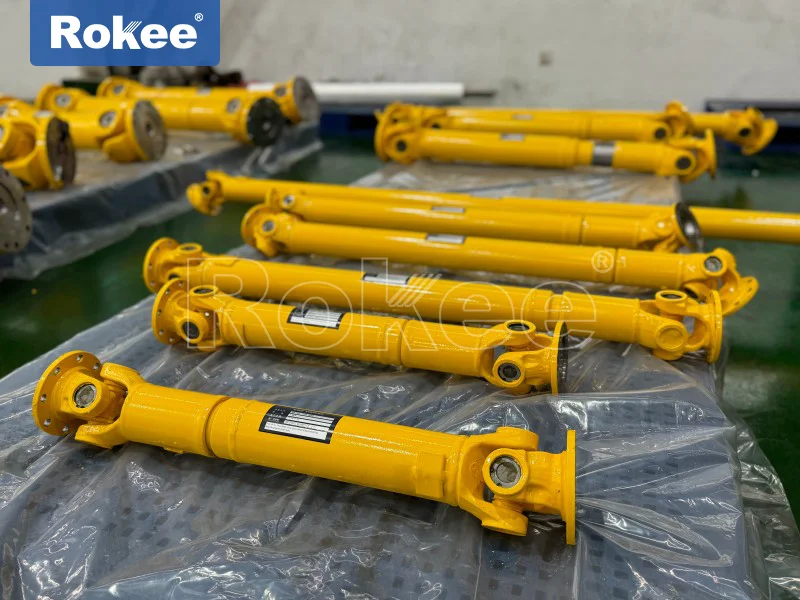
In the modern construction and manufacturing industry, mineral wool sandwich panels have emerged as a pivotal building material, valued for their exceptional fire resistance, thermal insulation, sound absorption, and structural stability. Composed of two outer facing layers and a central mineral wool core—typically made from natural volcanic rock or slag processed through high-temperature melting and fiber spinning—these panels are widely used in industrial workshops, commercial complexes, public facilities, and residential buildings. As the demand for high-quality mineral wool sandwich panels continues to grow, manufacturers are increasingly seeking ways to optimize production processes, reduce operational costs, and enhance overall efficiency. Among the various mechanical components that contribute to the smooth operation of production lines, the efficient universal coupling stands out as a critical element that directly impacts the performance, reliability, and cost-effectiveness of mineral wool sandwich panel manufacturing.
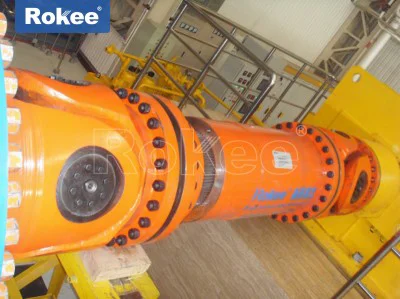
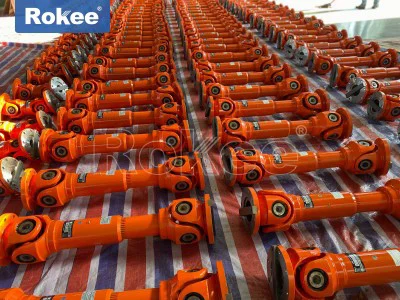
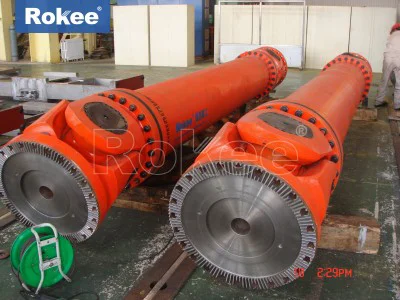
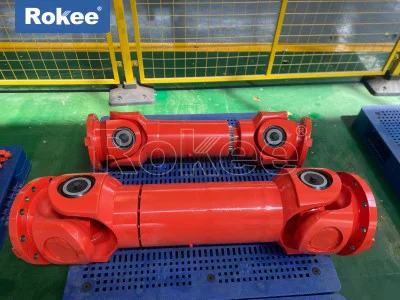
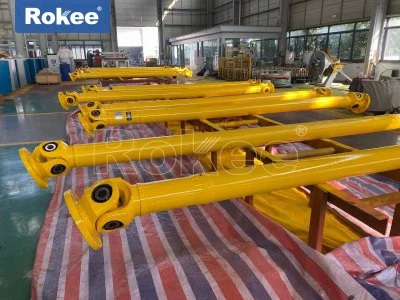
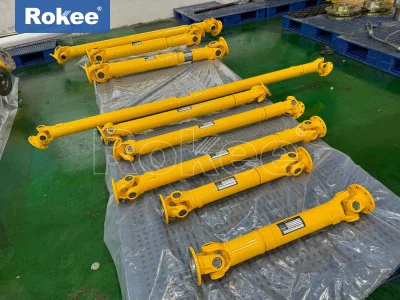
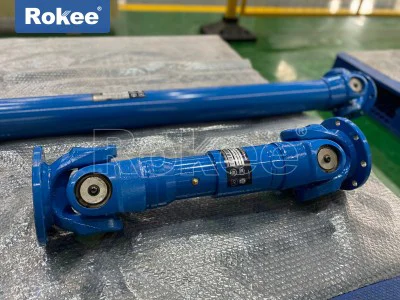
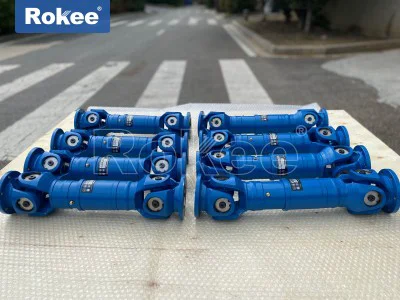
A universal coupling, also known as a universal joint, is a mechanical component designed to connect two rotating shafts in different mechanisms, enabling them to rotate together and transmit torque and motion seamlessly. Unlike rigid couplings that require perfect alignment between shafts, universal couplings are uniquely engineered to accommodate angular misalignment, axial displacement, and radial deviation between the driving and driven shafts. This flexibility is particularly valuable in complex industrial production lines like those used for mineral wool sandwich panels, where multiple components—such as uncoilers, roll formers, mineral wool feeders, glue sprayers, laminating units, and cutting systems—operate in coordination, often with slight misalignments caused by manufacturing tolerances, installation errors, load deformation, or thermal expansion. The ability of efficient universal couplings to compensate for these misalignments ensures consistent power transmission, reduces mechanical stress on connected equipment, and minimizes the risk of breakdowns, all of which are essential for maintaining continuous production and reducing operational costs.
To understand the role of efficient universal couplings in reducing costs and increasing efficiency in mineral wool sandwich panel production lines, it is first necessary to grasp the complexity of the production process. The manufacturing of mineral wool sandwich panels involves a series of interconnected stages, each requiring precise control and reliable power transmission. The process begins with the uncoiling of metal sheets—usually color-coated steel or aluminum alloy—which are fed into the production line through a hydraulic uncoiler. These metal sheets then undergo roll forming to achieve the desired profile before moving to the glue spraying stage, where an adhesive is evenly applied to their inner surfaces. Meanwhile, the mineral wool core is processed to the required thickness and density, then accurately conveyed between the upper and lower metal sheets to form a three-layer structure. This structure is then pressed and bonded in a laminating unit under controlled temperature and pressure, before being cut to the desired length by a cutting system and stacked for packaging. Each of these stages relies on motors and drives connected by couplings to transmit power, and any inefficiency or failure in this power transmission chain can disrupt the entire production process, leading to increased downtime, wasted materials, and higher costs.
Traditional couplings used in mineral wool sandwich panel production lines often struggle to meet the demands of continuous, high-load operation. Rigid couplings, for example, cannot accommodate even minor misalignments between shafts, which can lead to excessive wear on bearings, gears, and other components, increasing maintenance frequency and replacement costs. Flexible couplings, while able to absorb some misalignment, often have lower torque capacity and are prone to degradation under the heavy loads and constant vibration typical of mineral wool production. In contrast, efficient universal couplings address these limitations through their robust design and superior performance characteristics, making them an ideal choice for optimizing production line efficiency.
One of the key advantages of efficient universal couplings is their exceptional angular compensation capability. According to industrial standards, different types of universal couplings can accommodate angular misalignments between shafts ranging from 5° to 45°, depending on their structural design. This means that even if the shafts of connected equipment—such as the motor driving a roll former and the roll former itself—are not perfectly aligned, the universal coupling can still transmit torque reliably without causing excessive stress or wear. In mineral wool sandwich panel production lines, this capability is particularly valuable because the various stages of the production process often involve equipment with slightly offset shafts due to the modular design of the line or dynamic shifts during operation. By compensating for these misalignments, universal couplings reduce the risk of component failure, extend the service life of connected equipment, and minimize unplanned downtime. Unplanned downtime is a major cost driver in manufacturing, as it not only halts production but also leads to wasted labor, raw materials, and energy. By reducing downtime, efficient universal couplings directly contribute to cost reduction and productivity improvement.
Another critical feature of efficient universal couplings is their high torque transmission capacity. Mineral wool sandwich panel production line involve heavy-duty operations, such as pressing thick metal sheets and mineral wool cores together, which require significant torque to drive the machinery. Universal couplings are typically made from high-quality alloy steels—such as 45 steel, 45 forged steel, or 40 chromium—that undergo heat treatment to enhance their strength, wear resistance, and fatigue life. Heavy-duty universal couplings may also use alloy cast steel or forged steel components to handle even higher torque loads, ensuring that power is transmitted efficiently from motors to the various production stages. This high torque capacity allows the production line to operate at optimal speeds, reducing the time required to manufacture each panel and increasing overall throughput. Additionally, the efficient power transmission of universal couplings minimizes energy loss, as less power is wasted due to friction or misalignment. This energy efficiency directly translates to lower energy costs, a significant expense for manufacturers operating large-scale production lines.
The durability and low maintenance requirements of efficient universal couplings further contribute to cost reduction in mineral wool sandwich panel production. Unlike some other coupling types that require frequent lubrication, adjustment, or replacement, high-quality universal couplings are designed to withstand the harsh operating conditions of industrial production lines—including constant vibration, temperature fluctuations, and heavy loads—with minimal maintenance. The use of robust materials and precision engineering ensures that these couplings have a long service life, reducing the frequency of replacements and the associated costs. For example, universal couplings made from ductile iron, which has a high strength-to-weight ratio and excellent resistance to fatigue and wear, can last significantly longer than couplings made from less durable materials. A study by the Materials Research Society found that components made from ductile iron have a fatigue limit that exceeds many other materials commonly used in couplings, translating to longer service life and reduced maintenance costs. This durability also means that manufacturers can avoid the costs associated with unplanned maintenance and replacement, such as labor costs, replacement parts, and production downtime.
In addition to reducing maintenance and energy costs, efficient universal couplings also help minimize material waste in mineral wool sandwich panel production. The production of these panels requires precise coordination between the various stages to ensure that the metal sheets and mineral wool core are properly aligned and bonded. Any misalignment or disruption in the production process can lead to defects such as uneven panel thickness, misaligned layers, or poor bonding, resulting in scrapped panels and wasted raw materials. Universal couplings play a critical role in maintaining this precision by ensuring consistent power transmission to each stage of the production line. For example, in the laminating stage, the even application of pressure requires that the rollers are driven at a consistent speed, which is ensured by the reliable torque transmission of universal couplings. If the power transmission is inconsistent, the pressure applied to the panel may be uneven, leading to defects and material waste. By ensuring smooth, consistent operation, universal couplings help reduce the number of defective panels, minimizing material waste and lowering raw material costs.
The versatility of efficient universal couplings also contributes to their ability to reduce costs and increase efficiency in mineral wool sandwich panel production lines. These couplings are available in a variety of structural types—including cross shaft, ball cage, and ball fork designs—each with unique performance characteristics that can be tailored to the specific needs of different production stages. For example, cross shaft universal couplings, which consist of two fork joints, a cross shaft, and bearings, are ideal for applications with moderate angular misalignments (typically 15° to 25°) and high torque requirements, making them suitable for driving roll formers and laminating units. Ball cage universal couplings, on the other hand, offer higher angular compensation and smoother rotation, making them suitable for high-speed applications such as cutting systems. This versatility allows manufacturers to select the most appropriate universal coupling for each stage of the production line, optimizing performance and efficiency. Additionally, the compact design of many universal couplings makes them easy to install in tight spaces, which is often a requirement in modular production lines. Their lightweight yet robust structure also reduces the overall weight of the equipment, minimizing energy consumption and wear on supporting structures.
The integration of efficient universal couplings into mineral wool sandwich panel production lines also supports the adoption of automation and smart manufacturing technologies, which further enhance efficiency and reduce costs. Modern production lines increasingly rely on automated control systems, sensors, and real-time data analytics to optimize operation and reduce human error. Universal couplings play a key role in this automation by ensuring that the various automated components—such as robotic arms, automatic cutting systems, and conveyor belts—receive consistent power transmission, allowing them to operate in sync with minimal supervision. For example, in an automated production line, sensors monitor the alignment and performance of the equipment, and any deviations are adjusted in real time. The flexibility of universal couplings allows them to adapt to these adjustments without disrupting production, ensuring that the line operates at optimal efficiency. Additionally, the reliable performance of universal couplings reduces the need for manual intervention, freeing up labor resources to focus on more value-added tasks, such as quality control and process optimization.
To fully realize the cost-saving and efficiency-enhancing benefits of efficient universal couplings, manufacturers must select the right coupling type for their specific production needs and ensure proper installation and maintenance. Factors such as the torque requirements, angular misalignment, operating speed, and environmental conditions of each production stage should be carefully considered when selecting a universal coupling. For example, heavy-duty stages such as laminating may require cross shaft universal couplings with high torque capacity, while high-speed stages such as cutting may benefit from ball cage universal couplings with smoother rotation. Proper installation is also critical, as incorrect alignment or assembly can reduce the performance and service life of the coupling, leading to increased costs. Regular maintenance, such as periodic inspection and lubrication, can further extend the life of the coupling and ensure consistent performance. While the initial investment in high-quality universal couplings may be higher than that of lower-quality alternatives, the long-term savings in maintenance, energy, and material costs more than offset this initial expense.
In conclusion, efficient universal couplings are a critical component in mineral wool sandwich panel production lines, offering a range of benefits that directly contribute to cost reduction and efficiency improvement. Their ability to compensate for angular misalignment, transmit high torque efficiently, and withstand harsh operating conditions reduces equipment wear, minimizes downtime, and lowers maintenance costs. By ensuring consistent power transmission to each stage of the production process, universal couplings help reduce material waste and improve product quality, further enhancing cost-effectiveness. Their versatility and compatibility with automation technologies also support the adoption of smart manufacturing practices, allowing manufacturers to optimize production processes and stay competitive in a growing market. As the demand for mineral wool sandwich panels continues to increase, the role of efficient universal couplings in driving operational efficiency and cost savings will only become more important. Manufacturers that invest in high-quality universal couplings and integrate them effectively into their production lines will be better positioned to meet market demand, reduce costs, and achieve long-term success.