PU Sandwich Panel Machine With Cardan Shaft Coupling Suitable For Various Plates
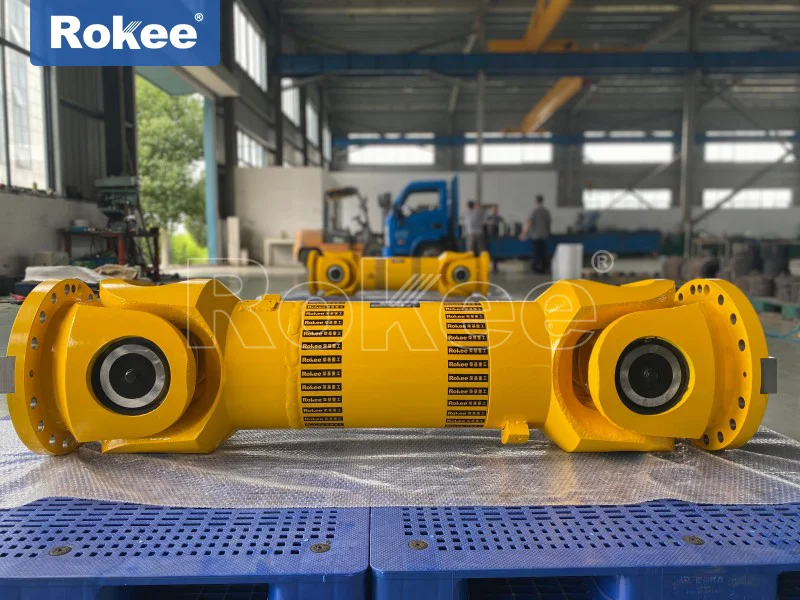
The production of polyurethane sandwich panels has become an indispensable part of the modern building materials manufacturing industry, as these composite panels are widely applied in architectural thermal insulation, cold storage enclosure, factory workshop partition, logistics warehouse roofing and wall decoration, and various industrial and civil construction fields that require excellent heat preservation, sound insulation, moisture resistance and structural stability. The core competitiveness of PU sandwich panel products in the market not only depends on the raw material formula and composite bonding effect of the panels themselves, but also is closely linked to the overall operating stability, processing accuracy, production continuity and multi-material adaptation capability of the production and forming equipment used in the manufacturing process. Among all the key functional components that determine the comprehensive performance of the PU sandwich panel production line, the transmission connection part plays a decisive fundamental role, as it undertakes the important task of transferring power from the driving power device to each processing and forming unit of the equipment, ensuring the synchronous operation of each functional module and realizing the continuous and standardized processing of different types of base plates and composite core materials. The PU sandwich panel machine equipped with cardan shaft coupling stands out sharply from ordinary traditional transmission structural equipment in the market, precisely because the cardan shaft coupling optimizes the whole power transmission logic and mechanical operation state of the production line, effectively solving various common mechanical operation problems that are easy to occur in the long-term continuous production process of traditional equipment, and greatly expanding the adaptation range of the equipment for different specifications, thicknesses, textures and material properties of sandwich base plates and composite plates, making the whole production equipment more adaptable, durable, efficient and stable in complex and long-term industrial production scenarios.
In the actual industrial production process of PU sandwich panels, most production lines need to operate continuously for a long time under high-load working conditions, and the equipment often faces various complex external and internal mechanical interference factors during operation. On the one hand, the on-site installation environment of the production line is limited by the space of the factory building, and it is difficult to achieve absolute coaxial alignment between the driving motor, reducer, roller pressing forming mechanism, cutting sizing mechanism and other core power and execution components. There are often inevitable radial deviation, angular deviation and axial displacement between the connected transmission parts. On the other hand, in the process of processing different types of plates, the thickness, hardness, surface friction coefficient and processing resistance of the plates will change significantly. When switching between thin lightweight decorative sandwich plates, thick load-bearing thermal insulation sandwich plates, rigid metal surface composite plates and flexible non-metal surface sandwich plates, the instantaneous load borne by each operating part of the equipment will fluctuate violently, which is easy to cause impact vibration and torque oscillation in the transmission system. For ordinary PU sandwich panel machines using traditional rigid connection or ordinary fixed coupling transmission structures, these deviations and load fluctuations will directly lead to excessive local stress on the transmission parts, serious wear of connecting components, easy loosening of fixed parts, asynchronous operation speed of each processing module, and even frequent shutdown and maintenance due to transmission failure in serious cases. These problems not only seriously reduce the continuous production efficiency of the equipment, affect the consistency of the processing size and forming quality of each batch of sandwich panels, but also greatly increase the later maintenance cost, component replacement frequency and production downtime loss of the production line, bringing many unstable hidden dangers to the standardized and large-scale production of sandwich panel manufacturers.
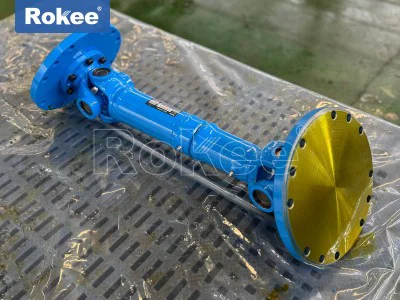
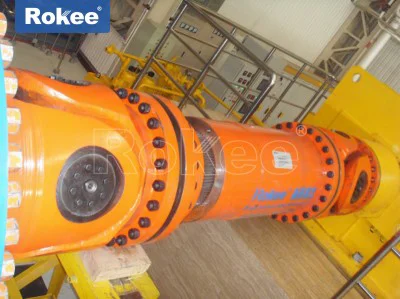
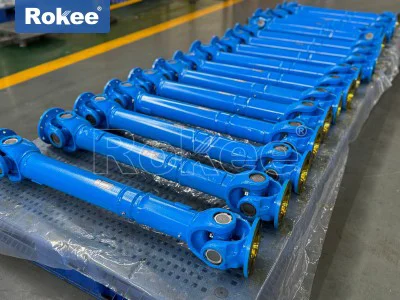
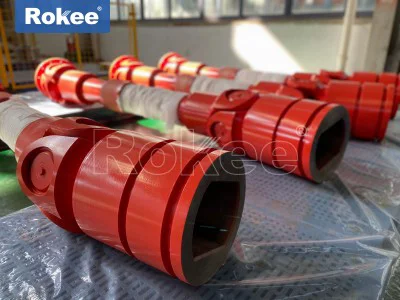
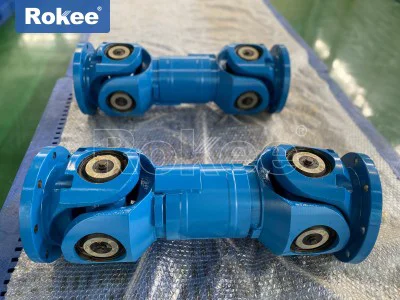
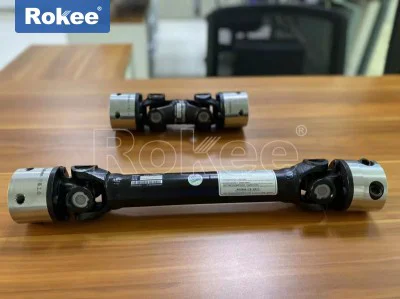
The cardan shaft coupling configured in the improved PU sandwich panel machine is professionally designed and manufactured aiming at the above pain points and bottlenecks in the actual production of sandwich panels, and its unique mechanical structural design can well adapt to various non-coaxial working conditions and variable load production requirements in the plate processing process. Different from rigid couplings that cannot tolerate any deviation and flexible couplings with limited compensation range, the cardan shaft coupling has excellent multi-directional displacement compensation performance, which can effectively compensate for angular displacement, radial displacement and axial displacement between the driving end and the driven end of the equipment transmission system generated by installation errors, equipment operation vibration and long-term mechanical fatigue deformation. In the daily plate processing and production process, even if there is a certain degree of position deviation between the power output shaft of the equipment power unit and the rotating shaft of the pressing and forming roller group, or the position of the transmission part is slightly displaced due to long-term high-load operation and mechanical vibration, the cardan shaft coupling can still maintain stable and efficient power transmission without generating additional mechanical stress or causing power transmission loss. This excellent displacement compensation capability fundamentally avoids the mechanical jitter and operation stagnation of the equipment caused by transmission position deviation, ensures that each transmission shaft and operating component of the production line can run smoothly and synchronously all the time, and lays a solid mechanical foundation for the continuous and stable processing of various plates.
In addition to the outstanding displacement compensation function, the cardan shaft coupling also has excellent shock absorption and buffer performance, which is crucial for the PU sandwich panel machine to switch processing different types of plates and cope with instantaneous load changes. When the equipment processes plates of different thicknesses and materials, the extrusion force required for plate pressing, the traction force required for plate conveying and the shearing force required for plate fixed-length cutting will change instantly. For example, when switching from processing thin aluminum alloy surface decorative sandwich plates to thick color steel plate load-bearing thermal insulation sandwich plates, the instantaneous operating load of the equipment will increase significantly in a short time, and the traditional transmission structure will directly transmit this instantaneous load impact to the whole transmission system, resulting in sharp vibration of the equipment, abnormal noise in operation, and even deformation and damage of internal transmission gears and bearings. The cardan shaft coupling can effectively absorb and buffer the instantaneous impact torque and vibration generated by load changes through its internal flexible connection structure and reasonable shaft body stress distribution, weaken the vibration conduction between various components of the equipment, reduce the impact of load fluctuation on the core operating parts of the production line, and keep the equipment running smoothly and quietly all the time. This shock absorption and buffer effect not only effectively prolongs the service life of various mechanical parts of the PU sandwich panel machine, reduces the wear and aging speed of key components, but also ensures the stability of the plate processing state, avoiding the problems of uneven foaming and bonding of PU core materials, inconsistent plate surface flatness and inaccurate cutting size caused by equipment vibration during production.
The most prominent advantage of the PU sandwich panel machine equipped with cardan shaft coupling in actual production is its strong and comprehensive plate adaptation performance, which can meet the diversified processing and forming needs of various types of sandwich plates without replacing transmission parts or adjusting the equipment structure in a large range. In the actual market demand, the types of PU sandwich panels required by different application scenarios are diverse in material and specification. In terms of surface base materials, there are metal base plates such as color steel plates, galvanized steel plates, aluminum zinc plated plates and aluminum alloy plates, as well as non-metal base plates such as fiber cement plates, magnesium oxide plates, PVC decorative plates and composite paper surface plates; in terms of core material thickness, the processing thickness ranges from thin plates of several centimeters used for interior decoration partition to thick plates of more than ten centimeters used for cold storage thermal insulation and industrial workshop fire prevention; in terms of plate performance requirements, there are flexible thin plates for simple enclosure and rigid thick plates for load-bearing and shock resistance. Different plates have different requirements on the transmission power, operating speed, pressing pressure and traction stability of the processing equipment, and traditional single-structure PU sandwich panel machines often can only process single or a few types of plates, with poor universality and low equipment utilization rate.
With the support of cardan shaft coupling transmission structure, the whole power transmission system of the PU sandwich panel machine has a wider torque transmission range and more flexible speed adaptation capability. The coupling can maintain efficient power transmission output under both low-speed and high-torque working conditions required for processing thick and hard load-bearing plates and high-speed and stable operation working conditions required for processing thin and lightweight decorative plates, and will not have the problems of insufficient power transmission, slipping and idling at low speed, or transmission overload and component heating at high speed. When processing metal surface plates with high surface hardness and large processing resistance, the cardan shaft coupling can stably bear high torque load, ensure sufficient pressing and forming power of the equipment, make the PU core material and the surface base plate tightly bonded without degumming and hollowing; when processing non-metal surface plates with low hardness and easy surface damage, the coupling can buffer the excessive rigid extrusion force of the transmission system, avoid surface indentation, deformation and scratch of the plates during processing, and ensure the surface flatness and appearance quality of finished sandwich plates. This all-round adaptation ability enables one piece of equipment to cover the production and processing needs of most mainstream PU sandwich panel products on the market, manufacturers do not need to purchase multiple production lines for different plate processing, effectively reducing the equipment procurement investment and factory site occupation cost, and greatly improving the economic benefit and production flexibility of production and processing.
In terms of long-term operation and daily maintenance management, the PU sandwich panel machine with cardan shaft coupling also has obvious practical advantages compared with traditional equipment. The overall structural design of the cardan shaft coupling is simple and reasonable, with few internal wearing parts and strong structural rigidity and corrosion resistance. It is not easy to be affected by dust, debris and tiny PU foam residues in the sandwich panel production environment, and will not be corroded and damaged due to long-term contact with raw material auxiliary materials used in plate production. In the daily production process, the coupling does not need frequent lubrication maintenance and regular calibration and debugging, and only needs simple regular surface cleaning and conventional inspection to maintain a good working state. For production enterprises, this low-maintenance characteristic greatly reduces the daily equipment maintenance workload and maintenance labor cost, avoids the production delay caused by frequent equipment maintenance and debugging, and ensures the continuous and efficient operation of the production line throughout the year. At the same time, due to the stable transmission performance of the cardan shaft coupling, the failure rate of the whole PU sandwich panel machine is extremely low, the service life of the whole equipment is effectively prolonged, the frequency of equipment shutdown and parts replacement is reduced, and the stable and orderly progress of the production plan of sandwich panel manufacturers is fully guaranteed.
In the actual production and processing operation, the excellent transmission performance of the cardan shaft coupling also directly optimizes the overall processing accuracy and finished product quality consistency of the PU sandwich panel machine. The synchronous coordination of each functional mechanism in the sandwich panel production process is very important. From the automatic feeding of the surface base plate and the uniform pouring of PU foaming core material, to the continuous pressing and composite forming of the plate, and then to the fixed-length cutting and automatic discharging of the finished plate, every link needs the precise and synchronous cooperation of the conveying mechanism, pressing mechanism and cutting mechanism. The traditional transmission structure is prone to transmission delay and speed asynchronous problems due to position deviation and load impact, resulting in inconsistent pressing time of plates, uneven foaming thickness of core materials and inaccurate cutting length of finished plates, leading to large quality differences between different batches of products and even a large number of unqualified products. The cardan shaft coupling ensures that the power transmission between all functional mechanisms of the equipment is timely, accurate and synchronous, there is no transmission delay and speed difference, each plate can obtain the same pressing time, foaming composite pressure and cutting positioning accuracy in the production process, the size deviation and performance difference of finished PU sandwich panels are controlled within a very small range, the overall product qualification rate is significantly improved, and the market competitiveness of manufacturers' products is effectively enhanced.
With the continuous upgrading of the building materials industry and the increasing diversification of market demand for energy-saving, thermal insulation and environmental protection building materials, the PU sandwich panel industry is developing towards large-scale production, diversified product types and high-precision product quality. In this development trend, the performance requirements for supporting production and processing equipment are also constantly improving, and the traditional single-function and low-stability PU sandwich panel machines can no longer meet the current diversified and high-efficiency production needs of manufacturers. The PU sandwich panel machine adopting cardan shaft coupling transmission structure perfectly conforms to the development trend of the industry, with its strong multi-plate adaptation capability, stable long-term operation performance, low maintenance cost, high processing accuracy and efficient continuous production efficiency, solving many practical production pain points for sandwich panel processing enterprises. Whether it is small and medium-sized building materials manufacturers that need flexible production and diversified product switching, or large-scale professional sandwich panel production enterprises that pursue large-scale continuous production and stable product quality, this kind of equipment can well meet the actual production needs. In the future, with the further expansion of the application scope of PU sandwich panels in new building construction, cold storage logistics, industrial manufacturing and other fields, the market demand for multi-functional, high-stability and strong-adaptability sandwich panel production equipment will continue to rise, and the PU sandwich panel machine with cardan shaft coupling will become the mainstream preferred processing equipment in the industry relying on its excellent comprehensive performance, helping more building materials production enterprises realize efficient, stable and low-cost standardized production of various PU sandwich panel products.