Splined Telescopic Universal Shaft Coupling
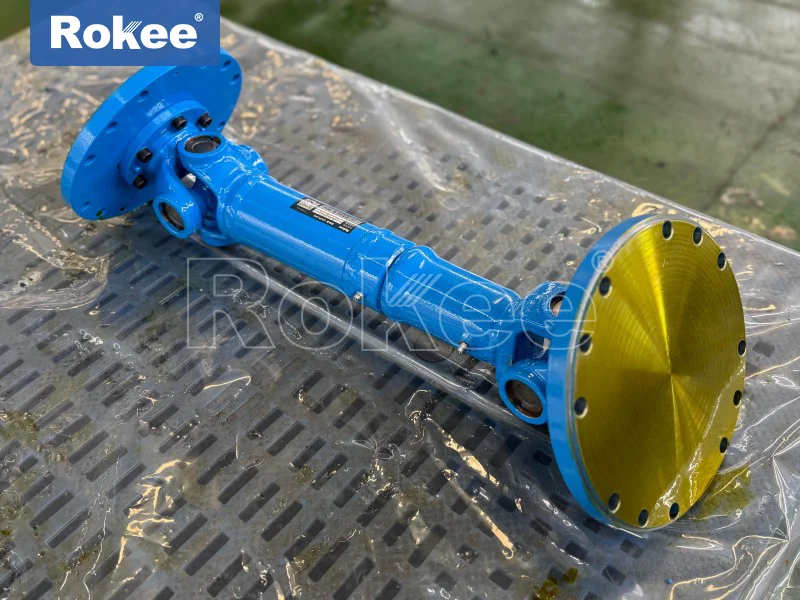
Splined telescopic universal shaft coupling is a versatile and high-performance mechanical transmission component designed to address complex misalignment and displacement challenges in power transmission systems. Integrating spline telescopic structure and universal joint transmission principles, this coupling stands out from traditional rigid and ordinary flexible couplings with its dual compensation capabilities for angular deviation and axial displacement. It can maintain stable and efficient torque transmission even when connected shafts suffer from installation deviations, equipment vibration, thermal expansion and contraction, and dynamic position changes during operation. The precision-machined spline pairing enables smooth telescopic movement along the axial direction, while the universal joint structure adapts to multi-angle rotational deflection, effectively eliminating extra mechanical stress, vibration and wear caused by shaft misalignment. Widely adaptable to various industrial transmission scenarios with variable operating conditions, it serves as a core guarantee for the long-term stable operation of mechanical transmission systems, balancing transmission accuracy, structural flexibility and operational durability comprehensively.
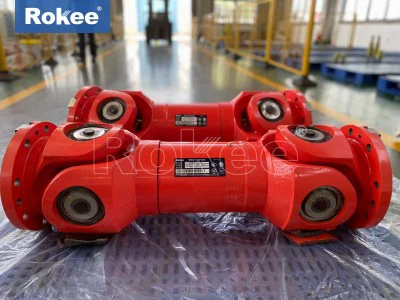
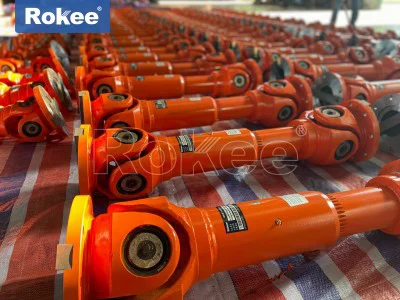
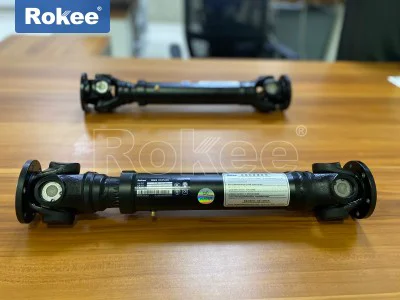
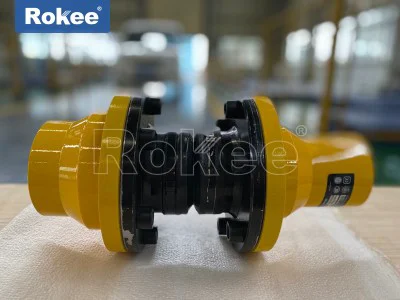
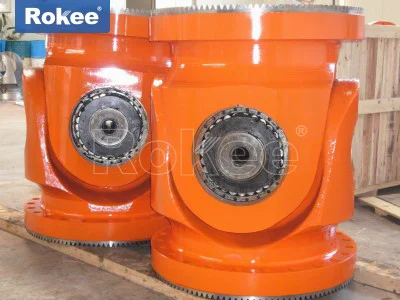
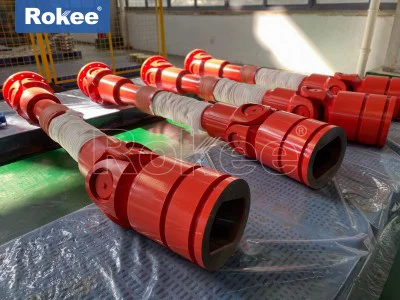
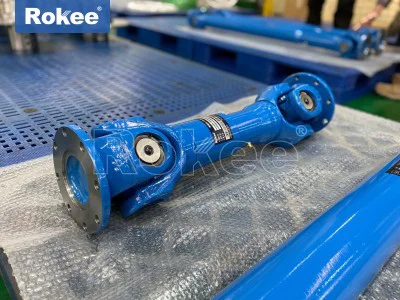
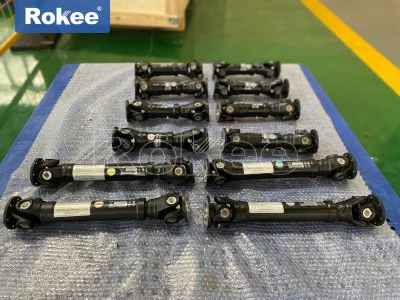
The core structural composition of splined telescopic universal coupling defines its unique transmission performance and adaptive capabilities, with each component cooperating precisely to realize integrated telescopic adjustment and universal transmission functions. The whole structure mainly includes universal joint assemblies, spline telescopic pairs, shaft tube main bodies, bearing components and sealing and lubrication auxiliary structures. The universal joint assembly, usually adopting cross-shaft and needle roller bearing configuration, is the key part to achieve angular compensation, allowing the driving shaft and driven shaft to form a certain deflection angle during rotation without hindering power transmission. The spline telescopic pair composed of inner splined shaft and outer splined sleeve is the core functional unit for axial displacement adaptation, with involute splines processed by high-precision machining technology to ensure tight meshing between tooth surfaces. This meshing state guarantees synchronous rotation without rotational slippage during torque transmission, while allowing free linear sliding in the axial direction to adapt to shaft spacing changes. The lightweight and high-strength shaft tube connects each functional module as the main bearing structure, and the built-in sealing and lubrication system can effectively isolate external dust, moisture and impurities, reducing friction loss of moving parts and prolonging the overall service life of the coupling.
The working principle of splined telescopic universal shaft coupling is based on the complementary coordination of spline axial motion and universal joint angular rotation, realizing error-free power transmission under complex displacement conditions. In the standard operating state with accurate shaft alignment, the spline pair remains relatively fixed, and the universal joint maintains coaxial rotation, transmitting torque efficiently and stably with minimal power loss. When the mechanical equipment generates axial position changes due to thermal expansion, operational vibration or installation tolerance errors, the inner splined shaft slides linearly along the inner wall of the outer splined sleeve, automatically adjusting the overall length of the coupling to offset axial displacement differences. This telescopic movement does not affect the meshing state of spline teeth, so the torque transmission efficiency remains stable without power interruption. When the connected shafts produce angular deflection due to equipment operation deviation or structural deformation, the cross-shaft universal joint rotates flexibly around multiple axes, converting angular misalignment into regular rotational motion rather than destructive bending stress. In actual complex working conditions, axial and angular deviations often exist simultaneously, and the coupling can perform dual compensation synchronously, ensuring continuous, uniform and reliable power output throughout the operation cycle.
Compared with traditional transmission couplings, splined telescopic universal shaft coupling possesses prominent performance advantages in adaptability, stability and service life, making it more suitable for modern industrial complex working conditions. Traditional rigid couplings can only work normally under precise coaxial alignment, and slight misalignment will cause severe shaft vibration, component wear and even equipment failure, with almost no displacement compensation ability. Ordinary flexible couplings can adapt to a small amount of angular deviation but lack effective axial telescopic adjustment function, which is difficult to cope with frequent shaft spacing changes caused by thermal expansion and mechanical movement. In contrast, the splined telescopic universal shaft coupling integrates dual compensation functions, covering axial displacement, angular deflection and composite misalignment working conditions. Its spline tooth surface adopts large-area contact design, which can evenly distribute torsional load, avoid local stress concentration and reduce tooth surface wear and deformation. Meanwhile, the optimized bearing and lubrication structure greatly reduces friction coefficient during operation, lowering mechanical vibration and noise. Additionally, its integrated structural design improves overall rigidity and impact resistance, enabling it to withstand instantaneous torsional shock and variable load impacts in high-intensity industrial operation scenarios.
The manufacturing and processing technology of splined telescopic universal shaft coupling directly determines its transmission accuracy, operational stability and durability, requiring strict precision control in every production link. The core spline pair components are processed by high-precision gear milling and grinding technology, ensuring consistent tooth profile accuracy, uniform tooth spacing and smooth tooth surface finish, which is the key to realizing stable meshing and flexible telescopic movement. The universal joint cross shaft and bearing cup parts adopt fine forging and heat treatment processes to improve material hardness, toughness and fatigue resistance, preventing deformation and damage under long-term alternating load operation. The overall shaft tube undergoes precision turning and dynamic balance calibration to eliminate rotational unbalance, ensuring high-speed operation without obvious vibration and jitter. In the assembly process, professional matching detection is carried out for spline clearance and universal joint rotation flexibility to control the fit tolerance within a reasonable range, avoiding excessive clearance leading to transmission backlash or excessive tightness causing unsmooth telescopic movement. Surface anti-corrosion and wear-resistant treatment is also conducted on all parts to enhance environmental adaptability and extend the service life in harsh working environments.
Splined telescopic universal shaft coupling has extremely wide application coverage in industrial mechanical transmission systems, adapting to diversified working scenarios of different industries and equipment. In mechanical manufacturing equipment such as automated production lines, machine tools and conveying machinery, it is used for power connection between driving motors and execution components, adapting to position deviation and vibration displacement generated during equipment reciprocating operation, ensuring the continuity and accuracy of production and processing. In engineering machinery and transportation equipment, it undertakes the power transmission task of movable mechanical arms and walking mechanisms, coping with frequent axial distance changes and angle adjustments during equipment operation. In metallurgy, chemical industry and building materials industries with harsh working conditions such as high temperature, high vibration and heavy load, its excellent thermal deformation adaptation and impact resistance can effectively resist the adverse effects of complex environments on transmission systems. In addition, it is also widely applied in agricultural machinery, environmental protection equipment and general mechanical transmission fields, providing reliable transmission solutions for various mechanical systems with variable operating conditions and misalignment problems.
Rational installation and standardized daily maintenance are crucial to give full play to the performance of splined telescopic universal shaft coupling and extend its service cycle. During installation, it is necessary to ensure that the coaxiality and installation spacing of the connected shafts meet the assembly requirements, avoid forced installation caused by excessive deviation, and reserve a reasonable telescopic stroke range for the spline pair to prevent telescopic limit jamming during equipment operation. The installation angle of the universal joint should be controlled within the optimal working range to avoid long-term operation under excessive deflection angle which will increase friction loss and component wear. In daily maintenance, regular inspection of the coupling’s operating state is required, including checking for abnormal vibration, noise and temperature rise during operation. It is necessary to regularly supplement and replace lubricating grease for spline pairs and universal joint bearings to maintain good lubrication conditions and reduce dry friction wear. Meanwhile, the sealing structure should be inspected regularly to prevent aging, damage and oil leakage, avoiding external impurities from entering the moving fit gap to cause tooth surface abrasion and jamming. Timely removal of surface dust and corrosive substances can effectively prevent component corrosion and structural aging.
With the continuous upgrading of modern industrial mechanical equipment towards high speed, high precision and high automation, the technical optimization and development potential of splined telescopic universal shaft coupling are increasingly prominent. Current industrial production puts forward higher requirements for the stability, adaptability and maintenance cycle of transmission components, and this coupling’s composite compensation performance just meets the development demand of variable-condition transmission systems. Future optimization directions mainly include material upgrading, adopting new high-strength, wear-resistant and fatigue-resistant alloy materials to further improve load-bearing capacity and environmental adaptability. Structural optimization will focus on reducing overall weight while maintaining structural rigidity, improving transmission efficiency and equipment energy-saving performance. In addition, the integration of intelligent monitoring structures will become an important development trend, realizing real-time monitoring of operating temperature, vibration state and wear degree of the coupling. With continuous technological innovation, splined telescopic universal shaft coupling will further expand its application scope, provide more efficient and reliable support for modern mechanical transmission systems, and become an indispensable core component in the field of industrial power transmission.