Cardan Coupling Torque Transmission
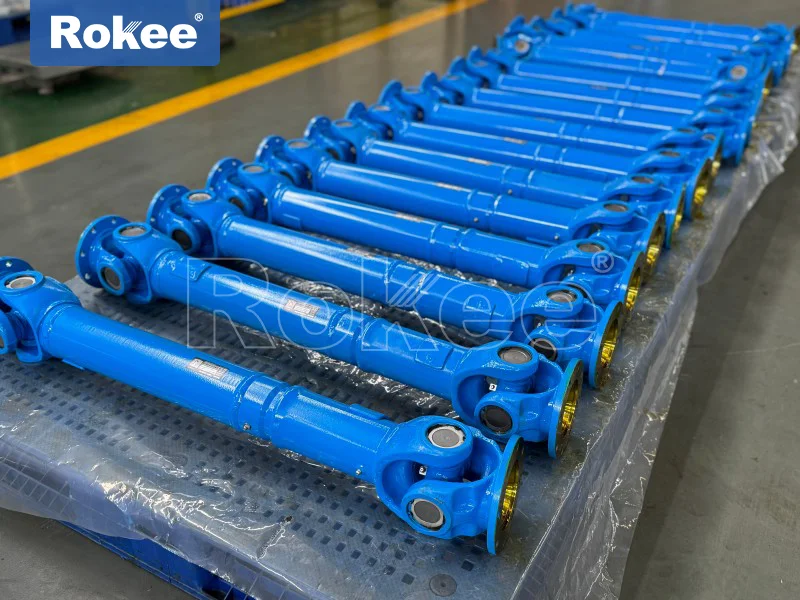
Cardan coupling torque transmission stands as one of the most versatile and reliable mechanical power transfer technologies widely adopted in modern mechanical systems, serving as a core component to transmit rotational torque and motion between misaligned driving and driven shafts. Also known as universal joint coupling, this mechanical device features a unique articulated structure that effectively compensates for angular, axial, and radial shaft deviations during operation, overcoming the limitations of rigid couplings that only work under perfectly aligned shaft conditions. Its fundamental value lies in maintaining continuous and stable torque output under dynamic operating offsets, which makes it indispensable in various mechanical transmission scenarios ranging from light-duty mechanical equipment to heavy industrial machinery.
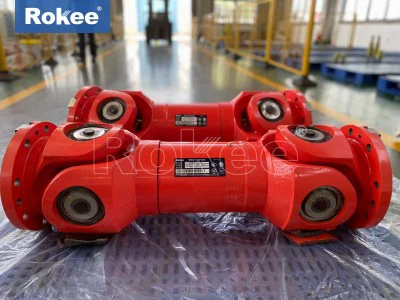
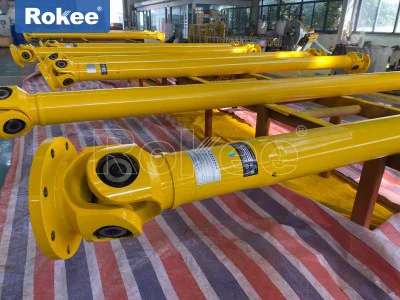
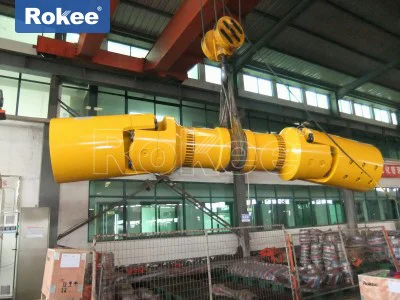
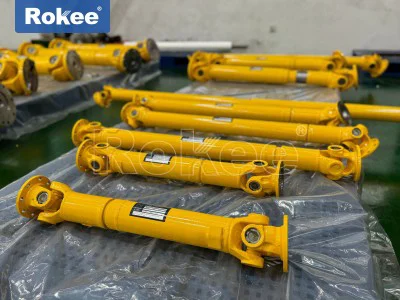
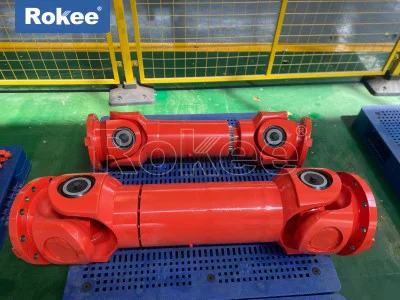
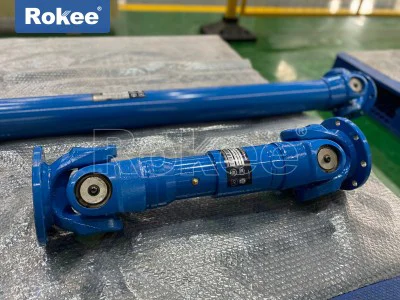
The stable torque transmission capability of Cardan couplings is fundamentally derived from their exquisite and compact structural design, which consists of three core functional components: two symmetrical fork-shaped yokes and a central cross-shaped spider with four sets of bearing assemblies. The two yokes are respectively fixed on the driving shaft and driven shaft, while the cross spider is hinged between the two yokes through precision needle bearings, forming a flexible spatial hinge structure. Each arm of the cross spider can achieve independent rotational deflection within the yoke’s limiting range, allowing the coupling to adapt to spatial angular deviations between the connected shafts. The bearing assemblies installed at the connection points effectively reduce friction resistance during rotational movement, ensuring that torque loss is minimized in the power transmission process. Unlike rigid transmission structures that rely on fixed axis rotation, the hinged structure of Cardan couplings allows multi-directional flexible movement, enabling continuous torque transmission even when the relative position of the two shafts changes slightly due to equipment vibration, load fluctuation, or installation errors. This structural flexibility lays a solid foundation for its strong adaptability in complex and variable mechanical operating environments.
The working principle of Cardan coupling torque transmission follows precise geometric motion laws, realizing continuous power output through coordinated spatial rotation and hinge deflection movements. When the driving shaft starts to rotate and outputs rotational torque, the fixed driving yoke rotates synchronously with the shaft and drives the cross spider to perform circular motion through the bearing connection. The cross spider, as the intermediate force-transmitting component, transfers rotational power to the driven yoke, thereby driving the driven shaft to rotate and complete torque transmission. In the working process, the cross spider can automatically adjust its spatial posture according to the angular offset between the two shafts, offsetting the motion deviation caused by shaft misalignment. However, a single Cardan joint has an inherent motion characteristic: the instantaneous rotational speed of the driven shaft fluctuates periodically when there is a certain angular deviation between shafts. This periodic speed variation will produce slight torque pulsation during high-speed operation, which is a typical mechanical feature of single-section Cardan transmission. To weaken this effect, most engineering applications adopt double-section Cardan coupling structures to balance motion fluctuations and achieve more stable constant-speed torque transmission.
Cardan coupling torque transmission possesses prominent performance advantages that distinguish it from other traditional coupling types, making it widely applicable in diverse mechanical transmission fields. First and foremost, it has excellent misalignment compensation capability, which can adapt to large-angle angular deviation and a certain range of axial and radial displacement between shafts, effectively tolerating installation errors and dynamic displacement generated during equipment operation. Secondly, it boasts high torque transmission efficiency and strong load-bearing capacity, which can stably transmit large torque under heavy-duty working conditions without structural deformation or power interruption. In addition, the overall structure of the Cardan coupling is simple and compact, with fewer vulnerable parts, bringing outstanding convenience in daily use and later maintenance. Compared with elastic couplings that rely on elastic deformation for buffering, Cardan couplings have higher structural rigidity and better stability under long-term continuous operation. Meanwhile, its strong environmental adaptability allows it to work normally in harsh working environments such as high vibration, dust, and variable temperature, ensuring reliable torque transmission for mechanical equipment under complex working conditions.
Despite its numerous application advantages, Cardan coupling torque transmission also has inherent performance limitations and operational defects that need to be fully considered in engineering design and application. The most notable shortcoming is the periodic torque and speed fluctuation of single-section Cardan joints under angular misalignment conditions. This fluctuation will intensify with the increase of shaft offset angle and operating speed, easily causing mechanical vibration, noise, and fatigue wear of transmission parts, which is not suitable for ultra-high-speed and ultra-precise transmission scenarios. In addition, although the bearing friction of the coupling is small, long-term high-load and high-speed operation will still produce cumulative friction loss, leading to gradual wear of bearings and cross spider hinge parts, which will reduce torque transmission accuracy and structural stability over time. Moreover, the flexible hinged structure cannot buffer and absorb impact loads effectively. When the equipment bears sudden load impact, the impact force will be directly transmitted to the coupling and subsequent transmission components, easily causing structural fatigue damage. These limitations determine that Cardan couplings need targeted structural optimization and matching design in high-precision and high-impact working scenarios.
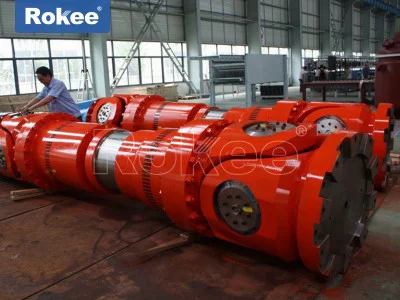
Cardan coupling torque transmission technology covers a wide range of industrial application scenarios, playing an irreplaceable role in various mechanical power transmission systems. In engineering machinery and heavy equipment, it is widely used in the power transmission structures of cranes, excavators, and conveyor equipment, stably transmitting large torque to support heavy-load operation of equipment and adapting to shaft displacement caused by equipment movement and vibration. In vehicle transmission systems, Cardan couplings are applied to the transmission connection between automobile engines, gearboxes and drive axles, compensating for the position deviation of each component during vehicle driving and ensuring continuous power output. In general industrial manufacturing equipment, they are used in the transmission structures of machine tools, fans, and pumps, solving the power transmission problem of misaligned shafts caused by equipment assembly and operation deformation. In addition, they are also applied in agricultural machinery, metallurgical equipment, and mining machinery, adapting to the complex and changeable working conditions of different industries and providing stable and reliable torque transmission support for various mechanical equipment.
The operational stability and service life of Cardan coupling torque transmission systems are closely related to standardized installation and scientific operation control. In the installation stage, the relative angle and spatial position of the driving and driven shafts need to be accurately calibrated to avoid excessive single-side offset angle, which can effectively reduce torque fluctuation and mechanical vibration during operation. For double-section Cardan coupling structures, it is necessary to ensure the symmetrical arrangement of the two joints and consistent offset angles, so as to offset periodic speed and torque fluctuations and achieve stable constant-speed transmission. During equipment operation, long-term overload operation and sudden frequent start-stop impact should be avoided, because excessive instantaneous load will cause excessive stress on the hinge parts of the coupling, accelerating structural wear and fatigue damage. At the same time, matching operating speed parameters should be set according to the structural specifications of the coupling. Excessively high operating speed will amplify the adverse effect of periodic motion fluctuation, reduce transmission stability, and even cause resonance problems of the transmission system, affecting the overall operating performance of mechanical equipment.
Scientific daily maintenance and regular inspection are key measures to maintain the long-term stable torque transmission performance of Cardan couplings and extend their service life. The core of maintenance work focuses on the lubrication protection of bearing and hinge parts, which are the main friction and wear components of the coupling. Regular filling of high-performance lubricating grease can effectively reduce friction resistance and wear loss, avoid dry friction damage caused by insufficient lubrication, and maintain stable torque transmission efficiency. In the regular inspection process, it is necessary to check the wear degree of the cross spider, yoke hinge and bearing components, observe whether there is abnormal clearance, structural deformation or loose connection, and replace worn parts in a timely manner to prevent increased transmission error and vibration noise. In addition, the sealing performance of the coupling should be checked regularly to prevent dust, impurities and moisture from entering the internal hinge structure, which can avoid component corrosion and abrasive wear. Standardized maintenance management can effectively eliminate potential operational faults, ensure that the Cardan coupling always maintains efficient and stable torque transmission capacity in the long-term service process, and reduce the failure rate and maintenance cost of mechanical transmission systems.