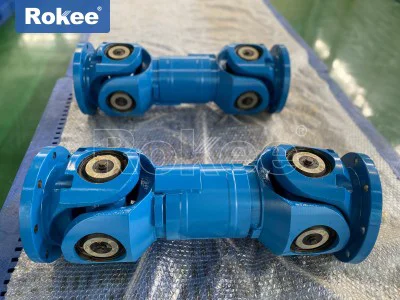
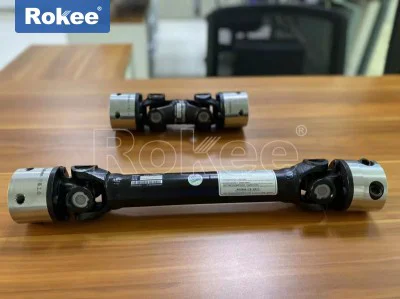
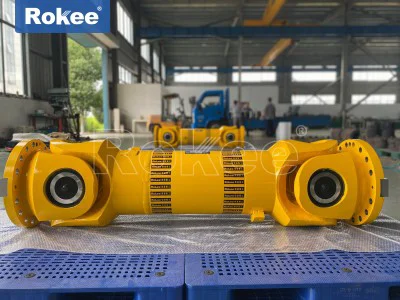
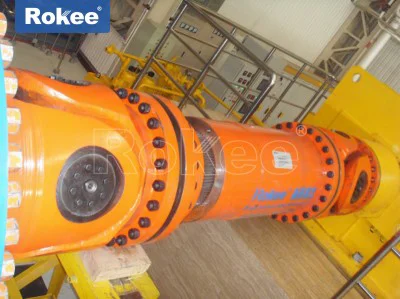
Pump Drive Cardan Drive Shaft
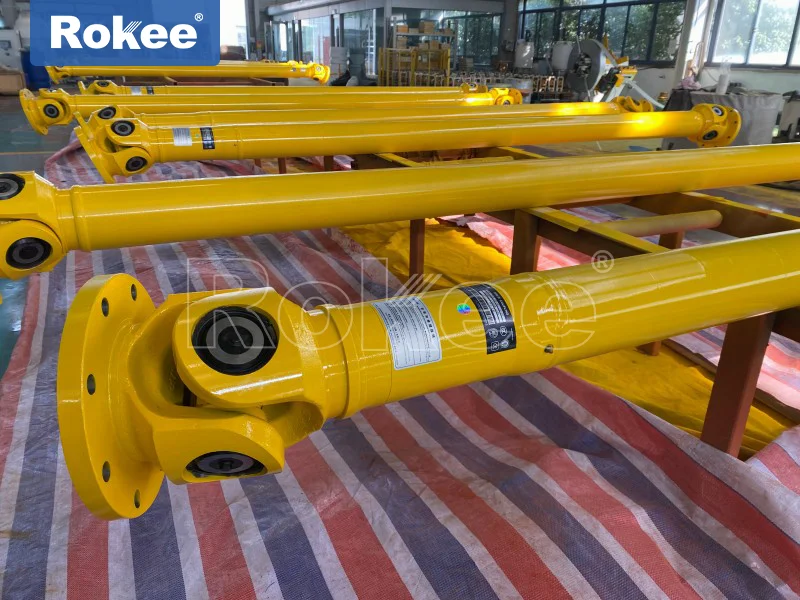
The pump drive cardan drive shaft serves as a core flexible transmission component in modern fluid handling systems, designed to bridge power output units and pump bodies for stable torque and rotational motion transfer. Unlike rigid transmission shafts that rely on precise coaxial alignment, this specialized drive shaft integrates universal joint structures and telescopic mechanisms, enabling effective power delivery even when angular deviation, axial displacement and radial offset occur between connected equipment. In long-term continuous pump operation, minor structural deformation, installation errors and mechanical vibration often cause misalignment between driving and driven parts, which rigid shafts cannot adapt to and will eventually lead to transmission failure or equipment wear. The cardan drive shaft solves this industry pain point with its flexible compensation capability, maintaining consistent transmission efficiency while buffering operational vibration and impact. Widely applied in various industrial pump scenarios requiring long-distance power transmission and dynamic alignment adjustment, it has become an indispensable component for ensuring the stable and durable operation of fluid transportation equipment.
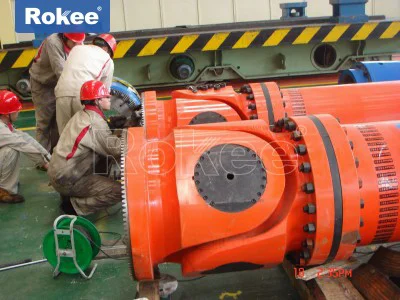
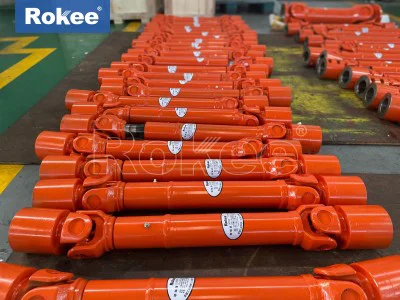
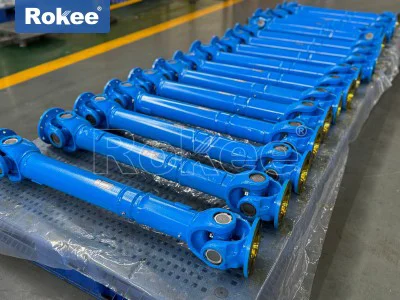
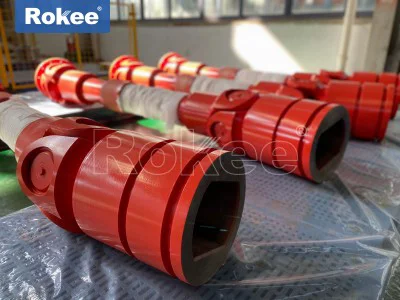
The fundamental operational logic of the pump drive cardan drive shaft originates from the mechanical motion characteristics of universal joint articulated structures and auxiliary telescopic components. A complete assembly mainly comprises double-end universal joints, cross shaft bearing sets, hollow intermediate shaft tubes and telescopic spline structures, with each part undertaking independent and coordinated transmission tasks. When the power source starts to operate, rotational torque is transmitted to the input-end universal joint through the connecting flange, and the cross shaft structure inside the joint converts fixed-axis rotation into flexible articulated motion. This structural design allows the shaft to adapt to continuous angular changes during pump operation, eliminating the transmission dead angle of rigid connectors. Meanwhile, the built-in spline telescopic structure can automatically adjust the overall length of the drive shaft according to axial displacement generated by equipment thermal expansion, mechanical vibration or load changes. In the entire power transmission process, multiple sets of bearing components bear rotational friction and load pressure, ensuring continuous and smooth torque output without stalling or jittering, even under dynamic misalignment conditions that are common in pump working environments.
Structural optimization design endows the pump drive cardan drive shaft with outstanding environmental adaptability and load-bearing performance suitable for complex pump working conditions. Different from ordinary cardan shafts for general machinery, pump-dedicated models adopt reinforced hollow shaft tube structures, which effectively reduce the overall weight of the assembly while ensuring structural rigidity and torsion resistance. The hollow design also helps reduce rotational inertia during high-speed operation, enabling the pump to respond faster to load changes and improving the sensitivity of fluid transportation adjustment. The universal joint fork body is processed with integrated forging technology, which avoids structural cracks and deformation caused by long-term high-load operation. The cross shaft and matching bearings adopt wear-resistant and pressure-resistant structural configurations, which can withstand frequent impact loads generated by pump start-stop and variable-speed operation. In addition, the internal sealing structure of the joint parts is optimized to block dust, moisture and fluid impurities in industrial working environments from entering the friction pair, effectively reducing component wear and avoiding transmission stuck problems caused by foreign matter accumulation. These targeted structural improvements make the drive shaft highly reliable in continuous industrial operation scenarios.
The core performance advantages of pump drive cardan drive shafts are fully reflected in transmission stability and fault tolerance of working conditions, which perfectly match the operational characteristics of industrial pump systems. Most fluid transportation equipment needs long-term uninterrupted operation, and slight misalignment generated by equipment aging, foundation settlement or operational vibration is inevitable during the service cycle. Rigid transmission structures will produce severe torsional stress and vibration under such conditions, accelerating the wear of connecting parts and even causing shaft breakage and equipment shutdown. In contrast, the cardan drive shaft can automatically compensate for multi-dimensional misalignment including angle, axial direction and radial direction in real time, keeping the transmission state stable at all times. Its flexible connection characteristic can also absorb part of the operational vibration and mechanical impact of the pump system, reducing the vibration conduction between the power source and the pump body, lowering the overall operating noise of the equipment, and avoiding loose connection and component damage caused by long-term vibration. Moreover, this drive shaft maintains high transmission efficiency within a wide speed and load range, avoiding power loss and energy waste caused by misalignment, and improving the overall energy utilization rate of the pump system.
Material selection is a key factor determining the service life and comprehensive performance of pump drive cardan drive shafts, and all core components adopt targeted material matching schemes for pump working conditions. The main shaft tube is usually made of high-strength alloy structural materials, which have excellent torsion resistance, fatigue resistance and mechanical stability, and can resist alternating load impact generated by long-term pump operation without permanent deformation. The cross shaft and bearing core parts adopt high-hardness wear-resistant alloy materials, which undergo fine heat treatment processes to improve surface hardness and internal toughness, effectively reducing friction loss during high-speed rotation and delaying component wear failure. The sealing and protective accessories are made of high-elasticity aging-resistant polymer materials, which can maintain stable sealing performance in variable temperature and humid industrial environments, and are not easy to deform, age or fail. Compared with ordinary carbon steel materials used in common mechanical shafts, the optimized material combination significantly enhances the adaptability of the drive shaft to harsh working conditions, extends the maintenance cycle, and reduces the failure rate of transmission links in pump systems.
The installation and commissioning process of pump drive cardan drive shafts directly affects the operating stability and service life of the entire pump system, and standardized operation is required to ensure optimal performance. Before installation, it is necessary to check the integrity of all components, confirm that there is no wear, deformation or damage on the universal joint, spline and bearing parts, and clean the connecting surface to ensure no impurities affect the assembly accuracy. During assembly, the coaxiality and spacing of the power source end and pump connecting end need to be finely adjusted to control the initial misalignment within a reasonable range, avoiding excessive initial deflection that increases operational wear. The spline telescopic part should retain a reasonable expansion and contraction margin to reserve space for axial displacement caused by equipment thermal expansion and vibration. After installation, manual rotation debugging is required to check whether the drive shaft operates smoothly without jamming, abnormal friction or offset shaking. Formal operation can only be carried out after confirming that all indicators are normal. Scientific installation and commissioning can maximize the flexible compensation performance of the cardan drive shaft, reduce later operational failures, and lay a foundation for long-term stable operation of the pump system.
Scientific daily maintenance and regular inspection are essential to maintain the efficient operation and extend the service life of pump drive cardan drive shafts. In daily operation, attention should be paid to observing the operating state of the drive shaft, including whether there is abnormal vibration, unusual noise or unstable rotation during pump operation, which are important early warning signs of component wear or misalignment failure. Regular lubrication maintenance must be carried out on the universal joint bearings and spline telescopic parts, and high-quality special lubricants should be selected to ensure good fluidity and wear resistance, reduce dry friction loss between moving parts, and prevent rust and corrosion of metal components. It is necessary to regularly check the fastening state of connecting fasteners to avoid loose connection caused by long-term vibration, which leads to transmission offset. Meanwhile, check the aging and damage of the sealing parts in real time, and replace failed seals in time to prevent dust and impurities from entering the internal structure and causing accelerated wear. Regular maintenance can effectively eliminate potential faults, keep the drive shaft in optimal working condition, and ensure the continuous and efficient operation of the pump drive system.
With the continuous upgrading of industrial fluid transportation technology, the performance optimization and application scope of pump drive cardan drive shafts are constantly expanding, showing important industrial application value. Modern industrial production puts forward higher requirements for the stability, efficiency and durability of pump equipment, which drives the continuous innovation of cardan drive shaft design and manufacturing technology. The latest optimized products adopt more precise structural design and advanced processing technology, realizing larger angle compensation range and more sensitive axial adjustment capability, and can adapt to more extreme high-load and high-speed pump working conditions. At the same time, lightweight and high-strength design concepts are further applied, reducing the overall self-weight of the drive shaft while improving structural strength, which helps reduce the idle load energy consumption of the pump system. As a key flexible transmission component, the pump drive cardan drive shaft will continue to iterate with industrial equipment technology, providing more reliable transmission guarantees for efficient and stable operation of various fluid handling systems, and supporting the stable operation and efficiency improvement of modern industrial fluid transportation links.