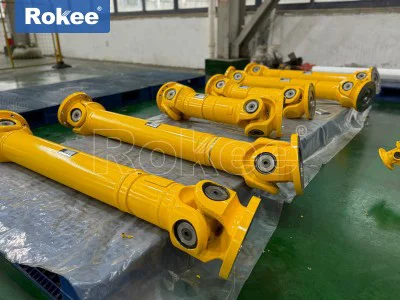
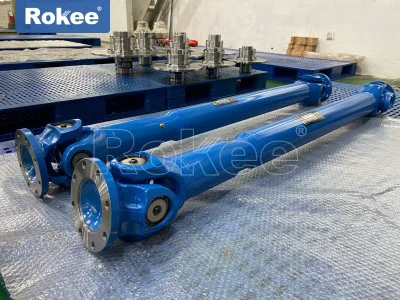
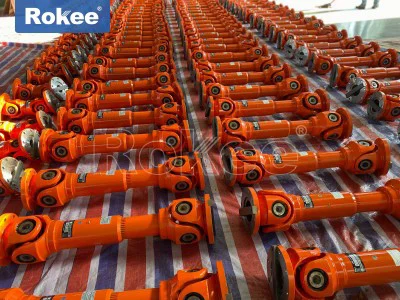
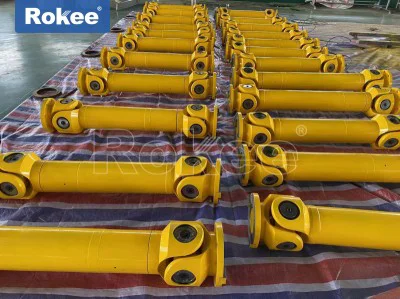
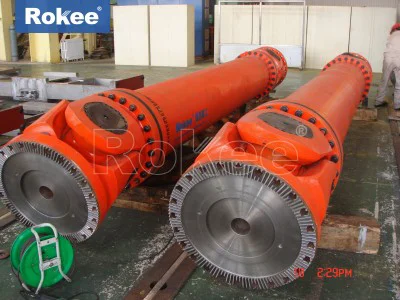
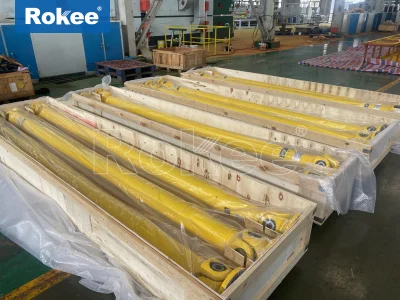
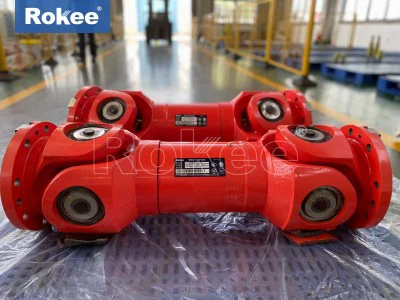
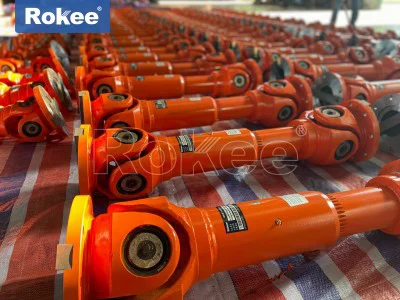
Customization Scheme Of Cardan Drive Shaft For Rockwool Sandwich Panel Machinery
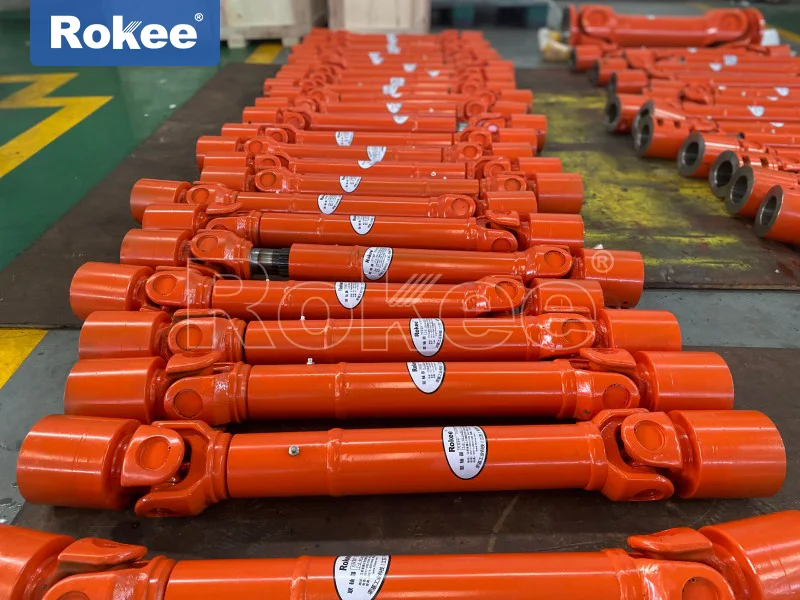
The rockwool sandwich panel machinery is a complex integrated production system that involves multiple continuous processes, including rockwool fiber forming, mixing, compounding, pressing, cutting, and conveying. Each link requires precise, stable, and efficient power transmission to ensure the consistency of product thickness, density, and surface flatness, as well as the long-term stable operation of the entire production line. Among the numerous transmission components in the rockwool sandwich panel machinery, the cardan drive shaft, also known as the universal joint drive shaft, plays an irreplaceable core role. It is responsible for transmitting torque and rotational motion between different functional modules that are not perfectly coaxial, compensating for angular deviations, radial offsets, and axial displacements caused by equipment installation limitations, structural deformation during operation, and thermal expansion. However, due to the differences in production scale, process requirements, and operating conditions of different rockwool sandwich panel machinery, the standard cardan drive shafts produced in batches often cannot fully match the actual working needs of the equipment. Improper matching will not only affect the transmission efficiency and product quality but also easily lead to premature wear, fatigue damage, and even sudden failure of the drive shaft, resulting in unplanned production downtime and increased maintenance costs. Therefore, the customization of cardan drive shafts for rockwool sandwich panel machinery has become an essential measure to optimize the performance of the production line, improve operational reliability, and reduce overall operating costs. The customization scheme must be based on a comprehensive analysis of the working characteristics of the rockwool sandwich panel machinery, the actual operating conditions, and the specific transmission requirements, integrating mechanical design, material science, processing technology, and quality control to form a systematic and targeted solution that meets the individual needs of different equipment.
Before starting the customization of the cardan drive shaft, a detailed investigation and analysis of the rockwool sandwich panel machinery must be carried out to lay a solid foundation for the subsequent design and manufacturing. This investigation work mainly covers three core aspects: the working parameters of the machinery, the operating environment, and the transmission requirements. In terms of the working parameters of the machinery, it is necessary to accurately collect and sort out the rated power, operating speed, and torque range of the main drive system of the rockwool sandwich panel machinery. The torque transmitted by the cardan drive shaft is directly related to the power and speed of the machinery. For example, in large-scale rockwool sandwich panel production lines with high output requirements, the drive system needs to provide large torque to drive the pressing roller, conveyor belt, and other components to operate stably, so the customized cardan drive shaft must have sufficient load-bearing capacity to withstand the maximum torque during operation without deformation or damage. At the same time, the operating speed of the machinery also affects the design of the cardan drive shaft. High-speed operation will generate greater centrifugal force, which requires the drive shaft to have good dynamic balance performance to avoid vibration and noise caused by unbalanced rotation. In addition, it is necessary to understand the structural layout of the machinery, including the installation positions of the drive source, transmission components, and execution components, to determine the installation space, length, and angle of deflection of the cardan drive shaft. The rockwool sandwich panel machinery often has multiple functional modules arranged in a non-coaxial manner due to process requirements, which leads to a certain angular deviation between the driving shaft and the driven shaft. The customized cardan drive shaft must be able to compensate for this deviation within a reasonable range to ensure smooth power transmission.
The operating environment of the rockwool sandwich panel machinery is another important factor affecting the customization of the cardan drive shaft. Most rockwool sandwich panel production workshops have harsh operating conditions, often accompanied by a large amount of rockwool dust, high temperature, and certain humidity. Rockwool dust is fine and easy to enter the internal structure of the cardan drive shaft, such as the universal joint and spline connection, causing wear and blockage, affecting the flexibility of rotation and reducing the service life of the drive shaft. High temperature will affect the material performance of the drive shaft, leading to thermal expansion and deformation, and even reducing the strength and toughness of the material. Therefore, in the customization process, it is necessary to consider the protection measures against dust and high temperature. For example, adding a sealed protective cover to prevent dust from entering, and selecting materials with good high-temperature resistance to ensure that the drive shaft can work stably under high-temperature conditions. In addition, some production workshops may have special requirements such as corrosion resistance, which also needs to be considered in the material selection and surface treatment of the cardan drive shaft.
The transmission requirements of the rockwool sandwich panel machinery directly determine the core performance indicators of the customized cardan drive shaft. Different production processes of rockwool sandwich panels have different requirements for power transmission. For example, in the pressing process, the power transmission needs to be stable and uniform to ensure that the thickness and density of the sandwich panel are consistent; in the cutting process, the transmission needs to have good responsiveness to ensure the accuracy of the cutting length. Therefore, the customized cardan drive shaft must meet the requirements of stable transmission, small vibration, low noise, and high transmission efficiency. At the same time, considering the frequent start-up, shutdown, and load changes of the rockwool sandwich panel machinery during operation, the cardan drive shaft must have good fatigue resistance and impact resistance to withstand the transient impact torque generated during start-up and shutdown, and avoid fatigue failure after long-term operation. In addition, the service life of the cardan drive shaft is also an important requirement. Under normal maintenance conditions, the service life of the customized drive shaft should be consistent with the overall service life of the rockwool sandwich panel machinery to reduce the frequency of replacement and maintenance.
Based on the results of the investigation and analysis, the design of the customized cardan drive shaft is carried out, which is the core link of the entire customization scheme. The design work mainly includes structural design, material selection, and parameter calculation, and each link needs to be closely combined with the actual needs of the rockwool sandwich panel machinery. In terms of structural design, the type of cardan drive shaft is selected according to the angular deviation, transmission distance, and load size of the machinery. Common types of cardan drive shafts include single universal joint drive shafts, double universal joint drive shafts, and telescopic cardan drive shafts. For rockwool sandwich panel machinery with a small angular deviation and short transmission distance, a single universal joint drive shaft can be selected, which has a simple structure and low manufacturing cost. For machinery with a large angular deviation or long transmission distance, a double universal joint drive shaft is more suitable. The double universal joint can eliminate the speed fluctuation caused by the single universal joint, ensure uniform transmission, and compensate for larger angular deviations. In addition, some machinery may have axial displacement during operation due to thermal expansion or structural deformation, so a telescopic cardan drive shaft needs to be selected. The telescopic structure can compensate for axial displacement, avoid the occurrence of excessive stress in the drive shaft, and ensure stable operation.
The structural design of the cardan drive shaft also needs to consider the connection method with the drive source and the driven component. Common connection methods include flange connection, spline connection, and key connection. Flange connection has the advantages of high connection strength, good centering performance, and easy disassembly, which is suitable for large torque transmission and is widely used in rockwool sandwich panel machinery. Spline connection has good guiding performance and can transmit large torque while allowing a certain amount of axial movement, which is suitable for occasions where axial displacement needs to be compensated. Key connection is simple in structure and easy to process, but its connection strength is relatively low, and it is suitable for small torque transmission occasions. In the design process, the appropriate connection method is selected according to the torque size, installation space, and disassembly requirements of the machinery. At the same time, the structural details of the cardan drive shaft are optimized, such as increasing the fillet radius at the transition of the shaft to reduce stress concentration, and designing a reasonable lubrication channel to ensure that the universal joint, spline, and other components can be fully lubricated, reducing wear and extending service life.
Material selection is a key factor affecting the performance and service life of the customized cardan drive shaft. The material of the cardan drive shaft must have sufficient strength, toughness, fatigue resistance, and wear resistance to withstand the torque, impact, and wear during operation. Common materials for cardan drive shafts include carbon steel, alloy steel, and stainless steel. Carbon steel has the advantages of low cost and easy processing, but its strength and fatigue resistance are relatively general, which is suitable for small torque and low-speed transmission occasions. Alloy steel, such as 40Cr, 20CrMnTi, has high strength, good toughness, and excellent fatigue resistance after heat treatment, which is suitable for large torque and high-speed transmission occasions, and is the preferred material for most customized cardan drive shafts of rockwool sandwich panel machinery. Stainless steel has good corrosion resistance and high-temperature resistance, which is suitable for harsh operating environments with corrosion and high temperature, but its cost is relatively high, and it is selected according to the actual operating environment of the machinery. In addition to the main material of the drive shaft, the material of the universal joint, bearing, and other components also needs to be selected reasonably. For example, the universal joint cross shaft and bearing can be made of high-carbon chromium bearing steel, which has good wear resistance and fatigue resistance, ensuring the flexibility and reliability of the universal joint rotation.
Parameter calculation is an important part of the design of the customized cardan drive shaft, which ensures that the drive shaft can meet the transmission requirements and has sufficient safety margin. The main parameters to be calculated include torque, shaft diameter, angular deviation, and dynamic balance. Torque calculation is based on the rated power and operating speed of the rockwool sandwich panel machinery, using the formula T=9550P/n (where T is torque, P is power, and n is speed), and considering the dynamic correction coefficient to account for the impact torque generated during start-up and load changes. The shaft diameter is calculated according to the torque and material performance, using the torsion strength formula to ensure that the shaft can withstand the maximum torque without plastic deformation or fracture. The angular deviation of the cardan drive shaft is determined according to the structural layout of the machinery, and the maximum allowable angular deviation of the drive shaft is designed to be greater than the actual angular deviation of the machinery to ensure that the drive shaft can work normally. Dynamic balance calculation is essential for high-speed operation of the cardan drive shaft. The unbalanced mass of the drive shaft will generate centrifugal force during rotation, leading to vibration and noise, which affects the transmission stability and service life of the drive shaft. Therefore, the dynamic balance grade of the drive shaft is determined according to the operating speed, and dynamic balance test is carried out during the manufacturing process to ensure that the unbalanced mass is within the allowable range.
After the design is completed, the manufacturing process of the customized cardan drive shaft is carried out, which directly determines the accuracy and performance of the drive shaft. The manufacturing process mainly includes blanking, forging, machining, heat treatment, surface treatment, and assembly. Blanking is the first step of manufacturing, which uses cutting equipment to cut the raw material into the required size according to the design drawing. Forging is used to improve the internal structure of the material, enhance the strength and toughness of the blank, and ensure that the performance of the drive shaft meets the requirements. The forging process needs to control the forging temperature, forging speed, and forging ratio to avoid defects such as cracks and inclusions in the blank. Machining is the key link to ensure the dimensional accuracy and shape accuracy of the cardan drive shaft. It includes turning, milling, drilling, grinding, and other processes. The machining accuracy must meet the design requirements, especially the dimensional accuracy of the shaft diameter, the coaxiality of the shaft, and the surface roughness of the connection part, which directly affect the connection performance and transmission stability of the drive shaft. For example, the surface roughness of the spline and flange connection surface should be controlled within a reasonable range to ensure good fit and transmission efficiency.
Heat treatment is an important process to improve the material performance of the cardan drive shaft. Different heat treatment processes are adopted according to the material and performance requirements of the drive shaft. For example, alloy steel drive shafts usually undergo quenching and tempering treatment to improve the strength and toughness of the material, making it have good comprehensive mechanical properties. The quenching temperature, holding time, and cooling speed need to be strictly controlled during heat treatment to avoid defects such as quenching cracks and excessive hardness. For the universal joint cross shaft and bearing, surface hardening treatment, such as high-frequency quenching or carburizing and quenching, is adopted to improve the surface hardness and wear resistance of the components, extending their service life. Surface treatment is used to prevent the cardan drive shaft from corrosion and wear, and improve its service life. Common surface treatment methods include painting, galvanizing, and phosphating. Painting is suitable for general operating environments, which can prevent rust and corrosion; galvanizing has good corrosion resistance, suitable for humid and corrosive environments; phosphating can improve the adhesion of the paint and enhance the corrosion resistance of the drive shaft. The surface treatment method is selected according to the operating environment of the rockwool sandwich panel machinery.
Assembly is the final link of the manufacturing process of the cardan drive shaft. The assembly process needs to be carried out in strict accordance with the design drawings and assembly specifications to ensure the accuracy and reliability of the assembly. First, the universal joint, bearing, and other components are installed on the shaft body, and the fit clearance between the components is adjusted to ensure that the universal joint can rotate flexibly without jamming. Then, the connection parts, such as flanges and splines, are installed and fixed to ensure the connection strength and centering performance. During the assembly process, lubricating oil is applied to the rotating parts and connection parts to reduce friction and wear. After assembly, a comprehensive inspection is carried out to check whether the assembly is correct, whether the rotation is flexible, and whether there is any abnormal noise, ensuring that the cardan drive shaft meets the design requirements.
Quality control is an important guarantee for the customization of the cardan drive shaft, which runs through the entire customization process from design, manufacturing to testing. In the design stage, the design scheme is reviewed and verified by professional engineers to ensure that the design parameters are reasonable, the structure is reliable, and it can meet the actual needs of the rockwool sandwich panel machinery. In the manufacturing stage, strict quality inspection is carried out on each process. For example, the blank is inspected for defects such as cracks and inclusions; the dimensional accuracy and shape accuracy of the machined parts are inspected using measuring tools such as calipers, micrometers, and dial gauges; the heat treatment quality is inspected using hardness testers and metallographic microscopes to ensure that the material performance meets the requirements; the surface treatment quality is inspected to ensure that the coating is uniform, firm, and free of defects such as peeling and rust. After the assembly is completed, a series of performance tests are carried out on the cardan drive shaft, including torque test, speed test, dynamic balance test, and durability test. The torque test is used to verify whether the drive shaft can withstand the rated torque and maximum torque; the speed test is used to check the stability of the drive shaft at different speeds; the dynamic balance test is used to ensure that the unbalanced mass of the drive shaft is within the allowable range; the durability test is used to simulate the actual operating conditions of the drive shaft, test its service life and reliability, and ensure that it can work stably for a long time.
In addition to the design, manufacturing, and quality control, the customization scheme of the cardan drive shaft also includes installation guidance and after-sales service. The installation of the cardan drive shaft has a great impact on its performance and service life. Therefore, professional technicians are arranged to provide on-site installation guidance, ensuring that the drive shaft is installed correctly, the connection is firm, and the angular deviation and axial displacement are within the allowable range. At the same time, the installation personnel are trained to let them master the correct installation method and precautions. After-sales service is an important part of the customization scheme, which can solve the problems encountered by the user during the use of the cardan drive shaft in a timely manner. For example, if the drive shaft has abnormal noise, vibration, or other faults during operation, professional technicians are sent to the site for inspection and maintenance; if the drive shaft is damaged due to quality problems, it is replaced or repaired free of charge according to the after-sales service commitment. In addition, regular follow-up visits are carried out to understand the use status of the drive shaft, provide maintenance suggestions, and help users extend the service life of the drive shaft.
The customization of the cardan drive shaft for rockwool sandwich panel machinery is a systematic project that requires close cooperation between the customization provider and the user. The user needs to provide accurate working parameters, operating environment, and transmission requirements of the machinery, and actively cooperate with the customization provider in the investigation and design work. The customization provider needs to have professional technical capabilities, rich manufacturing experience, and strict quality control systems to ensure that the customized cardan drive shaft meets the user's needs. Through scientific and reasonable customization, the cardan drive shaft can perfectly match the rockwool sandwich panel machinery, improve the transmission efficiency and stability of the production line, reduce the failure rate and maintenance costs, and ensure the continuous and stable operation of the rockwool sandwich panel production. With the continuous development of the rockwool sandwich panel industry, the requirements for the performance and reliability of the machinery are getting higher and higher, and the customization of the cardan drive shaft will play a more important role in the optimization and upgrading of the production line. In the future, with the application of new materials, new processes, and new technologies, the customization level of the cardan drive shaft will be further improved, providing more efficient, reliable, and durable transmission solutions for the rockwool sandwich panel machinery industry.