Adaptability Analysis Of Cardan Drive Shaft And Sandwich Panel Production Machinery
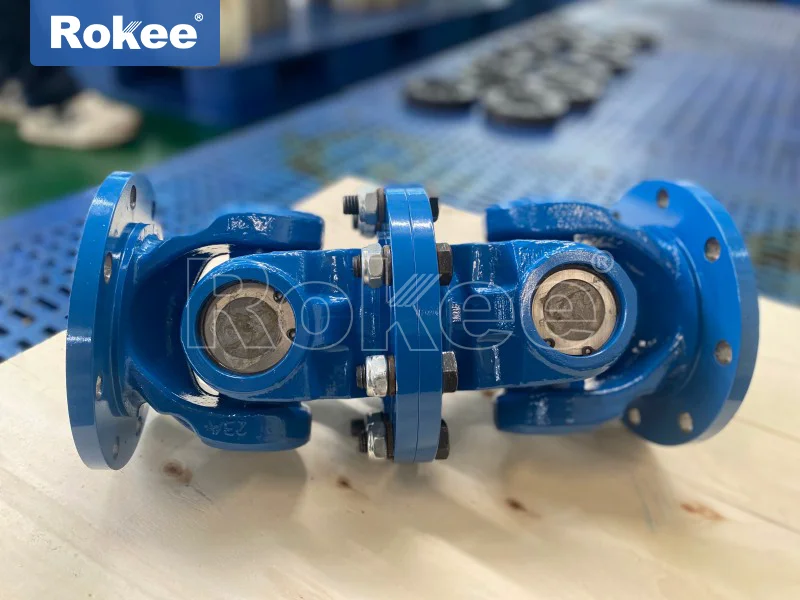
In the modern industrial system, mechanical equipment is the core support for promoting production efficiency, optimizing product quality and expanding industrial scale. Among numerous industrial equipment, cardan drive shafts and sandwich panel production machinery play irreplaceable roles in their respective fields. The cardan drive shaft, as a key power transmission component, undertakes the important task of transferring torque and rotational motion between non-coaxial components, and its adaptability directly determines the stability and efficiency of the entire transmission system. Sandwich panel production machinery, as specialized equipment for manufacturing composite sandwich panels, is widely used in construction, transportation, energy and other fields, and its adaptability is closely related to the diversity of product specifications, the rationality of production processes and the adaptability to different working environments.
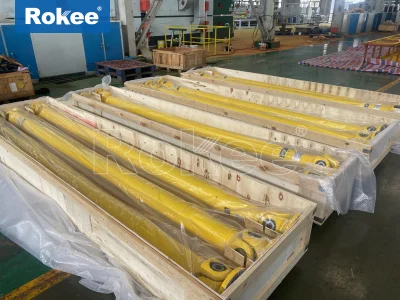
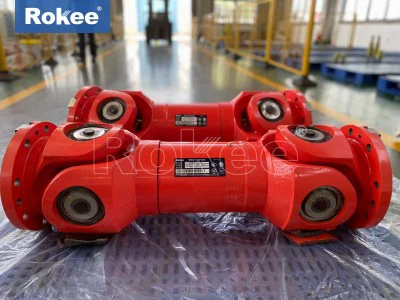
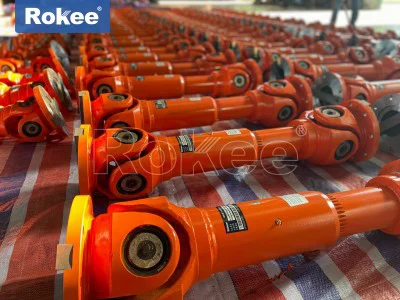
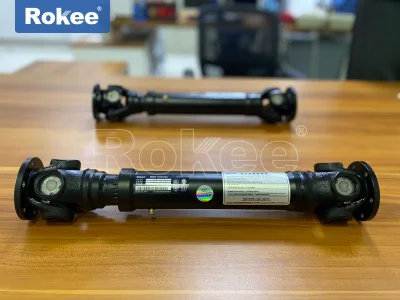
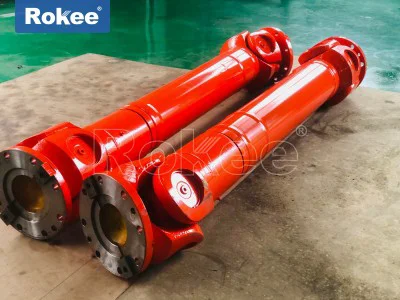
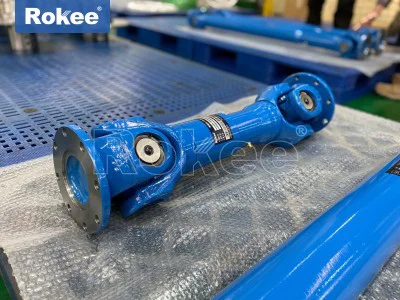
The adaptability of cardan drive shafts is mainly reflected in their ability to adapt to different transmission requirements, installation environments and working loads, which is rooted in their unique structural design and mechanical properties. A typical cardan drive shaft is composed of universal joints at both ends and a middle shaft, and some structures are also equipped with telescopic joints to meet the needs of distance adjustment. The core function of the universal joint is to realize the reliable transmission of torque and rotational motion when there is an angular deviation between the driving shaft and the driven shaft. Its special geometric structure allows the two shafts to deflect within a certain angle range (usually 5° to 45°) while maintaining the continuity of motion, which effectively solves the problem of non-coaxial installation caused by the layout limitations of industrial equipment and the spatial position changes of components during operation. For example, in large-scale engineering machinery, due to the complex structural layout of the equipment, the power source and the executing components are often not on the same axis, and the cardan drive shaft can compensate for the angular deviation between the two shafts through the universal joint, ensuring that the power is transmitted stably and efficiently, so that the equipment can operate normally.
In addition to angular deviation compensation, the cardan drive shaft also has strong adaptability to axial and radial displacements. During the long-term continuous operation of industrial equipment, factors such as vibration, thermal expansion and equipment settlement will cause changes in the relative position of the driving shaft and the driven shaft, resulting in axial stretching or compression and radial offset. The telescopic structure designed on the cardan drive shaft can flexibly adjust the length of the shaft to compensate for axial displacement, while the universal joint can also absorb a certain amount of radial offset, reducing the impact of position changes on the transmission system. This adaptability enables the cardan drive shaft to be widely used in various harsh industrial environments, such as metallurgical rolling mills, mining equipment and marine propellers, where the equipment is often subject to strong vibration and large temperature changes, and the cardan drive shaft can still maintain stable transmission performance, ensuring the continuous operation of the production process.
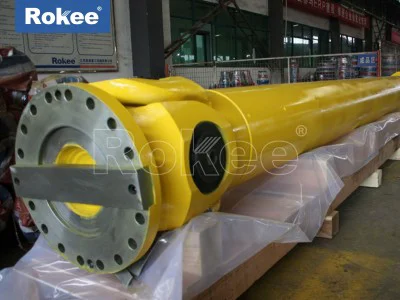
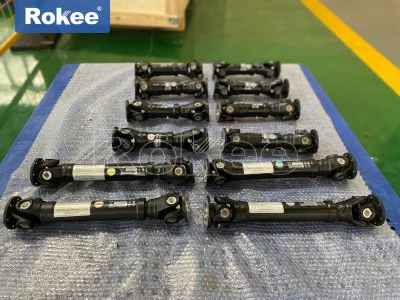
The adaptability of cardan drive shafts to different working loads and speed requirements is another important embodiment of their performance. Different industrial scenarios have very different requirements for torque and rotational speed. For example, heavy-duty equipment such as cranes and crushers need to transmit large torque, while precision machine tools and automotive transmission systems require high-speed and stable transmission. In response to these different needs, cardan drive shafts can be designed with different structural forms and material selections. For heavy-duty scenarios, cardan drive shafts usually adopt thick-walled seamless steel pipes as the middle shaft, and the universal joints use needle roller bearings with strong load-bearing capacity, which can withstand large torque and shear stress, avoiding damage due to overload. For high-speed scenarios, ball cage universal joints are often used, which have the characteristics of smooth transmission and small vibration, and can reduce energy loss and mechanical wear under high-speed operation. In addition, the double cardan drive shaft design can eliminate the speed fluctuation of the single universal joint, making it more suitable for long-distance and high-precision transmission scenarios, further expanding the adaptability range of the cardan drive shaft.
The adaptability of cardan drive shafts is also reflected in their compatibility with different connection methods and equipment types. In industrial production, the connection forms between the cardan drive shaft and the driving component, the driven component are diverse, including flange connection, spline connection and clamp connection. These connection methods can be flexibly selected according to the structural characteristics of the equipment and the transmission requirements, ensuring that the cardan drive shaft can be perfectly matched with various types of industrial equipment. At the same time, the cardan drive shaft can also be customized according to the specific needs of the equipment, such as adjusting the length of the middle shaft, changing the angle range of the universal joint and selecting special materials to adapt to special working environments (such as high temperature, corrosion and low temperature). For example, in the aerospace field, the cardan drive shaft used in the helicopter rotor transmission system needs to adapt to the high-altitude low-temperature environment and the high-speed rotation of the rotor. Therefore, it is usually made of lightweight and high-strength alloy materials, and the universal joint is optimized and designed to ensure its stability and reliability under extreme conditions.
Compared with the cardan drive shaft, the adaptability of sandwich panel production machinery is more focused on the adaptability to production processes, product specifications and raw material types, which is determined by its functional positioning as specialized production equipment. Sandwich panel is a composite material composed of two layers of surface materials and a middle core material, which has the advantages of light weight, high strength, heat insulation, sound insulation and fire resistance, and is widely used in building exterior walls, roofs, cold storage and other fields. The core task of sandwich panel production machinery is to complete the integrated processing of surface materials and core materials, including uncoiling, leveling, preheating, core material filling, lamination, curing and cutting. Its adaptability directly affects the diversity of product types, the precision of product dimensions and the efficiency of production operations.
The adaptability of sandwich panel production machinery to different product specifications is one of its core performance indicators. In practical production, the specifications of sandwich panels (such as thickness, width, length and core material type) need to be adjusted according to the needs of different application scenarios. For example, the sandwich panels used in building roofs need to have a larger width and length to reduce the number of joints and improve construction efficiency, while the sandwich panels used in cold storage need to have a thicker core material to enhance heat insulation performance. Sandwich panel production machinery achieves the adaptability to different product specifications through modular design and flexible adjustment mechanisms. The key components of the equipment, such as the uncoiling device, the roll forming machine and the cutting device, are designed as independent modules, which can be quickly replaced or adjusted according to the product specifications. For example, the roll forming machine can adjust the distance between the rollers to adapt to the forming of surface materials of different thicknesses and widths; the cutting device can flexibly set the cutting length through the control system to meet the needs of different product lengths. In addition, the core material filling device can also adjust the filling amount and filling speed according to the thickness of the core material, ensuring that the core material is evenly distributed and the bonding effect between the core material and the surface materials is good.
The adaptability of sandwich panel production machinery to different raw material types is also an important aspect of its adaptability. The surface materials of sandwich panels can be color steel plates, stainless steel plates, aluminum plates and other metal materials, as well as non-metal materials such as glass fiber reinforced plastic plates; the core materials can be polyurethane, rock wool, glass wool, EPS and other materials with different properties. Different raw materials have different physical and chemical properties, which put forward different requirements for the processing technology and equipment parameters of sandwich panel production machinery. For example, the processing of polyurethane core material requires precise control of the foaming temperature and time, while the processing of rock wool core material requires attention to the uniformity of laying and the bonding strength with the surface materials. Sandwich panel production machinery adapts to different raw material types by optimizing the processing process and adjusting the equipment parameters. For example, the preheating device can adjust the preheating temperature according to the thermal conductivity of the surface materials; the foaming system can adjust the ratio of foaming agents and the foaming pressure according to the type of core material, ensuring that the core material has good performance. At the same time, the equipment can also be equipped with different feeding devices according to the form of raw materials (such as coil materials, sheet materials, granular materials), realizing the integrated processing of various raw materials.
The adaptability of sandwich panel production machinery to different production environments and production scales is also worthy of attention. In terms of production environment, sandwich panel production machinery can adapt to both indoor fixed production workshops and outdoor temporary production sites. For indoor production, the equipment can be integrated into a continuous production line to achieve high-efficiency automated production; for outdoor production, the equipment can be designed as a mobile type, which is convenient for transportation and installation, and can quickly start production according to the construction needs. In terms of production scale, the equipment can be adjusted according to the actual production needs of enterprises. Small and medium-sized enterprises can choose small-scale semi-automatic production machinery, which has the advantages of low investment and flexible operation; large-scale enterprises can choose large-scale fully automatic continuous production lines, which can realize 24-hour uninterrupted production, greatly improving production efficiency and reducing labor costs. The fully automatic production line integrates multiple functional modules such as automatic feeding, automatic forming, automatic cutting and automatic stacking, which is controlled by an intelligent control system to realize the automation and intelligence of the entire production process, and can adapt to the large-scale and intensive production needs of enterprises.
In addition to the above aspects, the adaptability of sandwich panel production machinery also includes the adaptability to production efficiency and product quality requirements. With the continuous development of the market, enterprises have higher and higher requirements for production efficiency and product quality. Sandwich panel production machinery adapts to this demand by adopting advanced control technology and optimization design. For example, the intelligent control system based on PLC can realize the precise control of each production link, reduce the error caused by manual operation, and improve the precision of product dimensions and the stability of product quality; the high-speed roll forming technology and automatic cutting technology can greatly improve production efficiency, shorten the production cycle, and meet the market demand for large batch and fast delivery. At the same time, the equipment is also equipped with fault self-diagnosis function, which can timely find and alarm the faults in the production process, reduce the downtime caused by equipment failure, and ensure the continuity and stability of production.
Although the application fields and functional positioning of cardan drive shafts and sandwich panel production machinery are quite different, their adaptability design follows the same core principles: taking the actual production needs as the starting point, optimizing the structural design and functional configuration, and improving the compatibility and adjustability of the equipment. In the process of actual application, the adaptability of the two types of machinery is also affected by many factors, such as the quality of equipment manufacturing, the level of operation and maintenance, and the changes of working conditions. For example, if the cardan drive shaft is not regularly lubricated and maintained, the wear of the universal joint will be accelerated, which will reduce its adaptability to angular deviation and load; if the sandwich panel production machinery is not regularly calibrated and maintained, the precision of the equipment will be reduced, which will affect its adaptability to product specifications and raw material types.
In the context of the continuous development of industrialization and intelligence, the adaptability requirements of cardan drive shafts and sandwich panel production machinery are constantly improving. For cardan drive shafts, with the development of new energy, aerospace, marine and other fields, there is an increasing demand for lightweight, high-strength, high-speed and maintenance-free cardan drive shafts. The future development direction will focus on the research and development of new materials (such as carbon fiber composites) and new structural forms, further improving the adaptability of the equipment to extreme environments and complex working conditions. For sandwich panel production machinery, with the increasing emphasis on energy conservation and environmental protection, the demand for green, energy-saving and environmentally friendly production equipment is becoming more and more urgent. The future development will focus on optimizing the production process, reducing energy consumption and environmental pollution, and at the same time, integrating intelligent technologies such as Internet of Things and big data to realize the intelligent monitoring and adaptive adjustment of the production process, further improving the adaptability and intelligence level of the equipment.
In conclusion, the adaptability of cardan drive shafts and sandwich panel production machinery is an important guarantee for their stable operation and wide application in industrial production. The cardan drive shaft, with its unique structural design, has strong adaptability to transmission deviation, working load and connection mode, and provides reliable power transmission support for various industrial equipment. Sandwich panel production machinery, through modular design, flexible adjustment and intelligent control, has good adaptability to product specifications, raw material types and production environments, and meets the diverse production needs of enterprises. In the future, with the continuous progress of science and technology and the continuous upgrading of industrial demand, the adaptability of these two types of machinery will be further optimized and improved, playing a more important role in promoting the high-quality development of the industrial economy.