Short Cardan Drive Shaft

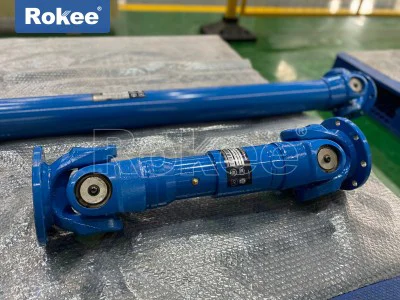
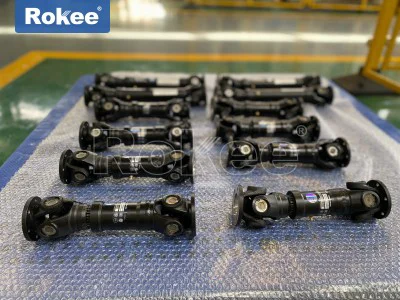
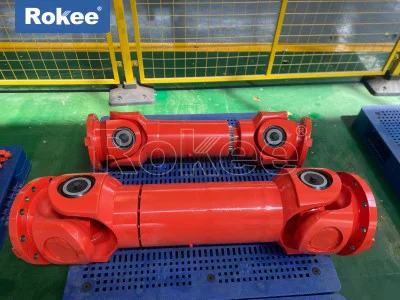
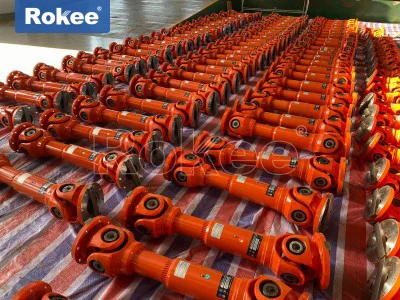
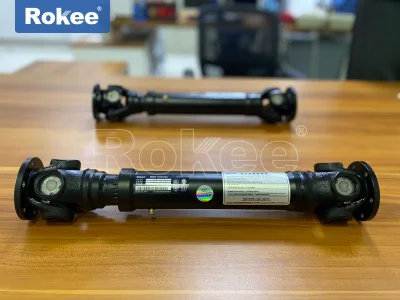
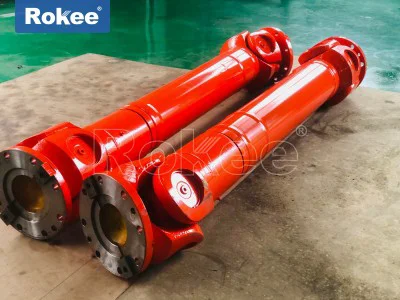
The short cardan drive shaft is a compact and high-efficiency mechanical power transmission component optimized from traditional standard cardan shafts, designed specifically for confined installation spaces and short-distance power transmission scenarios. Retaining the core universal joint structure of conventional cardan shafts, this streamlined mechanical part effectively transmits torque and rotational motion between misaligned driving and driven shafts while featuring a shorter overall length, simplified structural layout, and minimized spatial occupancy. It addresses the inherent limitations of long cardan shafts, such as excessive vibration, low transmission precision, and inconvenient installation in compact mechanical systems. Widely adaptable to light and medium-load mechanical equipment, it balances flexible angular compensation and stable power output, making it a critical connecting component for modern compact mechanical transmission systems. Its optimized structural design also reduces unnecessary mechanical loss, ensuring reliable and efficient operation in diverse working conditions with limited assembly space.
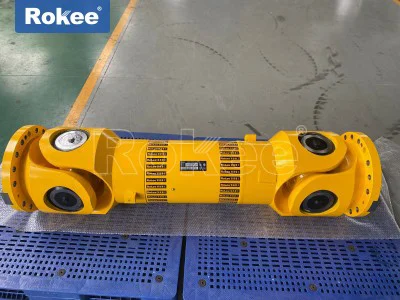
The structural composition of the short cardan drive shaft inherits the classic universal joint transmission principle while undergoing targeted miniaturization and simplification to suit short-span power transmission needs. Its core structure mainly includes precision universal joints, shortened shaft tubes, reinforced connecting sleeves, and anti-loosening assembly components, eliminating redundant intermediate structures adopted by long cardan shafts for long-distance transmission. The universal joint hinge structure serves as the core functional unit, enabling the shaft to adapt to small-angle deflection and minor axial displacement during operation, which compensates for installation errors and operational position deviations between connected mechanical parts. The shortened shaft tube is manufactured with high-strength seamless materials, ensuring rigid structural stability without excessive weight gain, while the integrated connecting structure enhances the overall compactness of the component. All assembly gaps are precisely controlled through fine processing technology, effectively reducing mechanical clearance and avoiding jitter or power attenuation during high-speed rotation. This streamlined structure not only simplifies the overall assembly process but also improves the structural rigidity of the drive shaft, laying a solid foundation for stable short-distance power transmission.
The working mechanism of the short cardan drive shaft centers on the flexible coordination of universal joint hinges and rigid shaft body transmission, achieving continuous and stable torque transmission under variable spatial alignment conditions. During equipment operation, the power input end receives rotational torque from the power source and transmits it to the shortened shaft tube, while the universal joint flex hinge converts fixed-axis rotation into adaptive spatial rotation. When the driving shaft and driven shaft produce small angular deflection or axial offset due to equipment operation vibration or installation tolerance, the universal joint’s hinge pins and bearing components perform micro-angle rotation and displacement adjustment in real time. This adaptive adjustment eliminates transmission dead angles and torque loss caused by shaft misalignment, ensuring consistent rotational speed and torque output at the driven end. Unlike long cardan shafts that require multi-section coordination to complete distance transmission, the short structure realizes one-step direct transmission, effectively reducing intermediate energy loss and mechanical vibration generated by multi-component linkage. Even in high-frequency continuous operation, it can maintain smooth power transmission without obvious speed fluctuation or mechanical noise.
One of the most prominent advantages of the short cardan drive shaft is its excellent spatial adaptability and installation flexibility, which makes it irreplaceable in compact mechanical systems. Traditional transmission components such as rigid coupling shafts and long cardan shafts have strict requirements on installation space and shaft alignment accuracy, often failing to adapt to narrow assembly environments and compact structural layouts of modern miniaturized equipment. In contrast, the short cardan drive shaft features a highly integrated and miniaturized overall size, which can be flexibly arranged in limited mechanical gaps without occupying excessive equipment space. Its allowable small-angle deflection and micro axial displacement tolerance greatly reduce the difficulty of equipment assembly and debugging, allowing for minor installation deviations without affecting normal transmission performance. Additionally, its lightweight structure effectively reduces the overall load of the transmission system, lowers the inertial resistance during equipment startup and operation, and improves the response sensitivity of mechanical movement. This unique spatial adaptation capability enables it to perfectly match the development trend of miniaturization and integration of modern mechanical equipment.
In terms of operational stability and durability, the short cardan drive shaft exhibits superior comprehensive performance compared with ordinary short transmission shafts. Its key load-bearing components are processed with high-strength wear-resistant materials and undergo rigorous thermal treatment processes, which significantly enhance structural hardness, torsion resistance and fatigue resistance. During long-term continuous operation, it can withstand cyclic torque impact and frequent angular adjustment without structural deformation or component wear failure. The optimized internal friction structure of the universal joint reduces contact wear between moving parts, effectively extending the service life of the whole component. Meanwhile, the short shaft body design avoids the torsional deformation and resonant vibration problems that are prone to occur in long slender shafts during high-speed operation, ensuring high-precision and low-vibration transmission. In complex working environments with slight vibration, temperature change and load fluctuation, it can maintain stable working state, with low failure rate and minimal maintenance demand, greatly reducing the daily operation and maintenance cost of mechanical equipment.
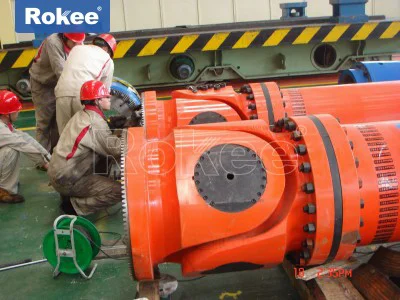
The short cardan drive shaft has a wide range of application scenarios, covering multiple fields of light industrial machinery, auxiliary mechanical equipment and special compact transmission systems. In automated auxiliary transmission equipment, it is used to connect power execution components and transmission mechanisms, providing stable power support for small-scale linear and rotational movement. In light-duty mechanical transmission systems such as logistics conveying equipment and small processing machinery, it realizes efficient power connection between power motors and working components, adapting to frequent start-stop and variable-load operation conditions. It is also widely applied in the auxiliary transmission structures of mobile mechanical devices, where its compact size and anti-vibration performance can adapt to the dynamic position changes of equipment during movement. Moreover, in precision mechanical testing equipment and miniature power transmission systems, its high-precision and low-loss transmission characteristics ensure the accuracy and stability of mechanical action, meeting the high requirements of precision equipment for transmission consistency and response speed.
In terms of daily maintenance and application economy, the short cardan drive shaft has obvious practical advantages, bringing long-term cost-saving benefits to equipment operation. Its simple and integrated structural design avoids the complex assembly of multi-section components, making daily inspection, disassembly and maintenance more convenient. The few vulnerable parts and standardized component structure support quick replacement and maintenance, greatly shortening equipment downtime caused by component failure. The excellent wear resistance and structural stability reduce the frequency of component replacement and maintenance operations, effectively lowering the later operation cost of mechanical equipment. In addition, its high transmission efficiency reduces invalid power loss during equipment operation, indirectly improving the overall energy utilization rate of mechanical systems. Compared with other precision compact transmission components with complex structures and high maintenance costs, it balances performance reliability and application economy, becoming a cost-effective choice for short-distance and compact-space power transmission solutions.
With the continuous upgrading of modern mechanical equipment towards miniaturization, high precision and high efficiency, the application value and development potential of short cardan drive shafts are constantly improving. Mechanical transmission systems are increasingly demanding compact structural layout, low vibration operation and high-precision power output, which precisely matches the core performance advantages of short cardan drive shafts. Continuous optimization of material technology and processing technology is further improving its load-bearing capacity, transmission precision and environmental adaptability, enabling it to adapt to more complex and diversified working conditions. In the future, with the in-depth development of intelligent and miniaturized mechanical equipment, the short cardan drive shaft will be further optimized in structural integration, lightweight design and silent transmission performance, and its application scope will continue to expand in emerging mechanical fields, becoming an indispensable basic component of modern compact mechanical transmission systems.