Flexible Universal Shaft
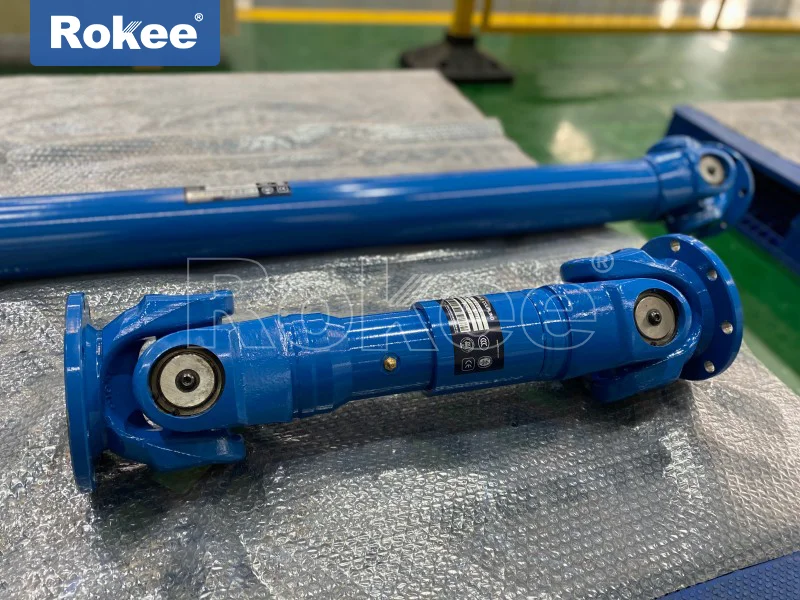
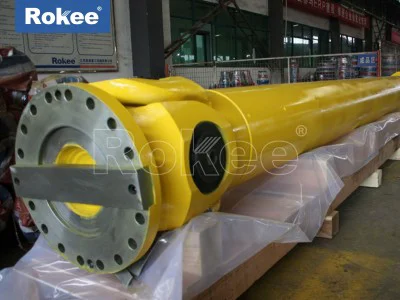
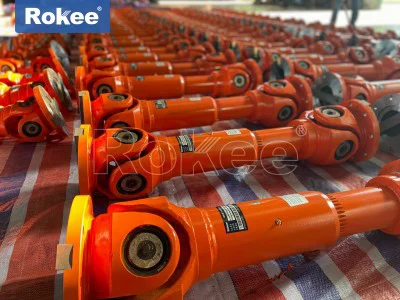
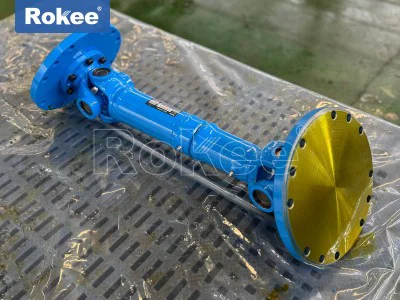
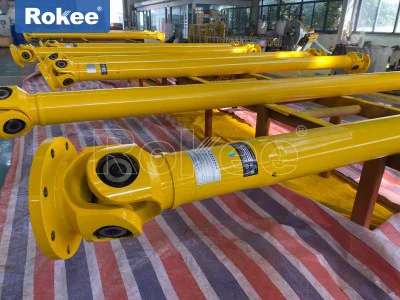
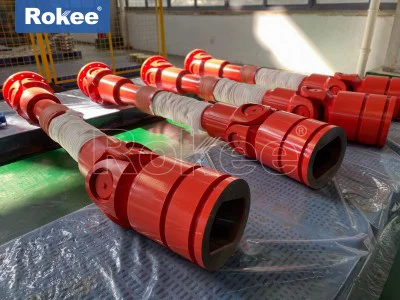
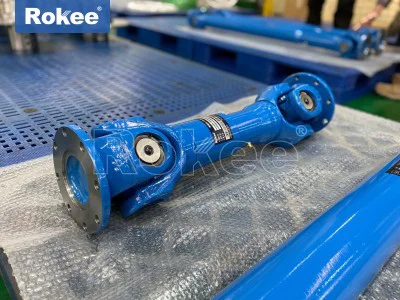
A flexible universal shaft, often referred to simply as a universal drive shaft or cardan shaft, is a critical mechanical power transmission component designed to transfer torque and rotational motion between two shafts that are not collinear, with inherent flexibility to accommodate angular, radial, and axial misalignment between driving and driven components. Unlike rigid shaft couplings that demand precise alignment and cannot adapt to positional shifts during operation, flexible universal shafts are engineered to maintain consistent power delivery even when connected shafts move relative to one another, making them indispensable across nearly every sector of mechanical engineering and industrial production. At its core, the fundamental structure of a standard flexible universal shaft consists of several key integrated components that work in tandem to deliver reliable performance, with variations in component design and material composition giving rise to different shaft types tailored for specific operating conditions. The primary structural elements include two yoke assemblies (also called fork joints), a central cross-shaped joint (universal joint cross), precision bearing sets, sealing components, a main shaft body (which may be solid or hollow), and optional telescopic sections for length adjustment. The yoke assemblies serve as the connection points between the universal shaft and the driving and driven equipment, featuring mounting interfaces such as flanges, splines, or keyways to ensure secure torque transfer. The universal joint cross, positioned between the two yokes, is the heart of the flexible mechanism, with four perpendicular journal ends that fit into the corresponding bearing seats on the yokes, allowing free angular movement in two perpendicular planes. High-precision bearings, typically needle roller bearings for heavy-duty applications or ball bearings for lighter, high-speed use, reduce friction between the cross and yokes, enabling smooth rotation and minimizing energy loss. Sealing elements, such as dust covers, oil seals, and protective boots, are critical to preventing the ingress of dust, moisture, debris, and contaminants while retaining internal lubrication, which safeguards the internal components from premature wear and corrosion. Some advanced flexible universal shafts also include damping elements or reinforced bearing housings to enhance stability under heavy loads or high vibration, while telescopic designs incorporate splined shaft sections that can slide axially to compensate for changes in the distance between driving and driven components during operation, adding an extra layer of flexibility beyond angular misalignment accommodation.
The performance characteristics of flexible universal shafts are defined by a set of core mechanical and operational parameters that determine their suitability for different applications, with no single universal shaft design capable of optimizing all performance metrics simultaneously, leading to targeted engineering for specific use cases. One of the most vital performance attributes is torque transmission capacity, which refers to the maximum rotational force the shaft can transfer continuously without deformation, fatigue, or failure; this capacity is directly influenced by material strength, cross-sectional area of the shaft body, and the load-bearing rating of the universal joint and bearings. High-torque models are constructed from high-strength alloy steels with enhanced heat treatment to withstand heavy, shock-induced loads common in heavy machinery, while light-duty shafts use carbon steel or aluminum alloys for lower torque requirements and reduced weight. Angular misalignment tolerance is another defining performance feature, representing the maximum angle between the input and output shafts that the unit can accommodate while maintaining smooth operation; standard general-purpose shafts typically handle angles ranging from 5 degrees to 45 degrees, with specialized high-angle designs engineered to manage angles exceeding 45 degrees for applications with extreme positional offsets. Transmission efficiency is a key metric for energy conservation, measuring the ratio of output power to input power, with well-designed flexible universal shafts achieving efficiency rates of 95% or higher under optimal alignment conditions; efficiency decreases slightly with larger misalignment angles due to increased internal friction, but precision machining and high-quality lubrication help minimize this loss. Operational speed range is also critical, as different applications require rotation speeds from low, steady RPM for heavy industrial equipment to high RPM for automotive and precision machinery; shafts designed for high speeds undergo dynamic balancing to eliminate vibration, reduce noise, and prevent premature bearing failure, while low-speed models prioritize load-bearing strength over high-speed balance. Durability and service life are closely tied to material selection, build quality, and resistance to environmental factors such as temperature fluctuations, moisture, and chemical exposure; alloy steel shafts offer exceptional wear resistance and fatigue life for heavy-duty, long-term use, while stainless steel variants provide corrosion resistance for harsh outdoor or industrial environments. Additional performance traits include torsional stiffness, which ensures minimal torsional deformation under load to maintain precise power transfer, and vibration damping ability, which helps absorb mechanical shock and reduce noise transmission between connected components, protecting both the shaft and the attached machinery from damage. Unlike rigid couplings, flexible universal shafts also excel at compensating for minor axial movement and radial offset, making them highly adaptable to dynamic operating conditions where machinery components shift slightly due to thermal expansion, load changes, or mechanical wear.
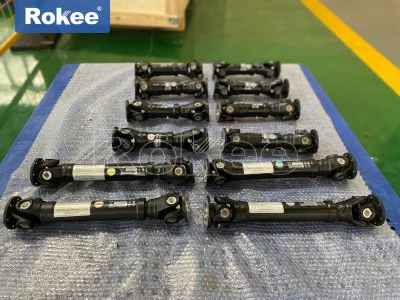
Flexible universal shafts are categorized into distinct types based on structural design, joint configuration, application scope, and operational capabilities, with each classification engineered to address specific challenges in power transmission, and the choice of type depends entirely on the required torque load, misalignment range, operating speed, and environmental conditions of the target application. The most common and widely used classification is based on joint design, starting with the cross-type universal shaft (cardan shaft), the traditional and most prevalent model, featuring a single cross joint connecting two yokes. This type is valued for its simple structure, high load-bearing capacity, ease of manufacturing and maintenance, and cost-effective performance, making it suitable for general industrial machinery, automotive drive systems, and agricultural equipment; however, single cross-type shafts exhibit minor speed fluctuations at larger misalignment angles, leading to the development of double cross-type universal shafts, which integrate two cross joints connected by an intermediate shaft. Double cross-type designs eliminate speed fluctuations, deliver smoother rotation at significant angles, and offer greater misalignment tolerance, making them ideal for high-speed applications and long-distance power transmission where uniform rotational speed is critical. Another major category is the constant velocity (CV) universal shaft, designed to maintain consistent rotational speed between input and output shafts at any misalignment angle, with a ball-and-cage or ball-trunnion joint structure that ensures uniform power delivery without speed variation or vibration. CV shafts are primarily used in automotive front-wheel drive and all-wheel drive systems, precision machinery, and aerospace applications where smooth, vibration-free operation and high-speed performance are non-negotiable, offering exceptional efficiency and quiet operation even at extreme angles. Telescopic flexible universal shafts represent a specialized category built with axially adjustable splined sections, allowing the shaft length to change dynamically during operation to compensate for varying distances between driving and driven components; these are widely used in mobile machinery, construction equipment, and agricultural implements where component movement is inherent. Beyond joint and adjustability-based classifications, shafts are also grouped by load capacity into light-duty, medium-duty, and heavy-duty variants: light-duty shafts are compact, lightweight, and designed for low torque, high-speed applications such as small industrial tools, office machinery, and precision instruments; medium-duty shafts balance load capacity and speed for general manufacturing equipment, conveyor systems, and automotive auxiliary components; heavy-duty shafts feature reinforced structures, thickened shaft bodies, and heavy-duty bearings for extreme torque loads in mining machinery, steel rolling mills, marine propulsion systems, and large construction equipment. Material-based classifications include carbon steel shafts for general industrial use, alloy steel shafts for heavy-duty, high-stress applications, stainless steel shafts for corrosive environments, and lightweight aluminum or composite material shafts for weight-sensitive applications such as automotive performance parts and aerospace components. Additionally, flexible universal shafts can be classified by installation type, including flange-mounted, spline-mounted, and keyway-mounted models, each designed for seamless integration with different equipment connection interfaces, further expanding their versatility across diverse mechanical systems.
The unique combination of flexible misalignment accommodation, reliable torque transmission, and adaptable design makes flexible universal shafts one of the most widely used mechanical components across nearly every industry, with applications spanning automotive, industrial manufacturing, agriculture, construction, aerospace, marine, mining, and precision engineering sectors. In the automotive industry, flexible universal shafts are foundational components of vehicle drivetrains, connecting the transmission system to the drive axle in rear-wheel-drive and four-wheel-drive vehicles, and serving as constant velocity drive shafts in front-wheel-drive cars to transfer power from the engine to the wheels while accommodating the up-and-down movement of the suspension and steering angle changes. They are also used in automotive steering systems, connecting the steering column to the steering gear, allowing for smooth steering control even as the steering column and gear assembly shift position during vehicle operation. In industrial manufacturing, flexible universal shafts are integral to a vast array of production machinery, including metalworking equipment such as rolling mills, punching machines, and lathes, where they transfer power between motors and working components while compensating for misalignment caused by heavy load stress and thermal expansion; they are also widely used in conveyor systems, packaging machinery, textile equipment, and printing presses, ensuring continuous power delivery in automated production lines where precise alignment is difficult to maintain. Agricultural machinery relies heavily on flexible universal shafts, particularly in tractors, harvesters, and tillage equipment, where they connect power take-off (PTO) systems to attached implements such as plows, mowers, and balers; the telescopic and high-angle designs excel in this sector, as agricultural equipment often operates on uneven terrain, requiring significant misalignment tolerance and length adjustability. Construction machinery, including excavators, cranes, concrete mixers, and bulldozers, uses heavy-duty flexible universal shafts to transfer power between engines, hydraulic pumps, and moving components, withstanding extreme shock loads, vibration, and harsh outdoor conditions, including dust, moisture, and temperature extremes. The aerospace industry utilizes precision-engineered lightweight universal shafts in aircraft control systems, helicopter rotor drive assemblies, and satellite solar panel drive mechanisms, where low weight, high reliability, and smooth, maintenance-free operation are critical; these shafts are typically made from high-strength lightweight alloys to meet strict aerospace performance standards while accommodating minor structural shifts during flight. Marine applications include boat propulsion systems, where flexible universal shafts connect the engine to the propeller shaft, compensating for hull flexing and movement in water, and are constructed from corrosion-resistant materials to withstand saltwater and humid marine environments. Mining and heavy industrial equipment, such as ore crushers, conveyor belts, and drilling machinery, depend on heavy-duty cross-type universal shafts to handle extreme torque loads and continuous operation in abrasive, high-vibration mining environments, with reinforced structures and durable lubrication systems to extend service life in harsh conditions. Beyond these major industries, flexible universal shafts are also used in medical precision equipment, robotics, material handling systems, power generation equipment, and various specialized mechanical tools, highlighting their unparalleled versatility. Their ability to solve the universal engineering challenge of transmitting power between misaligned shafts has solidified their role as a fundamental component in modern mechanical design, with ongoing advancements in material science and precision manufacturing continuously enhancing their performance, durability, and efficiency to meet the evolving demands of new and emerging technologies across global industries.
In summary, flexible universal shafts stand as a cornerstone of modern mechanical power transmission, blending a well-engineered structural design with versatile performance traits to address the critical need for reliable torque transfer between non-collinear shafts. Their diverse classifications, each tailored to specific load, speed, and environmental requirements, ensure that there is a suitable universal shaft design for nearly every mechanical application, from small-scale precision instruments to massive heavy-duty industrial machinery. The ongoing innovation in material engineering, joint design, and manufacturing precision continues to push the boundaries of their performance, expanding their operational capabilities and extending their service life in even the most demanding environments. As industrial automation, automotive technology, and advanced machinery continue to evolve, the role of flexible universal shafts remains irreplaceable, providing the essential flexibility and reliability that keep mechanical systems operating smoothly, efficiently, and consistently across countless applications worldwide.