Corrosion Resistance Of Universal Coupling Adapting To The Environment Of PU Sandwich Panel Making Line
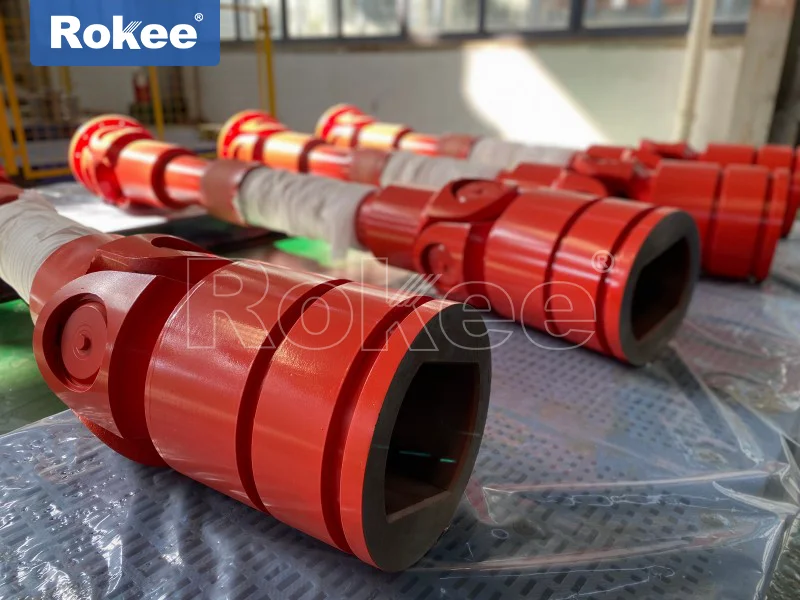
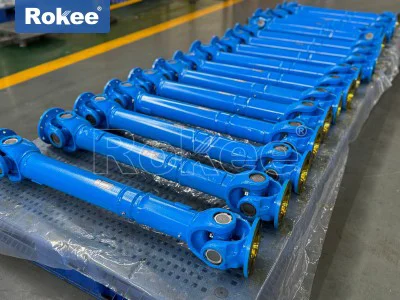
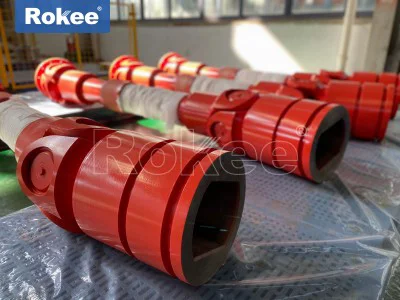
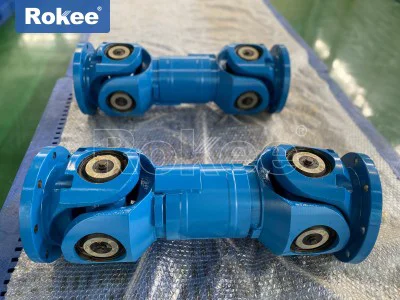
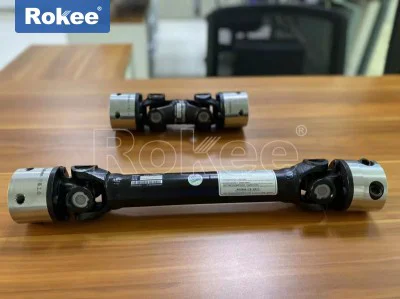
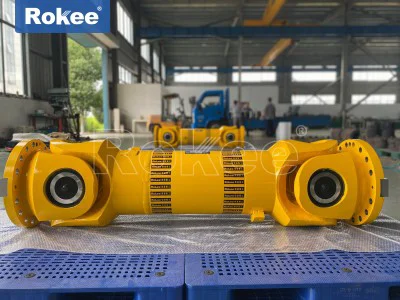
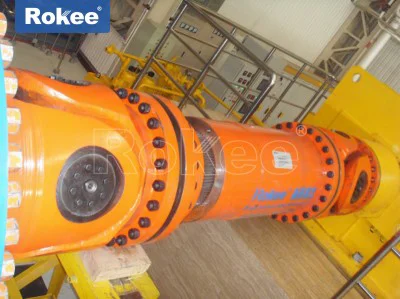
The stable and continuous operation of modern PU sandwich panel making lines relies heavily on the reliable performance of various core mechanical transmission components, among which universal couplings occupy an irreplaceable core position in connecting different transmission shafts, driving roller systems, and linking power output equipment with production execution mechanisms. As a key spatial linkage transmission component composed of fork heads, cross shafts, bearing assemblies and connecting structural parts, the universal coupling undertakes the important task of stably transmitting torque and rotational motion while adapting to angular deviation and axial misalignment between connected shafts during the full production cycle of PU sandwich panels. The overall operating environment of the PU sandwich panel making line is far more complex and harsh than that of ordinary general mechanical production lines, featuring long-term high-load continuous operation, volatile chemical raw material volatilization, humid and alternating temperature working conditions, and frequent contact with fine industrial dust and residual auxiliary materials generated in the panel forming process. These comprehensive environmental factors jointly form a persistent corrosive erosion effect on all metal mechanical parts in the production line, and the universal coupling, as a rotating and friction-operated transmission component with multiple precision matching clearances, is particularly vulnerable to corrosion damage of varying degrees in daily operation. Corrosion deterioration of universal couplings will not only directly damage the surface structural integrity of metal components, increase internal friction resistance during torque transmission and reduce overall transmission efficiency, but also easily induce accelerated wear of matching parts, abnormal vibration and noise in the transmission system, and even cause shaft connection looseness and transmission failure in severe cases, directly interrupting the continuous production rhythm of PU sandwich panels, reducing production continuity and product processing consistency, and bringing unnecessary hidden dangers to the stable operation of the entire production line. Therefore, excellent corrosion resistance has become one of the most essential basic performance indicators for universal couplings supporting the long-term stable operation of PU sandwich panel making lines, and it is also a key core factor to ensure the durability, low failure rate and long service cycle of transmission components in the whole production system.
To deeply understand the importance of corrosion resistance of universal couplings for PU sandwich panel making lines, it is first necessary to clarify the unique environmental characteristics of PU sandwich panel production workshops and the specific corrosion mechanisms faced by mechanical transmission components in such working scenarios. The production and manufacturing process of PU sandwich panels involves the mixing, foaming, bonding and composite forming of a variety of chemical raw materials, including polyurethane polyols, isocyanates, various composite additives and bonding auxiliary materials required for panel core foaming. In the raw material mixing and high-pressure foaming injection link of the production line, a small amount of volatile chemical gas and fine atomized raw material droplets will inevitably be generated in the working area of the equipment. These volatile substances are not only slightly acidic and alkaline in chemical properties, but also easy to adhere to the surface of metal mechanical parts after contacting with air and condensing, forming a thin corrosive film that continuously erodes the metal matrix of universal couplings. At the same time, the PU sandwich panel making line needs to maintain a specific temperature and humidity environment inside the workshop to ensure the stable foaming effect of polyurethane materials and the firm bonding quality between the core material and the metal surface plate. The internal temperature of the workshop often presents alternating changes with the start and stop of production equipment and seasonal environmental adjustments, and the air humidity is always maintained at a medium to high level for a long time. Such humid and temperature-alternating working conditions will accelerate the electrochemical corrosion reaction on the metal surface of universal couplings. Especially in the tiny gaps between the cross shaft and the bearing assembly, as well as the matching gaps between the fork head and the connecting flange, moisture and corrosive impurities are easy to accumulate and difficult to discharge naturally, forming a long-term localized corrosive environment, which continuously corrodes the internal precision matching structures of the coupling. In addition, in the cutting, trimming and finishing processes of finished PU sandwich panels, a large amount of fine dust generated by panel cutting and edge grinding will float in the workshop air. This fine dust is easy to adhere to the surface of universal couplings and mix with condensed moisture and chemical residues to form corrosive dirt deposits. The dirt deposits not only cover the surface of the coupling to accelerate surface corrosion, but also may wear the protective coating on the metal surface during the rotation and swing operation of the coupling, further exposing the metal matrix to the corrosive environment and aggravating the degree of component corrosion damage.
The basic structural characteristics and working operation mode of universal couplings determine that their corrosion damage will produce more serious adverse consequences than ordinary static mechanical parts in the operation of PU sandwich panel making lines. A standard universal coupling mainly relies on two fork head structures fixed on the driving shaft and driven shaft respectively, and a central cross shaft connecting the two fork heads to form a spatial linkage transmission structure. The four shaft necks of the cross shaft are installed in the mounting holes of the fork heads through precision needle roller bearings or plain bearings, which can realize spatial swing and angular compensation while transmitting torque, and adapt to the inevitable angular deviation and axial displacement of the transmission shaft caused by equipment installation errors, long-term operation vibration and mechanical thermal expansion and contraction. In the actual working process of the PU sandwich panel making line, the universal coupling is in a continuous rotating and reciprocating swinging working state for a long time, and all matching parts are in dynamic friction and relative motion state all year round. Once corrosion occurs on the surface and internal matching parts of the coupling, the original smooth surface of the metal parts will become rough and uneven, and the corrosion products generated by metal oxidation and chemical erosion will form hard granular impurities. These corrosion impurities will not only increase the friction coefficient between the cross shaft and the bearing, as well as between the fork head and the connecting parts, leading to increased transmission resistance, increased equipment operation energy consumption and reduced torque transmission accuracy, but also cause abrasive wear on the precision matching surfaces during the continuous rotation of the coupling, forming a vicious cycle of corrosion and mutual wear. With the gradual expansion of the corrosion range and the deepening of the corrosion degree, the effective wall thickness and structural strength of the fork head and cross shaft will be reduced, and the fatigue resistance and load-bearing capacity of the coupling will decline significantly. Under the long-term high-load torque transmission working condition of the PU sandwich panel production line, the corroded universal coupling is prone to structural deformation, local cracking and even fracture failure. Moreover, the corrosion damage of the coupling will also affect the coaxiality and rotational stability of the connected transmission shaft, causing periodic vibration and impact of the production line transmission system, which will not only shorten the service life of other supporting transmission equipment, but also affect the operating stability of the panel forming and conveying mechanism, resulting in uneven foaming of PU sandwich panels, inconsistent bonding thickness and other product quality problems, bringing multiple negative impacts on production efficiency and product yield.
The corrosion resistance performance of universal couplings suitable for PU sandwich panel making lines is reflected in multiple dimensions including metal matrix material corrosion resistance, surface anti-corrosion treatment effectiveness, structural anti-corrosion design rationality and long-term anti-corrosion stability in complex working conditions. In terms of metal matrix material selection, universal couplings applied in ordinary dry and low-corrosion industrial environments mostly adopt ordinary carbon steel materials with low cost and good mechanical processing performance, but such materials have weak natural corrosion resistance and are very easy to rust and corrode rapidly in the humid and chemical volatile environment of PU sandwich panel production workshops. Therefore, the universal couplings adapted to PU sandwich panel making lines need to select alloy steel materials with excellent natural electrochemical corrosion resistance and uniform structural density as the processing matrix. This kind of alloy steel material can effectively resist the chemical erosion of volatile chemical residues and humid air in the production workshop, reduce the occurrence probability of internal oxidation and electrochemical corrosion of the metal matrix, and maintain the structural integrity and mechanical strength of the coupling matrix for a long time even in the environment of long-term accumulation of corrosive impurities. At the same time, the alloy steel matrix has good processing performance and mechanical comprehensive properties, which can not only meet the high torque transmission and angular compensation functional requirements of universal couplings, but also avoid the problem of reduced anti-corrosion performance caused by internal structural defects generated during processing and forging. In terms of surface anti-corrosion treatment, targeted and multi-layer composite anti-corrosion treatment processes are essential for universal couplings used in PU sandwich panel production lines. Different from the single anti-rust oil coating treatment method for ordinary couplings, the surface treatment of special corrosion-resistant universal couplings needs to go through multiple processes such as surface polishing and derusting, surface strengthening pretreatment, bottom anti-corrosion layer treatment and surface protective layer covering. The surface polishing and derusting process can remove all oxide layers, rust spots and processing impurities on the surface of the coupling parts, ensuring the flatness and cleanliness of the metal surface and laying a foundation for the firm combination of subsequent anti-corrosion layers and the metal matrix. The bottom anti-corrosion layer can tightly adhere to the metal surface to form a dense isolation film, isolating the metal matrix from external humid air, chemical volatile substances and corrosive dust, and preventing corrosive media from contacting the metal matrix to cause internal corrosion. The surface protective layer has strong wear resistance and anti-aging performance, which can resist the friction and scratch generated by the swing and rotation of the coupling during operation, avoid the damage of the bottom anti-corrosion layer caused by mechanical friction, and effectively prevent external corrosive dirt from adhering and accumulating on the surface of the coupling.
The structural optimization design of universal couplings also plays a vital role in improving their adaptive corrosion resistance in PU sandwich panel making line environments. In the traditional universal coupling structure, there are many open gaps and dead corners inside the fork head connection and the cross shaft matching parts, which are easy to accumulate corrosive dust, condensed moisture and chemical residues, and these accumulated impurities are difficult to be discharged automatically during equipment operation, resulting in long-term localized corrosion inside the coupling and accelerating the damage of precision matching parts. The universal couplings optimized for the working conditions of PU sandwich panel production lines adopt streamlined structural design and closed protection optimization design on the basis of retaining the basic torque transmission and angular compensation functions. The structural design reasonably reduces the number of internal dead corners and narrow gaps of the coupling, smooths the surface transition of all parts, reduces the adhesion and accumulation of corrosive dust and chemical residues, and makes the surface of the coupling not easy to store dirt and scale. At the same time, a reasonable sealing protection structure is added at the matching position between the cross shaft and the bearing assembly, which can effectively block the intrusion of external humid air and corrosive impurities into the internal precision matching gaps, protect the internal bearing and rotating friction parts from corrosion erosion, and maintain the flexibility and precision of the internal moving structure of the coupling for a long time. In addition, the optimized structural design also takes into account the convenience of daily cleaning and maintenance of the coupling. The simple and reasonable structural form makes it easier for workers to remove surface dust and corrosive dirt during daily equipment maintenance, reducing the long-term corrosion damage caused by dirt accumulation, and further improving the long-term anti-corrosion durability of the universal coupling in the continuous production environment of PU sandwich panels.
The long-term practical operation application of universal couplings with excellent corrosion resistance in PU sandwich panel making lines fully verifies the important value of corrosion resistance performance for the stable operation of production equipment and the reduction of production operation costs. In the actual production and operation process, the universal couplings with good corrosion resistance can maintain stable surface structure and internal matching precision for a long time under the comprehensive action of chemical volatilization, high humidity and dust accumulation in the production workshop, without obvious rust, corrosion peeling and structural wear failure. The torque transmission efficiency of the coupling remains stable for a long time, the rotation and swing operation are smooth and free of abnormal vibration and noise, and the transmission system of the PU sandwich panel production line can maintain continuous and stable operation without frequent equipment shutdown and maintenance due to coupling corrosion damage. In contrast, universal couplings with poor corrosion resistance will gradually have surface rust and internal corrosion wear after a short period of operation in the same production environment, resulting in reduced transmission efficiency, abnormal equipment vibration, and frequent failures of shaft connection looseness, which require frequent manual maintenance, rust removal, part replacement and equipment debugging. Frequent equipment shutdown maintenance will not only interrupt the continuous production schedule of PU sandwich panels, reduce production output and processing efficiency, but also increase the comprehensive cost of equipment maintenance and parts replacement. At the same time, the unstable operation of the transmission system caused by coupling corrosion will also lead to fluctuations in the operating speed and conveying stability of the panel forming mechanism, affecting the forming quality and dimensional accuracy of PU sandwich panels, increasing the rate of defective products and bringing greater economic losses to production and processing enterprises. Therefore, selecting universal couplings with excellent corrosion resistance and adapting to the environmental characteristics of PU sandwich panel making lines can effectively reduce equipment failure rate, extend the service cycle of transmission components, reduce maintenance and replacement costs, ensure the continuity and stability of production, and help production enterprises achieve efficient and low-consumption long-term production operation.
In the future, with the continuous upgrading and optimization of PU sandwich panel making line production technology and the continuous improvement of industrial production automation and continuous operation requirements, the environmental adaptability and performance requirements for supporting universal couplings will be further improved, and corrosion resistance will always be an indispensable core performance index. The subsequent development and optimization of universal couplings for PU sandwich panel production lines will further focus on the integration of high corrosion resistance, high load-bearing performance and long-term fatigue resistance, continuously optimize alloy material ratio and composite surface anti-corrosion treatment technology, further improve the structural sealing and anti-fouling design, and make the universal couplings better adapt to the increasingly complex and efficient continuous production working conditions. For the production and operation management of PU sandwich panel making lines, attaching importance to the corrosion resistance performance selection and daily anti-corrosion maintenance management of universal couplings is not only a basic work to ensure the normal operation of mechanical transmission equipment, but also an important measure to stabilize product quality, improve production efficiency and reduce comprehensive production operation costs. Only by ensuring that each universal coupling in the production line has reliable corrosion resistance and long-term operation stability, can the entire PU sandwich panel making line maintain a good operating state for a long time, give full play to the production efficiency of automated production equipment, and lay a solid foundation for the stable output of high-quality PU sandwich panel products and the long-term stable development of production and processing enterprises.