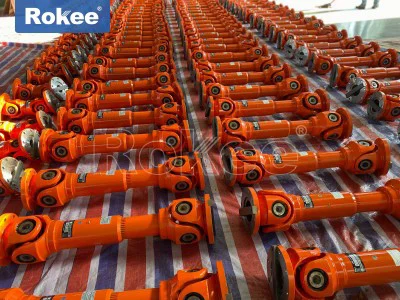
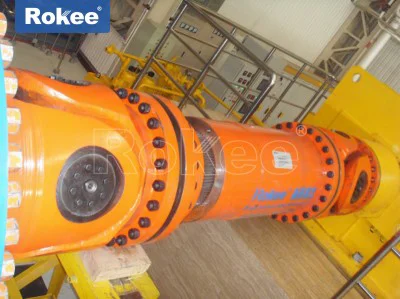
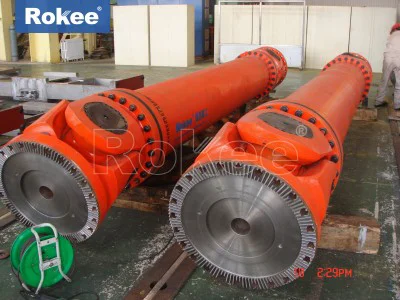
Fault Maintenance And Skills Of Universal Coupling In PU Sandwich Panel Manufacturing Line
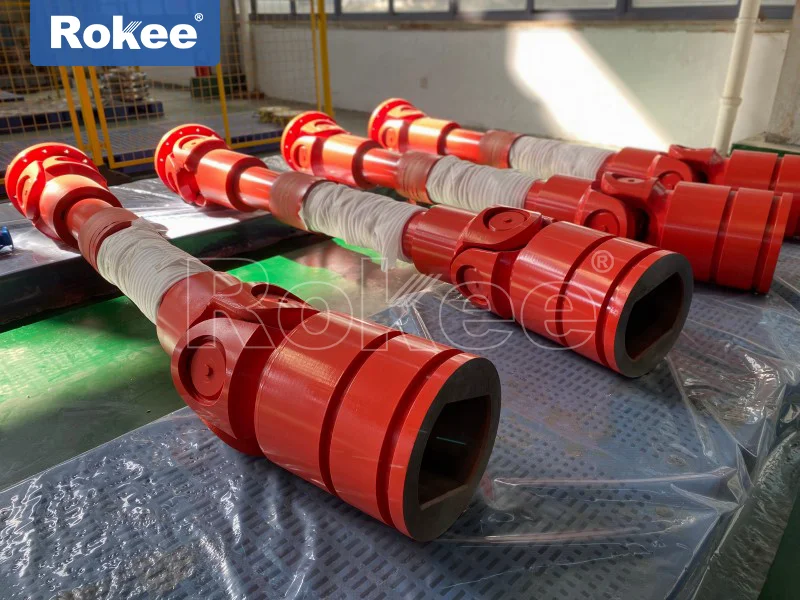
The continuous and stable operation of mechanical transmission components is the core foundation to ensure the long-term efficient production of PU sandwich panel manufacturing lines, and universal couplings stand as one of the most critical connecting and transmission parts in the entire production and transmission system. In the whole process of PU sandwich panel production, from the unwinding of upper and lower metal base plates, continuous conveying and pressure lamination of composite equipment, to fixed-speed transmission of foaming auxiliary power components and synchronous operation of cutting and finishing equipment, universal couplings undertake the important task of transmitting torque between adjacent rotating shafts, compensating for axial, radial and angular displacement deviations generated during equipment operation, and maintaining the synchronous coordination of each production link. The working environment of universal couplings in PU sandwich panel manufacturing scenarios is relatively harsh all year round. The production site is often accompanied by floating dust generated by raw material cutting and processing, tiny polyurethane foam debris scattered in the foaming and composite process, as well as continuous mechanical vibration and certain temperature changes caused by long-term continuous operation of production equipment. These adverse operating conditions will accelerate the wear and aging of internal structural parts of universal couplings, induce various potential operating faults, and if not detected and dealt with in a timely manner, minor abnormal problems will gradually evolve into serious transmission failures. Once the universal coupling fails abnormally, the synchronous transmission of the production line will be disrupted directly, resulting in inconsistent conveying speed of metal base plates, uneven composite pressure of PU foam materials, unstable bonding effect between core materials and metal plates, and a sharp increase in the defective rate of finished sandwich panels. In more serious cases, it will cause unexpected shutdown of the entire production line, affect the continuity of production scheduling, increase unnecessary equipment loss and production delay costs, and even cause secondary damage to other matching transmission equipment and mechanical components. Therefore, mastering the professional fault diagnosis methods, standardized daily maintenance procedures and practical operation and maintenance skills of universal couplings is not only a key basic work for on-site equipment management and maintenance personnel, but also an essential guarantee to maintain the long-term stable operation of PU sandwich panel manufacturing lines, ensure consistent product processing quality, and extend the overall service life of transmission system equipment.
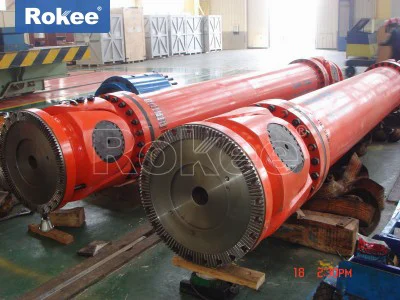
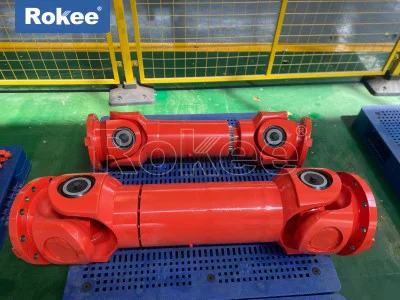
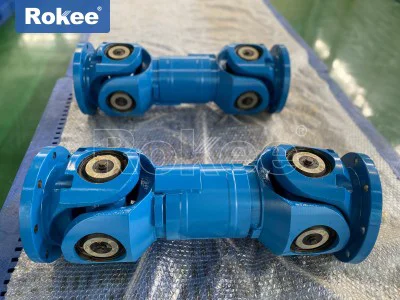
To carry out effective fault maintenance and scientific daily management of universal couplings in PU sandwich panel manufacturing lines, it is first necessary to fully understand the structural operation characteristics and special working load characteristics of universal couplings adapted to this production scenario. Most of the universal couplings used in PU sandwich panel production equipment adopt double cross-axis structural design, which can well adapt to the multi-directional displacement deviation and angle offset between driving shafts and driven shafts generated by long-term vibration and mechanical fatigue of the production line. Different from the universal couplings used in intermittent operation mechanical equipment, the universal couplings in PU sandwich panel manufacturing lines need to bear continuous cyclic torque load for a long time, and the start-stop frequency of the equipment is low but the continuous operation time is long, which makes the internal cross shaft, needle roller bearings, connecting forks and other core force-bearing parts always in a high-frequency friction and stress state. In addition, in the actual production process, due to the adjustment of production specifications of PU sandwich panels, the thickness and density of raw materials will be changed appropriately, and the operating load of the transmission system will fluctuate correspondingly in a certain range, which will bring alternating load impact to the universal couplings. This long-term continuous operation mode and variable load working condition make the fatigue wear and lubrication failure of key components become the most fundamental inducements for various common faults of universal couplings in actual operation. Only by clarifying the correlation between production working conditions and coupling failure mechanisms can maintenance personnel accurately locate fault causes in subsequent daily inspection and fault troubleshooting, avoid blind disassembly and maintenance operations, and improve the efficiency and pertinence of fault maintenance work.
Abnormal vibration and irregular running noise are the most intuitive and early common failure manifestations of universal couplings in the operation process of PU sandwich panel manufacturing line, and also the earliest abnormal signals that on-site operators and maintenance personnel can easily perceive in daily production monitoring. In the normal operating state of qualified universal couplings, the transmission operation is stable and smooth, the vibration amplitude of the connecting part is kept within a low and stable range, and the running sound is only uniform and subtle mechanical rotation sound without any periodic impact sound or harsh friction noise. When the universal coupling has installation deviation, internal part wear or loose connecting structure, the first obvious change is the gradual increase of vibration amplitude and the emergence of abnormal noise with regular rhythm. In the actual production process, many maintenance personnel often ignore the slight vibration and subtle abnormal noise in the early stage, and only carry out inspection and maintenance work when the vibration intensifies and the noise becomes harsh enough to affect the normal operation of the equipment, which leads to the continuous expansion of small faults and eventually triggers more serious mechanical failures. The main causes of abnormal vibration and noise of universal couplings in PU sandwich panel production lines are diverse, among which the most common one is the excessive alignment deviation between the driving shaft and driven shaft connected by the coupling. After long-term continuous operation of the production line, the base of transmission equipment will have slight settlement and mechanical deformation, and the fixing bolts of the coupling connecting part will also have different degrees of loosening under the action of long-term mechanical vibration, resulting in the original accurate installation and alignment state being broken, forming obvious angular and radial displacement deviation between the two connecting shafts. This deviation will make the internal force of the universal coupling unbalanced during torque transmission, resulting in eccentric rotation of the connecting fork and uneven friction of the cross shaft and bearing parts, thus generating continuous vibration and periodic impact noise. Another important cause is the wear and aging of internal vulnerable parts of the coupling. The cross shaft and needle roller bearings inside the universal coupling are the core friction and force-bearing parts. Under the long-term action of high-load friction and poor on-site working environment, the surface of the bearing rollers will be worn and peeled off, the gap between the cross shaft and the bearing will increase, and the elastic connecting parts inside the coupling will also appear fatigue deformation and aging damage. These wear problems will lead to increased running clearance of the coupling, unstable rotation coordination, and obvious vibration and friction noise during operation.
In addition to abnormal vibration and noise, overheating failure during operation is also a frequent and harmful common fault of universal couplings in PU sandwich panel manufacturing lines, which seriously affects the service life of coupling components and the safe operation of the entire transmission system. Under normal working conditions, the operating temperature of the universal coupling will rise slightly with the heat generated by mechanical friction, but it will always be kept within a reasonable range balanced with the ambient temperature, and there will be no obvious overheating phenomenon or peculiar smell generated by high-temperature scorching. When the universal coupling has overheating failure, the surface temperature of the coupling shell and connecting parts rises rapidly in a short time, the local temperature is far higher than the normal operating temperature range, and in severe cases, there will be smoke and peculiar smell of lubricant deterioration and scorching. The fundamental causes of coupling overheating failure are mainly concentrated in two aspects of lubrication state and operation load matching. Lubrication failure is the primary cause of overheating of most universal couplings in PU sandwich panel production lines. The floating dust and foam debris in the production environment will easily adhere to the surface of the coupling and penetrate into the internal lubrication channel with the operation of the equipment, resulting in the deterioration, pollution and hardening of the internal lubricating grease. At the same time, long-term operation will also lead to the gradual loss and consumption of lubricating grease, resulting in insufficient lubrication oil volume inside the coupling. Without effective lubrication protection, the direct dry friction between the cross shaft, bearings and other core components will generate a large amount of heat in a short time, which cannot be dissipated in time, resulting in continuous temperature rise of the coupling. On the other hand, long-term overload operation of the production line will also cause overheating of the universal coupling. When the production line operates beyond the rated load for a long time to increase output, the torque borne by the coupling exceeds the design bearing range, the internal parts are under excessive stress, the friction resistance increases sharply, and the heat generated by mechanical friction per unit time rises exponentially, eventually leading to overheating failure. If the overheating state is not dealt with in time, it will accelerate the thermal deformation and fatigue damage of the internal metal parts of the coupling, reduce the hardness and wear resistance of the parts, and easily cause shaft sticking and part fracture in severe cases, forcing the production line to stop operation suddenly.
Loose connection and structural failure of transmission parts are hidden dangerous faults of universal couplings in PU sandwich panel manufacturing lines, which are not easy to be found in daily visual inspection but will cause sudden production accidents once they break out. The universal coupling is connected with the driving shaft and driven shaft through fixing bolts and key connection structures, and the firmness of the connecting structure directly determines the stability of torque transmission. In the long-term continuous vibration environment of PU sandwich panel production, the fixing bolts at the coupling connection will gradually loosen due to vibration fatigue, the thread locking effect will fail, and the key parts used for positioning and torque transmission between the shaft and the coupling will also have keyway wear and key body deformation due to long-term force-bearing friction. In the early stage of loose connection, there is no obvious abnormal vibration and noise, and the production operation is not affected significantly, so it is easy to be ignored by maintenance personnel. With the continuous aggravation of loosening degree, the relative displacement occurs between the coupling and the rotating shaft during operation, the torque transmission efficiency decreases, the rotation synchronism becomes poor, and then the conveying speed of each link of the production line is inconsistent, affecting the composite processing quality of PU sandwich panels. In severe cases, the bolts fall off and the key parts are broken, resulting in disconnection of the transmission system, sudden shutdown of the equipment, and even collision and damage of adjacent mechanical parts due to out-of-sync operation. In addition, the fatigue cracking and structural deformation of the coupling connecting fork shell also belong to structural failure faults, which are mainly caused by long-term alternating load impact, material fatigue aging and improper installation and alignment. Once the connecting fork is cracked, it will directly affect the overall structural strength of the coupling, and it is easy to break during high-load operation, bringing great hidden dangers to the safe production of the entire production line.
Scientific and standardized daily preventive maintenance is the most effective means to reduce the failure probability of universal couplings in PU sandwich panel manufacturing lines, extend the service life of couplings, and reduce subsequent fault maintenance costs and shutdown losses. Different from passive maintenance after faults occur, preventive maintenance focuses on daily regular inspection, standardized lubrication management, regular alignment calibration and timely cleaning and dust removal, so as to eliminate potential hidden dangers of faults in the initial stage and ensure that the universal coupling is always in a good operating state. Daily visual and operational inspection is the basic link of preventive maintenance. On-site equipment operators and maintenance personnel need to arrange fixed inspection every day before the production line starts up and after it shuts down. During the inspection, they should carefully observe whether the external structure of the universal coupling is intact, whether there is obvious deformation, crack and damage on the surface of the connecting fork and shell, whether the fixing bolts at each connecting position are loose or missing, and check whether there is oil leakage and grease overflow at the lubrication filling port and the sealing position of the coupling. At the same time, during the operation of the production line, real-time attention should be paid to the operating vibration and running noise of the coupling parts. Once slight abnormal vibration and noise are found, the equipment should be inspected in time, and potential hidden dangers should be dealt with early to avoid the expansion of faults. It is necessary to establish a complete maintenance inspection record system, record the daily inspection status, abnormal problems and treatment measures of each universal coupling in detail, track the operation changes of the coupling for a long time, and provide data support for subsequent regular maintenance and parts replacement plan formulation.
Lubrication management is the core key content of the daily maintenance of universal couplings in PU sandwich panel manufacturing lines, and the quality of lubrication work directly determines the wear degree of internal core parts and the service life of the coupling. In view of the harsh working environment of PU sandwich panel production sites, with much dust and foam debris and long-term continuous high-load operation, it is necessary to formulate a targeted regular lubrication system, select lubricating grease suitable for high-load, anti-dust and anti-aging working conditions, and strictly control the lubrication cycle and lubrication operation specifications. The lubrication cycle of universal couplings should be formulated according to the actual operating time and load of the production line. For the couplings working in continuous high-load operation state, the lubrication and grease replacement cycle should be appropriately shortened, and for the equipment with relatively light load operation, the lubrication cycle can be adjusted moderately. Before lubrication operation, it is necessary to thoroughly clean the dust, foam debris and residual deteriorated old grease around the coupling lubrication filling port and sealing position to prevent external impurities from entering the inside of the coupling with the new lubricating grease and causing secondary wear of internal parts. During the grease filling process, the filling amount should be strictly controlled, neither too much nor too little. Excessive grease filling will lead to excessive internal pressure of the coupling, increased operating friction and heat generation, resulting in overheating failure; insufficient grease filling cannot form an effective lubricating oil film, resulting in direct dry friction between parts and accelerated wear. After the lubrication is completed, the sealing structure of the lubrication port should be checked and restored to ensure good sealing performance, prevent dust and debris from entering the inside of the coupling, and ensure the long-term stability of the internal lubrication state.
Regular shaft alignment calibration and fastening inspection of connecting parts are important maintenance skills to avoid abnormal vibration and loose connection faults of universal couplings in PU sandwich panel manufacturing lines. After the production line runs for a certain period of time, affected by equipment base settlement, mechanical vibration and load impact, the alignment accuracy between the driving shaft and driven shaft connected by the universal coupling will inevitably deviate. Therefore, regular professional alignment calibration work must be arranged regularly. During the alignment operation, professional debugging tools should be used to accurately detect the angular deviation and radial displacement between the two connecting shafts, and fine adjustment should be carried out according to the actual deviation data to ensure that the coupling is in the best coaxial operation state, reduce unbalanced force and eccentric friction during torque transmission, and fundamentally reduce vibration and wear faults. At the same time, all fixing bolts and key connection parts of the coupling should be regularly inspected and fastened one by one. For the bolts with loose threads, professional thread anti-loosening measures should be taken to enhance the connection firmness; for the keyway wear and key body deformation parts with slight wear, timely repair and adjustment should be carried out to ensure the positioning accuracy and torque transmission effect of the connection parts. For the parts with serious wear and failure that cannot be repaired, they should be replaced in a timely manner to avoid hidden dangers of sudden faults caused by long-term use of damaged parts.
Professional and standardized rapid fault troubleshooting and post-fault repair skills are essential capabilities for maintenance personnel to deal with sudden failure of universal couplings in PU sandwich panel manufacturing lines and quickly restore normal production order. When the universal coupling has abnormal vibration, noise, overheating and other faults during production operation, the first step is to implement safe shutdown protection procedures in accordance with equipment operation specifications, avoid forced operation with faults leading to fault expansion and secondary damage to equipment, and then carry out fault diagnosis and troubleshooting work step by step. In the process of fault diagnosis, follow the principle of from simple to complex and from outside to inside, first check the external connection state, bolt fastening and surface wear, eliminate simple loose connection and external dirt accumulation problems, and then carry out disassembly inspection of internal parts for faults that cannot be solved by external adjustment. For the overheating fault caused by lubrication failure, after shutdown and cooling, thoroughly clean the deteriorated and polluted old grease inside the coupling, replace the new high-quality lubricating grease that meets the working condition requirements, and check the sealing structure to ensure no leakage and good dust prevention effect. For vibration and noise faults caused by alignment deviation, re-calibrate the shaft coaxiality, adjust the installation position of the coupling, and eliminate displacement and angle offset. For wear, deformation and cracking faults of internal cross shaft, bearing and connecting fork parts, repair the repairable parts professionally, and directly replace the severely damaged and failed parts with new matching parts to ensure that the overall structural strength and transmission performance of the coupling return to the standard state. After the completion of fault repair and parts replacement, test run debugging must be carried out first, check the operating vibration, temperature and noise of the coupling after maintenance, and put it into formal production operation only after all operating parameters are normal and stable.
In conclusion, the universal coupling, as an indispensable key transmission component of PU sandwich panel manufacturing lines, has its operating state directly related to production continuity, product quality and equipment operation cost. The various faults of universal couplings in actual production are mainly caused by harsh on-site working environment, long-term continuous high-load operation, insufficient daily preventive maintenance, improper installation and alignment, and untimely lubrication management. Only by attaching importance to daily preventive maintenance work, doing a good job in regular inspection, standardized lubrication, alignment calibration and connection fastening, mastering scientific fault diagnosis methods and professional maintenance and repair skills, can the failure probability of universal couplings be effectively reduced, the service life of equipment components be extended, the sudden shutdown loss of production lines be reduced, and the long-term stable, efficient and safe operation of the entire PU sandwich panel manufacturing production system be fully guaranteed. In the daily equipment management work, maintenance and operation personnel should always adhere to the combination of preventive maintenance and timely fault repair, accumulate practical operation and maintenance experience in long-term production practice, continuously optimize the maintenance plan and operation management mode of universal couplings, lay a solid mechanical foundation for stable production and high-quality output of PU sandwich panels.