Non Telescopic Universal Joint Coupling

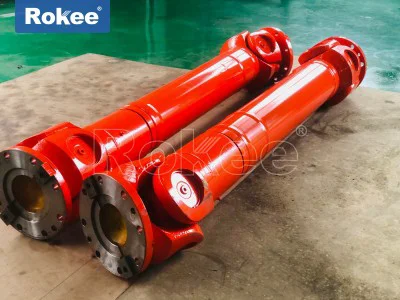
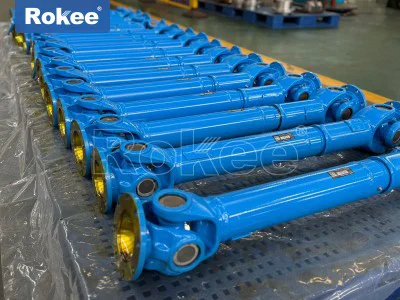
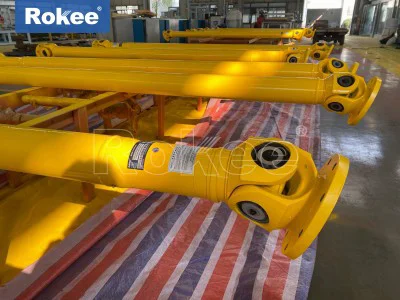
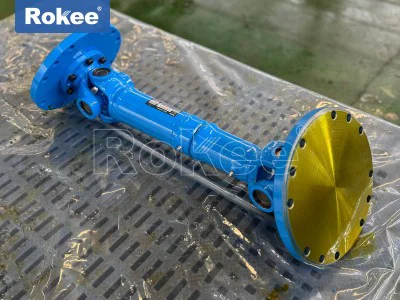
Non telescopic universal joint coupling is a robust mechanical transmission component designed to deliver stable torque and motion transfer between misaligned rotating shafts in industrial mechanical systems. Unlike telescopic universal joints that support axial length adjustment, this fixed-structure coupling features a non-extendable and non-retractable overall design, focusing on angular misalignment compensation while maintaining a constant shaft distance during operation. Its core structure consists of dual fork joints, a precision cross spider, and high-performance bearing assemblies, forming a rigid integrated mechanism that balances structural stability and flexible transmission performance. Widely adopted in heavy-duty and high-precision mechanical equipment, it effectively resolves transmission failures caused by installation deviations and operational angular offsets. With outstanding rigidity, strong load-bearing capacity, and minimal operational vibration, it has become an indispensable core component in fixed-distance power transmission scenarios, ensuring continuous and efficient mechanical operation under complex working conditions.
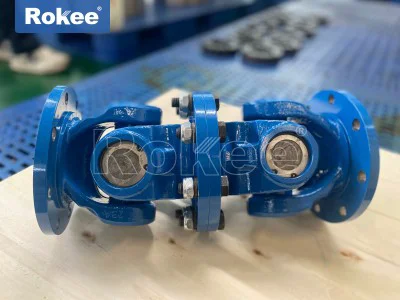
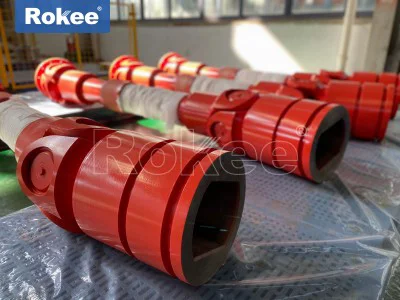
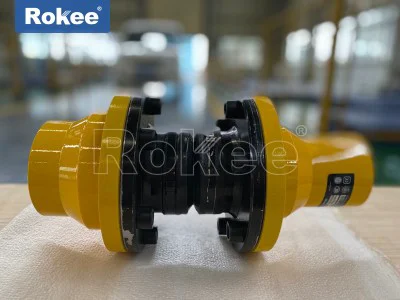
The structural composition of non telescopic universal coupling is meticulously optimized for fixed-distance transmission requirements, distinguishing it fundamentally from adjustable telescopic coupling models. The entire assembly adopts an integrated fixed framework without sliding or telescopic auxiliary structures, which simplifies the overall mechanical layout while significantly enhancing structural rigidity and operational stability. The core transmission unit includes two symmetrical fork joints that serve as the connection terminals for driving and driven shafts respectively, with integral forging molding ensuring high structural integrity and anti-deformation performance. Connecting the two fork joints is a high-precision cross spider, whose four symmetrically distributed arms are equipped with wear-resistant needle roller bearings. These bearings form flexible pivot pairs with the inner walls of the fork joint grooves, enabling free angular rotation within the allowable deflection range. All structural parts are tightly assembled with no reserved axial sliding gaps, which locks the axial distance between the connected shafts permanently. This fixed structural design eliminates axial displacement errors during equipment operation, avoids abnormal noise and vibration caused by structural clearance, and lays a solid foundation for long-term stable high-load transmission.
The working principle of non telescopic universal joint coupling is based on the spatial pivot motion of the cross spider mechanism, realizing efficient torque transmission under angular misalignment conditions. When the driving shaft starts to rotate, the rotational torque is transmitted to the cross spider through the connected fork joint, and the cross spider drives the opposite fork joint and the driven shaft to synchronize rotation through the flexible support of bearings. Benefiting from the orthogonal spatial structure of the cross spider, the coupling can adapt to continuous angular deflection between the two shafts during operation, automatically compensating for minor angular deviations generated by equipment installation errors, mechanical operation vibration, or component slight deformation. Different from telescopic couplings that need to coordinate axial displacement adjustment during operation, this fixed-structure coupling only undertakes angular compensation tasks, making its motion transmission path more concentrated and stable. In the entire transmission process, the fixed axial distance ensures consistent transmission inertia and uniform torque output, avoiding torque fluctuation problems caused by axial length changes. This pure angular compensation working mode enables the coupling to maintain high transmission accuracy and efficiency in fixed-spacing mechanical systems.
Non telescopic universal joint coupling possesses unique performance advantages that make it highly adaptable to heavy-duty and high-stability industrial transmission scenarios. First of all, its integral fixed structure delivers exceptional structural rigidity and anti-torsion capacity, which can withstand long-term high-torque impact loads without structural deformation or transmission failure, far exceeding the load stability of telescopic models in fixed-distance working conditions. Secondly, the absence of telescopic sliding structures reduces mechanical friction points and wear links, effectively lowering operational energy consumption and extending the service life of the entire coupling assembly. The precision-matched bearing and cross spider components ensure smooth pivot motion, minimizing transmission vibration and noise even during high-speed continuous operation. In addition, the fixed-spacing design effectively avoids axial play and displacement deviation, maintaining consistent transmission precision for a long time and reducing the frequency of equipment calibration and maintenance. It also features strong environmental adaptability, resisting minor temperature changes and dust interference in conventional industrial environments, and can operate stably in continuous-duty mechanical systems without frequent downtime.
The application scenarios of non telescopic universal joint coupling are highly targeted, mainly covering fixed-distance power transmission fields that require high stability and high rigidity. It is widely applied in various heavy engineering machinery, including cranes, road rollers and mining machinery, where it connects fixed transmission shafts to ensure stable torque output during heavy-load lifting and walking operations. In industrial production equipment such as papermaking machinery, rubber processing equipment and ventilation water pump units, the coupling provides precise and consistent power transmission for fixed-axis transmission systems, avoiding production errors caused by transmission instability. It also plays a key role in marine auxiliary machinery and offshore platform equipment, adapting to the stable power transmission needs of fixed mechanical structures in relatively harsh working environments. Moreover, it is commonly used in the auxiliary transmission systems of metallurgical and petroleum machinery, where its fixed structural characteristics effectively resist the slight vibration and impact generated by equipment operation, ensuring the continuous and reliable operation of the entire mechanical transmission chain.
Compared with telescopic universal joint couplings and other types of transmission couplings, non telescopic universal joint coupling shows distinct functional differentiation and scenario superiority. Telescopic couplings focus on solving the composite compensation problem of angular and axial displacement, but their sliding structures lead to lower overall rigidity and higher wear rate, making them unsuitable for high-precision and high-load fixed-distance scenarios. In contrast, non telescopic models abandon the axial adjustment function and concentrate on optimizing angular compensation performance and structural rigidity, achieving higher transmission stability and longer service life in fixed-spacing working conditions. When compared with rigid couplings that allow no misalignment compensation at all, this universal joint coupling retains excellent angular deflection adaptability, which can buffer the stress concentration caused by minor shaft misalignment and protect the main shaft and equipment components from damage. Meanwhile, it has simpler structure and lower maintenance difficulty than elastic couplings, with no need for frequent replacement of elastic vulnerable parts, reducing long-term equipment operation costs.
In terms of installation and daily maintenance, non telescopic universal joint coupling has obvious operational advantages and standardized technical requirements. During installation, the fixed structural feature requires precise positioning of the two connected shafts in advance to ensure the axial distance meets the design standards, while properly controlling the initial angular deviation within the allowable working range. The integral assembled structure simplifies the installation process, with no need to adjust the telescopic stroke, effectively improving installation efficiency and avoiding installation errors caused by improper length adjustment. For daily maintenance, the coupling’s fewer wearable components and closed matching structure reduce the entry of dust and impurities. Regular maintenance only includes checking the lubrication state of internal bearings and fastening the connecting parts, without complex parameter debugging. Timely supplementary lubrication can maintain the flexibility of pivot motion and reduce component wear. In long-term operation, regular visual inspection of structural integrity can effectively prevent hidden troubles, ensuring the coupling maintains stable transmission performance throughout the equipment service cycle.
With the continuous upgrading of industrial mechanical equipment towards high precision, high load and high stability, the application value of non telescopic universal joint coupling is constantly highlighted and expanded. Modern industrial transmission systems put forward higher requirements for the stability and durability of fixed-distance transmission components, and this coupling’s rigid fixed structure, reliable angular compensation ability and low maintenance characteristics perfectly match the development needs of high-end mechanical equipment. Continuous optimization of material technology and precision processing technology further improves its wear resistance, corrosion resistance and load-bearing performance, enabling it to adapt to more complex working conditions. In the future, with the continuous iteration of engineering machinery, industrial automation equipment and special mechanical systems, non telescopic universal joint coupling will be further promoted and applied in more professional fields, providing more stable and efficient basic guarantee for fixed-distance mechanical power transmission.