Non Telescopic Cardan Drive Shaft
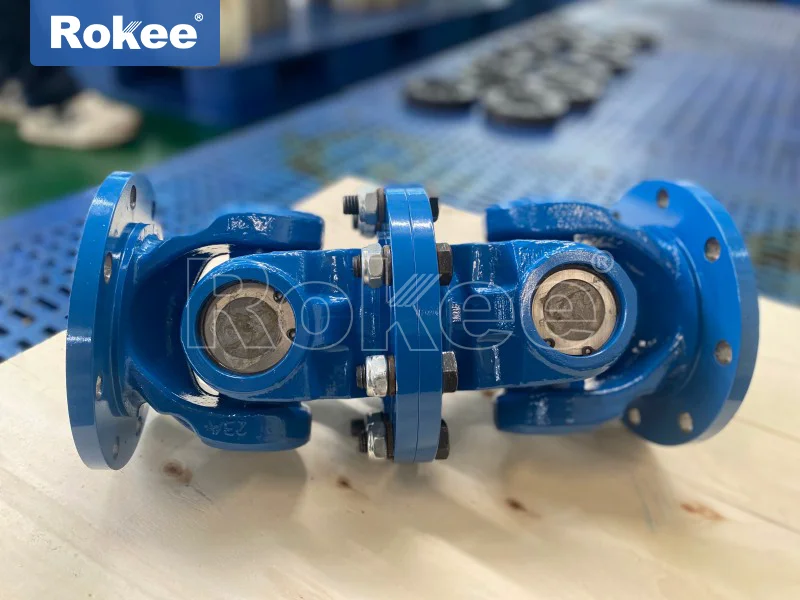
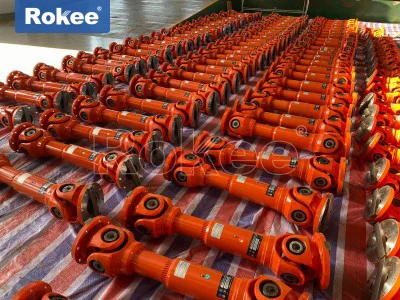
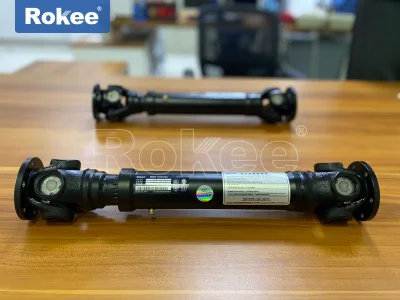
The non telescopic cardan drive shaft is a specialized power transmission component engineered to deliver stable, high-efficiency torque transfer across mechanical systems, distinguishing itself from conventional telescopic models through its fixed integral structural design. As a core part of universal joint transmission systems, it eliminates the retractable spline structure used in telescopic drive shafts, featuring an integrated shaft body and fixed connection terminals that maintain a constant overall length during operation. This mechanical component primarily relies on the cardan universal joint principle to compensate for angular misalignment between driving and driven equipment, ensuring continuous and uniform power output without axial length variation. Optimized for operating scenarios with fixed installation spacing and limited displacement, it excels in structural rigidity, operational stability, and long-term durability. Widely applied in stationary industrial machinery, special engineering equipment, and fixed transmission assemblies, it avoids the mechanical wear, loose fit, and transmission deviation risks associated with telescopic structures, providing a reliable and low-maintenance power transmission solution for high-load and high-precision mechanical systems.
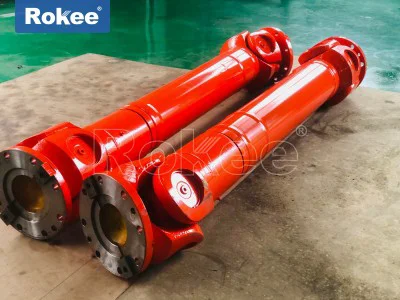
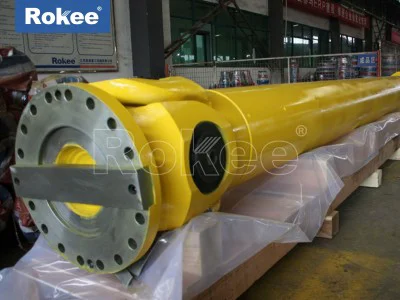
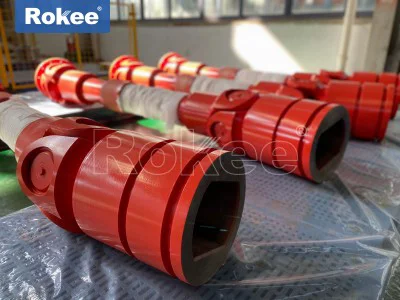
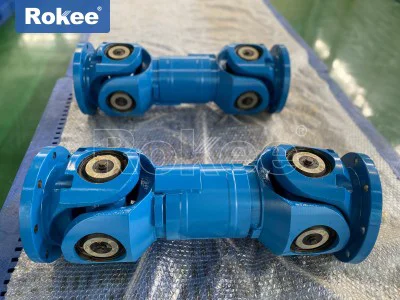
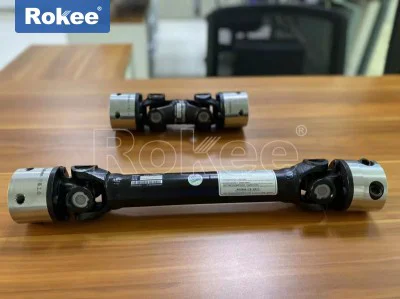
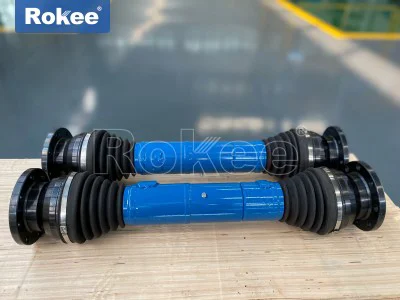
The structural composition of the non telescopic cardan shaft adopts an integrated and non-retractable design, forming a compact and high-strength assembly without any telescopic adjustment mechanisms. Its main components include symmetrically arranged universal joint assemblies at both ends, an integral solid or tubular shaft body, precision-machined yoke frames, high-load bearing units, and anti-loosening fastening parts. Unlike telescopic drive shafts that adopt segmented splicing and spline matching structures, the entire shaft body of the non telescopic model is integrally formed or fixedly welded as a single unit, with no relative sliding or displacement between internal components. The universal joints at both ends follow the classic cardan transmission structure, consisting of cross-shaped spindle components and sealed bearing structures, which can flexibly adapt to the angular offset generated during equipment operation. All connection positions are fixed through precision bolting and positioning locking structures, ensuring that the overall length of the drive shaft remains unchanged under all working conditions. This simplified and integrated structural design effectively reduces the number of mechanical movable parts, lowers the failure probability caused by component friction and dislocation, and significantly enhances the overall structural stability and load-bearing uniformity of the drive shaft during long-term continuous operation.
The working principle of the non telescopic cardan drive shaft is based on the geometric motion characteristics of cardan universal joints and the fixed-length constraint of the integral shaft body, realizing stable torque transmission under angular misalignment conditions. When the power source drives the input end of the drive shaft to rotate, the cross spindle of the universal joint converts the single-axis rotational motion of the driving end into flexible rotational motion that can adapt to angular deflection. This structural feature allows the drive shaft to maintain continuous power output even when there is a certain angle deviation between the driving equipment and the driven equipment, effectively compensating for angular displacement generated by equipment installation errors, operational vibration, and mechanical deformation. Benefiting from the fixed-length non-telescopic design, the drive shaft will not produce axial extension or contraction during the entire power transmission process, avoiding the axial tension and compression stress and transmission speed fluctuation common in telescopic drive shafts. The integral shaft body uniformly transmits torque from the input end to the output end, with the sealed bearing assembly ensuring flexible rotation of the universal joint while reducing rotational resistance. Under the combined action of fixed-length positioning and flexible angular compensation, the drive shaft achieves synchronous and stable power transmission, ensuring consistent rotational speed and torque output to meet the precise operation requirements of mechanical equipment.
The non telescopic cardan drive shaft possesses unique performance advantages in structural stability and operational reliability compared with traditional telescopic drive shaft products. First, the fixed integral structure eliminates the gaps and abrasion problems of telescopic spline pairs, avoiding transmission clearance increase and power loss caused by long-term sliding friction. This enables the drive shaft to maintain high transmission accuracy and torque output stability even after thousands of hours of continuous operation. Second, the reduced number of movable parts greatly lowers the risk of mechanical failure, effectively resisting vibration and impact loads during equipment operation, and reducing the amplitude of mechanical resonance in the transmission system. In addition, the overall structural rigidity of the non telescopic drive shaft is significantly improved, which can bear higher instantaneous torque and steady load, and is not prone to bending deformation and structural looseness under high-load working conditions. Its fully sealed universal joint structure can effectively isolate external dust, moisture, and debris, protecting internal bearings and spindle components from wear and corrosion. These performance characteristics make it far more adaptable than telescopic models in fixed-spacing transmission scenarios, with lower operational failure rates and longer service life.
The non telescopic cardan drive shaft has clear and targeted application scenarios, mainly suitable for mechanical transmission systems with fixed installation spacing, small operational displacement, and high stability requirements. It is widely used in various stationary industrial processing equipment, including automated production lines, precision transmission machinery, and heavy-duty processing equipment that requires long-term fixed-position operation. In these scenarios, the installation distance between driving and driven components remains basically unchanged, and the non-telescopic fixed-length design can give full play to its advantages of high rigidity and low wear. It is also commonly applied to special engineering machinery and auxiliary transmission assemblies with limited operating displacement, where equipment vibration and angular deflection are the main displacement forms, and axial length adjustment is not required. Moreover, it shows excellent application value in power transmission systems that require high precision and low failure rate, such as mechanical testing equipment and constant-speed transmission devices. For mechanical systems that frequently produce axial displacement and require real-time length compensation, the non telescopic structure is not applicable, which also defines its unique application boundary and makes it more professional and targeted in matching working conditions.
Material selection and manufacturing processes are key factors determining the service performance and service life of non telescopic cardan drive shafts, with all core components adopting high-strength and wear-resistant metal materials. The integral shaft body is mostly made of high-quality alloy steel with excellent tensile strength and bending resistance, which can withstand high torque and complex mechanical stress without permanent deformation. The cross spindle and bearing parts of the universal joint adopt carburized and quenched alloy materials, with high surface hardness and wear resistance, adapting to frequent rotational friction and load impact. All metal components undergo precision heat treatment processes such as normalization and tempering to eliminate internal stress generated during processing and improve structural toughness and fatigue resistance. The processing process adopts integrated forming and precision CNC machining technology to ensure the dimensional accuracy of the shaft body and the matching precision of universal joint components. The surface of the components is treated with anti-rust and anti-corrosion processes such as galvanizing and oil sealing, which can adapt to different working environments. The standardized and refined manufacturing process ensures that each drive shaft has consistent structural performance, stable transmission effect, and strong environmental adaptability, laying a solid foundation for long-term reliable operation.
Daily maintenance and fault prevention of non telescopic cardan drive shafts are simpler and more efficient than telescopic products, benefiting from their simplified fixed structure. Since there is no telescopic spline moving structure, there is no need to regularly check spline wear, gap adjustment, and lubrication replacement of sliding parts, greatly reducing daily maintenance workload. The core maintenance focus is on the sealing performance of universal joints and the fastening state of connecting parts. In daily use, it is only necessary to regularly check whether the sealing sleeve of the universal joint is intact to prevent lubricant leakage and foreign matter intrusion, and inspect whether the fastening bolts at both ends are loose due to long-term vibration. Regular quantitative supplementation of special high-temperature and wear-resistant lubricating grease for the bearing assembly can maintain the flexible rotation of the universal joint and reduce friction loss. During equipment overhaul, staff only need to detect the wear degree of the universal joint spindle and bearings and check the overall straightness of the shaft body. With fewer vulnerable parts and simple maintenance procedures, the drive shaft effectively reduces equipment maintenance costs and downtime, improving the continuous operation efficiency of the entire mechanical system.
With the continuous upgrading of industrial mechanical equipment towards high precision, high stability and long life, the application value of non telescopic cardan drive shafts in modern transmission systems is constantly improving. Its fixed-length high-rigidity structure makes it an ideal substitute for telescopic drive shafts in fixed working condition scenarios, effectively solving the problems of easy wear, loose transmission and frequent maintenance of traditional telescopic products. In the future, with the continuous innovation of new metal materials and precision processing technology, the structural performance of non telescopic cardan drive shafts will be further optimized, with higher load-bearing capacity, stronger fatigue resistance and better environmental adaptability. It will be more widely used in intelligent manufacturing equipment, heavy industrial machinery, special power transmission systems and other fields, providing more stable and efficient basic support for the stable operation of various mechanical systems. While maintaining its core structural advantages, the product will also develop towards lightweight and high-precision integration, continuously adapting to the diversified and high-standard development needs of modern industrial transmission technology.