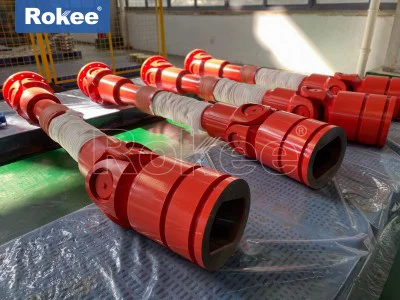
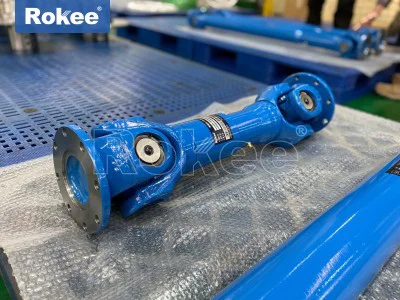
Flange Cardan Drive Shaft
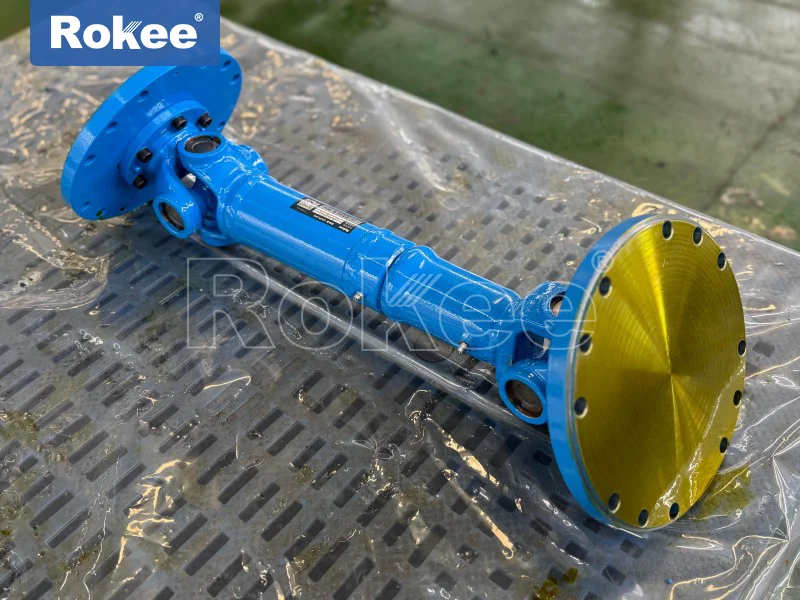
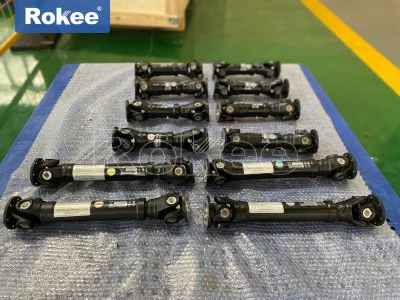
Flange cardan drive shafts are indispensable mechanical transmission components widely adopted in industrial power systems and mechanical equipment operation. Differentiated from ordinary universal joint shafts, this type of drive shaft integrates rigid flange connection structures with flexible cardan universal joint mechanisms, enabling stable and efficient torque and rotational power transmission between misaligned driving and driven shafts. It can effectively adapt to multi-dimensional spatial deviations including angular deflection, axial displacement and radial offset during equipment operation, solving the power transmission bottleneck of traditional rigid shaft connections that are prone to jamming and damage under non-linear working conditions. Featuring compact structural layout, strong load-bearing capacity and excellent operational stability, it can adapt to complex and variable working environments, ensuring continuous and reliable power output for various mechanical transmission systems while reducing mechanical vibration and operation failure risks.
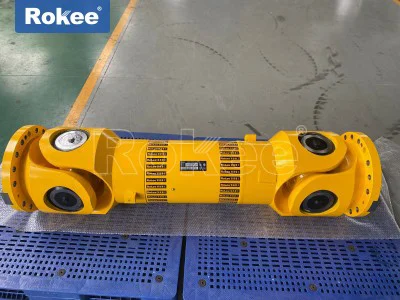
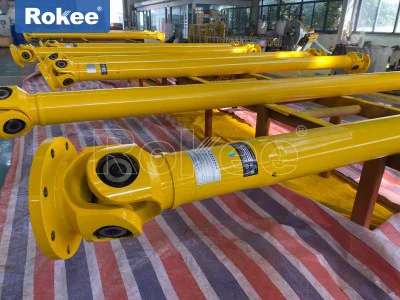
The overall structural composition of flange cardan drive shafts is scientifically layered and functionally specialized, with every core component cooperating closely to complete high-precision power transmission. The main load-bearing part is a high-rigidity hollow shaft tube, which is optimized in wall thickness and tubular structure to balance light weight and structural strength, effectively bearing torsional load and avoiding deformation or fracture during long-term high-speed rotation. At both ends of the shaft tube are symmetrically arranged universal joint assemblies, the core functional units that realize flexible transmission. Each universal joint consists of precision cross spiders, movable bearings and flange yokes, where the cross spider acts as the force-transmitting core to connect the two sets of yokes and support multi-angle rotational movement. The outermost flange discs are integrated with the flange yokes, with uniform bolt holes designed for fast and firm docking with driving and driven equipment. Some models are equipped with telescopic spline structures inside the shaft tube, which can automatically compensate axial distance changes caused by equipment operation and installation errors, further improving the adaptability of the entire transmission system.
The working principle of flange cardan drive shafts is based on the geometric motion characteristics of universal joint hinge mechanisms and the rigid connection advantages of flange structures, realizing flexible and stable power transmission in misaligned shaft systems. When mechanical equipment starts to operate, torque and rotational motion are stably transmitted from the driving equipment to the drive shaft through the fixed flange connection end. The cross spider of the universal joint converts the single-direction rotational motion of the driving end into multi-angle flexible rotational motion, offsetting the angular misalignment between the driving shaft and the driven shaft in real time. During the transmission process, the precision bearings installed on the cross spider reduce friction resistance between moving parts, ensuring smooth rotation and minimizing power loss. The flange structure eliminates the looseness and displacement problems that easily occur in traditional sleeve connections, maintaining stable connection rigidity under high load and high-speed working conditions. The telescopic spline structure works synchronously to adapt to axial position changes of equipment parts, ensuring that the torque transmission state remains consistent and stable no matter how the spatial position of the two connected shafts changes within the allowable range.
Flange cardan drive shafts possess prominent performance advantages that make them superior to traditional transmission shafts in complex industrial scenarios. First of all, their multi-dimensional deviation compensation capability is far more comprehensive than ordinary rigid couplings, which can tolerate simultaneous angular, axial and radial misalignments, greatly reducing the installation precision requirements of mechanical equipment and lowering assembly difficulty. Secondly, the integrated flange connection mode provides higher connection rigidity and structural stability, avoiding vibration, shaking and torque attenuation caused by loose connections during high-load operation. In terms of transmission efficiency, the optimized universal joint and bearing matching structure effectively reduces internal friction and mechanical loss, maintaining high-efficiency power transmission for a long time. Additionally, the overall structure is designed with high-strength wear-resistant materials and anti-corrosion surface treatments, which can resist abrasion, oxidation and environmental erosion in harsh working conditions, extending the service life of components. The balanced structural design also suppresses high-speed operation vibration and noise, improving the overall operational stability of mechanical systems.
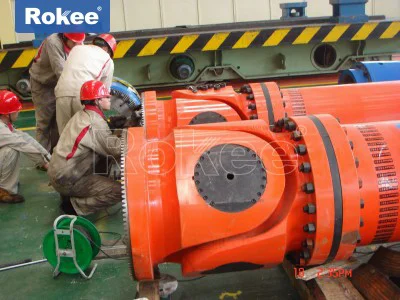
The installation and debugging process of flange cardan drive shafts follows standardized mechanical assembly logic, focusing on matching precision and connection firmness to ensure subsequent stable operation. Before installation, operators need to check the integrity of all components, confirming that the shaft tube, universal joint parts, flange discs and bearings are free from wear, deformation and damage, and cleaning the connecting surfaces to remove dust, oil stains and impurities that may affect assembly precision. During formal installation, the drive shaft is aligned with the driving and driven equipment interfaces respectively, and flange bolts are fastened symmetrically and evenly to avoid connection deformation caused by uneven stress. After preliminary installation, fine debugging is required to adjust the relative position of the drive shaft, ensuring that the misalignment angle and telescopic displacement are within the optimal working range. It is also necessary to manually rotate the shaft body to check for jamming, abnormal friction and unsmooth rotation. After debugging is completed, a no-load test operation is carried out to observe the vibration and rotation state of the drive shaft, and minor adjustments are made according to the operating condition to ensure that the assembly meets the working requirements of formal load operation.
Scientific daily maintenance and regular inspection are key measures to maintain the long-term stable performance of flange cardan drive shafts and reduce equipment failure rates. In daily operation, it is necessary to regularly check the connection state of flange bolts to prevent bolt loosening caused by long-term mechanical vibration, which may lead to unstable transmission and component wear. The universal joint bearings and spline telescopic parts are key maintenance points, requiring regular lubrication with professional lubricating grease to reduce dry friction and wear of moving parts and ensure flexible rotation and telescopic movement. Operators need to regularly observe the operating state of the drive shaft, paying attention to abnormal vibration, noise and rotational jamming during equipment operation, which are early warning signs of component aging or failure. Regular cleaning of the shaft body surface is also required to remove dust, sediment and corrosive substances accumulated during operation, protecting the surface anti-corrosion layer. For equipment operating in high-intensity and harsh environments, regular disassembly and inspection of internal wear parts are needed, and severely worn bearings and sealing components should be replaced in a timely manner to avoid sudden equipment failure.
Flange cardan drive shafts have extremely wide application coverage, serving as core transmission components in multiple industrial and mechanical fields. In heavy machinery and engineering equipment, they are applied to the power transmission systems of large rotary and walking equipment, adapting to the frequent position changes and complex stress conditions of engineering machinery during operation. In industrial production lines, they are used in the transmission structures of automated conveying equipment, processing machinery and rotating devices, ensuring continuous and stable power output of production equipment and improving production continuity. In metallurgy, mining and chemical industries with harsh working environments, their excellent wear resistance and environmental adaptability enable them to operate stably in high-dust, high-vibration and humid working conditions. They also play an important role in agricultural machinery, transportation equipment and general mechanical transmission systems, effectively solving various misalignment power transmission problems and providing reliable technical support for the normal operation of various mechanical systems.
With the continuous upgrading of industrial mechanical equipment towards high precision, high efficiency and high stability, the technical optimization and performance improvement of flange cardan drive shafts are also advancing continuously. Modern manufacturing technologies are applied to the processing of drive shaft components, realizing higher dimensional precision and structural consistency of parts, further improving transmission stability and load-bearing performance. Material innovation also promotes the comprehensive upgrade of product performance, and new high-strength, wear-resistant and fatigue-resistant materials make the drive shafts more adaptable to extreme working conditions and prolong their service cycle. In terms of structural design, lightweight and integrated optimization are carried out on the premise of ensuring structural strength, reducing the overall weight of components, lowering equipment operation energy consumption and improving transmission response speed. In the future, with the development of intelligent mechanical equipment, flange cardan drive shafts will be combined with monitoring technologies to realize real-time monitoring of operating status, wear degree and stress changes, providing more reliable and intelligent support for industrial mechanical power transmission systems.