Cardan Drive Shaft For Sale
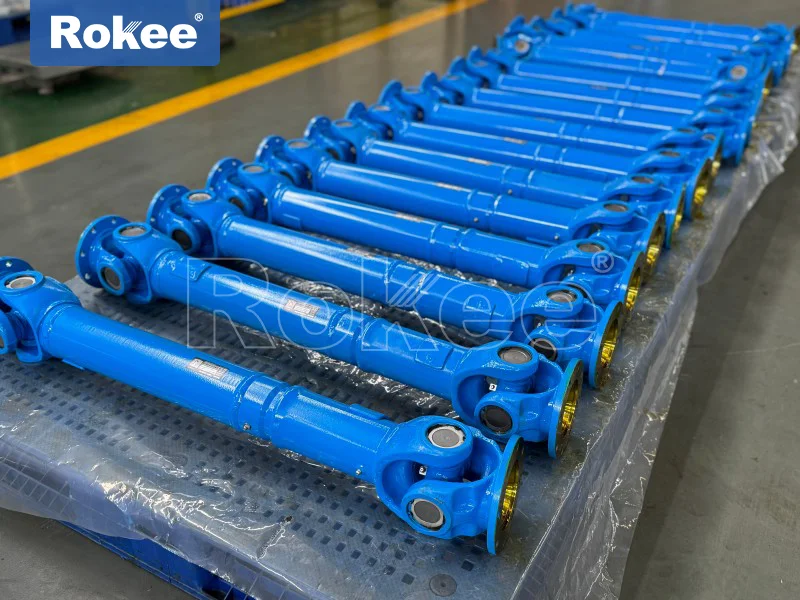
Cardan drive shafts, also commonly known as universal joint drive shafts, are essential mechanical transmission components widely utilized in automotive, industrial machinery, and heavy equipment systems. Engineered to solve the core problem of torque transmission between non-collinear shafts, these specialized shafts can effectively compensate for angular deviation, axial displacement and radial offset generated during equipment operation, ensuring stable and efficient power delivery in complex working environments. Ideal for rear-wheel-drive vehicles, commercial trucks, construction machinery and various industrial transmission devices, premium cardan drive shafts feature flexible joint structures, durable bearing components and optimized mechanical design. With growing demand for reliable power transmission parts in machinery maintenance and equipment upgrading, high-performance cardan drive shafts have become a sought-after component for mechanical operators and equipment managers, balancing operational stability, service durability and adaptive compatibility for diverse mechanical application scenarios.
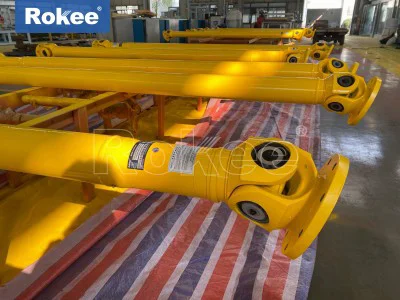
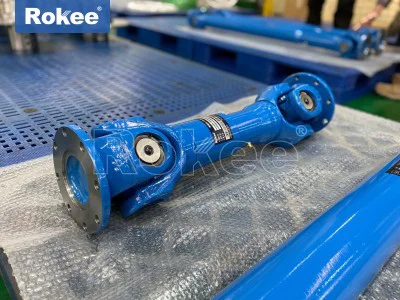
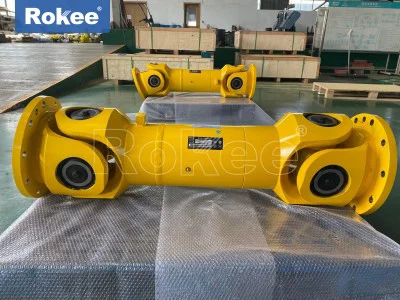
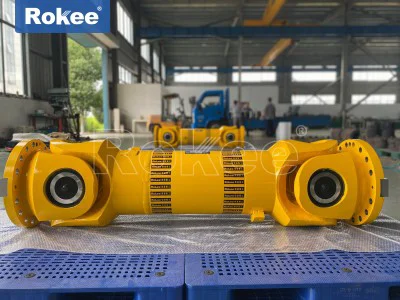
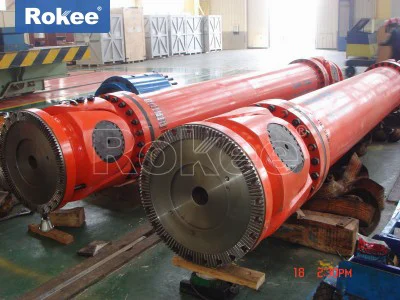
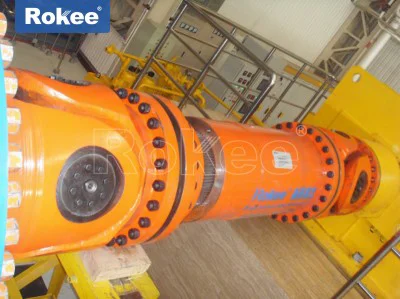
The core working principle of a cardan shaft centers on its universal joint structure, which distinguishes it fundamentally from rigid transmission shafts that require precise coaxial alignment. Each complete cardan drive shaft assembly is composed of universal joints, cross bearings, spline shafts and protective casings, forming a flexible transmission system that adapts to dynamic mechanical changes. The universal joint can freely adjust the transmission angle during operation, effectively offsetting the angular misalignment caused by equipment vibration, load changes and structural deformation. The built-in spline structure enables flexible axial expansion and contraction, which perfectly compensates for the distance variation between the power source and the driven component during mechanical operation. Meanwhile, high-precision cross bearings reduce friction resistance during rotation, ensuring low-loss torque transmission and avoiding power attenuation. This unique structural design allows the cardan drive shaft to maintain stable working performance even under irregular movement and variable load conditions, making it adaptable to the unstable operating states of various mobile and industrial mechanical devices.
Cardan drive shafts boast exceptional structural and performance advantages that make them irreplaceable in modern mechanical transmission systems. First and foremost, they exhibit outstanding adaptive capacity, tolerating a certain range of angular deflection and axial displacement that rigid shafts cannot accommodate, which greatly reduces the installation precision requirements of mechanical equipment and lowers assembly difficulty. Secondly, these drive shafts deliver excellent transmission efficiency, with smooth rotational operation and minimal energy loss during torque transfer, effectively improving the overall working efficiency of matched mechanical equipment. In terms of structural durability, qualified cardan drive shafts adopt high-strength metal materials and refined forging and machining processes, featuring strong compression resistance, torsion resistance and fatigue resistance. They can stably operate under long-term high-load and high-frequency working conditions without easy deformation or damage. Additionally, the modular assembly design simplifies later disassembly and replacement, bringing great convenience for daily equipment maintenance and part replacement, and effectively reducing equipment downtime caused by component failure.
The application scope of cardan drive shafts covers a wide range of commercial and industrial mechanical fields, showing strong universal applicability. In the automotive industry, they are key core components of rear-wheel-drive and four-wheel-drive vehicles, responsible for transmitting power from the transmission system to the rear differential and driving wheels, supporting normal driving and power output of passenger cars, pickup trucks and various commercial vehicles. In the field of engineering machinery, cardan drive shafts are widely installed in excavators, loaders, cranes and road construction equipment, adapting to the harsh working conditions of frequent start-stop, variable load and uneven operation. In industrial production scenarios, they serve as important transmission parts for conveyor equipment, processing machinery and automated production lines, realizing stable power connection between different mechanical modules. Moreover, these drive shafts are also applied in agricultural machinery, special engineering vehicles and mobile mechanical equipment, fully meeting the power transmission needs of diverse working scenarios with complex operating conditions and dynamic structural changes.
Material selection is a critical factor that determines the service life and comprehensive performance of cardan drive shafts, and high-quality materials lay a solid foundation for their reliable operation. Premium cardan drive shafts mostly adopt high-strength alloy steel as the main raw material for the shaft body, which undergoes strict heat treatment processes such as quenching and tempering to enhance overall hardness, toughness and torsion resistance. This material treatment enables the shaft body to resist strong torque impact and mechanical fatigue during long-term high-intensity operation, avoiding bending, twisting or fracture failures. The universal joint cross bearings and rotating parts are made of wear-resistant alloy materials with excellent surface hardness and friction resistance, reducing wear loss during frequent rotational movement. Meanwhile, the external protective structures use anti-corrosion and wear-resistant materials, which can effectively resist the erosion of dust, moisture and industrial debris in the working environment, preventing rust and structural aging. Scientific material matching and processing technology ensure that the drive shaft maintains stable performance in high-temperature, low-temperature, dusty and humid complex environments, extending its overall service cycle.
Daily maintenance and proper usage methods are essential to maximize the service performance and service life of cardan drive shafts. Regular lubrication is the most basic and key maintenance measure, which focuses on injecting professional high-temperature and wear-resistant lubricating grease into the universal joint bearings and spline structures. Sufficient lubrication can reduce internal friction and wear, avoid dry grinding damage of parts, and reduce operating noise and power loss. It is also necessary to conduct regular visual and operational inspections to check for shaft body deformation, surface cracks, loose joint connections and abnormal jitter during rotation. Timely adjustment and fastening of loose parts can prevent minor faults from evolving into major equipment failures. In daily operation, avoiding long-term overload operation and violent mechanical impact can effectively reduce the fatigue loss of the drive shaft structure. For equipment working in harsh environments, regular cleaning of surface dust and debris is required to prevent foreign matter from entering the rotating gap and affecting transmission accuracy. Standardized maintenance habits can significantly reduce component failure rate, lower equipment operation costs and ensure continuous and stable operation of mechanical systems.
When selecting a suitable cardan drive shaft, users need to focus on multiple core performance indicators and matching parameters to ensure optimal operation compatibility. First of all, it is necessary to confirm the torque bearing capacity of the drive shaft, which should match the maximum power output of the supporting mechanical equipment to avoid structural damage caused by insufficient load capacity during operation. Secondly, the adaptive angle range and axial displacement compensation range of the universal joint need to meet the actual operating stroke and structural movement range of the equipment, ensuring flexible power transmission in all working states. Users should also pay attention to the overall machining precision and assembly tightness of the product, as high-precision finished products can effectively reduce rotational jitter and vibration, improving transmission stability. In addition, different working environments correspond to different product requirements; equipment operating in harsh industrial and construction scenarios needs drive shafts with stronger wear resistance and anti-corrosion performance. Reasonable selection based on actual equipment parameters and working conditions can avoid model mismatch, reduce later maintenance frequency and improve the overall operational efficiency of mechanical equipment.
With the continuous advancement of mechanical manufacturing technology, modern cardan drive shafts are constantly optimized and upgraded in structural design, performance configuration and adaptive capacity, providing more reliable solutions for various mechanical power transmission needs. New-generation products adopt optimized universal joint structural design, further improving the angle compensation range and load-bearing stability, and can adapt to more complex dynamic operating conditions. The upgraded sealing structure effectively isolates external impurities, realizing better dustproof and waterproof performance, and some optimized models achieve low-maintenance or maintenance-free effects, greatly reducing daily maintenance workload. Meanwhile, refined lightweight design reduces the overall weight of the assembly while ensuring structural strength, which helps reduce the overall load of mechanical equipment and improve energy utilization efficiency. For equipment replacement and mechanical upgrading projects, high-quality cardan drive shafts with upgraded performance can effectively improve the stability and reliability of the entire transmission system, bringing higher operational value and longer service life for various mechanical equipment.