Cardan Coupling for Cranes

As a core transmission component in crane mechanical systems, the cardan coupling serves as a critical connecting unit that bridges power input and output shafts, enabling stable torque and rotational motion transmission under complex and dynamic operating conditions. Cranes operate in highly variable working scenarios, frequently facing installation deviations, structural deformation under load, and dynamic displacement during lifting and traversing movements. Unlike rigid shaft connections that rely on precise coaxial alignment, the cardan coupling features a flexible articulated structure that tolerates non-collinear shaft arrangement and continuous angular deviation, making it uniquely adaptable to the flexible transmission requirements of crane equipment. Its reliable power transmission performance directly affects the operating stability, lifting accuracy, and overall service life of crane machinery, and it has become an indispensable part of modern crane power transmission systems.
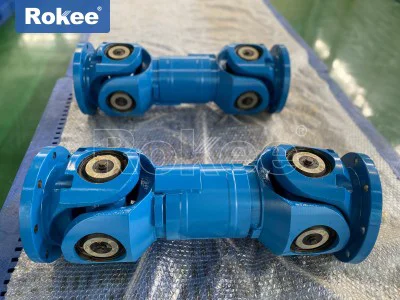
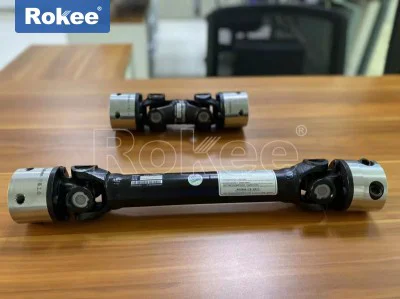
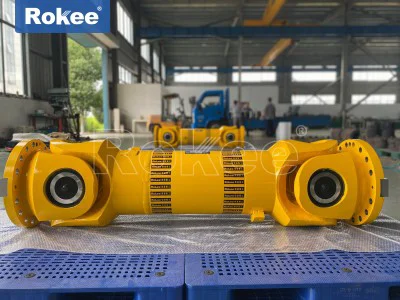
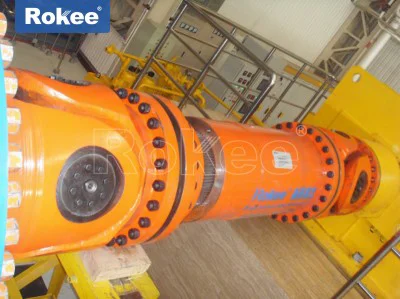
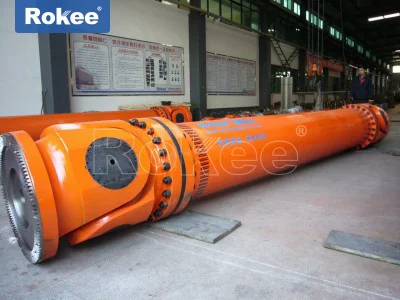
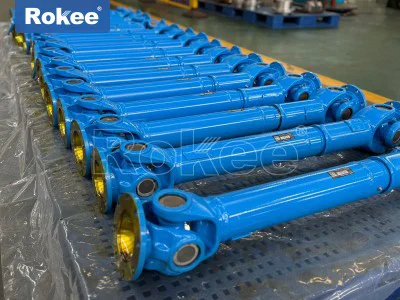
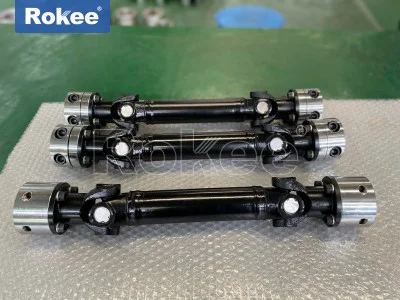
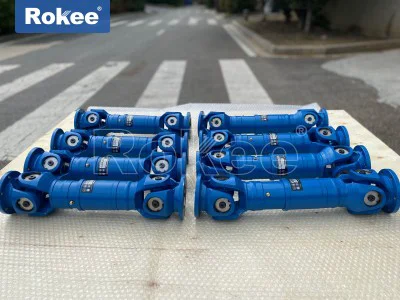
The basic structure of a cardan coupling is composed of two fork-shaped yokes, a central cross shaft, and auxiliary rolling bearing components, forming a compact and robust mechanical linkage system. The cross shaft acts as the core force-bearing and transmission medium, with its four shaft necks movably connected to the two yokes through precision bearings. This structural design allows the two connected shafts to form a certain intersecting angle while maintaining effective power transmission. In practical crane applications, most cardan couplings adopt a double-section combined structure with two sets of universal joints matched with a middle connecting shaft. This optimized design effectively compensates for the periodic speed fluctuation defect of a single universal joint, realizing constant-speed and stable torque transmission between driving and driven shafts, which is essential for avoiding jitter and impact during crane operation.
The working principle of the cardan coupling centers on its adaptive angular compensation and motion transmission characteristics. When the crane’s power drive system operates, the driving yoke rotates synchronously with the input shaft, driving the cross shaft to perform composite rotational and swinging motions. The cross shaft further drives the driven yoke and the output shaft to rotate, completing the transfer of rotational power and torque. Benefiting from the movable fit between the cross shaft and yokes, the coupling can adapt to angular misalignment, axial displacement, and radial offset between shafts caused by crane installation errors, frame deformation under heavy loads, and vibration during long-term operation. The typical angular compensation range of the structure can meet the daily operation deviation requirements of most cranes, ensuring continuous and unobstructed power transmission even when the relative position of the driving and driven shafts changes dynamically.
Crane equipment has extremely stringent requirements for transmission components, including high torque bearing capacity, strong impact resistance, and stable low-speed operation performance, all of which are fully satisfied by the inherent advantages of cardan couplings. In heavy-load lifting scenarios, cranes need to bear instantaneous impact loads during startup, braking, and load hoisting. The articulated flexible structure of the cardan coupling can effectively buffer and absorb instantaneous mechanical impact, avoiding rigid force transmission that may cause shaft deformation, gear wear, or structural fatigue damage. Compared with other flexible coupling types, it features higher structural rigidity and load-bearing efficiency, capable of maintaining stable transmission output under long-term heavy-duty operation without obvious power loss or motion deviation.
The unique structural advantages of cardan couplings make them widely applicable in various functional parts of crane systems. They are commonly installed in the transmission links of crane lifting mechanisms, traversing mechanisms, and slewing mechanisms, undertaking the power transmission task between motors, reducers, and executive working components. In the lifting mechanism, the coupling ensures stable output of lifting power, preventing uneven lifting speed and load shaking caused by unstable transmission. In the slewing mechanism of rotary cranes, it adapts to the dynamic angle change of the slewing shaft during rotation, ensuring smooth and continuous slewing action without stuck or intermittent operation. In the traveling transmission system of mobile cranes, it compensates for shaft position deviation caused by chassis vibration and terrain undulation, maintaining consistent power output of the traveling mechanism.
In terms of operating performance, cardan couplings deliver outstanding transmission efficiency and motion stability in crane working environments. The rolling friction formed by internal bearings minimizes mechanical friction loss during power transmission, ensuring high-efficiency torque output and reducing invalid energy consumption during crane operation. For the low-speed and high-torque operating characteristics of cranes, this coupling structure avoids the slipping and transmission lag problems that easily occur in elastic couplings. Even in harsh working environments such as outdoor open-air sites, dust-filled construction sites, and humid port operation areas, the compact and closed structural form can effectively resist the invasion of external impurities, reducing the probability of internal component wear and failure, and adapting to the complex and changeable working conditions of cranes.
Despite its excellent adaptability, the operating performance of a cardan coupling is closely related to installation accuracy and operating status. Reasonable installation alignment is the premise to ensure its service life and transmission effect. Excessively large angular deviation will increase the swinging amplitude of the cross shaft and yokes, leading to intensified bearing wear, increased operating vibration, and even abnormal noise during crane operation. Long-term operation under overload conditions will cause fatigue deformation of the cross shaft and aging of bearing components, reducing the compensation ability and transmission accuracy of the coupling. Therefore, in the daily operation of cranes, maintaining the coupling within a reasonable working angle range and avoiding long-term overload and frequent impact operations are key measures to maintain its stable performance.
Regular and standardized maintenance is crucial to extend the service life of cardan couplings and ensure the safe operation of cranes. The core maintenance focus lies in the lubrication of internal bearing and movable connection parts. Good lubrication can reduce metal friction and wear, lower operating temperature, and buffer mechanical vibration. Insufficient lubrication will lead to dry friction of internal components, causing rapid wear of shaft necks and bearings, and in severe cases, jamming of the transmission structure. In addition, regular inspection of the structural integrity of yokes, cross shafts, and connecting parts is required to check for fatigue cracks, deformation, and loose connection gaps. Timely maintenance and replacement of worn components can effectively avoid transmission failure during crane operation and prevent equipment safety accidents caused by coupling failure.
With the continuous upgrading of crane manufacturing technology and the increasing demand for high-precision and high-stability crane operation, the structural design and performance optimization of cardan couplings are also constantly progressing. Modern optimized cardan couplings adopt more streamlined structural layouts and high-strength structural materials, further improving overall rigidity and fatigue resistance, and adapting to the larger load and longer-cycle operation requirements of new-generation cranes. The improved internal bearing structure reduces operating friction and vibration, realizing smoother and more accurate power transmission, which helps improve the positioning accuracy and operating stability of crane lifting and slewing actions. At the same time, the optimized sealing structure further enhances the environmental adaptability of the coupling, enabling it to maintain stable working performance in more extreme working scenarios.
In the entire crane mechanical transmission system, the cardan coupling plays an irreplaceable transitional connection role. It not only undertakes the basic function of power transmission but also acts as a buffer and compensation unit for mechanical displacement and impact, protecting key core components such as motors and reducers from excessive impact and deformation damage. Its simple and reliable structural form, strong environmental adaptability, and excellent heavy-load transmission performance make it the preferred transmission component for most crane equipment. In the field of engineering machinery that pursues high efficiency, stability, and safety, the cardan coupling will continue to exert its unique structural advantages and provide solid technical support for the reliable operation of crane equipment.