Universal Joint Cardan Drive Shaft
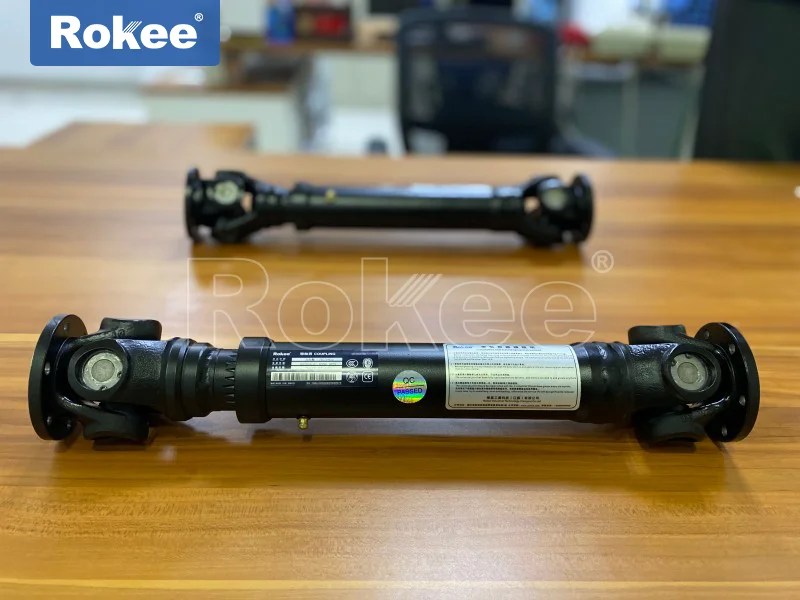
The universal joint cardan drive shaft stands as a foundational and versatile mechanical transmission component widely adopted in mobile and industrial mechanical systems. Designed to address the core challenge of torque and rotational power transmission between misaligned shafts, it effectively accommodates angular deviations, axial displacements, and minor radial offsets during equipment operation. This mechanical device integrates flexible connection structures with rigid transmission components, enabling stable power output even when the connected shafts fail to maintain perfect coaxial alignment. Its adaptive structural design allows it to function reliably under dynamic operating conditions, including mechanical vibration, structural deformation, and variable working angles. Serving as a critical power transfer bridge between power sources and execution components, it delivers consistent rotational force while compensating for real-time positional changes of mechanical parts. Owing to its robust adaptability, simple structural logic, and reliable transmission performance, the cardan drive shaft has become an irreplaceable part of vehicle power systems, agricultural machinery, construction equipment, and general industrial transmission devices, supporting the normal operation of diverse mechanical power transmission scenarios.
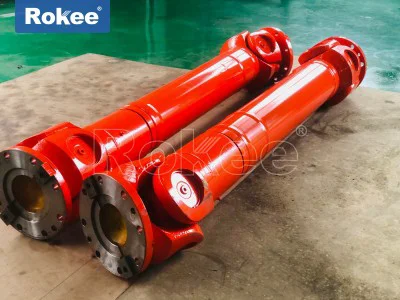
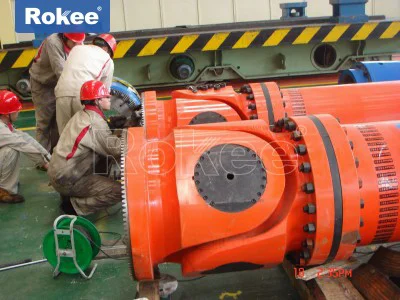
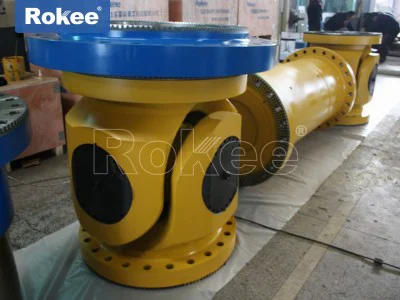
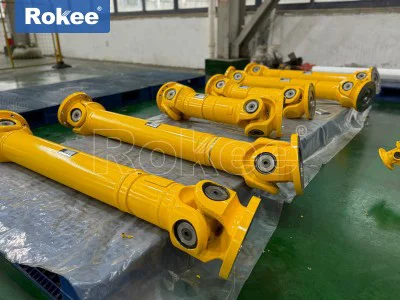
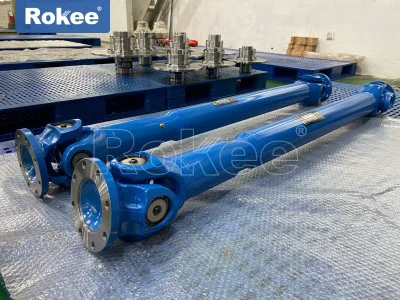
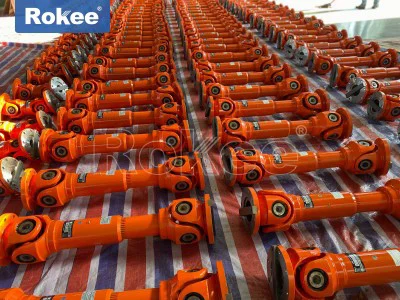
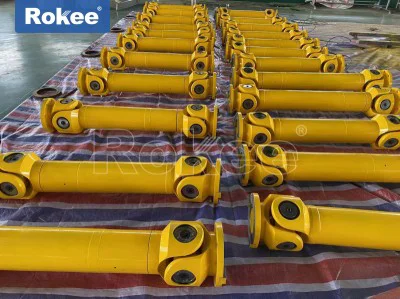
The basic structural composition of the universal joint cardan shaft features a sophisticated yet practical mechanical layout that balances transmission rigidity and motion flexibility. A complete assembly mainly consists of end yokes, a cross spider component, precision rolling bearings, a central shaft body, and telescopic adjustment structures. The paired yokes are installed at both ends of the drive shaft, serving as the connection interfaces with external transmission shafts and mechanical components, and they reserve assembly holes for bearing installation and fixed connection. The cross spider acts as the core kinematic connecting part, penetrating the bearing holes of the two yokes to form a flexible hinged structure that allows free angular swing within a certain range. The built-in rolling bearings between the cross spider and yokes effectively reduce friction resistance during rotational movement, avoiding rigid friction wear that may occur in traditional fixed connection structures. The central shaft body adopts a tubular or solid integrated structure according to load demands, providing sufficient structural rigidity to bear torque impact and rotational tension. Additionally, the telescopic spline structure matched with the shaft body can automatically compensate for axial distance changes caused by mechanical jitter and structural displacement, ensuring the continuity and stability of power transmission in dynamic working environments.
The working principle of the cardan drive shaft relies on spatial linkage kinematics and flexible hinge transmission, realizing efficient torque transmission between non-coaxial shafts. When the driving end shaft outputs rotational power, the torque is first transmitted to the connected yoke, which drives the cross spider to perform synchronous rotational motion. Benefiting from the symmetrical four-axis structure of the cross spider, the rotational force can be stably transferred to the driven end yoke at any deflection angle, thereby driving the operation of the driven mechanical shaft. A key mechanical characteristic of a single universal joint is its periodic angular velocity fluctuation during operation. When the two connected shafts form an included angle, the instantaneous rotational speed of the driven shaft will produce regular slight changes within one rotation cycle. To eliminate unbalanced transmission vibration caused by speed fluctuation, most practical applications adopt a double universal joint combination structure. This structural arrangement can offset the speed difference generated by a single joint through phase matching, achieving approximately constant-speed power transmission. This unique working mechanism enables the cardan drive shaft to maintain effective power output under continuous angle changes, perfectly adapting to the dynamic displacement characteristics of mechanical equipment in operation.
The functional advantages of universal joint cardan drive shafts make them highly competitive in various mechanical transmission scenarios. First and foremost, their outstanding misalignment compensation capability distinguishes them from ordinary rigid transmission shafts. They can tolerate continuous and irregular angular deviations and axial displacements during equipment operation, avoiding transmission failure or component damage caused by shaft position offset. Second, the structural design delivers excellent torque bearing capacity and transmission efficiency. The combination of high-strength cross spider and precision bearings minimizes power loss during rotation, ensuring that most input torque is accurately transmitted to the execution end. Moreover, the overall structure features high mechanical stability and impact resistance, enabling stable operation under variable load conditions such as sudden start, sudden stop, and alternating load impact. In addition, the modular assembly structure facilitates daily disassembly, inspection, and maintenance, with replaceable wearing parts that effectively reduce equipment operation and maintenance costs. Compared with other flexible transmission components, it also has a wider working angle range and stronger environmental adaptability, capable of operating normally in complex working conditions with vibration, dust, and minor structural deformation.
Universal joint cardan drive shafts cover a wide range of application scenarios, penetrating multiple fields of mechanical power transmission. In vehicle engineering, they are core components of automobile power transmission systems, responsible for transmitting power from the transmission to the drive axle, adapting to the up and down jitter of the vehicle chassis during driving and the angle change during steering to ensure smooth power output. In agricultural machinery equipment such as tractors and harvesters, cardan drive shafts connect engine power components and working execution parts, adapting to the complex and variable working terrain and frequent mechanical position changes of agricultural equipment. In construction machinery including excavators and loaders, they bear high-intensity variable load transmission tasks, meeting the high-power and high-stability operation demands of engineering equipment. In general industrial fields, they are widely used in conveyor equipment, mechanical transmission platforms, and rotating machinery, solving the power transmission problem between offset shafts in mechanical layout. Meanwhile, they also play an important role in marine auxiliary machinery and light power equipment, providing reliable flexible transmission solutions for different power levels and working environments.
Long-term stable operation of cardan drive shafts depends on standardized daily maintenance and scientific usage management, which can effectively extend service life and avoid mechanical failures. The key maintenance focus lies in the lubrication management of bearing and cross spider friction pairs. Regular injection of high-performance lubricating grease can reduce dry friction and abrasive wear of moving parts, avoiding rotation jitter and transmission noise caused by lubrication failure. It is necessary to regularly check the tightness of connecting fasteners to prevent component loosening and positional deviation caused by long-term vibration, which may lead to unbalanced transmission. In addition, the surface of the shaft body and joint components should be kept clean to prevent long-term accumulation of dust, impurities, and corrosive substances from damaging the structural surface and affecting kinematic flexibility. During equipment operation, extreme overload use should be avoided, as excessive instantaneous torque will cause plastic deformation of the cross spider and fatigue damage of bearings. Regular inspection of the telescopic spline structure is also essential to ensure its flexible telescopic performance and effective compensation for axial displacement, eliminating hidden dangers of transmission interruption caused by structural jamming.
In actual operation, universal joint cardan drive shafts may encounter typical mechanical faults, and accurate fault judgment can improve equipment operation efficiency. Common abnormal phenomena include abnormal vibration and noise during rotation, which are mostly caused by insufficient lubrication of internal bearings, excessive wear of cross spider friction surfaces, or loose connecting parts. Long-term unaddressed minor wear will gradually expand the transmission gap, resulting in increased vibration amplitude and continuous noise during equipment operation. Another frequent fault is insufficient power transmission efficiency, manifested as delayed power response and weak torque output. This problem usually stems from excessive wear of the telescopic spline structure or reduced flexibility of the universal joint, which affects the stability of power transmission. In addition, long-term overload operation will lead to fatigue deformation of the shaft body and structural aging of the universal joint, causing reduced deflection compensation capability and even transmission jamming. Timely diagnosis and maintenance of these typical faults can avoid small problems evolving into major mechanical failures, reduce equipment downtime, and ensure the continuous and stable operation of the entire mechanical transmission system.
With the continuous upgrading of mechanical manufacturing technology, the design and performance of universal joint cardan drive shafts are also undergoing continuous optimization and innovation. Modern production processes adopt high-strength alloy materials and precision integral forging technology, effectively improving the structural strength, fatigue resistance, and load-bearing limit of drive shaft components, making them adaptable to higher-power and more severe working conditions. Optimized structural design further reduces the internal friction coefficient and rotational inertia of the universal joint, improving transmission smoothness and energy utilization efficiency while lowering operational noise. The upgraded telescopic adjustment structure adopts more precise matching tolerances, realizing more sensitive and accurate axial displacement compensation and enhancing the dynamic adaptability of the equipment. In addition, the modular and lightweight design concept has been widely applied, reducing the overall weight of the assembly while ensuring structural stability, which helps reduce mechanical energy consumption and improve equipment operating flexibility. As core flexible transmission components, cardan drive shafts will continue to iterate with mechanical engineering technology, providing more efficient, stable, and durable power transmission solutions for modern mechanical equipment in various fields.